
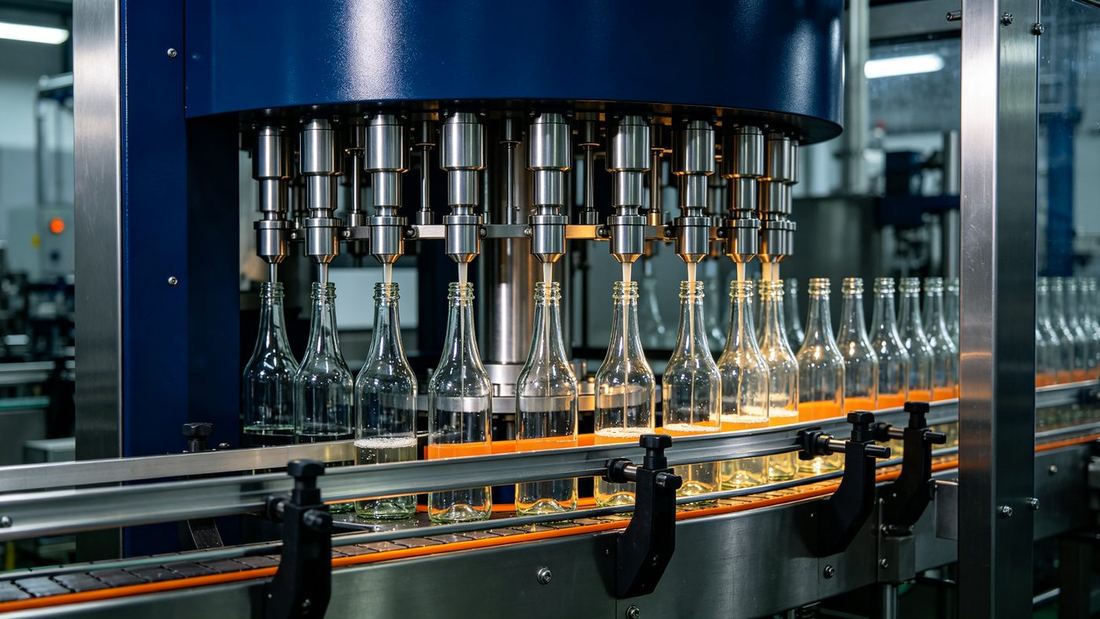
SunAura Machinery has commissioned a 6-head servo piston filling line with torque-monitored screw capping for a personal-care co-packer in Jebel Ali, UAE. The customer fills 250 ml, 500 ml and 1 litre PET bottles of shampoo, shower gel and body lotion for regional brands and private-label distributors, at a target of 40–50 bottles per minute. The project replaced an overflow filler that could not hold fill weight on thick shampoo and left wet, leaking caps on the line.
A bottled-water or juice line would have failed here on three points: it would not dose thick product accurately, it would torque plastic caps too hard, and it would leave product on the bottle threads. This line was specified around personal-care reality.
Why a Servo Piston Filler — Not Overflow or Gravity
Shampoo at 3,000–8,000 cP does not self-level, and it does not flow fast. Overflow fillers — common on water and light liquids — rely on the product reaching a fixed neck level; on thick gel they overfill and foam. Gravity fillers run too slowly at this viscosity. We specified a servo piston filler with bottom-up, anti-drip nozzles: the nozzle enters near the bottle base, the piston fills slowly to avoid aeration, and a ball-valve shut-off cuts the string between cycles. That is why the customer’s wet-cap rejection rate dropped after FAT.
| Filler type | Best viscosity | Shampoo suitability | Why |
|---|---|---|---|
| Gravity / overflow | 1–50 cP (water, juice) | Not suitable | Thick product self-levels slowly; overfills and foams |
| Flowmeter | 50–3,000 cP (oils, thin lotions) | Limited | Reading drifts as shampoo aerates; slow response |
| Servo piston (this line) | Up to ~20,000 cP | Selected | Repeatable volume per stroke; adjustable slow fill; anti-drip nozzle |
Two Capping Details That Matter on Personal-Care Bottles
Torque-monitored servo capping. Shampoo uses plastic screw caps with tamper-evident rings. Over-torque cracks the cap and breaks the ring before the customer buys it; under-torque leaks in transit. The capper runs each cap to a target torque recorded in the recipe, with torque data logged per bottle — a standard spindle capper without torque feedback cannot guarantee that on mixed cap sizes.
Cap sorting and orientation. Personal-care caps often have flip-top or disc-top geometry that jams in cheap sorting bowls. We supplied a centrifugal sorting bowl with orientation rails tuned to the customer’s two cap formats, so changeover between 250 ml and 1 litre bottles takes under 20 minutes.
Who This Line Suits — and What We Would Specify Differently
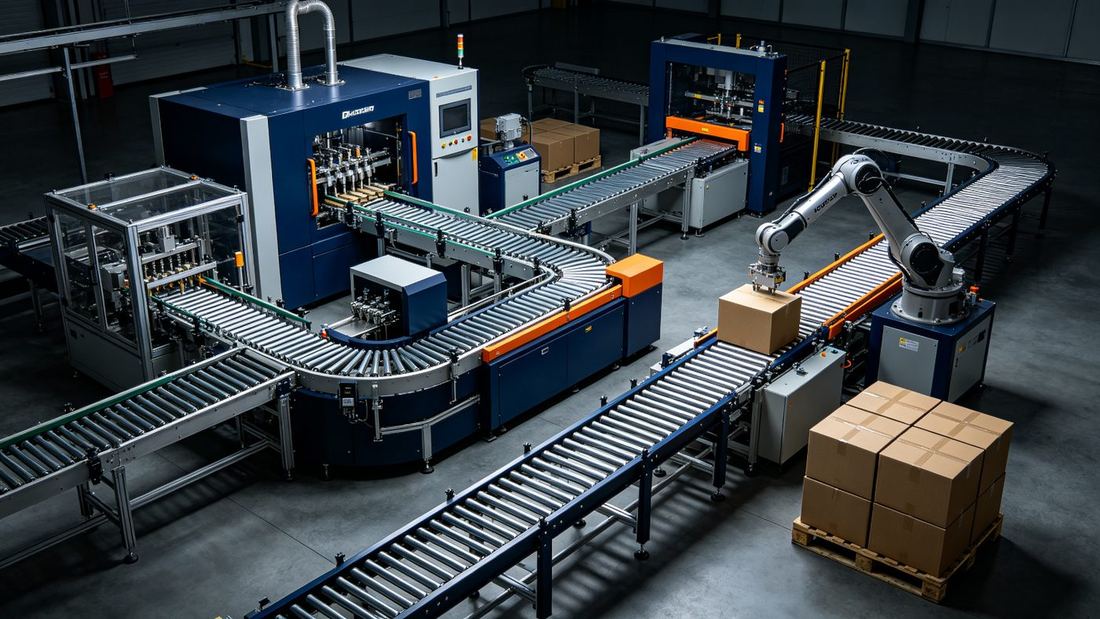
This configuration targets personal-care and cosmetic co-packers at 30–60 bottles/min running 250 ml–1 litre PET bottles of shampoo, lotion, gel or similar viscous product, where fill weight and cap torque both matter. Buyers above 80 bottles/min step to a rotary piston platform; buyers below 20 bottles/min are better served by a semi-automatic servo piston and a manual capping gun. For thin alcohol-based toners or water-like products, the piston and bottom-up program are overkill, and an overflow filler is the better fit.
The line passed FAT at our Qingdao workshop with the customer’s actual shampoo and cap formats, checked fill weight and cap torque across a full run, and shipped with spare nozzles, capping chucks and commissioning support covered under our after-sales service terms. For more on dosing principles, see liquid filling machines.
Filling shampoo, lotion, gel or other viscous personal-care product? Send your product viscosity, bottle size and target bottles/min to [email protected] or on WhatsApp. We will tell you whether a servo piston filler and torque capper fit your speed and format range. Browse our integrated lines and other commissioning news.