
Induction Sealing Machines — Continuous Foil Sealers
Industrial induction sealing machines for PET bottles, glass jars, HDPE pots and plastic containers. From compact 1500W benchtop induction sealers to 4500W water-cooled high-speed lines, our continuous induction foil sealers deliver hermetic, tamper-evident cap seals — factory-direct from SUNAURA Machinery's 48,000㎡ Qingdao plant.
What Is Induction Sealing & How Does It Work?
Induction sealing is a non-contact cap-sealing process that bonds a thin aluminum foil disc to the mouth of a non-metallic container — PET bottles, glass jars, HDPE pots, PP tubs and more. A capped container passes under an RF sealing head; the electromagnetic field induces eddy currents in the aluminum foil, which instantly heats up. The heat melts a polymer film on the underside of the foil, fusing it to the container rim and creating a hermetic, leak-proof, tamper-evident seal. When the end user unscrews the cap for the first time, the foil disc remains bonded to the container mouth as visible proof of integrity.
Because there is no physical contact with the product and no glue or ink, this induction sealer method is the global industry standard for food, pharmaceutical, cosmetic and chemical packaging. It prevents leakage in transit, blocks oxygen and moisture ingress, extends shelf life, and satisfies FDA / GMP tamper-evident packaging requirements. The result is a cleaner product, fewer customer complaints from leaky shipments, and lower return rates.
Our Induction Sealing Machine Range
Ten models covering tabletop benchtop units, continuous inline sealers, and high-speed production-line systems. Click any model for the full spec sheet, sealing demo video, and inquiry form.
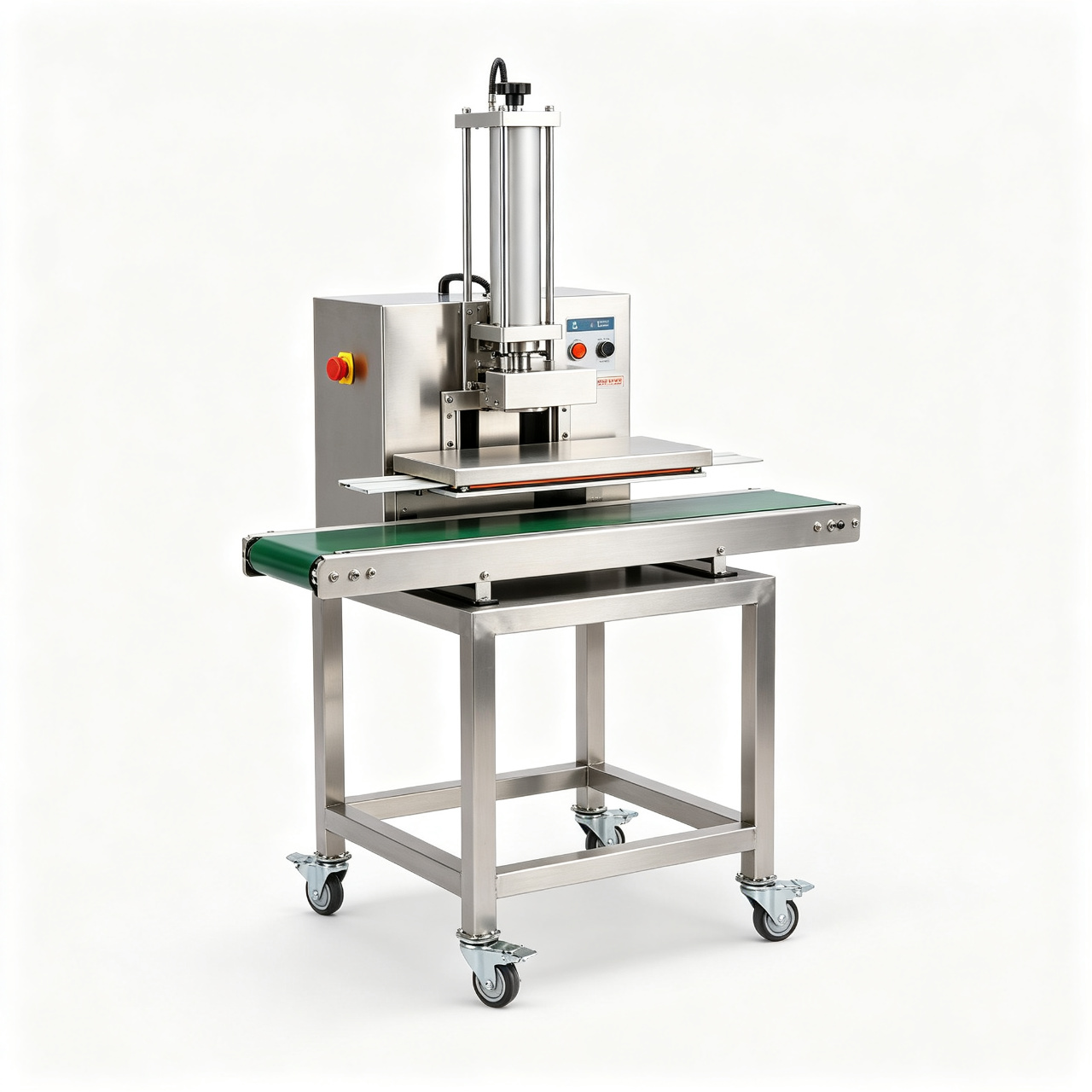
Automatic Aluminum Induction Sealing Machine for PET Bottles
Compact benchtop induction sealer for small PET bottles, 1500W, cap range 20–50mm. Ideal for start-ups and small-batch production.
View Details →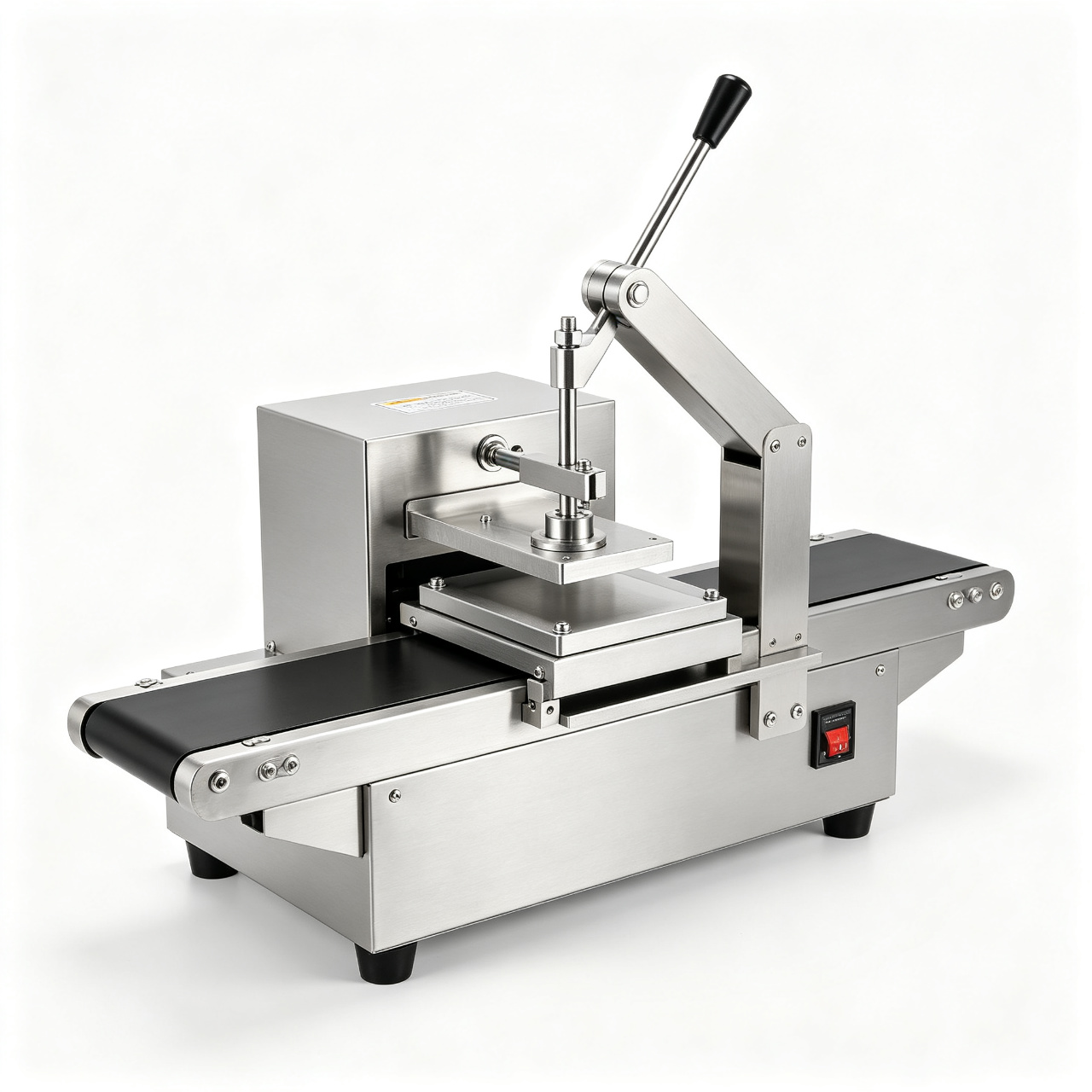
Continuous Induction Foil Sealer for Glass Jars
Desktop continuous foil sealer optimized for glass jars, 1500W, 20–50mm caps. Sauces, honey, pickles and baby food.
View Details →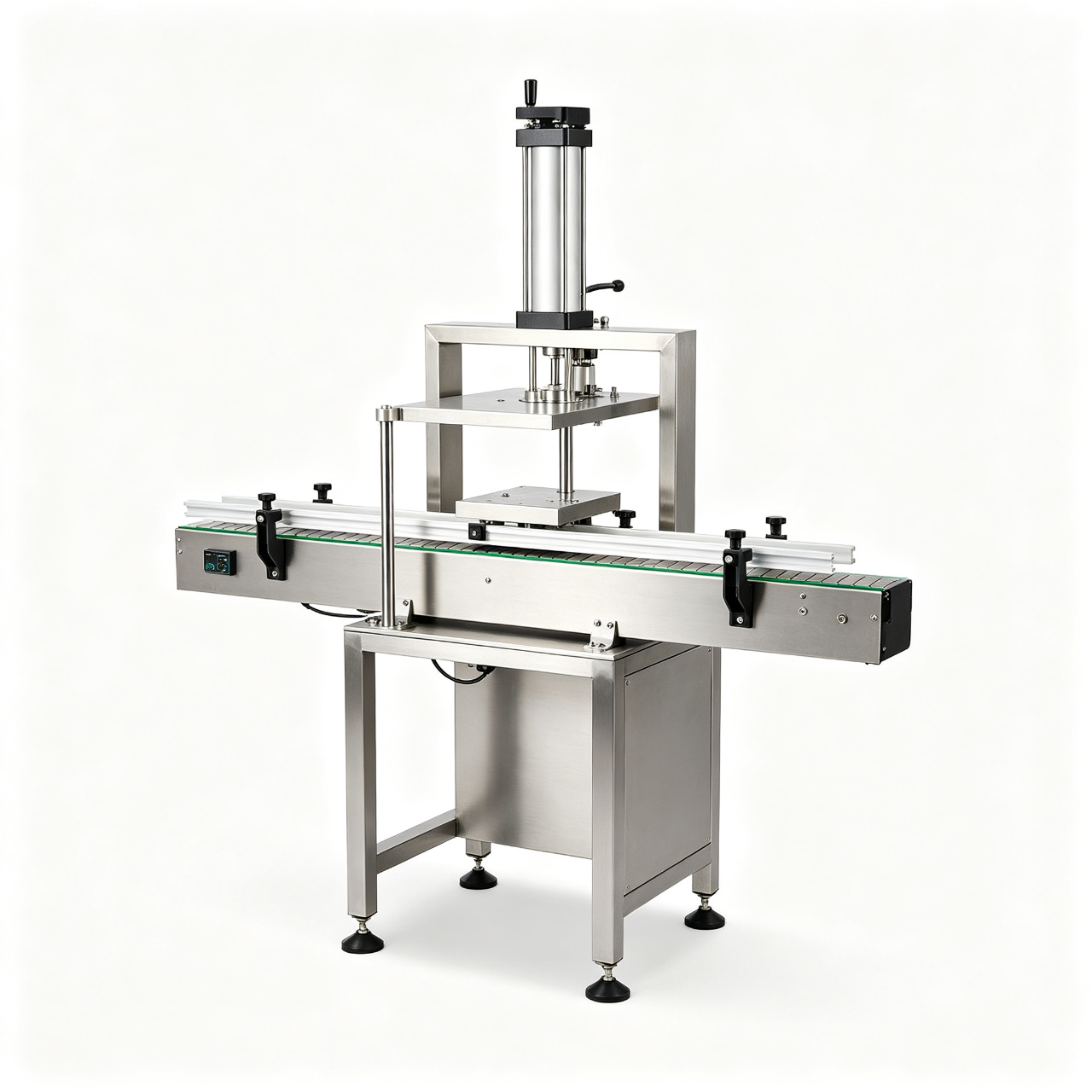
Continuous Induction Foil Sealer for Bottles and Jars
Floor-standing 2000W continuous induction sealer, 20–60mm cap range, handles containers up to 350mm tall.
View Details →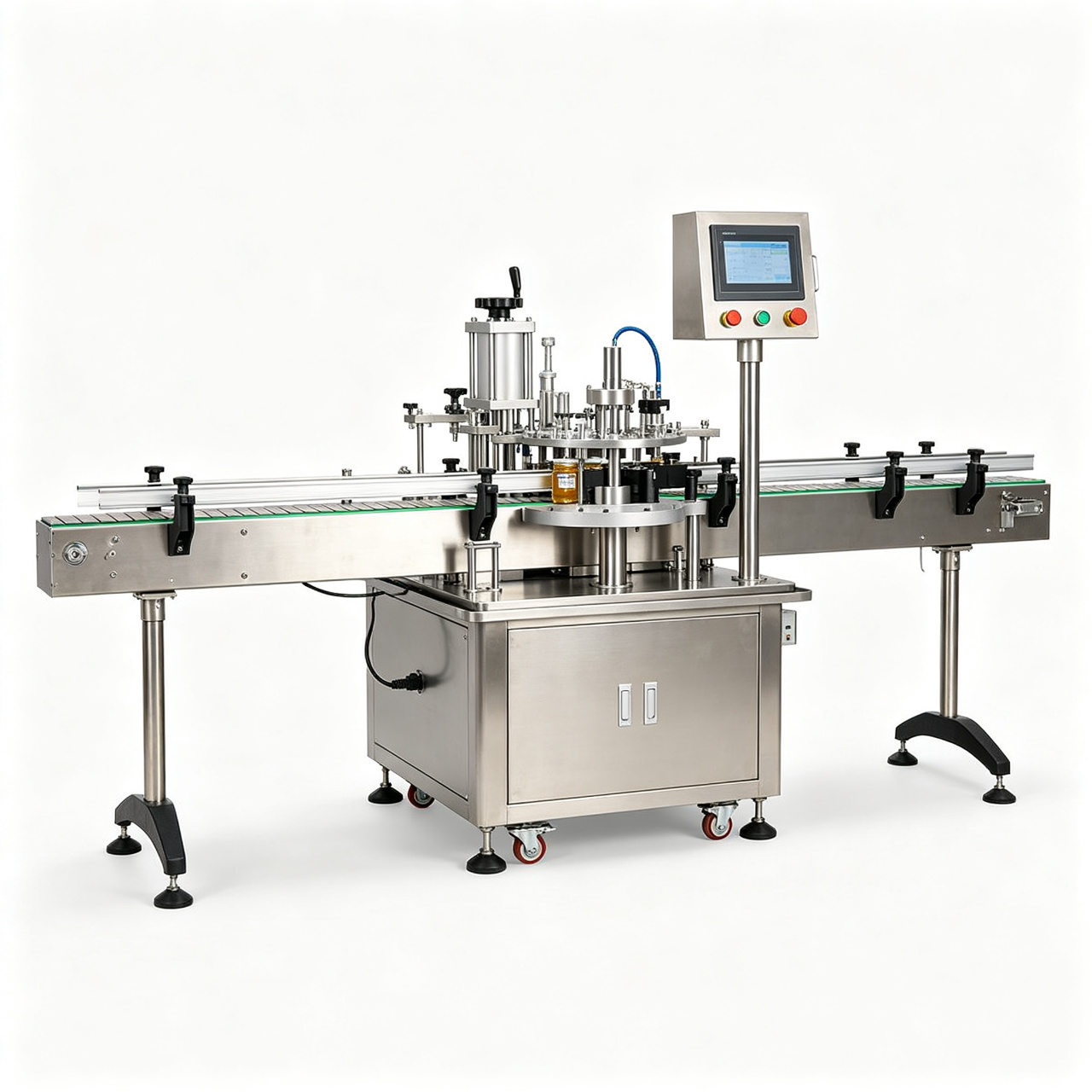
Online Induction Sealing Machine for Small Jars
Premium inline induction foil sealer with wide 20–130mm range and full digital control. Cosmetics, oils, spices.
View Details →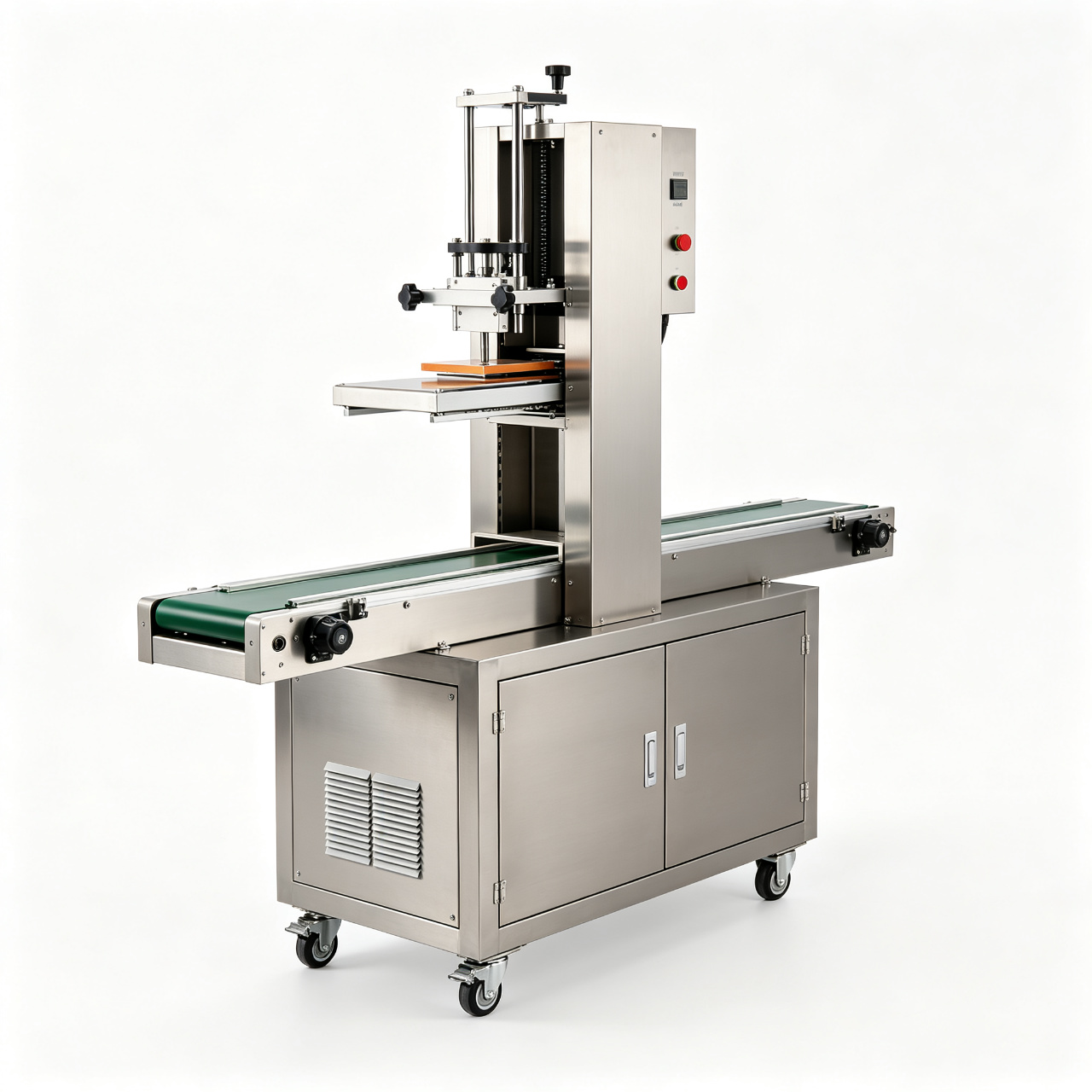
Electric Continuous Induction Sealer for Aluminum Foil
High-power 2300W continuous sealer, wide 30–150mm sealing head, throughput up to 300 containers per minute.
View Details →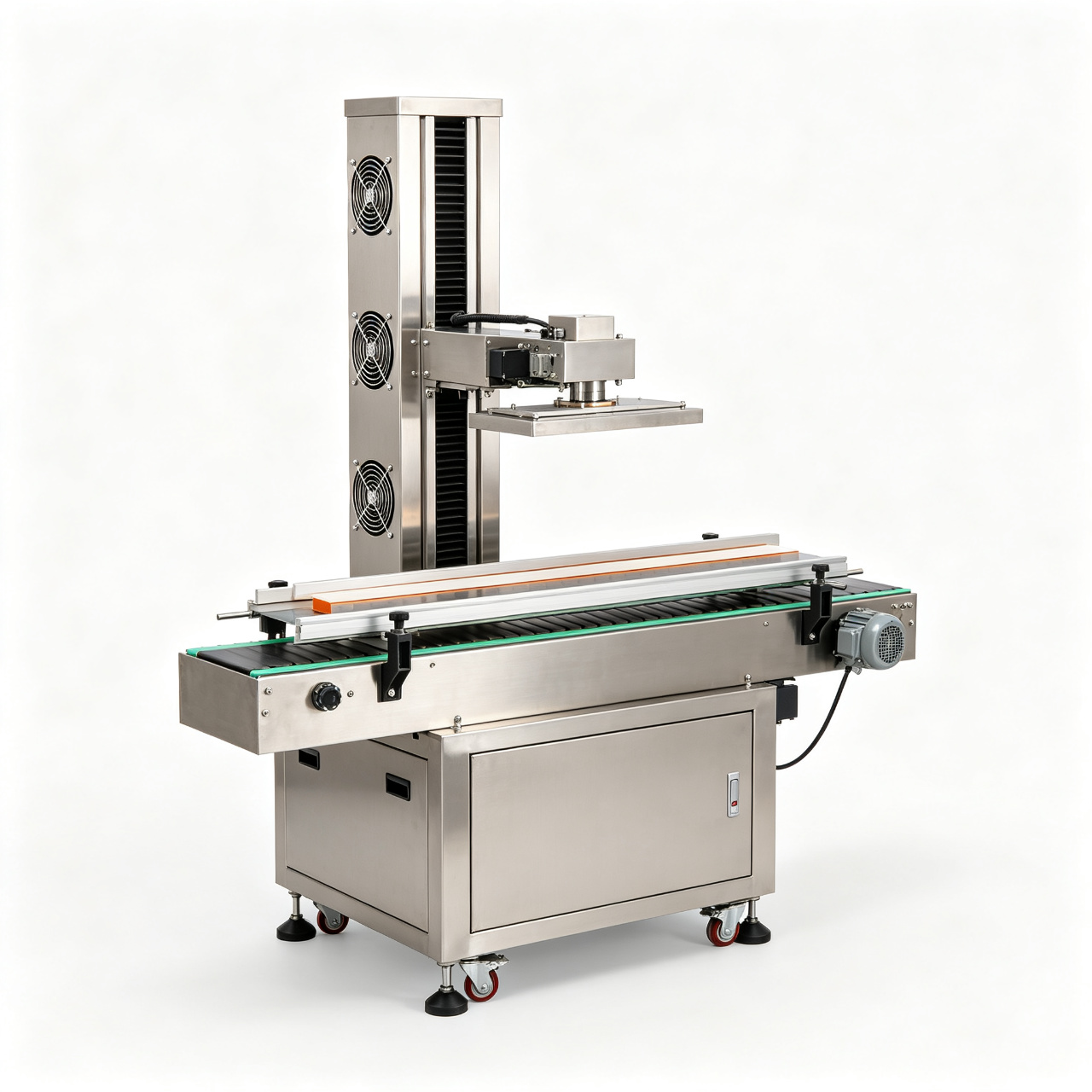
Air-Cooling Continuous Aluminum Foil Induction Sealer
2300W air-cooled variant, 30–150mm cap range. No water hookup needed — self-contained and easy to deploy.
View Details →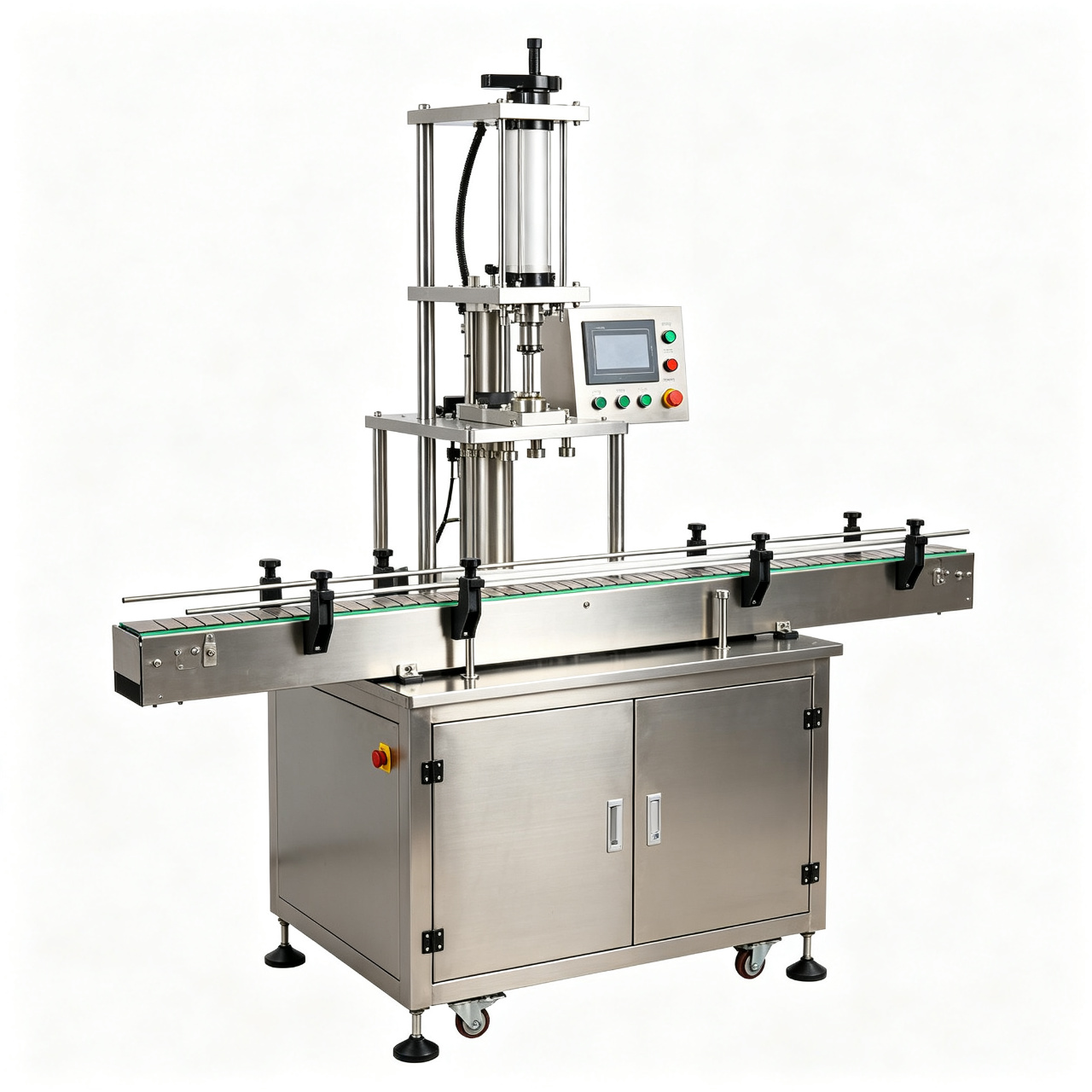
Electric Automatic Induction Sealer for Beverage Bottles
2300W vertical induction sealer optimized for narrow-neck beverage bottles, 20–60mm cap range. Water, juice, tea.
View Details →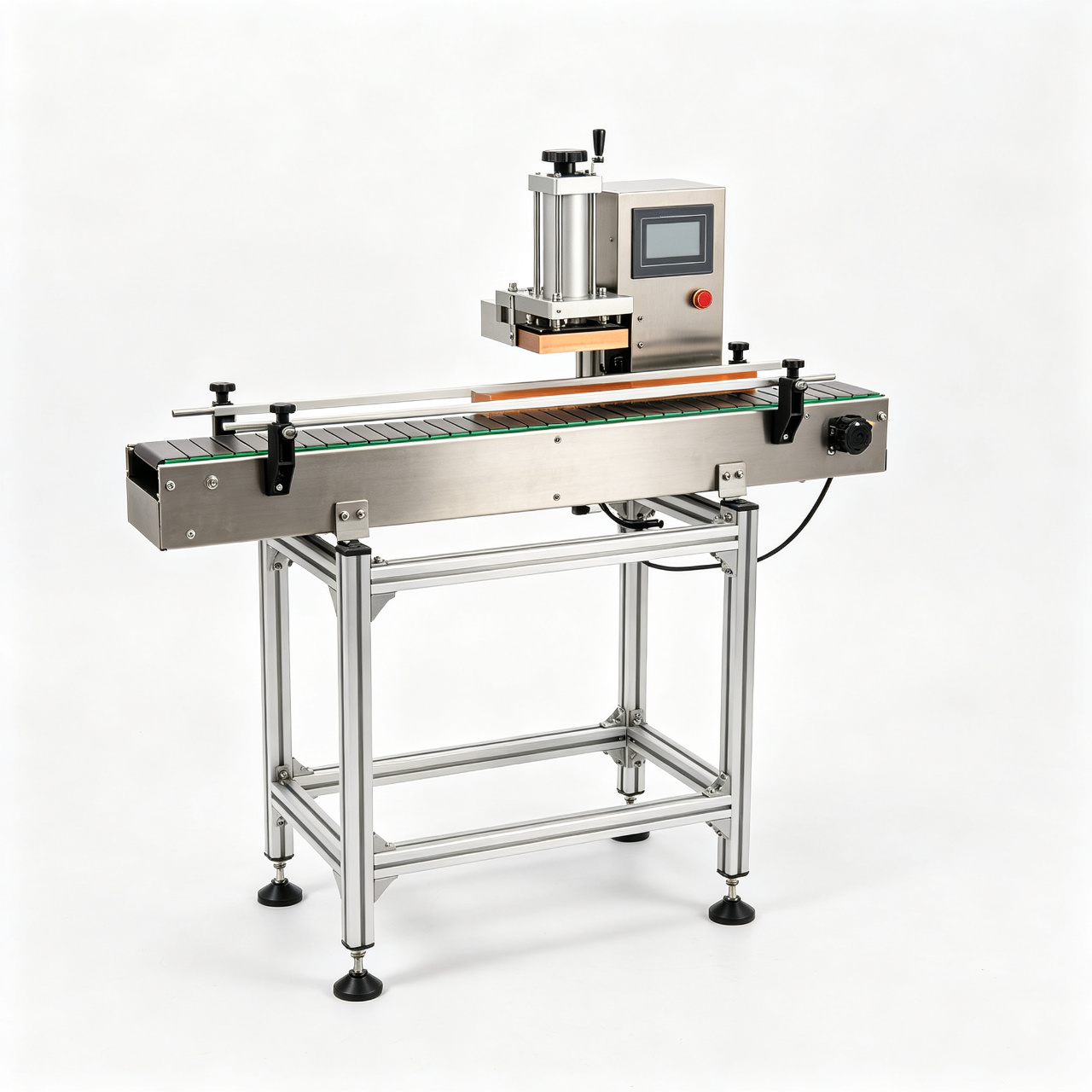
Bottle Continuous Induction Sealer for Aluminum Foil
Budget-friendly continuous bottle sealer, compact footprint. Reliable entry-level choice for start-up packaging lines.
View Details →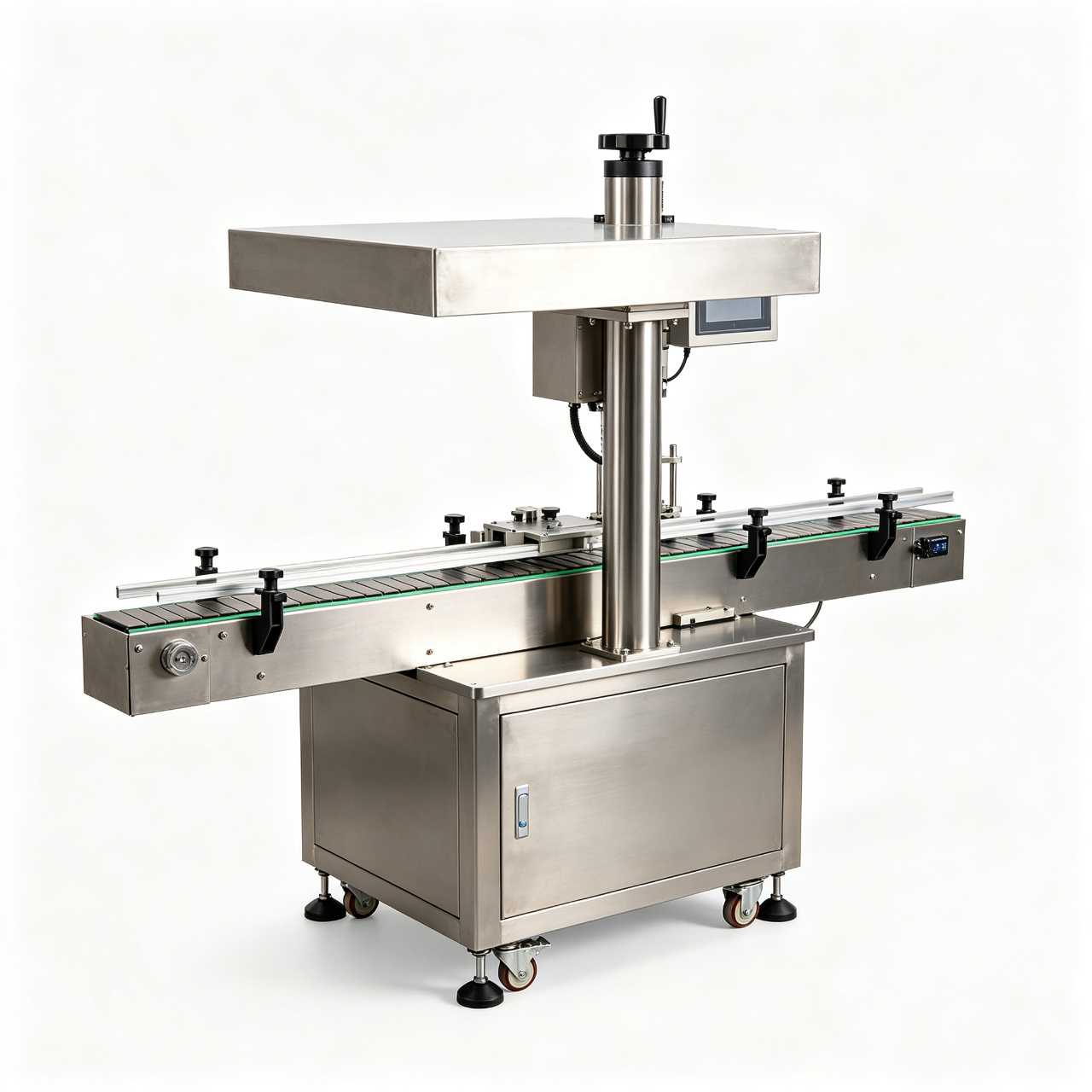
Large-Head Continuous Induction Sealer (30–150mm Caps)
4500W large-head sealer, 20–150mm wide cap range, handles containers up to 600mm tall. Gallons, pails, wide-mouth jars.
View Details →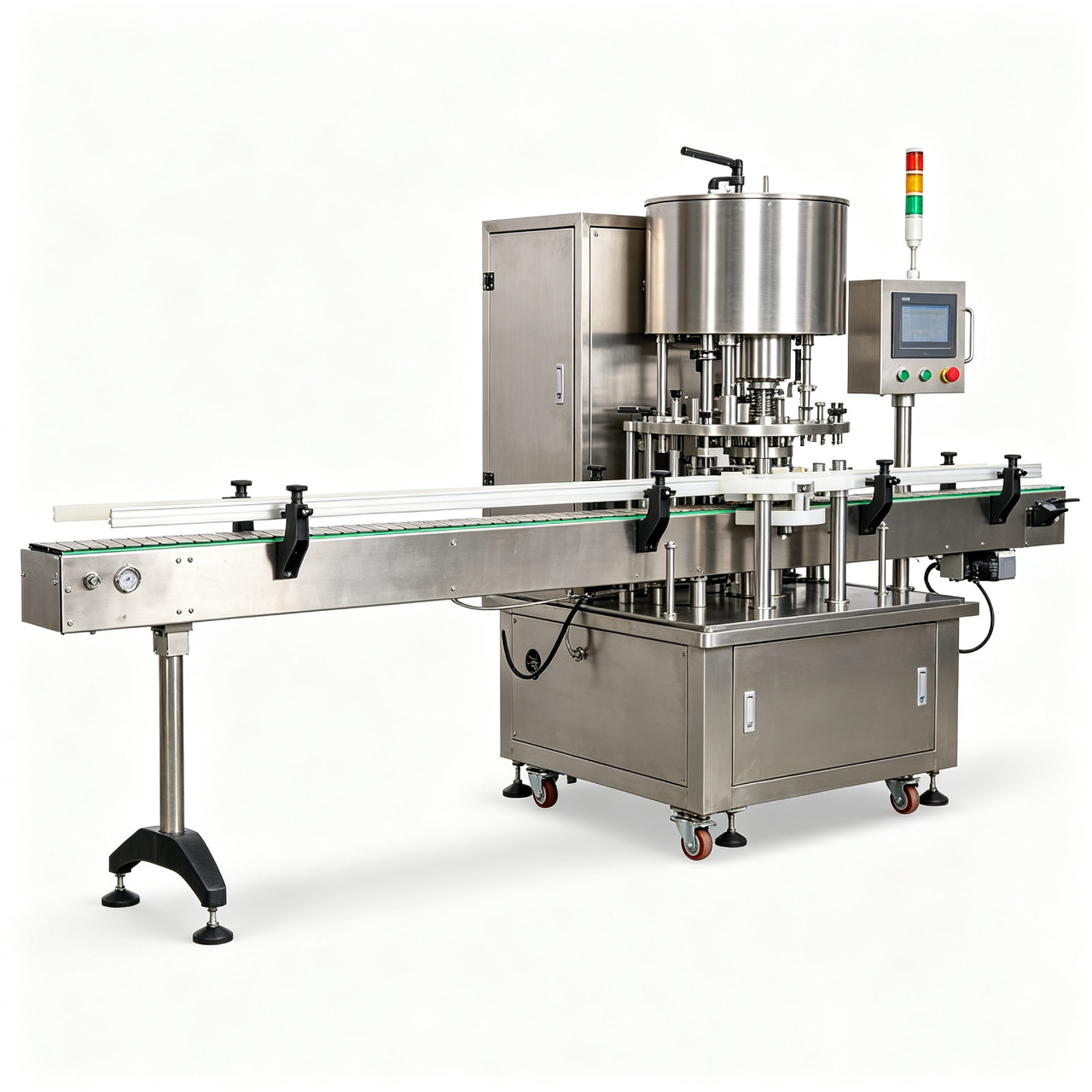
High-Speed Automatic Induction Sealing Machine with Conveyor
Flagship 3000W water-cooled system, 20–150mm range, production-line ready with integrated high-speed conveyor.
View Details →Why Buy Your Induction Sealer from SUNAURA Machinery
48,000㎡ Own Factory
Complete in-house manufacturing in Qingdao — raw steel to final assembly under one roof.
CE Certified
Every induction sealer ships with CE documentation and full RF safety compliance files.
ISO 9001:2015
Certified quality management system — component sourcing through final run testing.
SGS Audited
Third-party factory audit passed, with 20+ national patents in packaging machinery design.
12-Month Warranty
Full parts and labor warranty from shipment date, backed directly by factory engineers.
Lifetime Tech Support
Email, WhatsApp and remote video guidance for the entire service life of the machine.
Parts Shipped in 48h
Genuine spare parts dispatched worldwide via DHL / FedEx within 48 hours of confirmation.
48h Run Test
Every machine completes a 48-hour continuous run test before final shipment approval.
Applications by Industry
Induction sealing is used wherever product integrity, leak prevention or tamper evidence matters. Our continuous induction foil sealers serve these six core industries:
Pharmaceutical & OTC
Syrups, capsules, tablets and liquid medicines — satisfies FDA tamper-evident packaging regulations and protects patient safety.
Food & Beverage
Sauces, honey, edible oils, jams, dairy and beverages — prevents leakage, preserves freshness and blocks contamination.
Cosmetics & Personal Care
Creams, lotions, serums, shampoos and essential oils — leak-proof foil seals protect premium products during transit.
Chemical & Industrial
Solvents, lubricants, automotive fluids and industrial chemicals — prevents hazardous spills and corrosion in transport.
Agrochemical
Fertilizers, insecticides and liquid agrochemicals — secure hermetic sealing for safe storage and long-distance export shipping.
Nutraceutical
Vitamins, protein powders, probiotics and dietary supplements — moisture-barrier foil preserves potency and shelf life.
How to Choose the Right Induction Sealing Machine
Use this five-step checklist to match the correct SUNAURA model to your production reality. If you are unsure, send us your container samples and daily output — our engineers will recommend the right configuration free of charge.
- Container material and mouth size: Induction sealing works on non-metal containers only (PET, glass, HDPE, PP, PVC). Measure the cap diameter range you need to cover. Small jars (20–60mm) use standard heads; large-mouth containers (up to 150mm) require the large-head 4500W model.
- Throughput (containers per minute): Count your fastest shift output. Below 60 CPM: benchtop or compact inline. 60–150 CPM: standard 1500–2000W continuous model. 150–300+ CPM: 2300W high-power or the flagship 3000W water-cooled system with integrated conveyor.
- Cooling type: Air-cooled units are self-contained and ideal for intermittent or medium-duty use (up to ~8h/day). Water-cooled units sustain 24/7 high-power operation and are required for large-diameter caps or very high-speed lines — but need a chilled water supply.
- Line integration: Will the sealer sit inline after a capping machine? Confirm conveyor height, belt width, and direction (left-to-right or right-to-left) to match your existing line. We customize conveyor length and height on every order.
- Container mix: If you run both bottles and jars on the same line, choose the flexible "bottles and jars" model with quick-change guides. Single-format lines can use the dedicated model (PET bottles, glass jars, beverage bottles) for maximum sealing consistency.
Troubleshooting Guide — Common Issues & Solutions
Induction sealers are robust machines, but production issues do arise. This table covers the five most frequent problems our field engineers encounter, with practical step-by-step fixes. Always disconnect power before inspecting the sealing head.
| Problem | Possible Causes | Solutions |
|---|---|---|
| Weak or incomplete seal | Conveyor speed too fast; head-to-cap gap too large; foil liner too thin or wrong material; RF power output set too low. |
|
| No heat / foil not adhering | No RF output from head; damaged coil cable; wrong (non-induction) liner; cap not centered under head; machine in fault state. |
|
| Overheating / thermal shutdown | Continuous operation beyond duty cycle; blocked fan vents; high ambient temperature; low water flow on water-cooled units. |
|
| Seal misalignment / off-center foil | Bottle guides crooked; conveyor belt tracking off; caps off-center on containers; head not parallel to cap top. |
|
| Conveyor jam / bottles not passing through | Conveyor stopped; photo-eye sensor blocked; jammed bottle or fragment; motor overload tripped; side guides too narrow. |
|
For issues not covered above, send photos and a short video of the problem to [email protected] — our engineering team typically diagnoses root cause within one business day.
Frequently Asked Questions
What is the difference between induction sealing and a regular screw cap?
A regular screw cap applies pressure but leaves a microscopic gap between cap and rim — air and moisture can enter, and nothing visibly indicates tampering. Induction sealing adds a bonded aluminum foil disc across the container mouth under the cap, creating a hermetic barrier. When the cap is first removed, the foil remains attached to the container mouth as clear, visible proof of tamper evidence.
Can induction sealers work on glass jars?
Yes. Induction sealing works on both PET and glass jars, provided you use foil liners rated for glass. Our continuous induction foil sealer for glass jars is specifically optimized for sauce, honey and pickle jar lines. Glass requires slightly more RF energy than PET, so our glass-jar models use appropriately rated heads.
Should I choose an air-cooled or water-cooled induction sealer?
Air-cooled units are self-contained, require no water hookup, and are ideal for intermittent or medium-duty operation (up to ~8 hours/day). Water-cooled units dissipate heat far more efficiently and are recommended for high-speed lines running 24/7, or for sealing large-diameter caps over 80 mm that demand sustained high RF power output.
What foil liners do I need to buy for my bottles?
You need induction-capable foil liners matched to your container material. PET containers use PET-bottom liners; glass jars use glass-rated liners; PP/PE containers use compatible liners. Each liner has three layers: aluminum foil (generates heat), wax (absorbs into pulp board), and heat-seal film (bonds to the container rim). We can recommend liner suppliers or supply compatible liners at quote time.
How fast can these induction sealing machines run?
Output depends on cap diameter and conveyor speed. Benchtop compact units handle 40–80 containers per minute; standard 1500–2000W continuous models reach 120–200 CPM; the 2300W wide-head and flagship 3000W water-cooled systems handle up to 300–600 CPM for standard 28–38 mm caps. Larger caps reduce throughput because each container spends more dwell time under the head.
Do you offer custom configurations and testing before shipment?
Yes. We customize conveyor length, belt width, head height, sealing diameter range, voltage (220V / 380V) and machine color. Send us your container samples — we run a sealing test on the actual machine and send video documentation before you place the order. Standard models ship in 7–15 days; custom configurations take 20–30 days.
Get a Factory-Direct Induction Sealer Quote in 24 Hours
Tell us your container type, cap diameter, and daily output — our engineers reply with the right model recommendation, FOB price and lead time within one business day. Every machine is built in our 48,000㎡ Qingdao factory, CE & ISO 9001 certified, and tested for 48 continuous hours before shipment.
Email [email protected]How an Induction Sealing Machine Works: Electromagnetic Sealing Technology
An induction sealing machine bonds a foil liner to the mouth of a plastic or glass container without ever touching the product. This induction sealing technology is the gold standard for tamper-evident, leak-proof closure on filled and capped bottles and jars. Understanding the physics is the fastest way to troubleshoot weak seals and choose the right induction sealer for a line.
The Electromagnetic Principle
Inside each closure sits a multi-layer foil liner: a pulp or foam backing, a thin aluminum foil disc, and a heat-seal polymer film (LDPE or EMA) facing the bottle rim. When the capped container passes under the sealed work coil, the generator produces a high-frequency alternating magnetic field (20–100 kHz). The field couples through the non-conductive neck and induces eddy currents in the foil; I²R losses heat it almost instantly to 180–250 °C, melting the polymer film onto the rim. The end user unscrews the cap, leaving the foil bonded as tamper evidence. Because no jaw, wheel or pressure bar touches the bottle, this is a true non-contact sealing method.
Foil Liner Construction
Inside each closure sits a multi-layer liner: a pulp or foam backing, a thin aluminum foil disc, and a heat-seal polymer film (LDPE or EMA) facing the bottle rim. Pulp-backed liners serve dry products; foam-backed liners absorb bulge on hot-filled items; wax-backed liners are standard on glass twist-off jars. The heat-seal film is matched to the container resin and product chemistry.
Key Specifications and Selection Guide
Four numbers drive selection: cap diameter, line speed, container material and cooling method. The table below summarizes the operating window of the SUNAURA induction sealer family; final power and head size are confirmed during FAT with the customer's actual caps and liners.
| Parameter | Online Small-Jar Head | Air-Cooled Continuous Head | High-Speed Conveyor Head |
|---|---|---|---|
| Cap diameter range | 15–60 mm | 20–120 mm | 30–150 mm |
| Generator power | 1–3 kW | 3–6 kW | 6–15 kW |
| Conveyor speed | up to 8 m/min | up to 12 m/min | up to 20 m/min |
| Operating frequency | 50–100 kHz | 30–80 kHz | 20–60 kHz |
| Cooling method | forced-air | integrated air cooling | water-cooled generator |
| Head gap to cap | 2–6 mm | 3–8 mm | 3–10 mm |
| Container materials | PET, PP, HDPE, glass | PET, PP, HDPE, LDPE, glass | PET, HDPE, PP, glass |
| Typical line output | up to 120 bpm | up to 250 bpm | up to 400 bpm |
Air-cooled generators eliminate the chiller and water loop, making them the default for food, cosmetic and pharmaceutical lines. Water-cooled heads are reserved for continuous runs above 8 m/min or cap diameters over 120 mm. Our air-cooling continuous aluminum foil induction sealer is the most-requested configuration for mid-speed beverage lines.
Induction Sealing Applications Across Industries
Induction sealing applications span food, beverage, condiments, cosmetics, nutraceuticals, pharmaceuticals and industrial chemicals. PET water, juice and edible-oil bottles use 20–40 mm screw caps sealed at 6–12 m/min; glass jars of jam, honey and sauces use 63–89 mm twist-off lids with wax-backed liners; small pharmaceutical vials and cosmetic droppers use 15–30 mm heads on intermittent-motion conveyors. The process is compatible with PET, glass, PP, HDPE and LDPE, and with product pH from acidic (≤pH 2) to alkaline (up to pH 12) when the liner film is specified accordingly. Hot-filled products up to 90 °C require a foam-backed liner and a controlled head gap. Dedicated variants include the automatic induction sealing machine for PET bottles, the continuous induction foil sealer for glass jars, and the online induction sealing machine for small jars.
Integration with Filling and Capping Equipment
An induction sealing machine is always installed immediately downstream of the capper. The cap must be fully tightened — a loose cap leaves the liner floating above the rim and prevents the foil from bonding. SUNAURA engineers size the sealer to the outlet of the capping machine and match conveyor width, rail height and reject logic with the upstream liquid filling machine. Cap-inspection sensors and foil-detection photeyes trigger an air-blow reject on any skipped or weak seal. The high-speed automatic induction sealing machine on conveyor variant serves beverage lines at 12–20 m/min.
Why Choose SUNAURA Induction Sealing Equipment
Every SUNAURA induction sealer is built in our 48,000 m² factory and tested on a live conveyor with the customer's bottles, caps and liners before shipment. Generators meet CE Machinery Directive and are manufactured under ISO 9001; see the certifications and patents page. Our global installation network commissions machines on six continents, and spares such as capacitors, RF cables, fuses and work coils are stocked for next-day dispatch.
Common Faults and Troubleshooting
- Weak or partial seal: wrong head gap, liner unsuited to the resin, cap not fully tightened, or power set too low. Re-check the gap gauge and cap torque first.
- Burnt or blackened liner: excessive power, head too close to the cap, or conveyor too slow. Reduce power or increase line speed.
- Arcing under the head: cracked work-coil boot, loose RF cable, or a conductive object in the field. Power off, inspect the coil boot and torque the RF connector.
- Skipped caps: failed liner insertion or a mis-triggered photeye. The reject system should catch these; verify sensor alignment weekly.
Maintenance
Clean the work-coil boot and cooling-air intake monthly with dry compressed air; inspect the RF cable and capacitor bank for discoloration every 2,000 hours; keep spare fast-blow fuses in the HMI cabinet; and record power, frequency and head-gap readings each shift so drift is caught early. Water-cooled heads additionally require annual coolant exchange and a flow-switch test.
Frequently Asked Questions
What cap diameters can a SUNAURA induction sealer handle?
Standard heads cover 15–150 mm. Small vial and dropper applications use 15–30 mm heads; typical beverage and food caps run 20–89 mm; wide-mouth jars up to 150 mm use the large-head water-cooled variant.
Is induction sealing suitable for glass jars?
Yes. Glass jars with twist-off or lug closures use wax-backed or foam-backed foil liners. The continuous foil sealer for glass jars is specified for hot-fill sauces, jams, honey and pickled products.
Air-cooled or water-cooled generator — which should I choose?
Choose air-cooled for lines up to roughly 8 m/min and cap diameters under 120 mm; it removes the chiller and water-treatment burden. Choose water-cooled for continuous duty above 8 m/min, cap diameters over 120 mm, or 24/7 high-output beverage lines.
Will induction sealing work with acidic or hot-filled products?
Yes, as long as the liner film is specified for the chemistry. Acidic products (pH 2–4) need PVdC or EMA-coated films; hot-fill up to 90 °C needs a foam-backed liner and a slightly larger head gap to prevent burn-through. SUNAURA tests the exact product and liner combination during FAT.
How is the seal verified on the line?
Cap photeyes detect missing caps; foil sensors and torque testers sample seal integrity each shift. Out-of-spec containers are blown off the conveyor by a dedicated reject station, and the HMI logs reject counts for traceability.
How often does the work coil need replacement?
Under normal maintenance the sealed work coil lasts 6,000–10,000 hours. Replacement is a bolt-on module: the RF connector and couplings disconnect in minutes, and the HMI auto-recognizes the new head.