
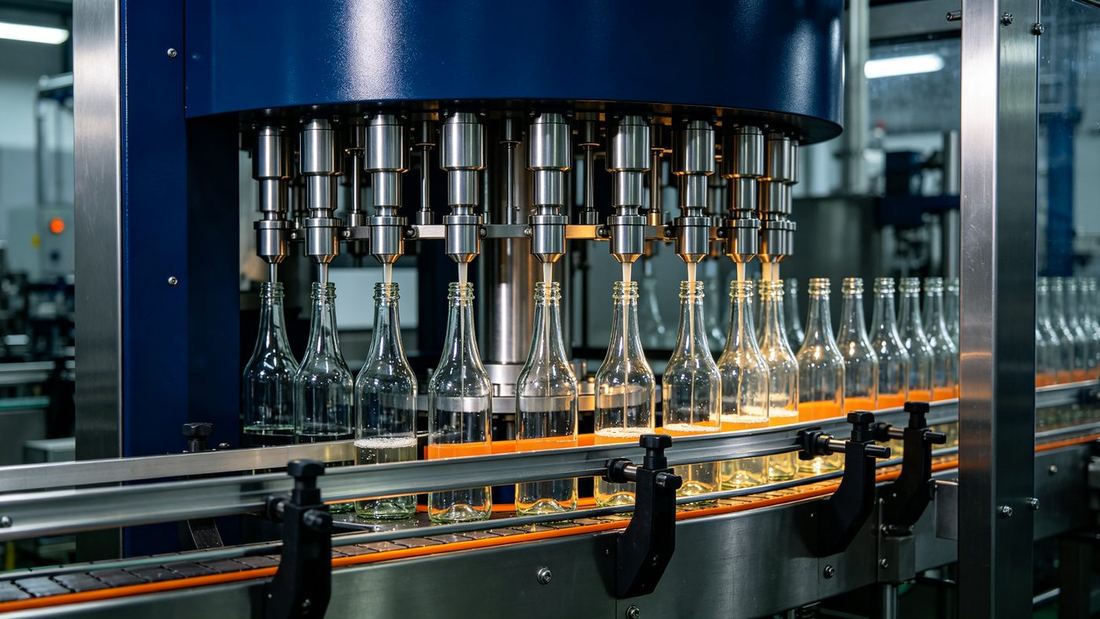
Yogurt, hummus, instant noodles, fruit cups, sauces and ready meals all ship in cups — yet the “cup filling machine” quotes buyers receive can describe two very different pieces of equipment. One supplier prices a rotary pre-made cup filling-sealing machine that fills cups delivered nested from a converter; another prices a rollstock form-fill-seal (RFS) machine that thermoforms the cup from film, fills it, lids it and punches it out in one loop. Both end up with a sealed cup, but they suit different volumes, cup geometries and budgets.
Buyers who buy the wrong one either overpay for tooling they never fill, or buy a cheap pre-made line that cannot hold throughput. This guide compares the two on the parameters that decide the purchase: product type, output, cup geometry, film cost, shelf life and budget. It is written for production managers and procurement specialists specifying liquid and viscous filling on a cup line.
Quick Comparison: Pre-Made Cup Sealer vs Rollstock Form-Fill-Seal
| Dimension | Pre-Made Cup Filler-Sealer | Rollstock Form-Fill-Seal (RFS) |
|---|---|---|
| How it works | Nested cups magazine-fed, filled, lidded with film roll, die-cut | Bottom web thermoformed into cups, filled, top web lidded, punched out inline |
| Typical output | 10–60 cycles/min; 1–4 lanes; ~1,000–12,000 cups/hr | 15–40 cycles/min, multiple cavities; ~3,000–20,000 cups/hr |
| Cup geometry | Any off-the-shelf round/square/rectangular cup; quick changeover | Cup shape is a forming mold; new shape = new mold set |
| Per-pack material cost | Higher: bought pre-formed cups + lidding film | Lower: forms only the film needed, no cup converter margin |
| Format changeover | 15–40 minutes for a new cup size | 1–4 hours for a new mold + film recipe |
| Shelf life / MAP | Nitrogen or gas flush lidding available; 7–30 days chilled | MAP vacuum/gas chamber integrated; up to 6–12 months for shelf-stable |
| Typical price band | Low–mid entry; semi-automatic from under 20k USD | Mid–high; molds and film handling add cost |
| Best fit | Low-medium volume, many cup sizes, co-packers, startup brands | Stable high-volume SKU, one or few cup formats, dairy/snack scale |
| Main limitation | You depend on a cup converter; cups occupy pallet storage | Long payback on low volume; mold lock-in |
How Each System Builds the Cup
A pre-made cup filling-sealing machine picks cups from a nested magazine, indexes them under filling nozzles, doses the product (piston for viscous, flowmeter for thin), applies a lidding film roll, heat-seals, and die-cuts the lid flush. It is modular: you can add a foil lidding station, a date coder, or a punch hole later. Cups come from a plastic thermoformer — usually PP, PET or rPET — in standard geometries.
A rollstock form-fill-seal machine heats a bottom film web and thermoforms each cup in a mold, fills it inline, lays a top film over it, seals under atmospheric, MAP or vacuum conditions, and punches the finished cup out of the web. Because the cup is made from raw film, there is no nested-cup inventory, but every cup shape is a machined mold set — the same trade-off as the thermoforming machines used for trays.
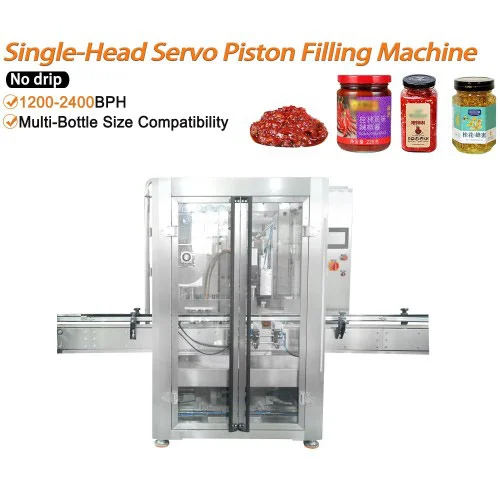
Scenario Framework: Which System Fits Your Product?
Work through these four conditions; they usually converge on one answer.
1. Output per cup format above roughly 5 million cups/year? Go rollstock RFS. The per-pack gap between bought cups and formed film typically saves 10–20% at scale, paying back the molds within 18–24 months. Below that volume, a pre-made sealer wins on cash and flexibility.
2. How many cup shapes change per week? More than 2–3 cup sizes weekly points to pre-made. Mold swaps on RFS run 1–4 hours each; pre-made sealers change over in 15–40 minutes. A co-packer running yogurt cups, sauce cups and fruit cups in one shift should not buy RFS.
3. Is the product hot-filled or aseptic? Hot-filled PP cups (jams, fruit) need a heat-resistant web and neck flattening on RFS; pre-made PP cups handle hot fill readily with the right lidding. Aseptic cup lines are almost always rollstock RFS with sterile tunnels — that is a separate, higher-capital specification.
4. Do you need a visible branded top film? Both run printed lidding. Pre-made lets you print lidding across many cup sizes cheaply; RFS needs the top web print registered to each cavity. If packaging design changes often, pre-made is more forgiving.
Selection Checklist Before You Ask for Quotes
- Product: name, viscosity (cP), pieces/particles (fruit bits, nuts), fill temperature.
- Cup material (PP/PET/rPET), dimensions, volume, and whether lidding is foil or film.
- Target cups per hour and cavities per cycle, not just “cups per day.”
- Shelf life target and required gas mix (e.g. 30/70 CO₂/N₂ for dairy, N₂ flush for snacks).
- How many cup formats per week and allowed changeover time.
- Filling principle: piston (viscous), flowmeter (thin/accurate), or auger (powder).
- Hygiene standard: dry, washdown, or 3-A/USDA sanitary execution.
- Upstream cup supply (pre-made converter) vs in-house film reels.
- Utility: compressed air, vacuum pump capacity, power, and (for RFS) cooling water.
- Date coding and reject requirements; weight control checkweigher downstream.
- Floor space: RFS runs 4–8 m long; semi-automatic pre-made sealers fit a bench.
- Budget band and payback target so suppliers size automation rather than upsell.
Common Buying Mistakes
Buying RFS for a 3-SKU pilot. Mold sets cost real money and sit idle on low volume. Start semi-automatic pre-made sealing, migrate to RFS as volume stabilizes.
Ignoring the dosing principle. A pre-made sealer with gravity dosing will foam on yogurt and splash on hummus. Specify piston or flowmeter based on product viscosity — the cup format is a separate decision.
Quoting the machine but not the molds and gas mixer. RFS molds, gas mixer and code printer can add 20–30%. Ask for a fully loaded line price.
Underestimating cup supply risk. Pre-made lines tie you to a cup converter’s minimum order and pallet logistics. If supply security matters, weight that in.
Bottom Line
Choose a pre-made cup filling-sealing machine when volume is low-to-medium, cup formats are many, or you are a co-packer changing SKUs daily — it is the low-risk, flexible entry. Choose a rollstock form-fill-seal machine when you have a stable high-volume cup SKU (roughly 5M+ cups/year per format), want the lowest per-pack material cost, and can absorb mold lead time. For hot-filled or aseptic cups at scale, RFS is the default.
SunAura builds both semi-automatic pre-made cup sealers and servo rollstock cup form-fill-seal machines, and integrates them with filling and packaging lines. Send us your cup drawing, product and target output — we will tell you which system pays back faster before you commit to a mold.
Specifying a cup line? Send your cup dimensions, product viscosity and target cups/hour to [email protected] or on WhatsApp for a pre-made vs RFS payback comparison. See our workshop and certifications before you compare suppliers.