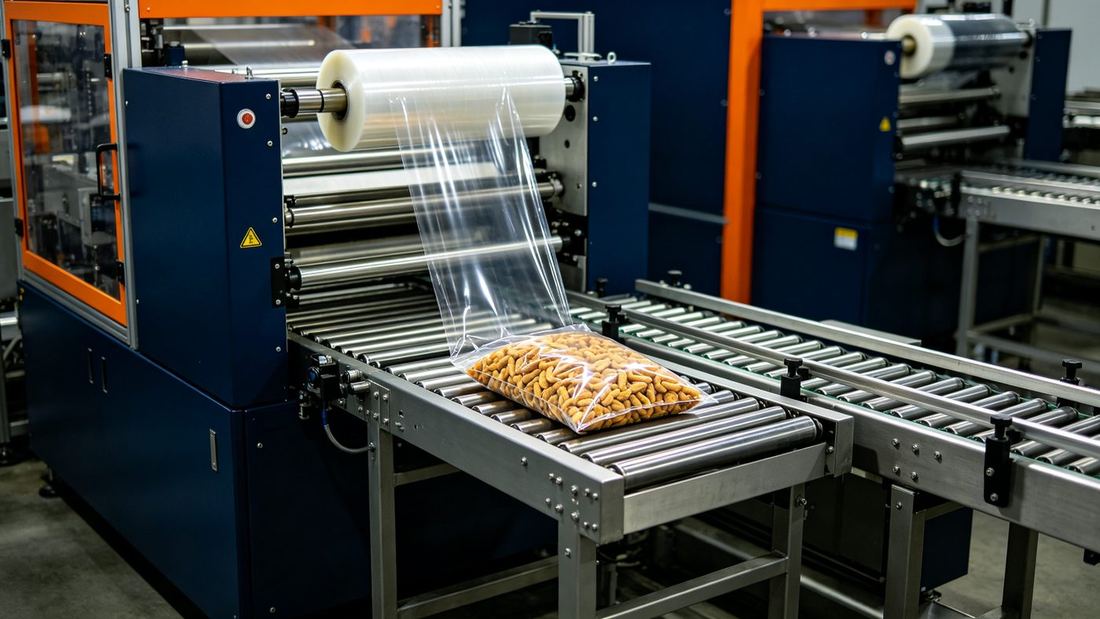
A horizontal flow wrapper (pillow packer) is the most common machine on a food or snack line, but buyers usually compare speed, film width and price — and ignore the drive system. The drive is the single biggest factor that decides whether you can run 2 SKUs a day or 20, and whether a 200-bag/min machine stays accurate at 40 °C shop-floor temperature. This guide compares mechanical cam, pneumatic and dual-servo flow wrappers and tells you which one your SKU mix and speed actually require.
Quick Comparison: Three Drive Types
| Dimension | Mechanical Cam | Pneumatic Actuated | Dual-Servo (Film + Cross-Seal) |
|---|---|---|---|
| Top speed | 40–120 packs/min | 30–80 packs/min | 80–250+ packs/min |
| Changeover between SKUs | 30–90 min (cam tracks, hand dial) | 20–40 min (air settings, formers) | 2–10 min (recipe recall, no tools) |
| Registration accuracy | ±2–3 mm, drifts with wear | ±1.5–2 mm | ±0.5–1 mm, optical eye |
| SKU mix per shift | 1–3 | 2–5 | 8–20 |
| Film waste at changeover | 30–80 m | 20–50 m | 5–15 m |
| Upfront cost | Baseline | +10–20% | +60–120% over baseline |
| Running cost | Low (one motor, air only for jaw open) | High (compressed air 24/7) | Medium (servos off at idle) |
| Noise / vibration | Loud, mechanical wear | Air-chatter, leaks | Quiet, smooth |
| Best fit | Single-SKU, low-speed | Short runs, thin products | Co-packers, multi-SKU, high-speed |
How to Choose, Step by Step
1. How many SKUs do you run per day? A bakery running one bread length all day does not need servo. A co-packer running 10 SKUs in an 8-hour shift loses more money to changeover time than the servo upgrade cost in under a year. Count SKUs per shift, not per year.
2. What is your target packs per minute? Below 80 packs/min, mechanical or pneumatic is usually enough. Above 120 packs/min, the cross-seal jaw must accelerate and decelerate every cycle; mechanical cams can do it, but they are fixed to one product length. Dual-servo lets the jaw speed change with the recipe.
3. Is your product delicate or variable in length? Chocolate bars, biscuits and energy bars vary in length by a few millimetres. Mechanical cam packs fixed length; dual-servo reads the product detector and adjusts jaw position in real time, crushing fewer bars.
4. Do you need optical registration on printed film? Printed film with brand graphics needs the cut to land on the print mark within ±1 mm. Mechanical cam drifts with wear; dual-servo with an optical eye holds registration across 100,000 packs.
5. How much film waste can you tolerate? On a co-packer line, each mechanical changeover wastes 30–80 m of film. At 10 changeovers a week that is 300–800 m — on high-barrier film that is real money.

Selection Checklist Before You Ask for Quotes
- Number of SKUs per shift and per week.
- Target packs per minute at each SKU.
- Product length, thickness and temperature range.
- Whether printed film with registration marks is used.
- Film type (OOP, PET/PE, barrier, N2-flushed).
- Product delicacy (does the jaw crush it?).
- Available floor space and upstream feeder type.
- Compressed air availability and quality.
- Skill level of operators (recipe recall vs dial turning).
- Film waste budget per changeover.
- Spare parts and local service support.
- Whether the line will later feed a cartoner or case packer.
Common Buying Mistakes
Buying a top-speed servo wrapper for a single-SKU plant. The servo HMI and recipe bank sit unused; you pay 60–120% more for hardware you will never use. If you run one bread, biscuit or noodle length all month, a mechanical cam wrapper is the right machine.
Buying a cheap pneumatic wrapper for a high-speed line. Pneumatic jaws chatter at 80 packs/min and air leaks raise the factory bill. Pneumatic makes sense below 60 packs/min and for short runs; above that it costs more in energy than it saves in purchase price.
Ignoring film waste at changeover. Buyers compare machine price but forget that film cost at changeover is where co-packers bleed money. A servo wrapper that wastes 10 m per changeover vs a mechanical one that wastes 60 m pays for the upgrade in 3–6 months on high-barrier film.
Bottom Line
Single-SKU, low-speed, fixed product: mechanical cam. Short runs, thin products, below 60 packs/min: pneumatic. Multi-SKU co-packers, above 120 packs/min, printed film or delicate products: dual-servo. Match the drive to your SKU count and speed, not to the brochure headline number.
SunAura builds mechanical, pneumatic and dual-servo pillow packaging machines, and integrates them upstream with multihead weighers and downstream conveyors into complete lines. Send us your SKU list and packs-per-minute target — we will spec the drive you actually need.
Planning a flow wrapper and unsure whether servo is worth it? Send your SKU count and packs/min to [email protected] or on WhatsApp. We will model the changeover-time and film-waste payback against your product mix.