
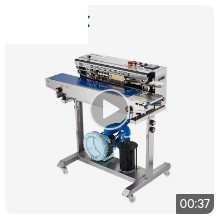
A bottle that arrives at a customer’s door leaking sauce through the cap is a returned container, a stained carton, and a failed shelf test. Induction cap sealing is the most reliable front-end answer: an electromagnetic coil heats the aluminum foil liner inside the cap, bonding it to the bottle mouth while the cap stays on. It gives tamper evidence, leak protection, and controlled evaporation for sauces, oils, supplements, chemicals, and pharmaceutical liquids.
Yet buyers routinely buy the wrong induction sealer class. A hand-held unit quoted for a 120-bpm juice line will never hold a consistent seal; a high-speed water-cooled conveyor sealer bought for a two-shift spice operation is wasted capital. This guide compares the four machine classes buyers actually receive quotes for — hand-held, bench-top continuous, inline air-cooled conveyor, and high-speed water-cooled — on the parameters that decide the purchase: cap diameter, throughput, seal consistency, and cost. It is written for production managers and procurement specialists specifying sealing on a filling line.
Quick Comparison: Four Induction Sealer Classes
| Dimension | Hand-Held | Bench-Top Continuous | Inline Air-Cooled Conveyor | High-Speed Water-Cooled |
|---|---|---|---|---|
| Typical output | A few bottles per minute, operator-fed | 20–60 bottles/min, short conveyor | 60–200 bottles/min, integrated into line | 200–600+ bottles/min, high-speed bottling |
| Cap diameter range | 15–120 mm with changeable heads | 20–120 mm | 20–180 mm; larger heads available | 20–120 mm optimized; large necks need special coils |
| Power range | 0.5–2 kW | 1.5–3 kW | 3–6 kW | 6–15 kW+ |
| Seal consistency | Operator-dependent; varies per bottle | Good for small batches; speed fixed | Repeatable with set power, gap and speed | Tightest repeatability; closed-loop parameters |
| Best fit | Pilot runs, small batch, e-commerce SKUs, backup unit | Semi-automatic lines, contract packers, multiple short runs | Most food, cosmetic, chemical automatic lines | Water, juice, edible oil, dairy high-volume bottling |
| Relative price | Lowest | Low–medium | Medium | High (coil, chiller, cabinet controls) |
| Key limitation | Not a production tool; no process record | Cannot tie into upstream filler/capper signals | Air cooling limits continuous duty above ~6 kW | Overkill and poor value below ~150 bpm |
How the Seal Actually Works
The cap already contains a foil liner — the machine does not add it. The induction head generates an alternating magnetic field; the aluminum foil absorbs the energy, heats up, and melts the wax layer that bonds the foil to the bottle lip. After cooling, the foil stays on the mouth when the customer unscrews the cap. A good seal shows uniform foil contact, no burn-through, and no wrinkled edges.
Three settings decide whether that seal appears on every bottle: output power (matched to foil thickness and glass vs plastic neck), head-to-cap gap (typically 2–5 mm; too far and the seal is weak, too close and the head risks damage), and residence time (controlled by conveyor speed). Hand-held units ask the operator to guess all three; inline machines lock them as recipes.
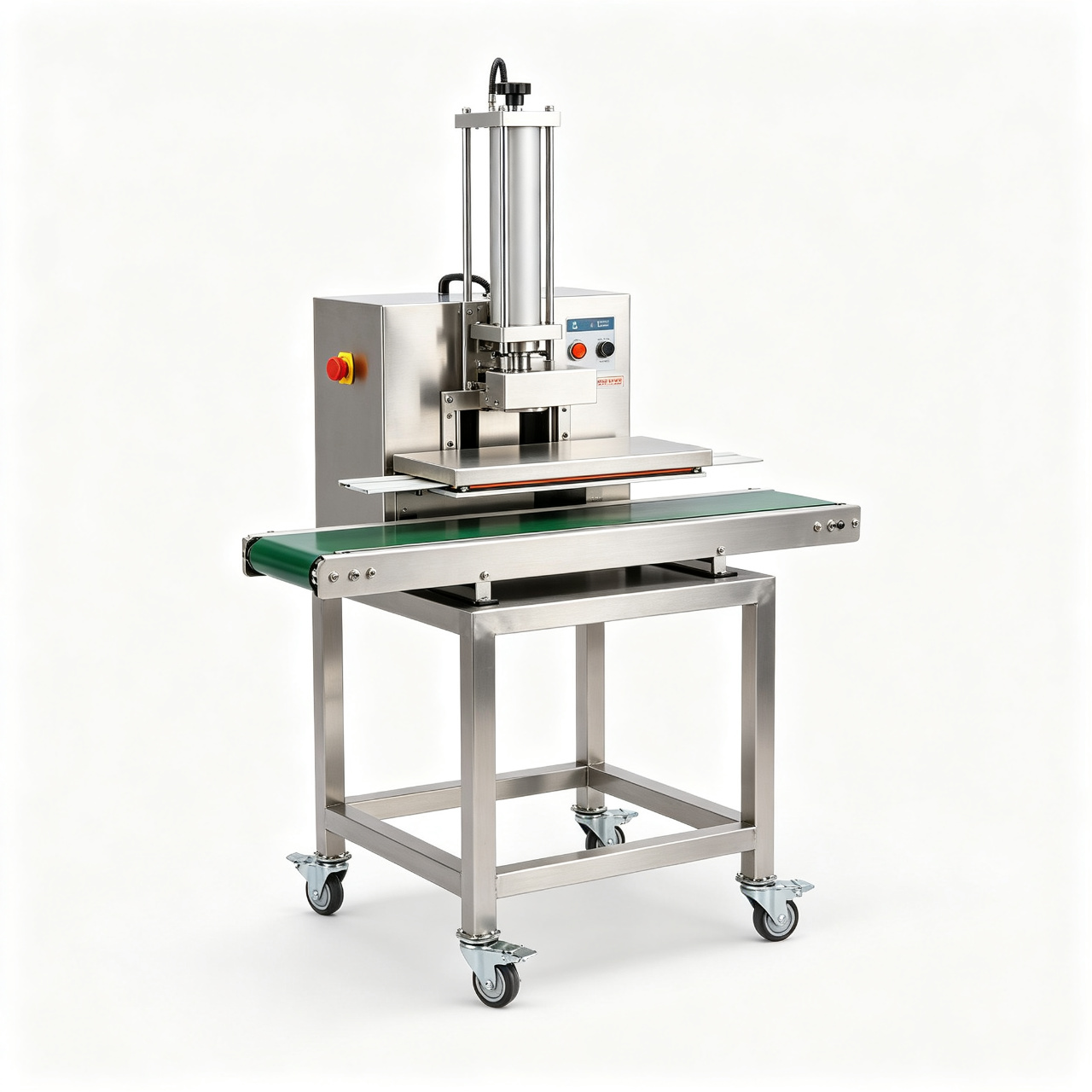
Decision Framework: Pick the Class by Throughput and Duty
Choose hand-held when your total output is under ~1,000 bottles per day, you run pilot batches, or you need a backup unit for rejects. It is not an automatic line component — there is no interlock with the capper and no production data.
Choose bench-top continuous when you run semi-automatic filling and capping at 20–60 bpm and change products several times a day. It is the right tool for a contract packer or a growing brand that has not committed to a fully automatic line.
Choose inline air-cooled conveyor when you integrate after an automatic capper at 60–200 bpm on sauces, edible oils, lotions, supplements, or chemicals. This covers the majority of SunAura filling and capping lines.
Choose water-cooled high-speed when you run above ~200 bpm on bottled water, juice, or dairy, where the unit runs two or three shifts a day and air cooling cannot remove the coil heat fast enough to hold stable parameters.
Liner and Material Checks Buyers Miss
The machine is only half the system. Before you seal the RFQ, confirm with your cap supplier:
- Liner type: foil-backed wax (induction), PS foam liner (non-induction), or pressure-sensitive liner — only foil-backed induction liners work with this machine
- Neck material: PET, HDPE, glass — each needs a different power/recipe preset
- Product temperature: hot-filled sauces need longer cooling before the seal is judged
- Neck diameter range across your SKUs, and whether one coil covers the full range or you need change heads
- Required process documentation: power log, seal reject rate, and batch records for audit (see our filling and capping line budget guide)
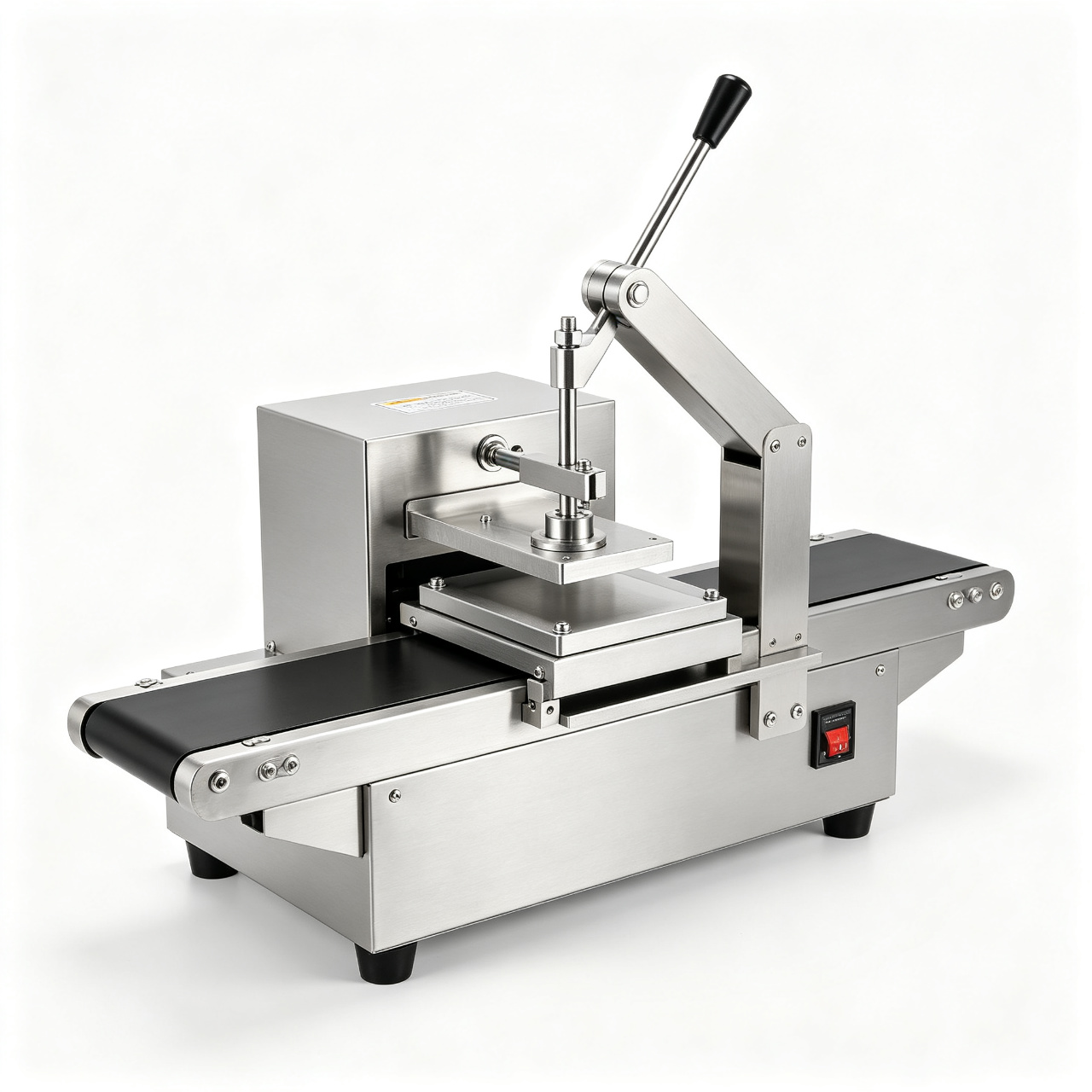
Common Selection Mistakes
Buying power by kW alone. A 6 kW head on the wrong coil diameter under-seals a 100 mm neck. Match coil ID to the largest cap in your range first, then size the power.
Forgetting the cap supplier. Induction sealing fails most often because the liner inside the cap is wrong, not because the machine is weak. Ask for seal samples from your actual caps before commissioning.
No reject integration. An induction sealer that does not signal a checkweigher or rejector lets weak-seal bottles leave the line. Plan the detection point in the line layout, not after installation.
Not sure which sealer class your caps and bottles need? Send us your cap drawings, liner type, bottle material, and target bph. Our team will recommend the machine class, test seals on your actual containers, and quote within 48 hours. Contact [email protected] or use the contact form.
Bottom Line
Choose hand-held for pilot and small batches, bench-top for semi-automatic lines up to 60 bpm, inline air-cooled conveyor for most automatic food and chemical lines between 60 and 200 bpm, and water-cooled high-speed for high-volume water, juice, and dairy above 200 bpm. Always match the coil to your largest cap, confirm the foil liner with your cap supplier, and plan reject integration at the line-layout stage.
SunAura builds induction sealing machines integrated with piston and overflow fillers, servo cappers, and checkweighers. See our build capacity in the workshop display, review compliance in certifications, and read more buyer guidance in the help center.