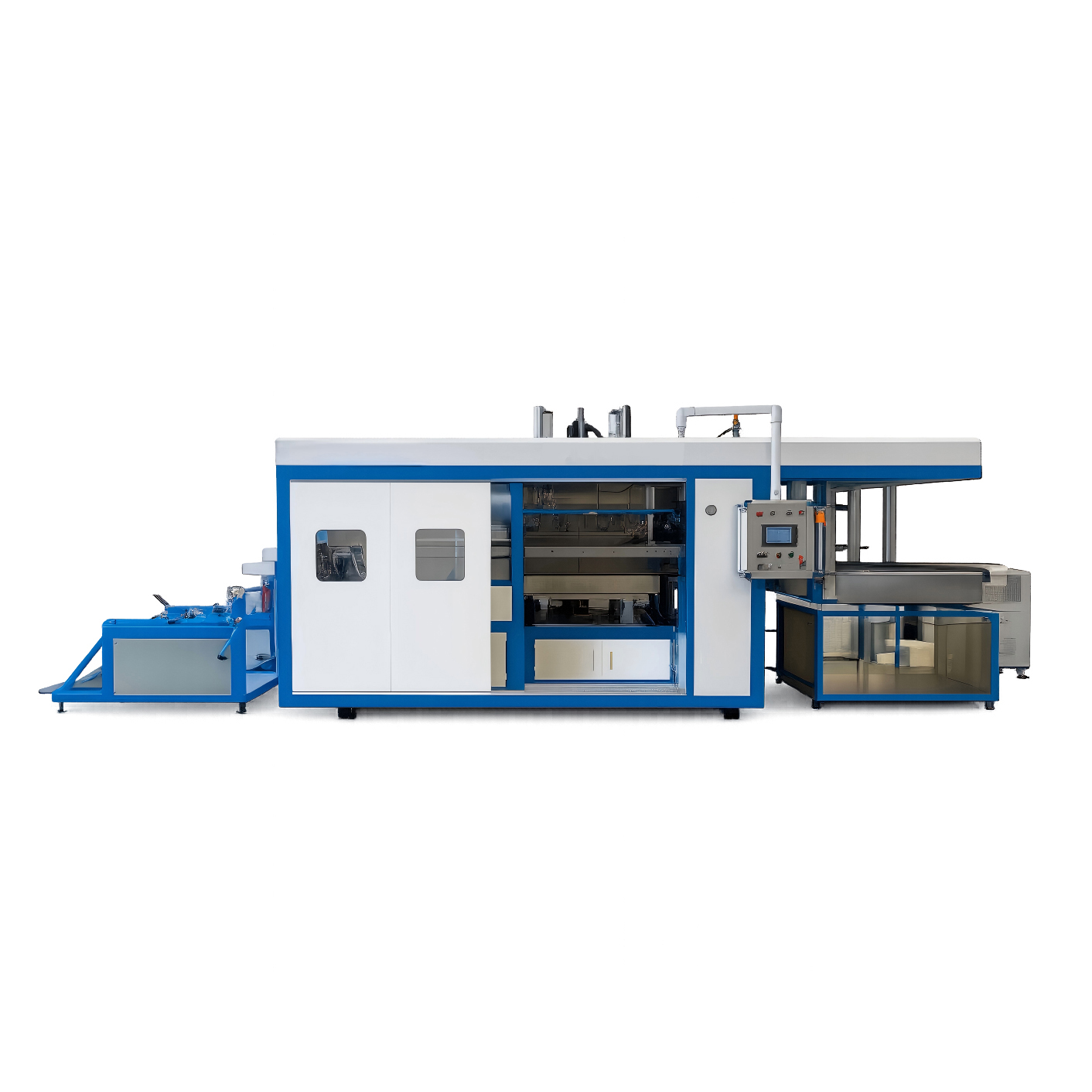
When a food or pharmaceutical buyer asks for a “thermoforming machine,” quotes rarely describe the same equipment. One supplier prices a rollstock thermoformer that stretches a flat web into every pack; another prices a tray sealer that fills pre-made trays; a third pushes a vacuum skin pack (VSP) line that drapes film over the product like a second skin. All three are sold as “thermoforming packaging,” and they behave, cost and scale completely differently.
Choosing the wrong one shows up as a 30% film bill overrun, a tooling investment that locks you into one pack size, or a throughput floor you cannot grow past. This guide compares the three systems buyers actually receive quotes for — rollstock thermoformer, pre-made tray sealer, and vacuum skin packer — on the parameters that decide the purchase: product type, required shelf life, output, format flexibility, and budget. It is written for production managers and procurement specialists specifying packaging on a turnkey packaging line.
Quick Comparison: Three Thermoforming-Based Pack Systems
| Dimension | Rollstock Thermoformer | Pre-Made Tray Sealer | Vacuum Skin Pack (VSP) |
|---|---|---|---|
| How it works | Bottom web heated, vacuum/air formed into pockets, filled inline, top web sealed and cut | Pre-formed trays loaded automatically or by hand, filled, lidded and cut | Product sits on a tray or board; top film is heated and vacuum-draped tightly over it |
| Typical output | 15–60 cycles/min, multiple cavities per cycle | 5–20 cycles/min; speed depends on tray loading | 8–25 cycles/min; skin film handling is slower |
| Shelf life (MAP) | 3–21 days with modified atmosphere; vacuum up to 12–18 months | 3–21 days MAP; similar barrier films | 7–30 days refrigerated; visual shelf appeal premium |
| Format flexibility | New tray size = new forming die set; one base web across sizes within width | Wide range of off-the-shelf tray sizes; quick changeover | Product shape drives film drape; irregular cuts are the strength |
| Film / pack cost | Lowest per pack: forms only the film needed, no pre-made tray margin | Higher: you pay for pre-formed trays plus lidding film | Highest: high-clarity skin film + tray/board; premium retail price justifies it |
| Typical price band (line) | Mid-high; tooling per cavity set added | Low-mid entry; semi-automatic models available | High; specialized film control and servo drape |
| Best fit | Stable SKU, high volume, meat/cheese/snack/medical packs | Low-to-medium volume, many tray sizes, contract packing | Premium meat, seafood, cheese, fresh retail where look sells |
| Main limitation | Long payback on low volume; die changeover downtime | You buy trays from a converter; tray supply risk and pallet volume | Film cost and scrap; not suited to hard, sharp products that puncture film |
How Each System Actually Builds the Pack
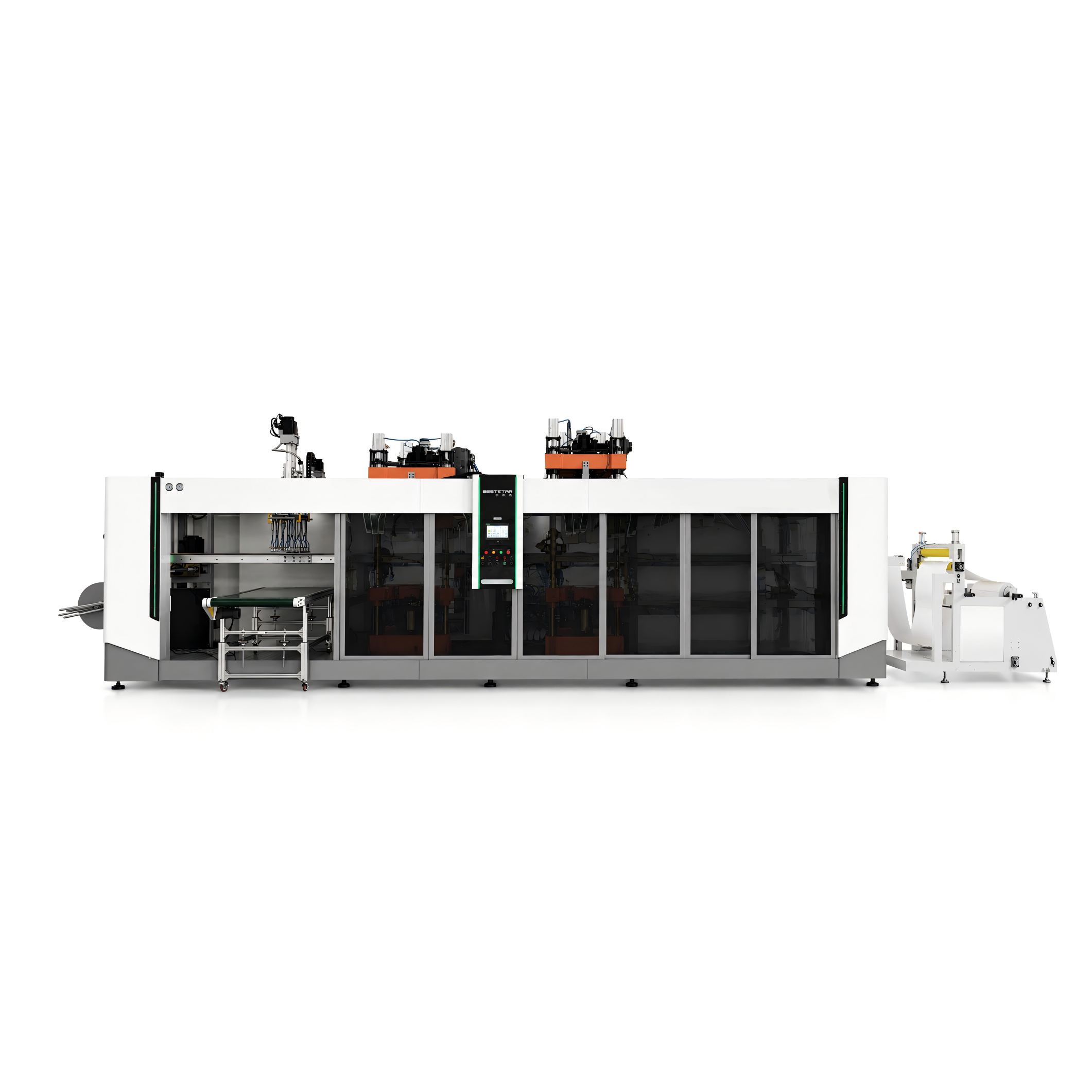
A rollstock thermoformer runs from two film reels. The bottom web is heated and pulled over a mold cavity; vacuum or compressed air draws the film down into the pocket. The product is deposited into the formed pocket inline, a top web seals over it under vacuum or modified atmosphere (MAP), and a die cuts the individual packs. Because the pack is formed from raw film, there is no separate tray inventory — but every pack dimension is a machined die set.
A pre-made tray sealer skips forming entirely. Trays arrive nested from a converter; a magazine feeds them, a robot or operator fills them, a film lidding web seals the flange, and a cutter separates the lids. Changeover between tray sizes is a recipe plus a few minute adjustments, which is why co-packers with 20 tray formats on one shift favor it.
A vacuum skin pack uses the top web as the product: the loaded tray moves under a heated, flexible film, and vacuum pulls the film down so it clings to the product and seals to the flange. The result looks like the product is floating in clear plastic — excellent for retail meat and seafood — but the skin film is expensive and sharp bones or hard edges can puncture it.
Scenario Framework: Which System Fits Your Product?
Work through these four conditions in order. They usually converge on one answer.
1. Volume per SKU above roughly 1 million packs/year? Go rollstock. The per-pack film and tray-cost gap compounds fast: rollstock typically saves 15–30% versus bought trays at high volume, and that saving pays back the die sets within 12–24 months. Below that threshold, the die investment sits idle and a tray sealer wins on cash.
2. How many pack sizes change per week? More than 2–3 format changes weekly points to a pre-made tray sealer. Die swaps on a rollstock machine run 1–4 hours each, plus film and recipe change; tray sealers often change over in 15–30 minutes. A contract packer running 15 SKUs a day should not buy a rollstock thermoformer.
3. Does the product need retail shelf appeal? Meat, seafood, cheese and premium ready meals sold on appearance belong on skin pack. The draped film shows color and marbling directly, which moves product at retail in a way an opaque MAP tray does not. Industrial bulk packs do not need it.
4. Required shelf life? All three pull vacuum and can inject MAP gas mixes, so shelf life is mostly about film barrier (EVOH) and seal integrity, not the machine. For 12+ months of vacuum shelf life — cured meats, coffee, medical devices — a rollstock vacuum thermoformer with high-barrier web is the default.
Selection Checklist Before You Ask Suppliers for Quotes
Send these twelve numbers with every RFP; suppliers who cannot answer all of them are guessing at your line:
- Product: name, dimensions, weight per pack, temperature at fill, and whether it has bones, shells, oil or sauces.
- Pack inner dimensions and pack depth — depth over 35 mm requires plug-assist forming.
- Target cycles per minute and cavities per cycle, not just “packs per hour.”
- Shelf life target and the required gas mix (e.g. 70/30 N₂/CO₂ for red meat).
- Film structure you intend to run (PET/PE, PA/PE, EVOH barrier) and its width and thickness range.
- How many format changes per week and the allowed changeover time.
- Upstream filler and downstream cutter/checkweigher you need integrated (see our turnkey line offering).
- Utility: compressed air pressure, vacuum pump capacity (m³/h), power and cooling water.
- Hygiene standard: dry environment, wet washdown, or USDA/3-A sanitary execution.
- Reject and gas-flush monitoring requirements, and whether data logging for audits is needed.
- Floor space and ceiling height; thermoformers run 6–12 m long and need film loading access.
- Budget band and payback target, so suppliers size the automation rather than upselling.
Common Buying Mistakes
Buying rollstock for a 3-SKU pilot. Die sets cost real money and sit unused during low-volume runs. Start semi-automatic tray sealing, then migrate to rollstock as SKU volume stabilizes.
Ignoring plug assist on deep packs. Vacuum-only forming thins the base; the pack bursts at the corner. Specify positive plug assist whenever pack depth exceeds 35 mm.
Quoting the machine but not the tooling and gas mixer. The die sets, vacuum pump oversizing, gas-mixing unit and code printer can add 20–35% to the headline price. Ask for a fully loaded line price including change parts.
Underestimating film logistics. Rollstock ties you to web width and thickness tolerance; a tray sealer lets you multi-source trays. If film supply security matters, weight that in.
Bottom Line
Choose a rollstock thermoformer when you have stable, high-volume packs (roughly 1M+ packs/year per format), want the lowest per-pack cost, and can absorb tooling lead time. Choose a pre-made tray sealer when volume is low, tray formats are many, or you are a co-packer who changes SKUs daily. Choose a vacuum skin pack only when retail appearance directly commands a price premium, and your product has no sharp points that can puncture the skin film.
SunAura builds servo-driven rollstock thermoformers and semi-automatic tray sealers for food, cosmetic and medical packers, and integrates them with fillers, checkweighers and sealing equipment on a single line. Send us your pack drawing, product and target output — we will tell you which system pays back faster before you commit to a die set.
Talk to our packaging engineers. Send your pack dimensions, product and target output to [email protected] or message us on WhatsApp for a rollstock vs tray-sealer payback comparison. See our workshop and certifications before you ask the next supplier for quotes.