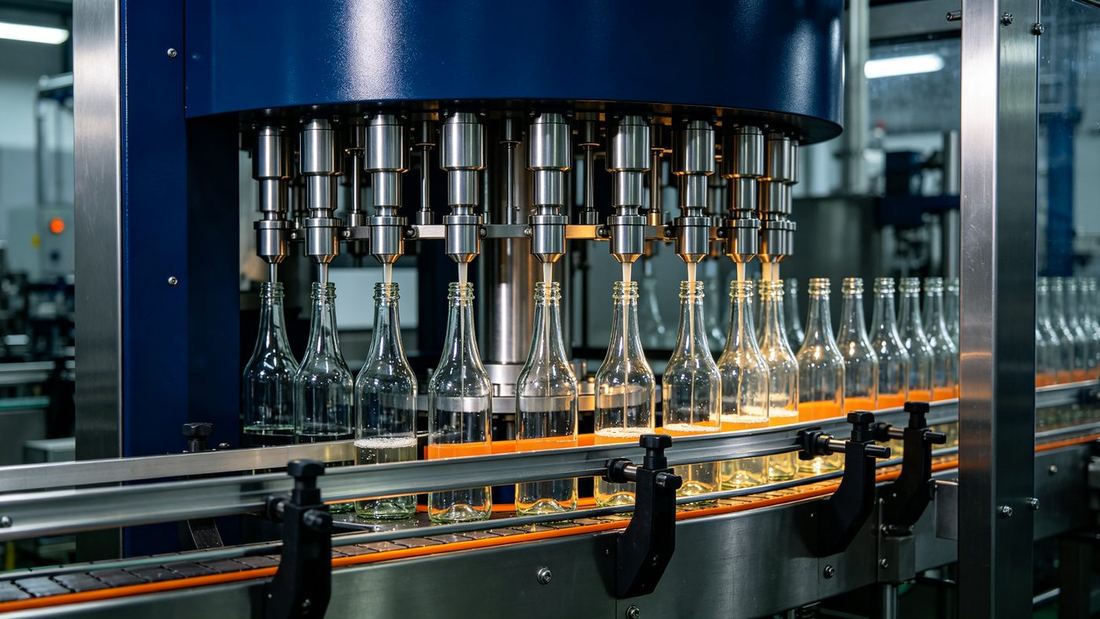
When a buyer sends us an RFQ that says “automatic bottle filler, 500 ml, 2,000 bph, accuracy ±0.5%”, the first question is never the price. It is: what are you actually filling? Water, juice, honey, sauce, oil, solvent, or an essential oil with suspended particles all run on fundamentally different machines. A gravity filler quoted for a 3,000 cPs sauce will foam, drip, and miss its volume within a week; a piston filler quoted for foamy beer will crush the foam and overflow the neck.
This guide compares the four mainstream automatic liquid dosing principles — gravity, overflow, piston, and pump (peristaltic / gear) — on the parameters that actually decide a purchase: viscosity range, fill accuracy, foam handling, particulate tolerance, speed, washdown, and price. It is written for production managers, plant engineers, and procurement specialists who are comparing liquid filling machines and want a neutral basis to separate the right machine from the right sales pitch.
Quick Comparison: Four Dosing Principles Side by Side
| Dimension | Gravity / Time-Gravity | Overflow (Level) | Piston (Volumetric) | Pump (Peristaltic / Gear) |
|---|---|---|---|---|
| How it doses | Valve opens for a timed interval; liquid flows by head pressure | Fills to a fixed neck level, vacuum returns excess liquid | Precision cylinder draws a fixed volume and pushes it into the bottle | Tubing or gear displacement delivers a fixed volume per rotation |
| Best viscosity range | 1–50 cPs (water-thin) | 1–100 cPs; low- to medium-viscosity | 50–100,000+ cPs; thin to pastes and chunky sauces | 50–10,000 cPs; peristaltic handles thin/clean liquids, gear handles viscous oils |
| Typical fill accuracy | ±1–1.5% (volume varies with level and foam) | ±0.25–0.5% by level, not volume | ±0.2–0.5% by true volume | ±0.5–1% per cycle; perishable tubing drift on peristaltic |
| Best product | Water, spirits, dilute chemicals, low-value thin liquids | Clear still liquids where neck level must match: water, juice, oil, glass bottles | Sauces, honey, cream, shampoo, lotions, gels, particulate suspensions | Pharma small doses, essential oils, corrosive chemicals, sterile single-use paths |
| Foam behavior | Poor — time dosing amplifies foam errors | Good — submerged fill tube and overflow return calm foam | Moderate — depends on valve design; can be sensitive to aerated pastes | Moderate — gear pumps shear aerated products; peristaltic is gentle |
| Realistic speed | Up to ~300 bph per valve on narrow neck products; high on large bottles | 1,000–6,000 bph on bottled water and oil lines | 30–60 bph per piston valve on thick products; 8–16 heads scale up | Low–medium; peristaltic 20–60 bph per head; gear pumps higher |
| Relative price | Lowest (simple valves, few moving parts) | Medium (needs return manifold, vacuum) | Medium–high (precision cylinders, seals, servo options) | Low–medium per head; peristaltic tubing is a recurring consumable |
| Key weakness | Only accurate on thin, non-foamy, non-viscous liquid | Does not weigh or measure volume — bottle geometry must be consistent | Slower on thin low-value liquids; wetted seals need scheduled replacement | Peristaltic tubing wears; gear pumps shear sensitive products |
How Each Principle Actually Works
Time-gravity fillers hold product in an overhead tank and open a nozzle valve for a set number of milliseconds. Output depends on head pressure, viscosity, and bottle back-pressure. They are cheap and easy to clean, but any viscosity drift between batches changes the filled volume, which is why they are reserved for thin, forgiving products.
Overflow fillers push liquid in until the bottle is full, then siphon the surplus back to the tank through a vent tube. The bottle always ends at the same neck height, regardless of small volume variations — which is why bottled water, cooking oil, and clear juice lines use them. They measure level, not weight; if your bottles have inconsistent bottom geometry, the net volume still varies.
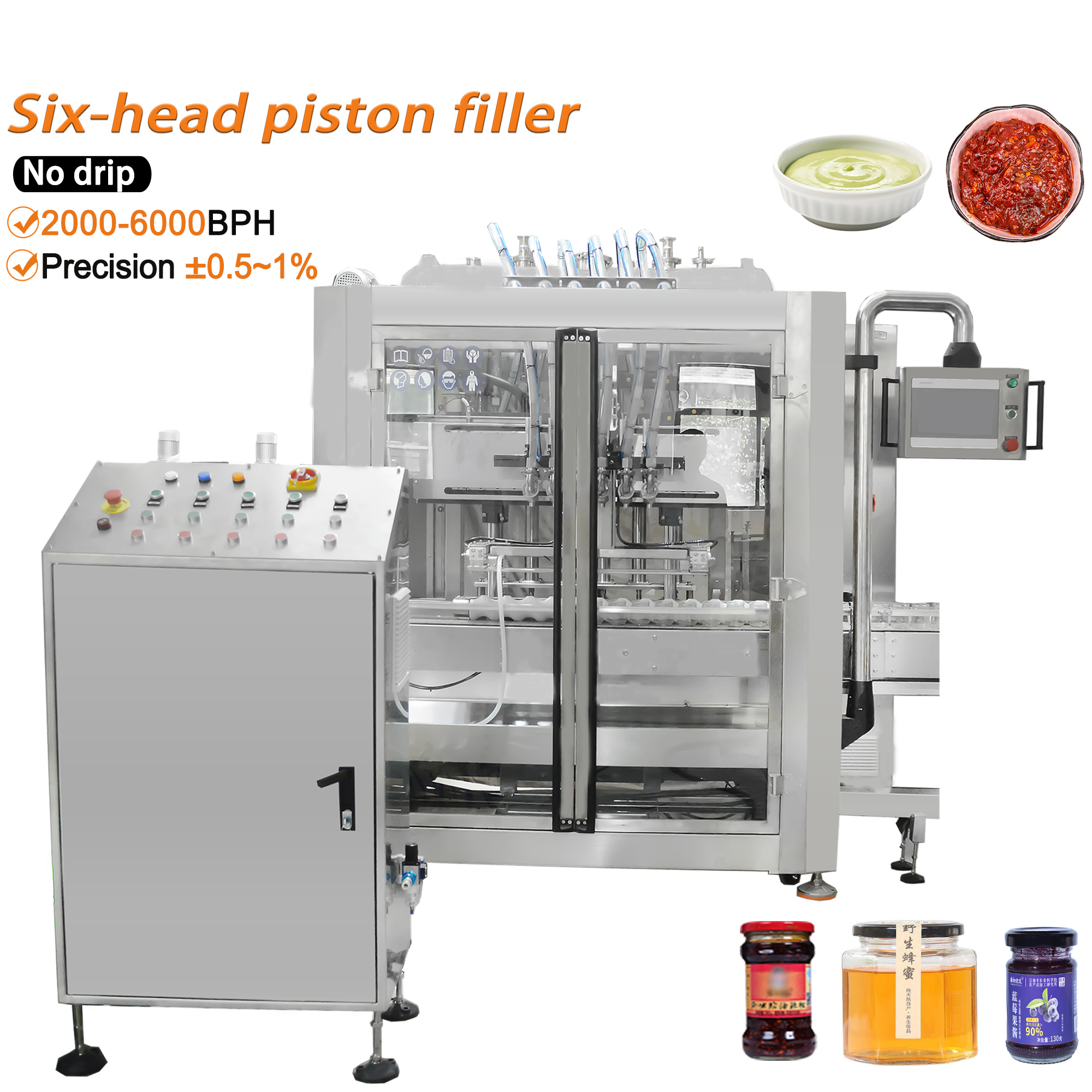
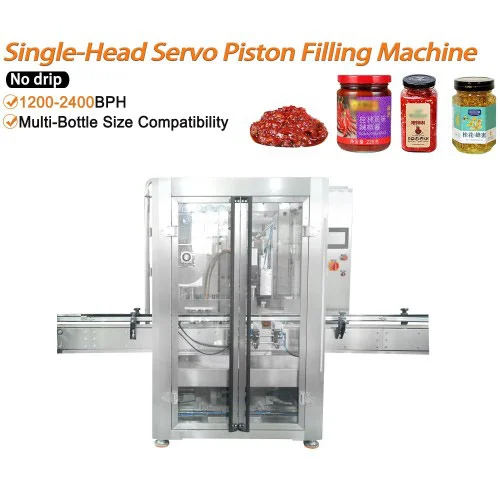
Piston (volumetric) fillers use a precision stainless cylinder. At the intake stroke, product is drawn in through a check valve; at the discharge stroke, the exact cylinder volume is pushed into the bottle. Viscosity barely changes the delivered volume, which is why honey, salsa, shampoo, and cream sit on piston fillers. Servo-driven pistons add recipe recall and volume adjustment from the HMI instead of hand-wheels.
Pump fillers come in two flavors. Peristaltic pumps squeeze food-grade tubing; the product never touches the pump, which makes them the default for pharma, essential oils, and corrosive chemicals — but tubing is a wear part and volume drifts as it flexes. Gear / lobe pumps meter viscous oils, syrups, and lotions at higher speed, but they shear delicate products and will aerate low-viscosity liquids.
Decision Framework: Pick the Principle by Your Product, Not by Speed
Choose gravity when your product is water-thin (under ~50 cPs), still, and low margin — bottled water, dilute window cleaner, spirits in narrow necks — and your accuracy expectation is ±1%. Paying for a piston filler on this product class is wasted capital.
Choose overflow when you fill clear still liquids into glass or rigid PET where the visible neck level must match exactly — cooking oil, juice, still water — and bottle geometry is consistent. If you sell by net weight rather than visible level, overflow alone is not enough; add a checkweigher.
Choose piston when viscosity is above ~50 cPs, the product has particulates (salsa, dressing with seeds, fruit pieces), foam must be controlled, or you need true volumetric accuracy of ±0.2–0.5% on sauces, honey, gels, and pastes. This is the most common correct choice for food sauce, cosmetic cream, and chemical paste lines.
Choose peristaltic pump when the product is small-dose, sterile, corrosive, or single-use-hygiene-critical — e-liquid, essential oils, reagents — and your throughput is under ~60 bph per head. Choose gear/lobe pump for viscous oils and syrups at higher throughput where shear is acceptable.
What to Confirm Before You Send the RFQ
Suppliers quote very different machines depending on the answers to these questions. Have them ready:
- Product name and viscosity in cPs (measured at filling temperature — hot honey and cold honey are different products)
- Specific gravity, and whether the product contains particulates (size, percentage)
- Foam behavior: still, lightly foaming, or heavily aerated (beer, whipped products)
- Bottle/jar material, neck diameter, fill volume range, and required headspace
- Target speed in bottles per hour, and how many SKUs you change over per day
- Required accuracy: by level, by volume, or by net weight (the last one needs a checkweigher, not just a filler)
- Washdown environment: dry, wipe-down, or full CIP / IP65 washdown
- Food-contact material: 3A sanitary, SUS316L, or chemical-resistant build
- Budget band and whether the line must integrate with capping, labeling, and checkweighing — see our filling and capping line budget guide for realistic ranges
Common Selection Mistakes
Specifying ±0.2% accuracy on a gravity filler. Time-gravity machines cannot hold that tolerance on any but the thinnest still liquids. The supplier will quote the machine; your QA team will fight it forever. Match the accuracy claim to the principle.
Buying a piston filler for foamy thin liquids. Piston valves can introduce aeration, and on water-thin products a piston machine costs 2–3x more than an overflow filler for the same result.
Ignoring the wetted parts and consumables. Piston seals and peristaltic tubing wear out. Ask the supplier for the expected seal/tubing life and the price of spare parts before you compare total cost of ownership — not just the machine price.
Forgetting bottle consistency. Overflow fillers assume uniform bottles. Recycled glass or inconsistent preforms will show up as net-weight drift that no filler tuning fixes.
Not sure which dosing principle your product needs? Send us the product, viscosity, bottle size, and target bph. Our filling application engineers will recommend the principle, run a sample test on your product, and quote the correct configuration within 48 hours. Contact [email protected] or use the contact form.
Bottom Line
Choose gravity for thin, still, low-value liquids under ~50 cPs; choose overflow for clear still products where visible neck level matters; choose piston for anything thicker than ~50 cPs, chunky, or needing true volumetric accuracy; choose peristaltic pump for small-dose sterile or corrosive products. Start from your product’s viscosity and foam behavior, lock the principle, then compare speed, heads, and price. Compare dosing principles on the same product first, and you will never again receive two “filler” quotes that cannot be reconciled.
SunAura builds piston, overflow, and pump filling machines integrated with capping, labeling, and checkweighing into complete packaging lines. See our build capacity in the workshop display, review compliance in certifications, and read more buyer guidance in the help center.