
Bottle & Jar Capping Machines — Torque-Controlled, 50–600 BPM
SunAura builds screw capping, press-on capping and rotary capping machines that seal bottles, jars, tubes and pails at consistent torque — integrated with our fillers as a single filling-capping line.
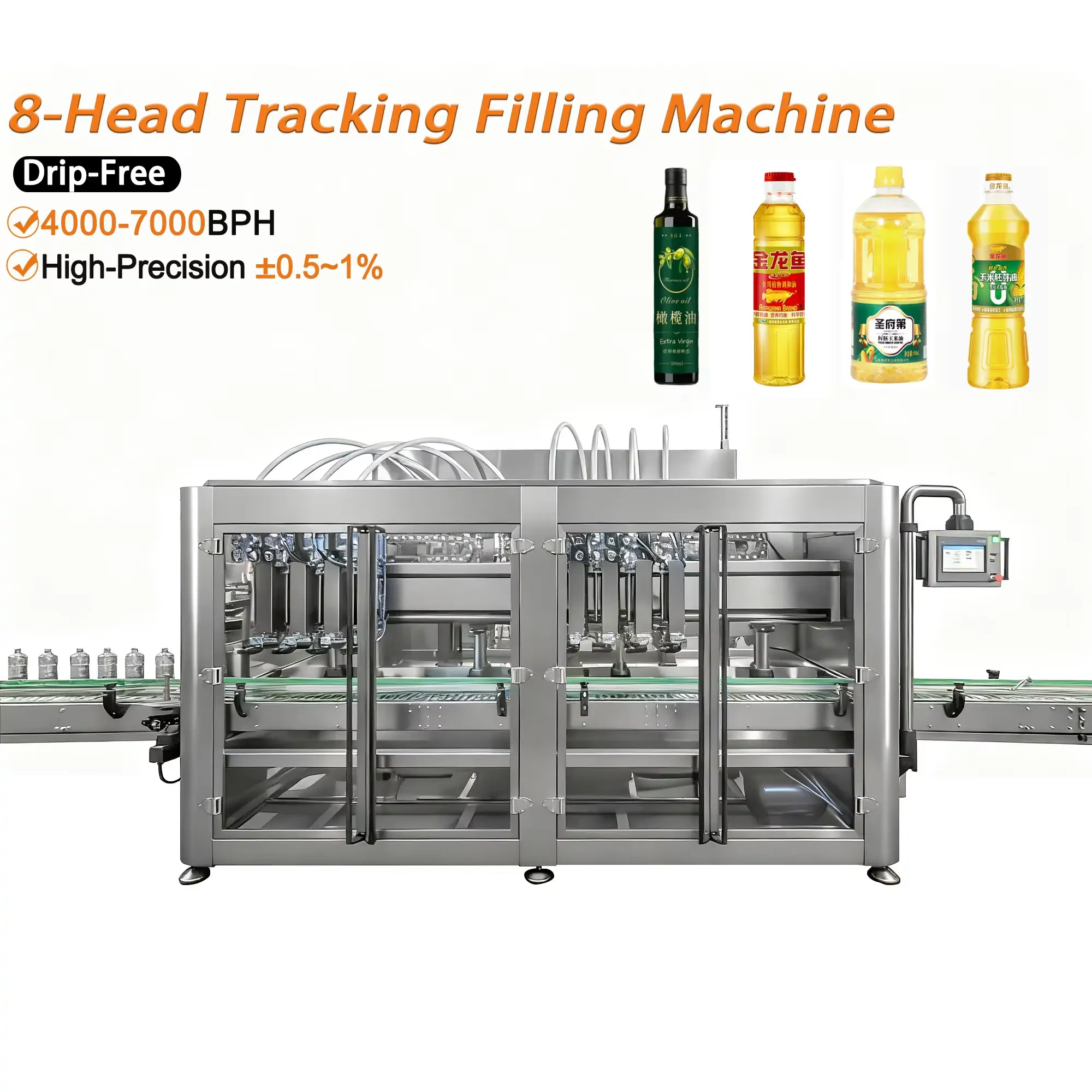
Capping machines that seal every container type
A capping machine applies and tightens closures — screw caps, press-on lids, spray pumps, droppers, lug caps and tube seals. SunAura cappers use magnetic torque heads or servo torque control to apply consistent closure pressure, avoiding both loose caps (leaks) and over-torque (broken closures). Every capper can be paired with a SunAura filler on a common frame or connected via conveyor as a filling-capping-monoblock.
What you get
Magnetic / servo torque heads
Adjustable torque from 5 to 80 lbf·in; servo models store recipes for one-touch recall.
Cap elevator & sorter
Vibratory bowl or elevator feeder sorts and drops caps onto bottles automatically.
No-fottle-no-cap
Photo-electric sensors prevent capping empty pockets and cap jams.
Quick-change guides
Tool-less bottle changeover; 15–30 min for a new container size.
Capping machine models
| Model | Type | Speed | Best for |
|---|---|---|---|
| Press-On Capper w/ Elevator | Press-on / snap | 40–120 BPM | Jars, wide-mouth lids |
| High-Speed Rotary Capper | Screw / rotary | 200–600 BPM | Water, beverage, oil |
| Tube Filling-Capping 2-in-1 | Tube seal | 30–80 TPM | Toothpaste, cream tubes |
| Tube Filler-Sealer | Ultrasonic / heat seal | 40–120 TPM | Cosmetic, pharma tubes |
| Oil Filling-Capping-Labeling Line | Monoblock line | 200–400 BPH | Edible oil, jugs |
Industries we serve
Food & beverage (water, oil, sauce, honey), cosmetics (serums, creams, shampoos), chemicals (detergents, lubricants, agrochemicals), pharmaceuticals (oral liquids, eye drops, syrups), and new-energy products (thermal paste, electrolyte). Send us a sample closure and we test the torque on our floor.
Connects with your front-end line
Every SunAura capper bolts onto a SunAura piston filler, magnetic-pump filler or cup-sealing machine. We supply the connecting conveyor, bottle unscrambler, labeler and ink-jet coder as one controlled line — SIEMENS PLC coordinates speed between filler and capper so no bottle stalls or misses a cap.
How an Automatic Capping Machine Works
A bottle capping machine looks simple — drop a cap, twist, done. The engineering is in controlling three things: how the cap gets to the neck, how the bottle is held while the cap turns, and exactly how much torque goes into the closure. Get any of the three wrong and you get leaking drums, cross-threaded caps, or over-torqued shoulders that crack on the pallet.
Cap delivery: elevator, sorter, and pick-off
Bulk caps go into a vibratory bowl or a cap-elevator hopper. The elevator lifts caps along a track with a rail that only passes them if they are face-up; upside-down caps fall back into the hopper. At the top, a sorter or track guide releases caps single-file to the capping head. On our press-on capper with cap elevator, a pick-off wheel drops each cap straight down onto the bottle neck as the conveyor indexes — no spinning, no flipping. For screw caps, the cap then drops into a funnel chuck that centers it on the threads before the spinning gripper engages.
Torque control: the heart of screw capping
On a screw capping head, a set of three or four polymer or rubber gripper discs spins the cap onto the neck. The critical number is torque, measured in Nm. Too little and the cap backs off during transport; too much and the liner compresses flat (losing its seal) or the neck cracks. We use two torque strategies depending on the product: magnetic clutch torque heads slip at a set Nm (good for 0.5–5 Nm, cost-effective, ±10% repeatability), and servo torque heads close the loop with a torque transducer on the spindle (0.2–15 Nm, ±3% repeatability, recipe recall on the HMI). We specify servo heads for edible oil drums, dairy pails, and any closure where a tamper-evident ring must snap but not shear.
Press-on, ROPP, and chuck capping
Press-on capping (also called push-on or snap-on) uses a vertical plunger to seat a cap over a lugged or crimped neck — no rotation. Used for cosmetics, beverage corks, trigger-sprayer over-caps, and yogurt foil lids. ROPP (Roll-On-Pilfer-Proof) caps are aluminum blanks that get rolled onto bottle threads by a forming wheel — standard on spirits and premium oils. Chuck capping grips the cap internally and twists it on, used for small pharma vials and perfume bottles where outside grippers would mar the finish. Tell us the cap type at RFQ and we will match the head to it.
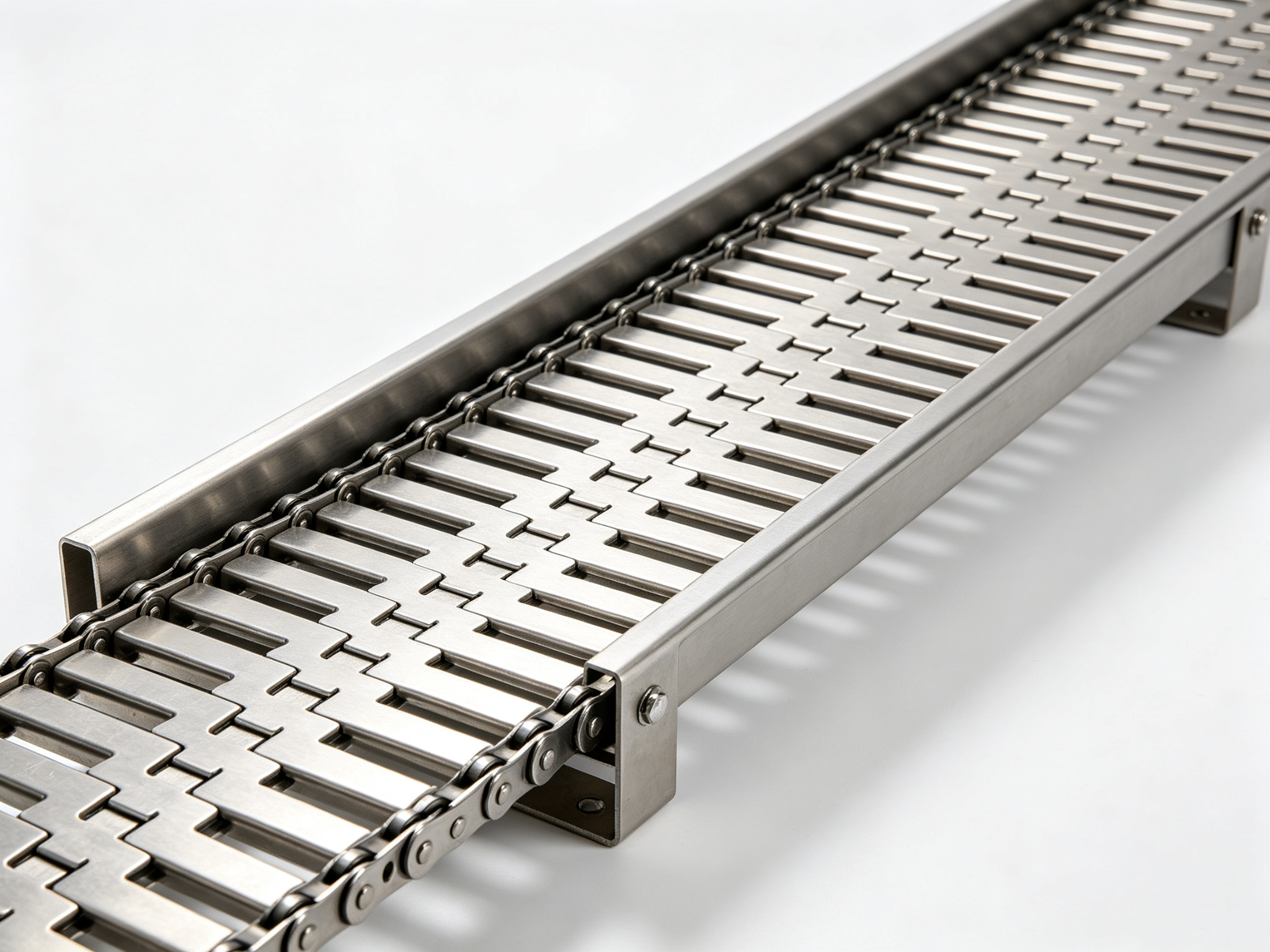
Capping Machine Parameters We Quote
Real numbers from a SunAura high-speed bottle capping machine proposal — compare against any competitor's quote.
| Parameter | Semi-auto / single head | Inline 2–4 head screw capper | High-speed rotary capper |
|---|---|---|---|
| Capping heads | 1 | 2 / 4 | 6 / 8 / 12 |
| Speed | 20–40 bpm | 60–120 bpm | 150–300 bpm |
| Torque range | 0.2–6 Nm (magnetic) | 0.5–10 Nm (magnetic / servo) | 0.2–15 Nm (servo closed-loop) |
| Torque repeatability | ±10% | ±5–10% | ±3% |
| Closure types | Screw, press-on | Screw, press-on, trigger | Screw, ROPP, press-on, cork |
| Bottle diameter range | 20–120 mm | 20–150 mm | 20–120 mm (starwheel) |
| Bottle height | 50–350 mm | 50–400 mm | 80–350 mm |
| Cap elevator / sorter | Bowl feeder optional | Incl. cap elevator + sorter | Incl. high-speed elevator |
| Installed power | 0.75–1.5 kW | 2.2–4 kW | 5–8 kW |
| Air consumption | 0.1 m³/min @ 0.6 MPa | 0.3 m³/min | 0.6 m³/min |
| Changeover time | 5–10 min | 15–25 min | 20–40 min (starwheel + guides) |
All wetted parts 304 stainless; 316L option for dairy and pharma. CE & ISO 9001 build, 72-hour FAT on our 48,000 m² floor before shipment. No-bottle-no-cap and no-cap-no-torque interlocks are standard.
Where Our Capping Machines Run
Eighteen years of capping lines across 100+ countries — here is where the torque numbers actually matter.
Edible Oil & Cooking Oil
1 L, 2 L, 5 L PET drums and 10 L jerrycans need torque in the 1.5–3 Nm band so the tamper ring snaps without shearing. We spec servo heads for 5 L drums because over-torque cracks the handle neck; see the capping buying guide.
Dairy — Milk, Yogurt, Cream
HDPE milk bottles use 28 mm screw caps at 1.0–1.5 Nm; yogurt cups need foil lids with a press-on foil sealer. Dairy lines run CIP after every shift, so we build lift-out capping chutes and 316L contact parts.
Sauces, Condiments & Honey
Glass chili-sauce and honey jars with twist-off lug caps (Twist-Off / TO) need a magnetically held torque of 1.2–2 Nm — enough to pop the vacuum seal on opening but not enough to warp the glass rim.
Cosmetics & Personal Care
Trigger sprayers, pumps, and over-caps on shampoo and lotion bottles use press-on capping at 40–80 bpm. Gripper pads are food-grade silicone so they don't mark shiny HDPE.
Pharma & Oral Liquids
Child-resistant caps on syrup bottles need a two-stage push-down-and-twist motion. Our capping head follows the child-resistant geometry; torque is logged per cap for batch records.
Chemicals & Detergents
5 L jerrycans of laundry liquid and 20 L pails of industrial cleaner need 3–6 Nm and a tamper-evident ring. We pair the capper with an induction sealer below for double-seal integrity.
Choosing the Right Capping Machine for Your Closure
Send us three things — bottle photo, cap photo, target BPM — and we will specify the head. In the meantime, this is the decision tree we work through.
Magnetic clutch inline screw capper, 2–4 heads, 60–120 bpm. This is the 80% case for beverage, water, edible oil, and sauces. Cost-effective, easy to clean.
Servo torque head, inline or rotary, 3–6 Nm closed-loop. Used for 5 L oil drums, 20 L chemical pails, dairy buckets. Recipe recall saves format-change time.
Vertical plunger press-on capper, 30–60 bpm. No torque — just a press force (typically 50–300 N). Used for cosmetic over-caps, trigger sprayer collars, corks.
Roll-on capper with forming wheels; used on spirits, premium olive oil, whiskey. The cap is a flat aluminum blank that gets threaded on the bottle during capping.
Two-stage capping head: push-down plunger + twist spindle. Used on pharma syrups and agrochemicals. Torque and push-force are both logged.
Rotary capper with starwheel. Bottles ride on the spindle so no stop-start impact; we hit 300 bpm on 500 ml water bottles. See high-speed rotary capper.
⚠ Common Capping Machine Selection Mistakes
- Specifying a magnetic clutch head for a closure that needs ±3% torque — magnetic clutches drift as the disc wears; you end up re-torquing every shift. Servo head pays back in 6–12 months on a high-speed line.
- Ignoring cap-feeder compatibility. A vibratory bowl that sorts one cap shape will jam on a second SKU. If you run two cap geometries, budget a dual-track sorter or a second elevator.
- Under-sizing the conveyor. The capper is only as fast as the bottle in-feed. We size the upstream screw and starwheel for 110% of capper BPM so the head never waits.
- Forgetting the induction sealer downstream. A screw cap without a foil liner leaks on a temperature-changing pallet. Plan for the induction sealing station in the same line layout.
- Specifying the wrong liner. EPE, foam, Pulp, PT liner each need a different insertion torque. Match the liner supplier's torque spec — we will follow it.
How the Capper Fits a Filling–Capping–Weighing Line
In a SunAura front-end line, the capper sits directly downstream of the liquid filling machine — typically within 1–2 meters, because a filled bottle needs a cap before it can build up back-pressure on the conveyor. For dry-product jars, a multihead weigher doses solids first, the filler tops up brine or oil, and the capper seals the jar.
Bottles leave the filler on a centered slat or neck-handle conveyor. We set the conveyor speed as a ratio of filler RPM so there is 1.5× spacing between bottles — no shoulder-knocking, no cap-drop misalignment.
A photo-eye at the capper in-feed detects a missing or tilted bottle; the cap pick-off pauses until the lane is clear. This prevents cap dumps into empty gaps, which otherwise jam the sorter for 20 minutes.
After capping, bottles pass through an induction sealer (for liner-sealed closures) then onto labeling. We don't build labelers, but we spec the conveyor spacing so the labeler's eyes can find each bottle.
Filler, weigher, and capper share one Siemens PLC. Missing-cap detection triggers a pneumatic reject 1.5 m downstream; torque out-of-tolerance triggers a separate reject bin so QA can log the batch. See line cost guide.
Capping Machine Engineering Questions
What torque should I specify for my screw caps?
Start from the liner supplier's spec — they publish a recommended torque per cap size. As a rule of thumb: 20–28 mm water/beverage caps at 0.8–1.5 Nm; 38–53 mm oil and sauce caps at 1.5–3 Nm; 60–120 mm pails at 3–6 Nm. We build a torque-test station at FAT so you can witness the actual closure values.
What is the difference between a magnetic clutch and a servo torque head?
A magnetic clutch slips at a preset Nm using magnetic tension on the disc — cheap, ±10% repeatability, good for stable single-SKU lines. A servo torque head closes the loop with a torque transducer on the spindle — ±3% repeatability, recipe recall, and per-cap logging for pharma. We spec servo for high-speed, multi-SKU, or regulated lines.
How fast can a bottle capping machine run?
Inline 2–4 head cappers run 60–120 bpm. Rotary cappers with 6–12 heads run 150–300 bpm on round bottles. Square, rectangular, or odd-shape bottles slow us down because we need side-gripping instead of neck-handling. Send bottle dimensions and we will commit to a number in writing.
Can one capper handle multiple cap sizes?
Yes, with change parts: different gripper discs, cap-centering funnel, and bottle guides. Recipe recall on the servo HMI brings torque and speed back instantly. Changeover is 15–25 minutes on an inline capper, 30–45 minutes on a rotary. If you run more than four SKUs, budget a dual-cap sorter.
What is a press-on capper used for?
Press-on capping seats a cap with a vertical plunger instead of twisting. Used for cosmetic over-caps, trigger-sprayer collars, wine corks, yogurt foil lids, and any closure that snaps or crimps rather than threads. Speed is typically 30–60 bpm because each cap needs a press cycle.
Do you supply the cap elevator and sorter?
Yes. Every capper we ship includes a cap elevator (inclined or vibratory bowl) and a sorter that orients caps face-up. For high-speed lines we add a live-cap-level sensor that pauses the elevator when the capping chute is full.
How do you handle CIP on a capping machine?
Product-contact parts (cap chute, centering funnel, bottle guide) are quick-disassembled without tools for washdown. The capping head itself is outside the wash zone on most models. For dairy and pharma, we offer 316L contact parts and a fully washdown-rated enclosure.
Get a Factory-Direct Quote in 24 Hours
Tell us your box size, daily output and voltage — our engineers reply with a model recommendation, price and lead time within one business day.
Looking for Bottle Labeling Machines?
After filling and capping, our bottle labeling machines apply wrap-around, pressure-sensitive and top-press labels on round and square bottles — integrated into the same front-end line. Explore the labeling range →
How Capping Equipment Works: From Cap Hopper to Sealed Bottle
An automatic capping machine turns loose closures and filled bottles into consistent, tamper-evident sealed packages. The process begins with a vibratory or centrifugal cap elevator that feeds closures out of a bulk hopper and orients them so the correct face points down. A chute then delivers each cap to a pick-off point above the container, where a timing screw or starwheel positions the bottle directly beneath the dropping cap. A well-tuned bottle capper places the cap onto the bottle neck with a light pre-engagement, so the spindle wheels that follow never start a cross-threaded run.
On a screw capping machine, two or four rubber-lined spindle wheels grip the cap on opposite sides and spin it down to a pre-set torque. Two control philosophies dominate: magnetic-clutch spindles, where slipping clutches limit torque mechanically and remain popular for low-to-medium speed lines, and servo-controlled spindles, where each spindle reports torque to the PLC in real time. Servo torque control offers tighter repeatability, full torque-data logging for pharmaceutical and food audits, and quick recipe changeovers between SKUs. Press-on capping uses a descending platen rather than spinning wheels; ROPP (roll-on pilfer-proof) capping deforms a metal skirt around the bottle neck with crimping rollers. Trigger sprays, flip-tops, snap-on lids and child-resistant closures each require dedicated change parts.

Key Specifications & Selection Guide
Selecting the right capping machine means matching closure geometry, line speed, torque window and container range. The table below shows the typical working envelope of SUNAURA spindle and press-on cappers; contact engineering for a torque calculation on your specific closure.
| Parameter | Typical Range | Notes |
|---|---|---|
| Output speed | 60 – 300+ bottles/min | Rotary spindles for high speed; inline spindles for flexible formats |
| Closure types | Screw caps, ROPP, snap-on, press-on, flip-top, trigger spray, child-resistant | Dedicated chuck / spindle change parts per closure family |
| Neck / cap diameter | Ø10 – Ø120 mm | Starwheel and chute change parts |
| Torque range | 0.5 – 25 N·m | Magnetic clutch or closed-loop servo torque control |
| Bottle materials | PET, HDPE, glass, aluminum, laminated tubes | Adjustable spindle pressure for fragile glass |
| Hopper capacity | 30 – 200 L | Optional level sensor with auto-refill interface |
| Electrical | 380 V / 50 Hz, 3-phase, ~2–5 kW | CE-marked, EMC-tested, IP54 standard / IP65 washdown option |
When the allowed torque window is narrow — for example thin-wall PET bottles that deform above 8 N·m — servo torque control pays for itself within the first changeover. For broad, low-cost closure families, a magnetic-clutch spindle remains the workhorse. Read more on the high-speed automatic bottle capping machine and the automatic press-on capping machine with cap elevator.
Industries & Applications
SUNAURA cappers run on front-end lines across food, beverage, dairy, condiments, spirits, cosmetics, home-care, agrochemicals and pharmaceuticals. In food and beverage they seal PET water, juice and edible-oil bottles; in pharma and nutraceuticals they handle child-resistant CRC closures with torque data logging; in chemicals they close HDPE jerrycans and trigger-spray bottles with anti-corrosion contact parts. A typical bottle capper on a condiment line closes glass jars with twist-off lids, followed by induction sealing and labeling.
Integration with Other Front-End Equipment
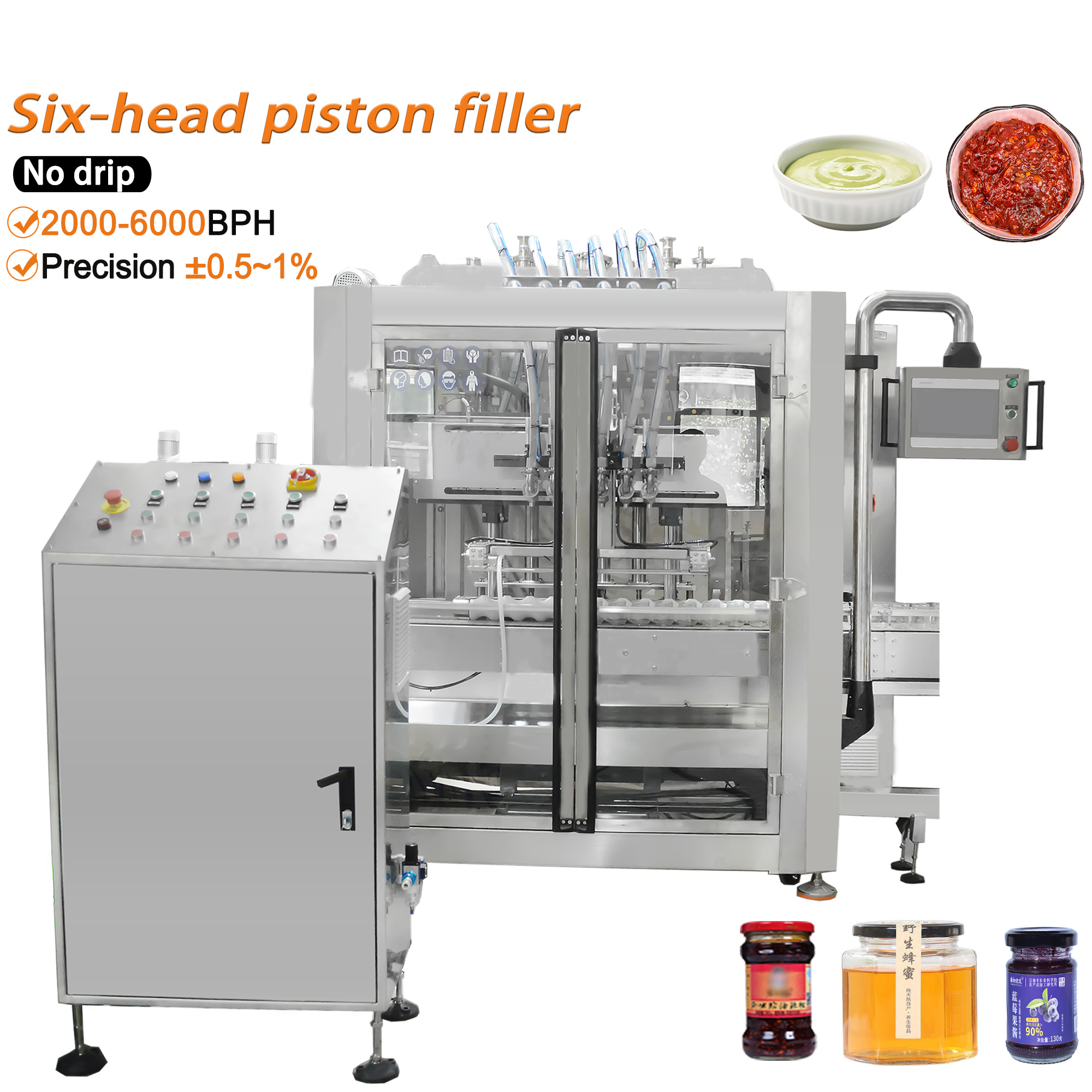
A capper rarely runs alone. Upstream it receives filled bottles from a piston, flow-meter or overflow filler — see the liquid filling machines family, including the 8-head piston filler shown below. Downstream it feeds an induction sealing machine for tamper-evident liner bonding, then a labeling machine and onto an accumulation table. Timing screws, starwheels and conveyors keep bottles spaced at the pitch the capper expects, which is the single biggest factor in low-cap-jam performance.
Why Choose SUNAURA for Your Capping Line
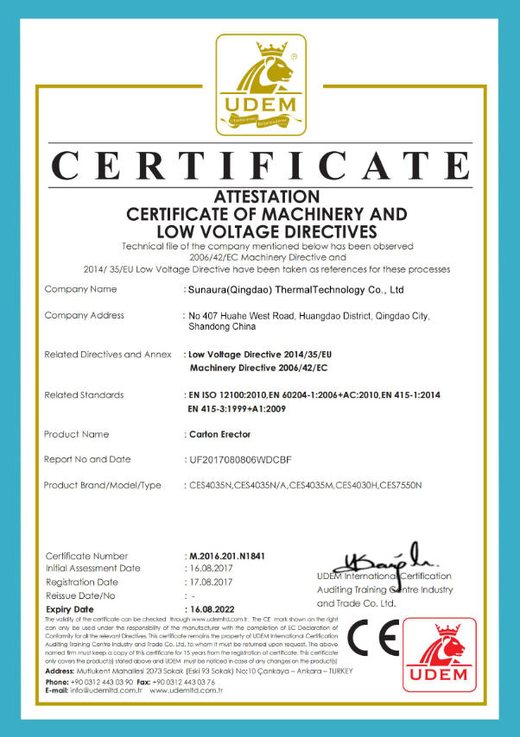
SUNAURA Machinery builds on a 48,000 m² manufacturing campus in Qingdao. Every screw capping machine leaves our floor after a documented Factory Acceptance Test (FAT): the customer's own bottles and closures are run at production speed, torque is measured at the cap and recorded, and a video report is delivered with the machine. We are CE-marked and ISO 9001 certified, and our installation team supports lines on five continents. Spindle rubber inserts, chucking chucks and torque calibrations are kept in stock for fast after-sales service response. Browse our certifications and patents to review the compliance record.
Frequently Asked Questions
How do I prevent cross-threading on a screw capping machine?
Cross-threading almost always starts before the spindle: the cap is not sitting square on the neck. Check cap-chute orientation, the drop height (too high knocks the cap sideways), and the pre-engagement fingers that center the cap before the spindles touch it. Verify that in-feed spacing matches the starwheel pocket so bottles do not arrive skewed.
What is the difference between magnetic-clutch and servo torque control?
Magnetic-clutch spindles slip at a mechanical torque limit and are simple, inexpensive and robust for steady SKUs. Servo spindles close the torque loop electronically, offering tighter repeatability, torque logging per cap, and one-screen recipe changes between products. Choose servo when your audit trail or thin-wall bottles demand it.
How fast can a SUNAURA bottle capper run?
Inline spindle cappers cover 60–120 bottles/min for flexible lines; rotary spindle and press-on cappers reach 200–300+ bottles/min on stable round containers. Actual output depends on cap orientation rate, bottle stability and upstream filler speed — we size the line as a whole during the FAT.
How often should I calibrate capping torque?
We recommend torque verification with a hand-held torque meter at the start of every shift, and a formal recalibration of spindle clutches or servo torque sensors every 3–6 months depending on line utilization. Spindle rubber inserts should be inspected weekly and replaced when the grip shows glazing or wear.
What closures can one capper handle?
A single base frame can be reconfigured between screw caps, press-on lids, ROPP closures and trigger-spray pumps by swapping the chuck, spindle inserts, cap chute and starwheel. Flip-top and child-resistant closures require dedicated change parts and are specified at order time.
Do you support installation overseas?
Yes. SUNAURA ships, installs and commissions cappers and complete liquid packaging lines worldwide, with remote video support as a fallback. See after-sales service for response SLA and spare-parts policy.