
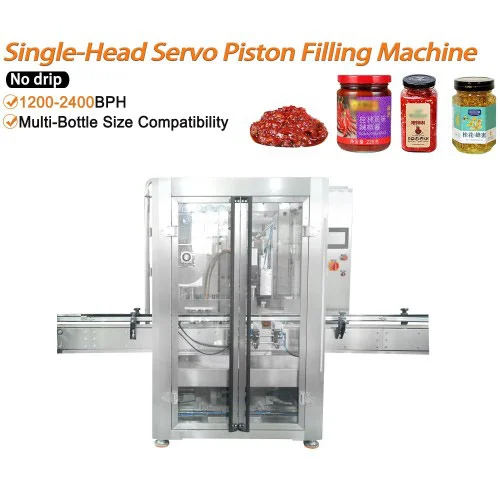
Qingdao, China — October 30, 2026. SunAura Machinery has commissioned a compact viscous-product filling and capping station for a South American sauce producer that packs chili sauce, hot sauce, and honey into wide-mouth glass jars. The line combines a servo piston filler with an inline spindle screw capping station, sized to run three jar formats at 35–45 jars per minute. This release explains why the buyer chose a spindle servo capper rather than an ROPP capper or a press-on lid machine, and which producers this configuration suits — and which it does not.
The Buyer’s Starting Point Was the Closure, Not the Machine
The customer already packed three sauce recipes into 250 ml, 375 ml, and 500 ml glass jars sealed with threaded metal twist-off lug lids. The existing manual and semi-automatic process produced inconsistent closing torque: some lids loosened after cooling and partial vacuum formed, while others were overtightened to the point of cracked glass threads. The goal of the project was not the fastest possible capping head — it was repeatable torque across all three SKUs and a controlled, tool-light changeover between formats.
Because the lids were pre-threaded twist-off closures, the capping decision narrowed quickly. The closure already carried its own thread; the machine only had to wind it on evenly at a defined torque. That requirement points to a spindle screw capper, and eliminated two alternatives early in the evaluation.
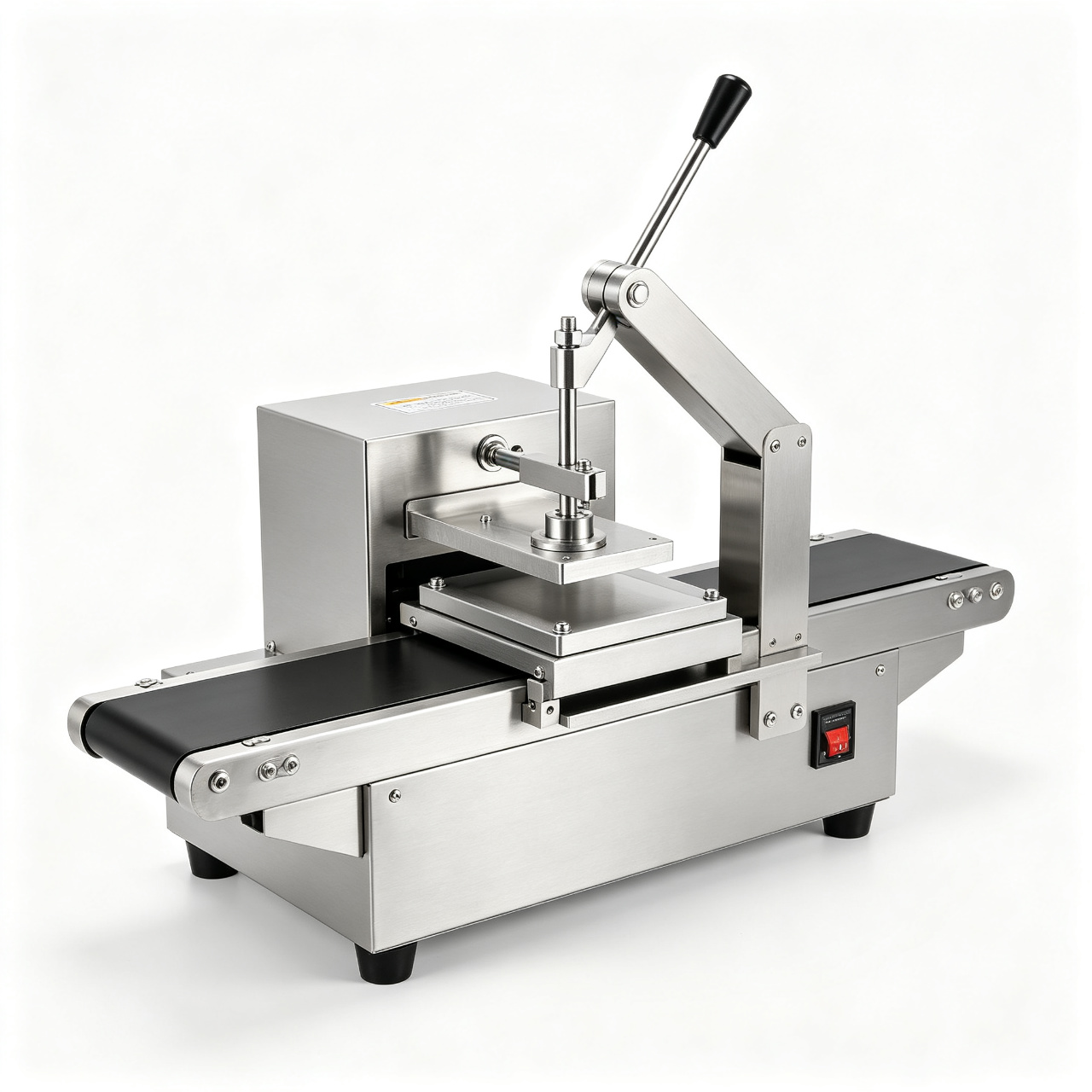
Why Spindle Servo Capping Beat ROPP and Press-On for This Line
Two other capping methods were considered during the supplier comparison. The differentiation, in engineering terms, was as follows:
| Option | Why it was or was not selected |
|---|---|
| Inline spindle servo capper (selected) | Matches the pre-threaded twist-off lug lid; servo torque control stores one recipe per jar size, reducing loose and cracked closures; fits the 35–45 jpm range with room to grow; inline footprint suited the buyer’s existing workshop. |
| ROPP roll-on pilfer-proof capper (rejected) | ROPP forms a thread and tamper band from a plain aluminum shell around a glass neck. The customer’s lids were already threaded and did not require aluminum forming or a pilfer-proof skirt. ROPP would have added head complexity, aluminum-forming tooling, and per-closure cost without a seal benefit for this product. |
| Press-on / snap capper (rejected) | Press-on lids seat by downward force alone, with no rotational tightening. Hot-fill and slow-cooling sauce and honey create partial vacuum after sealing; a snap lid can back off under that movement. The threaded, torque-controlled closure is the appropriate seal for this temperature profile. |
A rotary multi-head capper was also reviewed, but at 35–45 jars per minute it would have operated far below its efficient capacity, increasing capital cost without a throughput benefit. The inline spindle configuration matched the buyer’s actual demand and left a controlled growth headroom on the servo and conveyor.
What the Commissioned Station Includes
The supplied station covers the front-end process flow from container handling through sealed jars:
- Servo piston filler sized for sauces with fine particles, honey, and viscous condiments, with recipe-adjustable fill volume for the three jar capacities and a cleanable food-grade wetted path.
- Inline spindle screw capping station with servo-driven torque control, cap elevator and sorter, and three recipe presets for the 250 ml, 375 ml, and 500 ml formats.
- Bottle and jar conveyor with guide rails and indexed positioning that keeps each jar under the capping head, reducing cap misalignment between SKUs.
- Combined line control so filler volume, capping torque, and conveyor speed are called up together as one recipe, rather than adjusted station by station during changeover.
Performance Targets Set Before Factory Acceptance
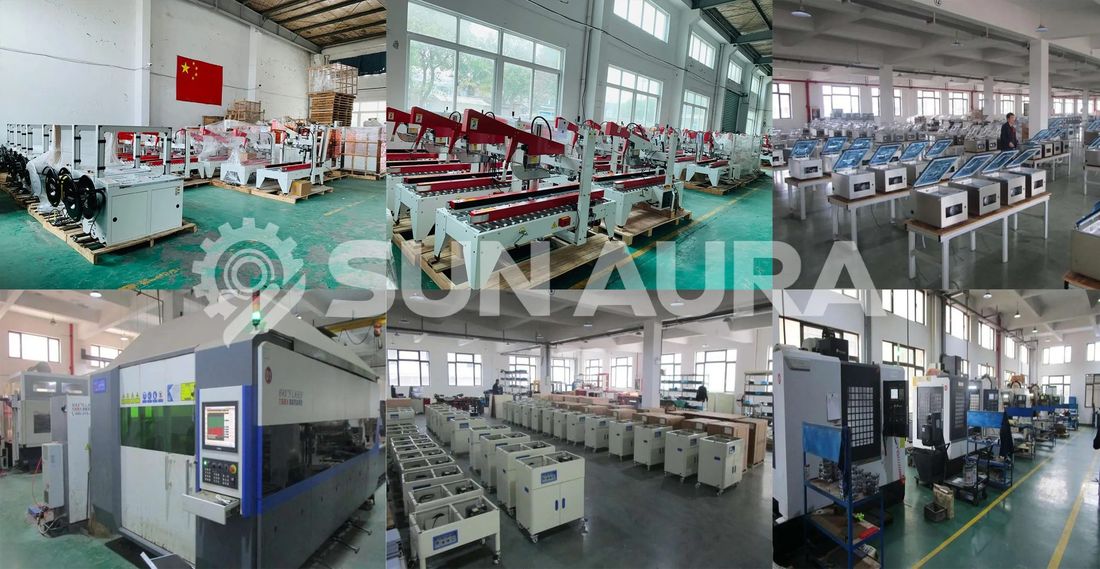
The line was tested at SunAura’s Qingdao workshop under the buyer’s own jars and lids before shipment. The acceptance targets were torque repeatability across recipes, changeover time between the three jar formats, and fill volume accuracy on the viscous and particle-containing sauces. The buyer retained their jars, lids, and sauce samples for the factory acceptance test so the measured torque and seal results reflected the real product rather than a clean demonstration medium.
For this producer, the relevant success measures were not peak speed in isolation: they were a stable seal at every format, fewer discarded jars from loose or cracked closures, and a changeover operators could complete without specialized maintenance support. After installation and operator training, the station feeds jars into the customer’s existing downstream labeling and packing operations.
Who This Configuration Suits
This filler-and-spindle-capper configuration fits producers who share the buyer’s profile:
- Pre-threaded screw caps, twist-off lug lids, pumps, or trigger closures on glass or plastic containers
- Viscous sauces, pastes, honey, syrups, or creams filled by piston dosing
- Moderate throughput in roughly 20–80 containers per minute where an inline station remains the cost-effective platform
- Several SKUs that depend on repeatable torque and recipe-based changeover
It is not the right specification for plain aluminum pilfer-proof closures, which need an ROPP head; for push-fit snap lids, which need a press-on station; or for very high-speed single-format beverage lines, where a rotary capping turret would be the appropriate platform.
Planning a filling and capping project? Share your cap type, container dimensions, product viscosity, target containers per minute, and number of SKUs. SunAura’s sales and engineering team will map the correct filler and capping method, provide a line layout, and return a quotation within 48 hours. Write to [email protected] or open the contact page.
Next Steps for the Buyer
The customer retains the three stored recipes for daily production, with additional recipe slots available as new jar formats are introduced. SunAura’s after-sales team documented the torque ranges, changeover parts list, and maintenance intervals during commissioning, and the spare-parts record travels with the project file. Additional station information and line references are available on the news page, alongside other complete packaging lines delivered to food and condiment producers.
SunAura designs and manufactures liquid and viscous filling machines, capping stations, and integrated front-end packaging lines for export food, beverage, cosmetic, and chemical manufacturers. Our production capacity, certification history, and workshop can be reviewed under workshop display and certifications and patents, with ongoing support described on the after-sales service page.