
No. Aluminum cans are built for a controlled short drop; that is why beverage lines use drop packers. The drop height is engineered and consistent.
Can I run glass bottles on a drop packer?
Rigid glass bottles with secure closures, yes — many beer lines do. Thin glass or jars with loose lids, no.
Summary
For rigid cans and bottles at high speed, a drop packer is the fast, compact, lower-cost choice. For fragile, mixed-format products, a top-load packer’s gentleness and flexibility earn its higher price. Send us your container type, case pattern and speed and we will spec the right case packer — and tell you if a cheaper option will do.
Sources
Technical ranges referenced: Velec Systems end-of-line comparison; Industrial Packaging Machines 2026 case packer types guide; Xintu Automation drop packer specification; Made-in-China wrap-around drop packer product pages. Speed ranges are industry estimates; the Monterrey co-packer configuration is this project’s own.
Related reading
Drop packers run 20–50 cpm. Robotic pick-and-place runs 10–25 cpm but handles more formats. For rigid cans at high speed, drop wins.
Does the drop damage the cans?
No. Aluminum cans are built for a controlled short drop; that is why beverage lines use drop packers. The drop height is engineered and consistent.
Can I run glass bottles on a drop packer?
Rigid glass bottles with secure closures, yes — many beer lines do. Thin glass or jars with loose lids, no.
Summary
For rigid cans and bottles at high speed, a drop packer is the fast, compact, lower-cost choice. For fragile, mixed-format products, a top-load packer’s gentleness and flexibility earn its higher price. Send us your container type, case pattern and speed and we will spec the right case packer — and tell you if a cheaper option will do.
Sources
Technical ranges referenced: Velec Systems end-of-line comparison; Industrial Packaging Machines 2026 case packer types guide; Xintu Automation drop packer specification; Made-in-China wrap-around drop packer product pages. Speed ranges are industry estimates; the Monterrey co-packer configuration is this project’s own.
Related reading
Rigid PET bottles with tight caps, yes. Flimsy or neck-sensitive PET bottles, no — the drop can deform them. Run a sample through before committing.
How fast is a drop packer compared to robotic?
Drop packers run 20–50 cpm. Robotic pick-and-place runs 10–25 cpm but handles more formats. For rigid cans at high speed, drop wins.
Does the drop damage the cans?
No. Aluminum cans are built for a controlled short drop; that is why beverage lines use drop packers. The drop height is engineered and consistent.
Can I run glass bottles on a drop packer?
Rigid glass bottles with secure closures, yes — many beer lines do. Thin glass or jars with loose lids, no.
Summary
For rigid cans and bottles at high speed, a drop packer is the fast, compact, lower-cost choice. For fragile, mixed-format products, a top-load packer’s gentleness and flexibility earn its higher price. Send us your container type, case pattern and speed and we will spec the right case packer — and tell you if a cheaper option will do.
Sources
Technical ranges referenced: Velec Systems end-of-line comparison; Industrial Packaging Machines 2026 case packer types guide; Xintu Automation drop packer specification; Made-in-China wrap-around drop packer product pages. Speed ranges are industry estimates; the Monterrey co-packer configuration is this project’s own.
Related reading
SunAura Machinery Specified a Drop Packer for a Mexican Beverage Co-Packer: Why Drop Packing Beat Top-Load for 330ml Cans
A beverage co-packer in Monterrey asked us to case-pack 330ml aluminum cans at 40 cases a minute. The spec sheet they had was for a top-load case packer — a servo pick-and-place that lowers cans into the case from above. We specified a drop packer instead. This article explains why: the difference between a drop packer and a top-load case packer is not just speed, it is how gentle you have to be, what containers you can run, and how much floor space you have.
How each machine works
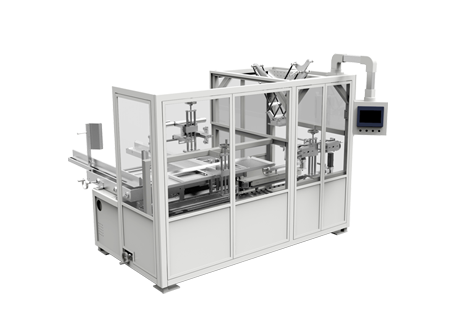
A drop packer groups the containers on a flighted conveyor, raises the group (or lowers a chute), and lets the cans or bottles drop by gravity into a pre-formed case below. A top-load case packer uses servo-driven mechanical arms or a bucket that picks up the group, moves it horizontally, and lowers it into the case. The drop packer is mechanically simple; the top-load packer is servo-driven and precise. They end up with the same case, but the path is completely different.
| Drop packer | Top-load case packer | |
|---|---|---|
| Speed | 20–50 cases/min | 15–40 cases/min |
| Container tolerance | Rigid cans, glass bottles, rigid PET; cannot handle fragile or loose caps | Handles almost any container, including jars, pouches, cartons |
| Gentleness | Short controlled drop — fine for rigid, bad for fragile | Mechanical lift and lower — gentle on fragile products |
| Floor space | Compact | Longer, with product collation zone |
| Relative cost | Lower | Higher |
| Changeover | Quick on same container family | Servo recipes, but more format parts |
| Best for | Cans, rigid glass/PET, beverage high-speed | Mixed formats, fragile products, pouches, jars |
Why the drop packer won in Monterrey
The product was 330ml and 500ml aluminum cans — rigid, uniform, and built to take a short drop. The line speed was 40 cases a minute, which is squarely in the drop packer’s range. The cases were standard RSC cases, pre-formed by the case erector upstream. The co-packer runs only cans and rigid bottles, no pouches or jars, so the top-load packer’s format flexibility was wasted. A drop packer gave them the speed they needed at a lower machine cost and a smaller footprint. We paired it with a hot-mell glue closer downstream, so the whole case-packing section was under one PLC.
When top-load is the only correct choice
Top-load case packing is the right call when the product is fragile: glass jars with lids that can pop, stand-up pouches that fold, bottles with loose caps, cartons that crush, or products that cannot take a free-fall drop. It is also the right call when you run mixed formats on the same line — cans one hour, bottles the next, jars after that. The top-load mechanical arm picks up and lowers the product with controlled force, so it never slams. On a multi-SKU co-packer handling every shape that comes in the door, the top-load machine’s flexibility pays for itself, even though it costs more and takes more floor space.
What the drop packer cannot handle
Do not put these through a drop packer: glass jars with loose or weak lids (the drop can pop the lid), stand-up pouches (they will fold or jam), flimsy PET bottles that deform on impact, cartons with open flaps, or any product that cannot survive a 15–20 cm free fall. If your product is fragile, a drop packer will produce breakage on day one. The short controlled drop is fine for cans and rigid bottles, but it is not “gentle” — it is gravity, and gravity does not care about your label.
Line integration: collation matters
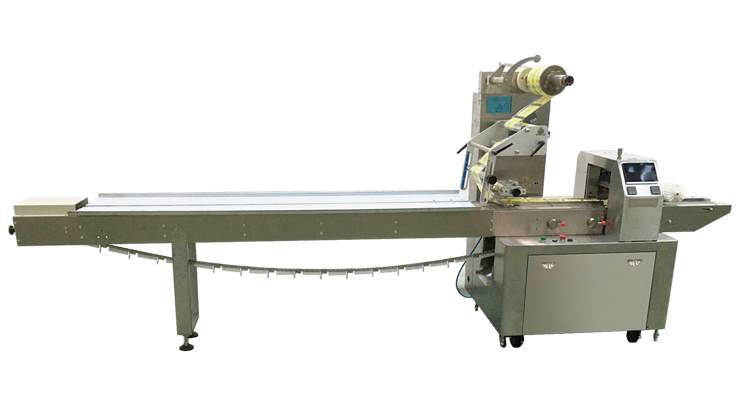
A case packer is only as good as the collation upstream. The product has to arrive in the right grouping — 4×3, 3×6, whatever the case pattern — before it reaches the packer. On a canning line, that means a laner or divider that splits the single-lane can flow into the right number of lanes. SunAura designs the collation conveyor, the packer and the case erector as one section: the cans come out of the conveyor in the right grouping, the drop packer lowers them, and the case moves out to sealing. If you buy the packer without the collation, the line will jam every changeover.
Speed matching and floor space
Drop packers run 20–50 cases a minute; top-load packers run 15–40. If your line produces 45 cases a minute of cans, only a drop packer keeps up. If your line runs 20 cases a minute of mixed fragile products, the top-load packer has the speed to spare and the flexibility you need. Floor space: a drop packer is compact, because it uses gravity. A top-load packer needs a collation zone and a pick-and-place arm, so it runs longer. Measure the factory floor before you spec — a top-load packer that does not fit is a packer you do not own.
Side-load vs top-load vs drop: the three you will compare
Buyers usually compare three case packers. The drop packer (covered above) uses gravity. The top-load packer uses a servo arm. The side-load packer pushes the product horizontally into the case from the side, common for bottles and jars in retail-ready trays. Side-load is gentler than drop and more compact than top-load, but it is best for rigid upright bottles that can be pushed sideways. If your product is a stand-up pouch, side-load will fold it. If it is a glass jar, side-load can crack it. The three are not interchangeable: drop for rigid high-speed, side-load for bottles, top-load for fragile mixed formats. SunAura will not sell you a drop packer for a side-load application, even if it is cheaper — the breakage cost in month one will tell you why.
Retail-ready vs standard RSC cases
The case type changes the packer. A standard RSC case is pre-formed and the packer drops or pushes product into it. A retail-ready (display-ready) case is a wraparound blank that forms around the product on the machine — often with a hot-melt glue closure and a tear-off front panel. Wraparound case packers are a different machine from standard drop packers, even though both handle cans. If your customer wants retail-ready shelves, you need a wraparound packer; if you are shipping to a distributor that opens and re-stocks, a standard RSC drop packer is cheaper. Know which case your supply chain expects before you spec the machine.
What not to buy
Do not buy a drop packer for fragile or irregular products — the drop will break them. Do not buy a top-load packer for a high-speed can line; it will be the bottleneck and you will pay double for speed you do not need. Do not buy the packer without the collation conveyor. And do not forget the case erector upstream: a drop packer needs pre-formed cases, and the erector has to match the packer speed. Buying the packer and erector from different suppliers is where end-of-line projects stall at integration.
Budgeting
A drop packer is the cheaper machine, but budget for: the collation laner, the case erector, the case sealing (tape or hot melt), and the conveyor to the palletizer. A top-load packer costs more upfront but handles more formats, so on a co-packer with a changing product mix it is often the lower-TCO choice. Ask for the line cost, not just the packer price. SunAura quotes the whole case-packing section as one number — erector, collation, packer, sealer — so there are no integration surprises.
Maintenance and wear parts
A drop packer has fewer wear parts than a top-load packer — no servo arm, no gripper, no precision linkage. The flights on the collation conveyor and the drop chute guides wear over time; the pusher cylinders are the other consumable. A top-load packer has servo drives, belts, and gripper fingers that need periodic replacement. On a high-speed can line running two shifts, the drop packer’s lower maintenance is a real annual saving. Ask for the wear-parts list and the expected replacement interval before you compare prices — a cheap packer with expensive gripper replacements every six months is not cheap.
Floor space and utilities
A drop packer needs compressed air (for the pusher and flights), 220V three-phase power, and a case supply. A top-load packer needs the same utilities plus more floor length for the collation zone. Before you order, measure the gap between the last machine upstream (the filler or the bundler) and the first machine downstream (the case sealer or palletizer). A packer that does not fit the gap is a packer you do not own. SunAura draws the line layout to your factory dimensions before quoting, so the packer, the erector and the conveyors all land in the space you have.
What the drop packer quote should include
When you compare quotes, make sure they all include the same scope: the collation laner, the case erector, the blank magazine, the pusher/drop chute, the outfeed conveyor to the case sealer, and the safety guards. A quote that skips the collation laner will look cheaper — and then you will buy it separately. Also ask for the wear-parts list and the changeover time on your actual container sizes. SunAura quotes the whole case-packing section as one line, so there are no surprises on installation day.
Integration with the upstream filler and capper
A case packer does not start at the packer — it starts at the filler. The linear filler and capper produce containers at a steady rate; the packer has to keep up. If the filler runs 400 bottles a minute and the packer only handles 300, the line backs up. SunAura sizes the packer to the slowest downstream machine and programs the whole line on one HMI. Buying the filler from one supplier and the packer from another is where lines stall at integration. One supplier, one PLC, one start button — that is how the case-packing section runs unattended.
FAQ
Still choosing between drop, side-load and top-load? The three questions that settle it: what is your product (rigid can vs bottle vs fragile pouch), how fast does the line run (20 cpm vs 45 cpm), and what case format (standard RSC vs retail-ready wraparound). Once those three are fixed, the case packer type is usually clear — the rest is picking the right machine within that type.
Can a drop packer handle PET bottles?
Rigid PET bottles with tight caps, yes. Flimsy or neck-sensitive PET bottles, no — the drop can deform them. Run a sample through before committing.
How fast is a drop packer compared to robotic?
Drop packers run 20–50 cpm. Robotic pick-and-place runs 10–25 cpm but handles more formats. For rigid cans at high speed, drop wins.
Does the drop damage the cans?
No. Aluminum cans are built for a controlled short drop; that is why beverage lines use drop packers. The drop height is engineered and consistent.
Can I run glass bottles on a drop packer?
Rigid glass bottles with secure closures, yes — many beer lines do. Thin glass or jars with loose lids, no.
Summary
For rigid cans and bottles at high speed, a drop packer is the fast, compact, lower-cost choice. For fragile, mixed-format products, a top-load packer’s gentleness and flexibility earn its higher price. Send us your container type, case pattern and speed and we will spec the right case packer — and tell you if a cheaper option will do.
Sources
Technical ranges referenced: Velec Systems end-of-line comparison; Industrial Packaging Machines 2026 case packer types guide; Xintu Automation drop packer specification; Made-in-China wrap-around drop packer product pages. Speed ranges are industry estimates; the Monterrey co-packer configuration is this project’s own.