
Yes. Most wrappers handle both; you may need to adjust the pre-stretch ratio and the wrap count. Run a load test after the switch.
Is cast film recyclable?
Both are polyethylene and are recyclable through industrial film recycling programs. The resin type is the same; the manufacturing process differs.
Summary
For clean, uniform, machine-wrapped loads on paved routes, cast film is the quieter, cheaper and consistent choice. For irregular, sharp, cold or outdoor loads, blown film earns its premium. Tell us your load shape, transport distance and wrapper type and we will spec the film and wrap cycle that survives the route.
Sources
Technical points referenced: SupplyTie “Cast vs Blown Stretch Film”; Mcpack “Blown vs Cast Stretch Film”; Juhong Packaging industrial comparison guide; John Maye Company cast vs blown summary; Glacier Pac stretch wrap overview. The distributor configuration is this project’s own. Film gauge and pre-stretch figures are industry estimates, not supplier specifications.
Related reading
- Drop packer vs top-load case packer for beverage cans
- Auger vs volumetric cup vs gravimetric powder filler
At the same gauge, yes — blown has better load retention. But cast film at thinner gauge, on a properly pre-stretched machine, often contains the load just as well at lower cost.
Can I switch film on the same wrapper?
Yes. Most wrappers handle both; you may need to adjust the pre-stretch ratio and the wrap count. Run a load test after the switch.
Is cast film recyclable?
Both are polyethylene and are recyclable through industrial film recycling programs. The resin type is the same; the manufacturing process differs.
Summary
For clean, uniform, machine-wrapped loads on paved routes, cast film is the quieter, cheaper and consistent choice. For irregular, sharp, cold or outdoor loads, blown film earns its premium. Tell us your load shape, transport distance and wrapper type and we will spec the film and wrap cycle that survives the route.
Sources
Technical points referenced: SupplyTie “Cast vs Blown Stretch Film”; Mcpack “Blown vs Cast Stretch Film”; Juhong Packaging industrial comparison guide; John Maye Company cast vs blown summary; Glacier Pac stretch wrap overview. The distributor configuration is this project’s own. Film gauge and pre-stretch figures are industry estimates, not supplier specifications.
Related reading
- Drop packer vs top-load case packer for beverage cans
- Auger vs volumetric cup vs gravimetric powder filler
Yes. Cast film is the standard hand-wrap film — it unwinds quietly and stretches easily. Blown hand-wrap exists but is louder and stiffer.
Does blown film really hold tighter?
At the same gauge, yes — blown has better load retention. But cast film at thinner gauge, on a properly pre-stretched machine, often contains the load just as well at lower cost.
Can I switch film on the same wrapper?
Yes. Most wrappers handle both; you may need to adjust the pre-stretch ratio and the wrap count. Run a load test after the switch.
Is cast film recyclable?
Both are polyethylene and are recyclable through industrial film recycling programs. The resin type is the same; the manufacturing process differs.
Summary
For clean, uniform, machine-wrapped loads on paved routes, cast film is the quieter, cheaper and consistent choice. For irregular, sharp, cold or outdoor loads, blown film earns its premium. Tell us your load shape, transport distance and wrapper type and we will spec the film and wrap cycle that survives the route.
Sources
Technical points referenced: SupplyTie “Cast vs Blown Stretch Film”; Mcpack “Blown vs Cast Stretch Film”; Juhong Packaging industrial comparison guide; John Maye Company cast vs blown summary; Glacier Pac stretch wrap overview. The distributor configuration is this project’s own. Film gauge and pre-stretch figures are industry estimates, not supplier specifications.
Related reading
- Drop packer vs top-load case packer for beverage cans
- Auger vs volumetric cup vs gravimetric powder filler
SunAura Machinery Specifies Cast Stretch Film for a Distributor’s New Rotary-Arm Pallet Wrapper: Why Cast Beat Blown for 1,200 Loads a Day
A regional distributor in Eastern Europe came to us after installing a rotary-arm pallet wrapper. They had been wrapping hand with blown film, and the new machine came pre-loaded with cast film — but their engineering team argued the switch would cost them load containment on long truck routes. We ran a load test, and kept cast. This article lays out the actual differences between cast and blown stretch film, when each earns its place, and why the “blown is stronger” rule of thumb is only half true.
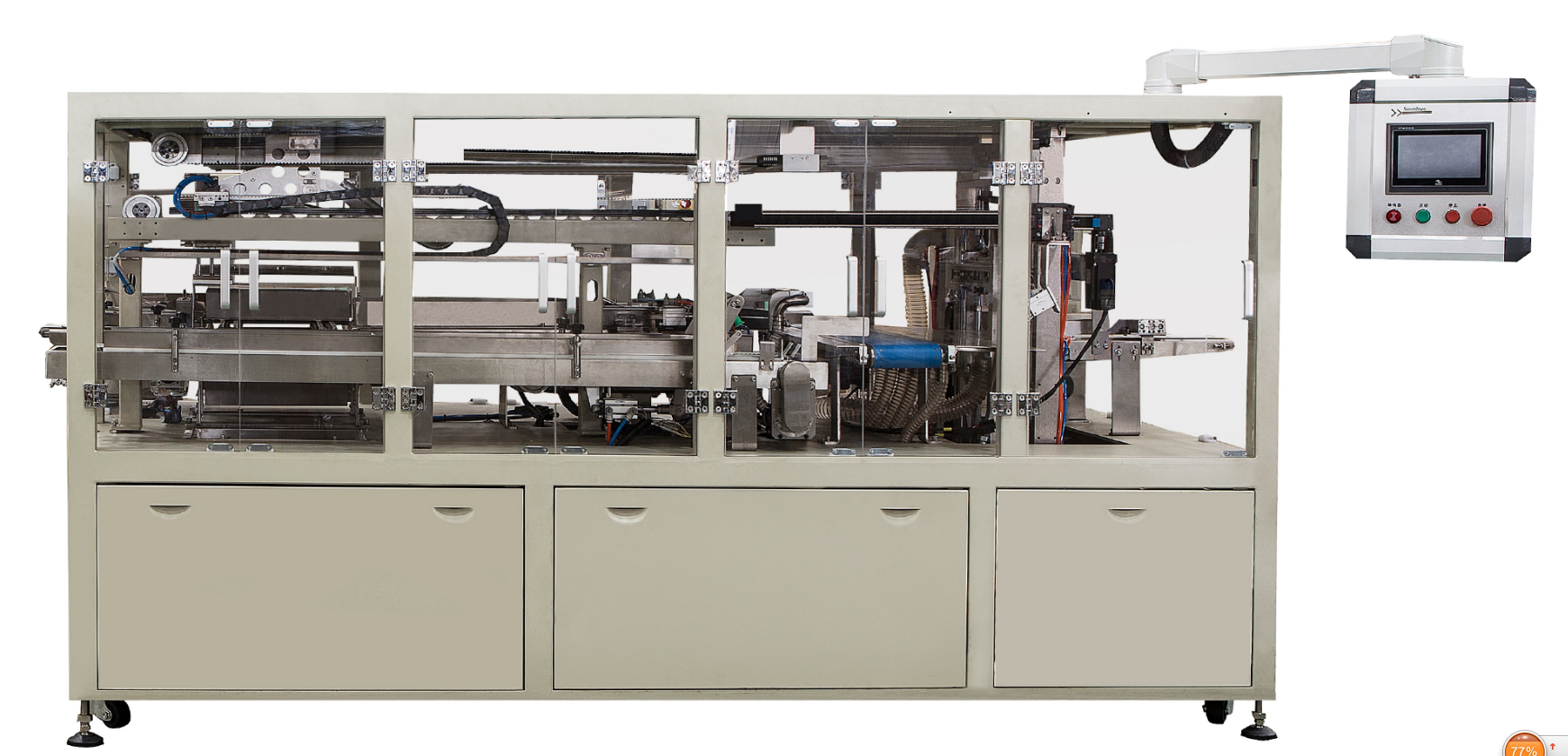
How the two films are made
Cast stretch film is extruded onto chilled rollers that cool it instantly as it leaves the die. Blown film is extruded as a tube, blown into a bubble with air, and cooled as the bubble rises. The two processes produce films that look similar but behave differently: cast is clearer, quieter and stretches more consistently; blown is tougher, puncture-resistant and holds load tighter. The manufacturing difference is the reason every other difference below exists.
| Cast stretch film | Blown stretch film | |
|---|---|---|
| Clarity | High — barcodes and labels easy to read | Hazy — harder to read labels through film |
| Unwind noise | Quiet | Loud (“snap” unwind) |
| Puncture resistance | Good, but lower at same gauge | Excellent — handles sharp corners, banding, irregular loads |
| Pre-stretch on machine | Handles 250–300% pre-stretch well | Lower pre-stretch window; stiffer |
| Gauge consistency | Tight, consistent | More batch-to-batch variation |
| Cling | Consistent, controllable | Variable, can be too aggressive |
| Relative cost | Lower per kg | Higher per kg |
| Best for | Machine wrapping, retail-ready pallets, clean loads, quiet warehouses | Heavy, irregular, sharp, cold-storage, outdoor loads |
Why cast won for the distributor
Three facts decided it. First, the loads were uniform shrink-wrapped cases of dry goods on standard pallets — no sharp metal corners, no protruding parts, no banded sacks. Second, the new rotary-arm wrapper pre-stretches the film by 250%, and cast film handles that pre-stretch window cleanly; blown film at high pre-stretch tends to snap. Third, the warehouse runs two shifts and the hand-wrap noise of blown film was already a complaint. Cast film also lets forklift drivers read the barcodes on the cases, which speeds up putaway. We paired the wrapper with the automatic bag palletizer upstream and programmed a 6-wrap bottom, 12-wrap top cycle. The distributor is using 17-micron cast film where they used to use 23-micron blown by hand — less film per load, and the loads survive the route.
When blown film is the correct choice
Blown film is not obsolete. It is the right answer when the load is irregular — sacks that bulge, hardware with sharp edges, building materials that protrude, drums or tires. It is also the right answer in cold storage: cast film can become brittle at freezer temperatures, while blown film stays flexible. And it is the right answer for outdoor, uncovered or rough intermodal shipping, where the film takes abuse from forklifts and weather. If your pallets are clean, uniform and going a short distance on paved roads, cast is cheaper and quieter. If your pallets look like a pile of random shapes going on a long rough journey, blown earns its higher price per kilo.
Gauge: the number that saves money
Most buyers buy film by the roll price, not by the gauge. A 17-micron cast roll costs less than a 23-micron blown roll, but if cast holds your load, you are using 26% less plastic per wrap. The right gauge is the thinnest film that still contains the load after a 200 km truck ride. SunAura runs a load test at commissioning: we wrap a pallet at 17 microns, ship it, and check the load shift. If it holds, you save on every load for years. If it shifts, we go up a gauge. Buying 23-micron film “to be safe” on a clean load is paying for plastic you do not need.
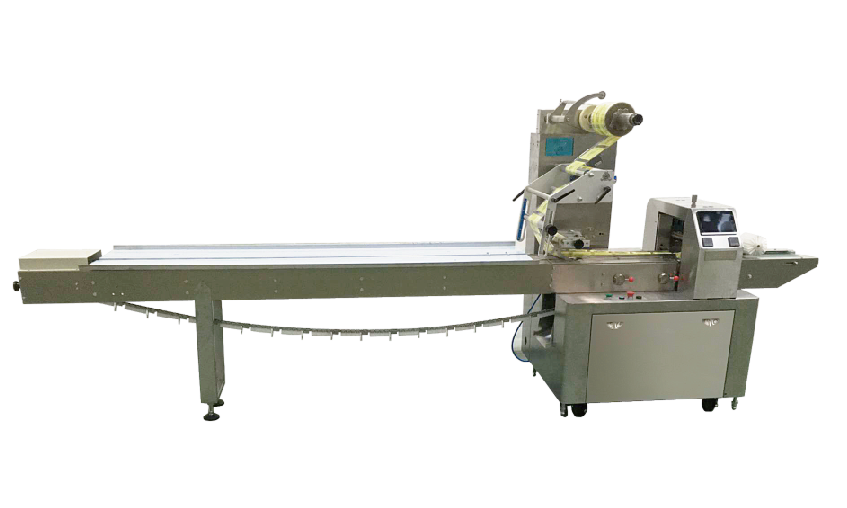
Pre-stretch and the wrapper’s film carriages
The wrapper matters as much as the film. A fixed-prestretch carriage stretches the film by a fixed ratio; a powered pre-stretch carriage adjusts the ratio on the HMI. Cast film loves powered pre-stretch — you can stretch it 250–300% and it still contains the load. Blown film has a lower pre-stretch window, because over-stretching it makes it brittle. If you buy a high-speed rotary-arm wrapper with powered pre-stretch, you are almost always better on cast film; if you buy a simple turntable wrapper with no pre-stretch, blown film will outperform cast on the same load. Match the film to the carriage, not just to the product.
Cling, UV and cold storage
Three film properties matter more than buyers expect. Cling is the tacky side that makes the film stick to itself — cast film has a controlled, consistent cling; blown film’s cling varies batch to batch. UV stabilizer is needed if pallets sit outside before shipping; unstabilized film gets brittle in sunlight. Cold storage: cast film can stiffen below freezing, while blown film stays flexible. For a freezer warehouse, specify a cold-grade cast film or go blown. If your loads go outside for a week before container loading, ask for UV-stabilized film — otherwise the film cracks on the docks and you are blaming the wrapper.
Wrap cycles: the other half of load integrity
Film is only half the answer; the wrap cycle is the other half. A good cycle wraps the pallet bottom 3–6 times (where forklifts hit it), the body 8–12 times, and the top 3–6 times (where loads shift in transit). A film that is correct but a cycle that wraps the body twice will still drop a load. SunAura programs the cycle at commissioning based on the actual load: light uniform loads get fewer wraps, tall or irregular loads get more. The HMI stores the cycle as a recipe, so the operator selects “20kg sack pallet” and the machine applies the right wraps. If your wrapper only has one fixed cycle, you are either over-wrapping (wasting film) or under-wrapping (losing loads).
What not to buy
Do not buy blown film for a quiet retail warehouse with clean, uniform pallets — you will pay more, hear more and gain nothing. Do not buy cast film for freezer storage or irregular sharp loads — it will puncture. Do not buy the cheapest cast film you can find; cling consistency is a batch-to-batch problem with cheap film, and a cling that fails on a humid day drops a pallet in transit. And do not specify film gauge without running a load test. The “23 microns always” rule is how factories overspend on film for a decade.
Operating cost: film per load
Film cost is not the roll price — it is the cost per pallet. A 17-micron cast roll has more meters per kg than a 23-micron blown roll, so even at the same price per kg, cast wraps more pallets per roll. On a 1,200-load-per-day distributor, saving 20% film per load adds up to a roll a day saved, which pays for the wrapper in under two years. Ask your film supplier for meters per roll and cost per load, not price per kg. That is the number that goes into your ROI.
Turntable vs rotary arm: the wrapper type that pairs with film
A turntable wrapper spins the pallet while the film carriage moves up and down. A rotary-arm wrapper spins the film carriage around a stationary pallet. Turntables are cheaper and fine for stable, square loads. Rotary arms are for tall, light or unstable loads that would slide off a spinning turntable — and they pair naturally with cast film at high pre-stretch, because the arm moves at a consistent speed. If you are wrapping light bags or tall unstable loads, the wrapper itself changes your film choice. SunAura sizes the wrapper to the load, not just the speed: a 1.8 m tall pallet of bulging sacks needs a rotary arm, not a turntable, regardless of film.
Edge protection and perforated film
Two optional film features worth knowing. Edge protection film has a reinforced edge that resists forklift damage at the pallet corners — useful if your warehouse has rough forklift drivers. Perforated film is pre-cut so it tears off easily at the end of the line, which saves operators time when unwrapping pallets for storage. Both add cost per roll, and both are correct only if the problem is real: edge film for high forklift damage, perforated for lines that unwrap every pallet. Do not buy both “just in case” — you will pay for features you never use.
Budgeting film and wrapper together
The cheapest line is not the cheapest wrapper plus the cheapest film — it is the combination that minimizes cost per load over five years. A powered pre-stretch wrapper costs more upfront but lets you run thinner cast film, which saves money every load. A fixed-prestretch wrapper is cheaper but forces you to use thicker film. On a 1,000-load-per-day line, the math usually favors the powered wrapper within two years. Ask your supplier for a five-year TCO comparison, not just the machine price. SunAura builds that comparison into the quote: we show the film saving against the machine premium, so you can see the payback before you sign.
Sustainability and thinner gauges
Thinner film is better for two reasons: it costs less per load, and it is less plastic. Modern cast stretch film at 15–17 microns contains loads that required 23–25 microns a decade ago, because pre-stretch carriages are better and resins are stronger. If you are still running 23-micron film on a powered pre-stretch wrapper, you are likely over-packaging — switch to a load test at 17 microns and see. Sustainability targets (PPWR reduction goals, brand owner plastic-reduction commitments) are driving this switch across the industry. The side benefit: less film means fewer roll changes per shift and less warehouse space for film storage.
FAQ
Still choosing between cast and blown? The three questions that settle it: what does your load look like (uniform vs irregular), where does it ship (paved short-haul vs rough long-haul), and what wrapper do you have (turntable vs powered pre-stretch rotary arm). Once those three are answered, the film choice is usually obvious — the rest is picking the gauge.
Can I use cast film on a manual hand-wrap dispenser?
Yes. Cast film is the standard hand-wrap film — it unwinds quietly and stretches easily. Blown hand-wrap exists but is louder and stiffer.
Does blown film really hold tighter?
At the same gauge, yes — blown has better load retention. But cast film at thinner gauge, on a properly pre-stretched machine, often contains the load just as well at lower cost.
Can I switch film on the same wrapper?
Yes. Most wrappers handle both; you may need to adjust the pre-stretch ratio and the wrap count. Run a load test after the switch.
Is cast film recyclable?
Both are polyethylene and are recyclable through industrial film recycling programs. The resin type is the same; the manufacturing process differs.
Summary
For clean, uniform, machine-wrapped loads on paved routes, cast film is the quieter, cheaper and consistent choice. For irregular, sharp, cold or outdoor loads, blown film earns its premium. Tell us your load shape, transport distance and wrapper type and we will spec the film and wrap cycle that survives the route.
Sources
Technical points referenced: SupplyTie “Cast vs Blown Stretch Film”; Mcpack “Blown vs Cast Stretch Film”; Juhong Packaging industrial comparison guide; John Maye Company cast vs blown summary; Glacier Pac stretch wrap overview. The distributor configuration is this project’s own. Film gauge and pre-stretch figures are industry estimates, not supplier specifications.