
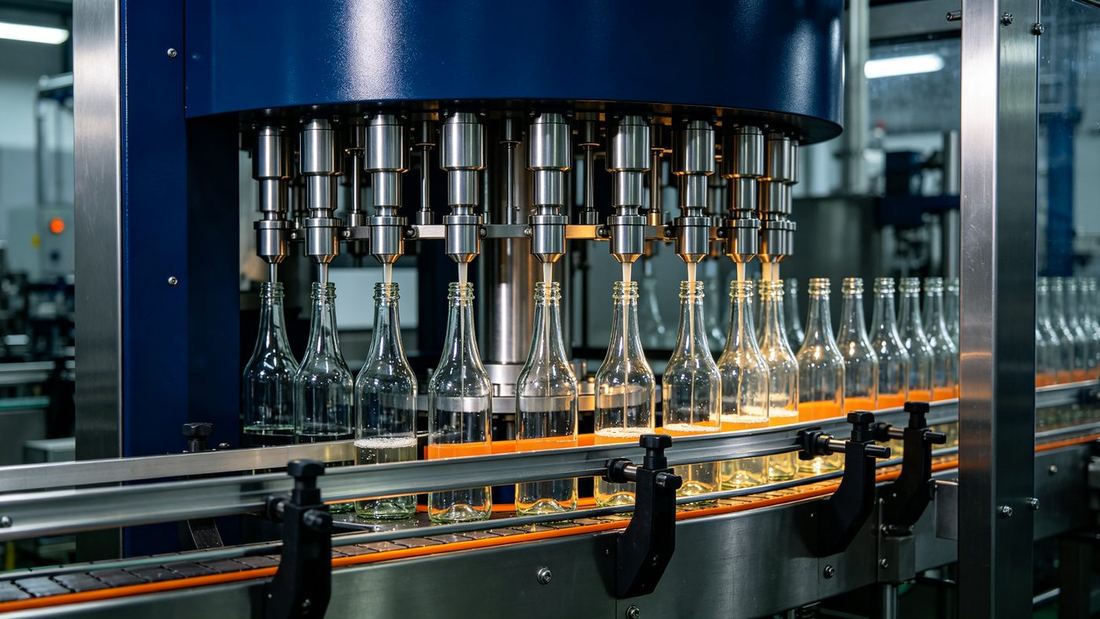
SunAura Machinery has commissioned a two-lane, 2,000-bph edible oil filling, screw-capping and induction sealing line for a cooking-oil bottler in West Africa. The customer bottles refined palm, sunflower and blended vegetable oils in 0.5 L, 1 L and 2 L PET bottles for retail and institutional distribution. The project replaced a single-lane gravity filler that could not hold fill accuracy on the heavier palm-oil winter batches.
What made this line different from a water or juice bottling project is not the throughput — 2,000 bottles per hour is modest by beverage standards. It is the product behavior. Refined oil runs 90–500 cSt, palm oil thickens sharply below 25 °C, oil strings and drips at the nozzle, and PET bottles with tamper-evident caps require an induction seal to stop leakage on a hot, humid coastal distribution route. Every station on the line was chosen against those four facts.
Why Piston Dosing, Not Overflow or Gravity Filling
Edible oil quotes usually come back with three dosing principles. The customer’s old line used gravity overflow, which is fast and cheap for thin, flat liquids — but on 0.92 g/cm³ oil at 300 cSt, overflow speed drops and the neck foam from a falling stream wrecks net weight. The alternative we specified is volumetric piston dosing: each bottle gets a fixed, meter-and-corrected volume regardless of viscosity drift, holding ±0.5% net weight across the 0.5–2 L range.
Flowmeter-based (mass) filling would have handled the viscosity and delivered the highest accuracy, but it costs roughly 40–60% more per nozzle and is aimed at high-speed runs above 6,000 bph. At 2,000 bph on a two-lane piston platform, the payback was not there. We also added a 45 °C jacketed holding and dosing circuit for the palm-oil season, so the line does not re-zero when viscosity climbs in winter.
| Dosing method | Best liquid | Net-weight accuracy | Relative cost/nozzle | This project |
|---|---|---|---|---|
| Gravity overflow | Thin water, juice, low-visc oil | ±0.5–1%, foam-prone | Low | Rejected — old line’s failure mode |
| Volumetric piston | Oil, sauce, lotion 50–1,000 cSt | ±0.3–0.5% | Mid | Selected |
| Mass / flowmeter | High-value, high-speed, varying density | ±0.1–0.3% | High (+40–60%) | Oversized at 2,000 bph |
No Drip, Tamper Evidence, and a Hot-Humid Climate
Oil strings. Every nozzle has a suction-back (drip-free) cut-off, and the filling orbit has a blow-off shield to keep oil off the neck — a dirty neck is the main reason induction seals fail. After capping with a servo spindle twin-head station (torque set per cap type, 28–38 mm screw caps), bottles pass an inline air-cooled induction sealer sized for the 38 mm pourer caps, with a reject sensor that kicks out any bottle without a verified foil seal.
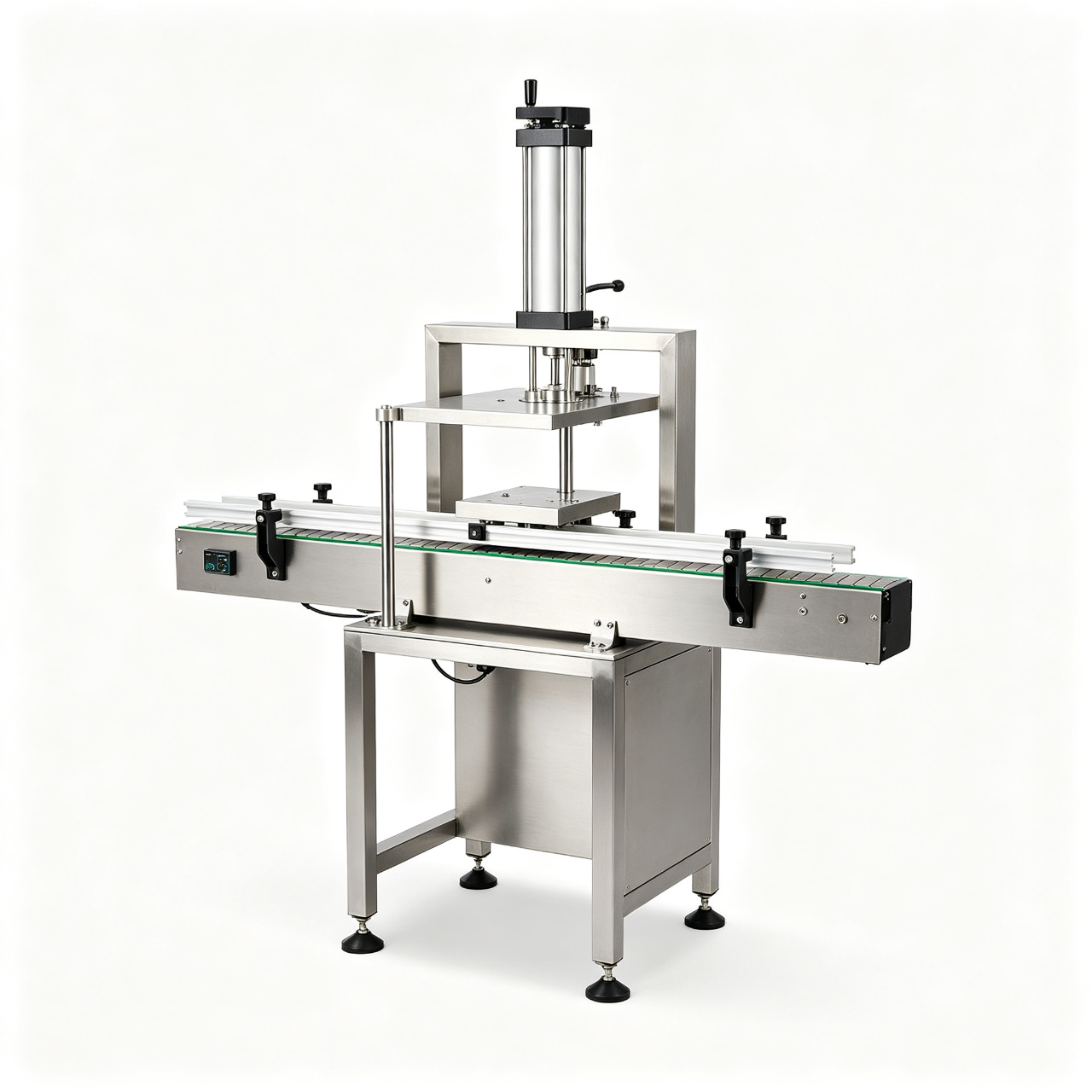
Because the plant sits in a humid coastal zone, the electrical cabinets are IP54 with sealed gland plates, and the machine frame is painted carbon steel with stainless contact parts rather than full 316 — a deliberate cost split. Full hygienic 316 construction is justified for dairy and meat lines, not for ambient oil bottling, and it would have added roughly 25% to the frame without a food-safety benefit here.
Who This Line Is For — and What We Would Specify Differently
This configuration targets bottlers at roughly 500–3,000 bph running 0.25–5 L oil, sauce, lotion or chemical products with a screw cap and a foil seal. Buyers above 6,000 bph should step up to rotary mass-flow filling; buyers below 500 bph are better served by a semi-automatic piston filler and a bench-top induction sealer. We did not push the customer to the bigger machine because the payback math did not support it.
The line passed FAT at our Qingdao workshop with the customer’s own bottles and oil viscosity samples, then shipped with a bilingual operating manual, spare-nozzle set, and a two-day commissioning and operator-training program on site. Spare parts and remote support are covered under our after-sales service terms.
Bottling oil, sauce or another viscous liquid? Send us your bottle, product viscosity and target bph to [email protected] or on WhatsApp. We will tell you whether piston, overflow or mass filling pays back, and spec the capping and sealing station to match your cap. Browse our liquid filling machines and other commissioning news first.