
For pharma and premium food, yes — a photo-eye or camera confirms the leaflet and product are inside before sealing. For candy, it is optional.
Can I add a top-load case packer later?
Yes, if the carton outfeed accumulates. SunAura designs for expansion so the case packer bolts on later without rebuilding the cartoner.
Summary
Horizontal cartoners for small flow-wrapped or rigid retail products; vertical cartoners for standing bars and mandrel-formed cartons; top-load case packers for bulky distribution packs. Match the machine to the product shape and the carton to the retail channel. Send us your product, carton size and speed and we will spec the right cartoning section — and tell you if a cheaper option will do.
Sources
Technical ranges referenced: IWK and Marchesini horizontal cartoner product overviews; Promatic horizontal intermittent cartoning guides; Bosch Packaging vertical cartoner specifications; PMMI ProSource cartoning machine buyer directory; Pearson Packaging top-load case packer literature. The Ho Chi Minh City confectionery configuration is this project’s own. Speed ranges are industry estimates, not supplier specifications.
Related reading
- Ultrasonic vs heat-jaw tube sealer for cosmetic tubes
- Air rinse vs water rinse bottle washer buying guide
100–200+ cartons a minute on small rigid products. Intermittent-motion tops out around 60–80 CPM.
Do I need a vision check on the cartoner?
For pharma and premium food, yes — a photo-eye or camera confirms the leaflet and product are inside before sealing. For candy, it is optional.
Can I add a top-load case packer later?
Yes, if the carton outfeed accumulates. SunAura designs for expansion so the case packer bolts on later without rebuilding the cartoner.
Summary
Horizontal cartoners for small flow-wrapped or rigid retail products; vertical cartoners for standing bars and mandrel-formed cartons; top-load case packers for bulky distribution packs. Match the machine to the product shape and the carton to the retail channel. Send us your product, carton size and speed and we will spec the right cartoning section — and tell you if a cheaper option will do.
Sources
Technical ranges referenced: IWK and Marchesini horizontal cartoner product overviews; Promatic horizontal intermittent cartoning guides; Bosch Packaging vertical cartoner specifications; PMMI ProSource cartoning machine buyer directory; Pearson Packaging top-load case packer literature. The Ho Chi Minh City confectionery configuration is this project’s own. Speed ranges are industry estimates, not supplier specifications.
Related reading
- Ultrasonic vs heat-jaw tube sealer for cosmetic tubes
- Air rinse vs water rinse bottle washer buying guide
Not well. Bottles topple on the infeed and do not push sideways cleanly. Bottles go in a case packer or a wrap-around loader, not a horizontal cartoner.
How fast is a continuous-motion cartoner?
100–200+ cartons a minute on small rigid products. Intermittent-motion tops out around 60–80 CPM.
Do I need a vision check on the cartoner?
For pharma and premium food, yes — a photo-eye or camera confirms the leaflet and product are inside before sealing. For candy, it is optional.
Can I add a top-load case packer later?
Yes, if the carton outfeed accumulates. SunAura designs for expansion so the case packer bolts on later without rebuilding the cartoner.
Summary
Horizontal cartoners for small flow-wrapped or rigid retail products; vertical cartoners for standing bars and mandrel-formed cartons; top-load case packers for bulky distribution packs. Match the machine to the product shape and the carton to the retail channel. Send us your product, carton size and speed and we will spec the right cartoning section — and tell you if a cheaper option will do.
Sources
Technical ranges referenced: IWK and Marchesini horizontal cartoner product overviews; Promatic horizontal intermittent cartoning guides; Bosch Packaging vertical cartoner specifications; PMMI ProSource cartoning machine buyer directory; Pearson Packaging top-load case packer literature. The Ho Chi Minh City confectionery configuration is this project’s own. Speed ranges are industry estimates, not supplier specifications.
Related reading
- Ultrasonic vs heat-jaw tube sealer for cosmetic tubes
- Air rinse vs water rinse bottle washer buying guide
SunAura Machinery Ships a Horizontal Cartoning Line to a Southeast Asian Confectionery Co-Packer: Why Horizontal Beat Vertical and Top-Load Cartoning for Pillow-Packed Candies
A confectionery co-packer in Ho Chi Minh City came to us last month with a room they had already wired for a cartoning machine. They were packing pillow-wrapped chews and fruit gummies at 250 pieces a minute, and they needed those packs dropped into retail cartons at 20 cartons a minute. They had asked three suppliers for quotes, and three suppliers had come back with three different machines: a horizontal cartoner, a vertical cartoner, and a top-load case packer. We specified the horizontal. This article explains why — and when the other two actually earn their place on a packaging line.
The three ways to put a product in a carton
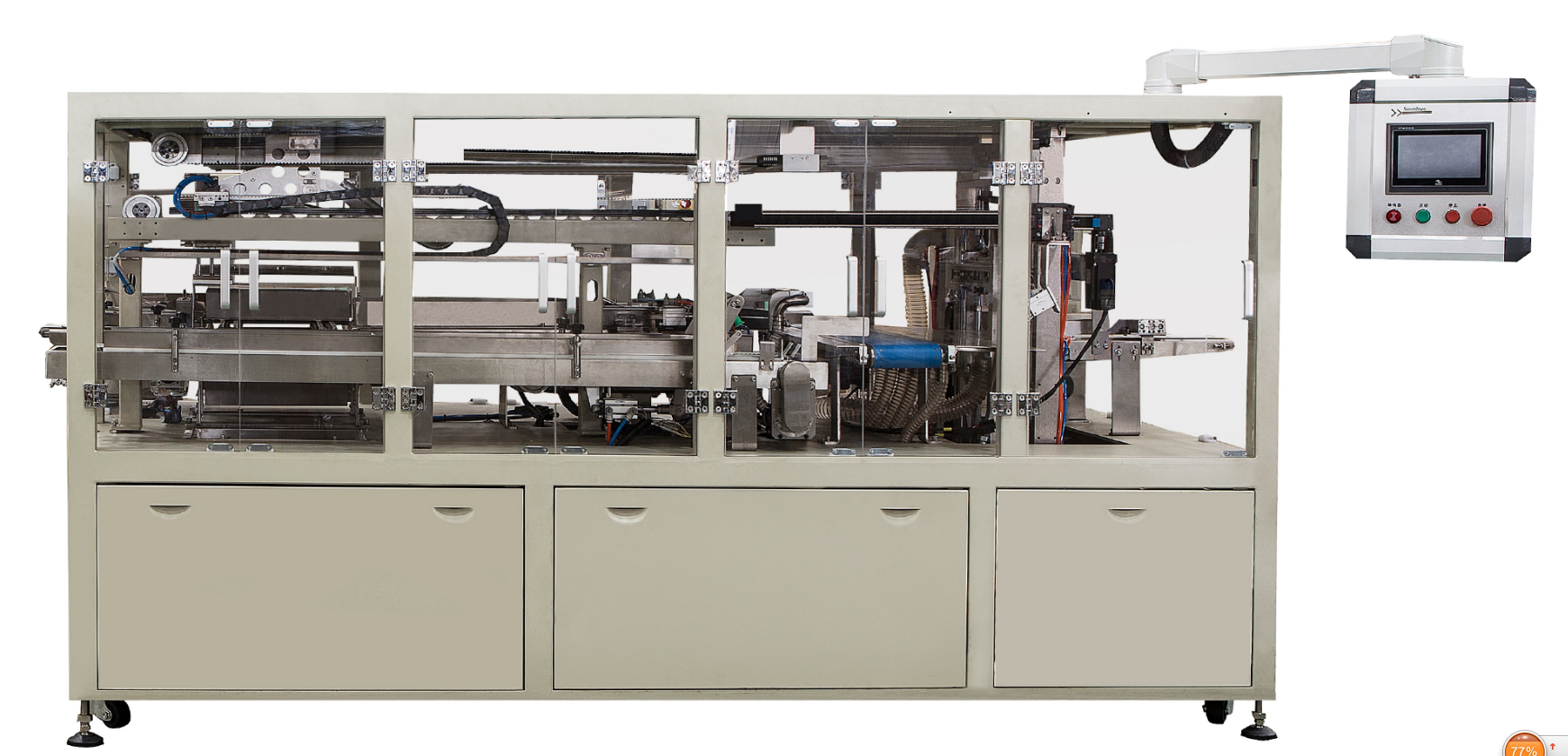
A horizontal (continuous or intermittent motion) cartoner erects a carton blank from a magazine, opens it sideways, pushes the product in from the side with a plunger, and folds and seals the flaps. A vertical cartoner picks a flat blank, forms it into a tube around a mandrel, fills it from the top, and seals the bottom flap — the classic “vertical form-fill-seal into a carton” used for biscuits and cereals. A top-load case packer picks loose products from a conveyor and drops them into an already-erected regular slotted carton (RSC) from above; it is the slowest and least polished of the three, but it is the only one that handles bulky, irregular products. All three end up with a carton on the outfeed; they differ in speed, product shape, and how polished the retail carton looks.
| Horizontal cartoner | Vertical cartoner | Top-load case packer | |
|---|---|---|---|
| Speed range | 30–200+ cartons/min | 30–120 cartons/min | 5–30 cases/min |
| Product shape | Small rigid/flow-wrapped items | Bars, biscuits, powders, liquids | Bulky, irregular, multi-item packs |
| Retail finish | Excellent (glued, crisp) | Excellent (mandrel-formed) | Functional, not retail-ready |
| Carton style | Tuck or glue end cartons | Bottom-seal, top-fill cartons | Standard RSC cases |
| Floor space | Long, narrow | Compact, vertical | Wide (picks from conveyor) |
| Relative cost | Medium–high | Medium | Low–medium |
| Best for | Candy, pharma sachets, flow wraps | Bars, cereal, biscuit cartons | Distribution cases, multipacks |
Why the horizontal won in Ho Chi Minh City
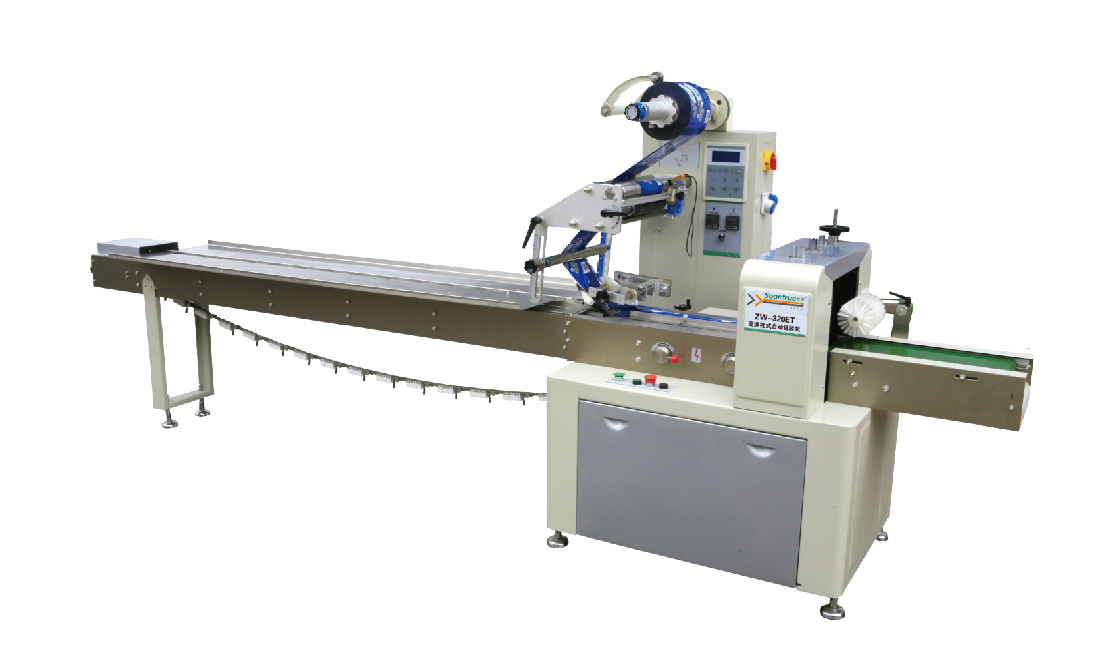
The product was pillow-wrapped chews and gummies — small, regular, and already in a flexible pack. The target carton was a 20-piece retail tuck-end carton that had to look clean on a supermarket shelf. At 20 cartons a minute, a horizontal intermittent-motion cartoner was well within its range. The horizontal machine takes the pillow packs off the outfeed of the flow wrapper, groups them, pushes them sideways into the erected carton, and seals the tuck end. The retail carton comes out crisp and branded. A vertical cartoner would have required the product to stand up and feed into a mandrel, which is awkward for loose pillow packs. A top-load case packer would have dropped the packs into an RSC that the customer would then have to re-box for retail — an extra step. We paired the horizontal cartoner with the flow wrapper upstream and a wrap-around labeler downstream, so the whole section ran unattended.
When a vertical cartoner is the right call
Vertical cartoning is the answer when the product is a bar, a stack of biscuits, a powder sachet, or a liquid pouch that stands on its own. The mandrel forms the carton around the product, which means you do not need a side-loading plunger. For a chocolate bar line running 120 bars a minute into retail cartons, a vertical cartoner is the standard. It is also the right choice when floor space is tight: the machine is tall and narrow rather than long. Vertical machines handle a wider range of carton sizes on changeover, because the mandrel adjusts rather than the whole side-loading track. SunAura specifies vertical cartoners for biscuit, cereal and energy-bar customers where the product is rigid and self-standing.
When a top-load case packer is the only correct choice
Top-load case packing is for distribution, not retail. If your product is bulky — bottled water, canned drinks, bags of snacks — and you are putting 12 or 24 units into a corrugated case for shipping, a top-load case packer or a robotic pick-and-place cell is the right answer. It will not make a crisp retail carton, but it will load an RSC case fast. For a confectionery co-packer selling to supermarkets, the retail carton is the product; for a drinks distributor, the corrugated case is the shipping vessel. Do not confuse the two. SunAura builds top-load and robotic case packers for distribution end-of-line, and horizontal cartoners for retail — we will tell you which one you actually need.
What the horizontal cartoner cannot handle
Do not put these through a horizontal cartoner: very tall or very wide products that will not pass through the side-loading throat (the carton has to be wider than the product), loose powders or liquids that need to be dosed into the carton (that is a vertical form-fill-seal job), irregular products that topple on the infeed conveyor, and hot products that cannot touch the carton blanks. If your product is a standing bar or a stack, use vertical. If it is a bulky distribution pack, use top-load. A horizontal cartoner bought for the wrong product is a machine that jams every batch.
Intermittent vs continuous motion
Within horizontal cartoners, there are two speeds. Intermittent-motion cartoners stop the carton while the plunger loads it; they run up to 60–80 cartons a minute and are cheaper. Continuous-motion (rotary or chain) cartoners load the carton while it is moving; they run 100–200+ cartons a minute and cost more. For the Ho Chi Minh City line at 20 cartons a minute, an intermittent machine was the correct choice — buying a continuous machine would have been paying 2x for speed that sat idle. Ask for your actual cartons-per-minute requirement, not the maximum. Most buyers over-specify by a factor of two.
Carton sealing: tuck vs glue vs tear-tape
Tuck-end cartons are the default for retail candy: they are fast to seal, no glue needed, and easy to open. Hot-melt glued cartons are tamper-evident and used for pharma and premium products. Tear tape adds easy-opening but costs more per carton. The choice affects the cartoner head, so specify it at quote time. A tuck-head cartoner cannot easily be converted to glued; the glue head is a separate option. For a confectionery line, tuck-end is standard. For a pharma line, glued with tamper-evidence is required.
Changeover and multi-SKU
A co-packer changing carton sizes twice a shift needs tool-less changeover: quick-release guides, recipe-driven plunger positions, and pre-set carton magazines. Modern servo cartoners store the carton size in the HMI and change over in 10–20 minutes. Older mechanical cartoners take an hour and need a mechanic. When you compare quotes, ask for the actual changeover time on your two most different carton sizes, and ask whether the spare change parts are included. SunAura tests changeover at FAT with the customer’s own cartons, so the quoted time is the real time.
Carton blank quality: the hidden failure point
Cartoning machines jam when carton blanks are bad. Blanks that are out of square, printed on the wrong side, or stored in humid conditions will not fold cleanly. A good cartoner has a blank magazine with a detection sensor that stops the line if a blank is missing or doubled. For a co-packer buying cartons from multiple printers, blank variation is a daily reality. Specify a magazine with automatic separation and a double-blank detector. SunAura includes blank detection as standard, because we have seen too many lines stopped by a bad carton.
Leaflets, inserts and sampling
Pharma and premium food often require a leaflet, instructions, or a coupon inside the carton. An inserter picks the leaflet from a magazine and places it in the carton before the product loads. This adds a station, a cost, and another failure point. For a candy line, you do not need it. For a pharma line, it is required by regulation. When you ask for a cartoner quote, say whether you need leaflets — the inserter is not a cheap add-on after the fact.
Printed cartons and registration
If your cartons are pre-printed, the cartoner has to fold them the right way out — a simple detail that causes show-stopping errors when a supplier ships blanks reversed. For cartons with a registered design (barcode on a specific flap), the machine needs a photo-eye to confirm the printed side faces out. For unprinted or blank cartons that get labeled later, this does not matter. Ask your carton printer for a folded proof, and send that proof to the machine supplier before FAT. A cartoner that folds every carton inside-out is a one-day fix that becomes a two-week disaster.
What not to buy
Do not buy a horizontal cartoner for standing bars or bulky distribution packs. Do not buy a continuous-motion cartoner for a 20 CPM line. Do not buy the cartoner without the infeed grouping and overhead conveyor from the upstream flow wrapper — hand-feeding a horizontal cartoner defeats the purpose. And do not forget the outfeed conveyor to the case packer: cartons have to be accumulated and collated before they go into a shipping case. SunAura quotes the whole section — flow wrapper, cartoner, outfeed, case packer — as one integrated line.
Budgeting the cartoning section
The cartoner price is not the line price. The real section includes: the infeed conveyor and grouping system, the carton blank magazine, the loading plunger or robot, the sealing head (tuck or glue), the carton outfeed and accumulator, and the integration with the upstream machine. A quote for “a horizontal cartoner” without the infeed and outfeed is not a usable line. Ask for the fully integrated section cost, and compare that number across suppliers. Cartoning is 15–25% of a typical food packaging line budget — skimping here shows up as cartons jammed on the floor every shift.
FAQ
Can a horizontal cartoner handle plastic bottles?
Not well. Bottles topple on the infeed and do not push sideways cleanly. Bottles go in a case packer or a wrap-around loader, not a horizontal cartoner.
How fast is a continuous-motion cartoner?
100–200+ cartons a minute on small rigid products. Intermittent-motion tops out around 60–80 CPM.
Do I need a vision check on the cartoner?
For pharma and premium food, yes — a photo-eye or camera confirms the leaflet and product are inside before sealing. For candy, it is optional.
Can I add a top-load case packer later?
Yes, if the carton outfeed accumulates. SunAura designs for expansion so the case packer bolts on later without rebuilding the cartoner.
Summary
Horizontal cartoners for small flow-wrapped or rigid retail products; vertical cartoners for standing bars and mandrel-formed cartons; top-load case packers for bulky distribution packs. Match the machine to the product shape and the carton to the retail channel. Send us your product, carton size and speed and we will spec the right cartoning section — and tell you if a cheaper option will do.
Sources
Technical ranges referenced: IWK and Marchesini horizontal cartoner product overviews; Promatic horizontal intermittent cartoning guides; Bosch Packaging vertical cartoner specifications; PMMI ProSource cartoning machine buyer directory; Pearson Packaging top-load case packer literature. The Ho Chi Minh City confectionery configuration is this project’s own. Speed ranges are industry estimates, not supplier specifications.
Related reading
- Ultrasonic vs heat-jaw tube sealer for cosmetic tubes
- Air rinse vs water rinse bottle washer buying guide