
October 14, 2026 | by Frank, SunAura Machinery Project Engineering
QINGDAO, China — SunAura Machinery has completed factory acceptance testing (FAT) for a complete turnkey packaging line ordered by a Mexican spice and sauce manufacturer based in Guadalajara, Jalisco. The line, which combines powder filling, sachet packing, bottle filling and end-of-line case packing, is scheduled for shipment at the end of October and commissioning at the customer’s plant in mid-November. The order is one of a growing number of mixed dry-and-wet projects we have delivered in 2026, and it shows how a mid-sized food producer can automate the whole downstream process without buying a separate line for every product type.
The Customer’s Challenge
The Mexican producer packages a range of dry spices (chili powder, oregano, cumin, black pepper), seasoning blends, and wet sauces (mole, salsa, hot sauce) into both sachets and bottles. Their previous operation used two semi-automatic fillers — one for powders and one for liquids — with manual bagging and hand-packed cases. They were running three shifts just to keep up with domestic demand, and labor costs in Jalisco had risen roughly 15% over the past two years.
They approached us in June 2026 with a clear goal: automate the entire downstream packaging process from bulk product to sealed, cased pallets, without doubling headcount. The line needed to handle both dry and wet products on the same equipment platform, with quick changeover between SKUs and a small footprint, because their leased plant in Guadalajara had limited floor space.
There were three technical problems that ruled out a simple “buy one machine” solution. First, fine spice powders dust heavily, and any powder that lands in a heat seal produces a weak, leaking sachet. Second, the wet sauces range from thin (table salsas) to viscous pastes (mole), so a single filling principle would not cover the viscosity range. Third, the customer runs a rotating schedule of more than 40 SKUs, some of them private label for supermarket chains, which means changeover, recipe memory and label change had to be measured in minutes rather than hours.
The Line We Built
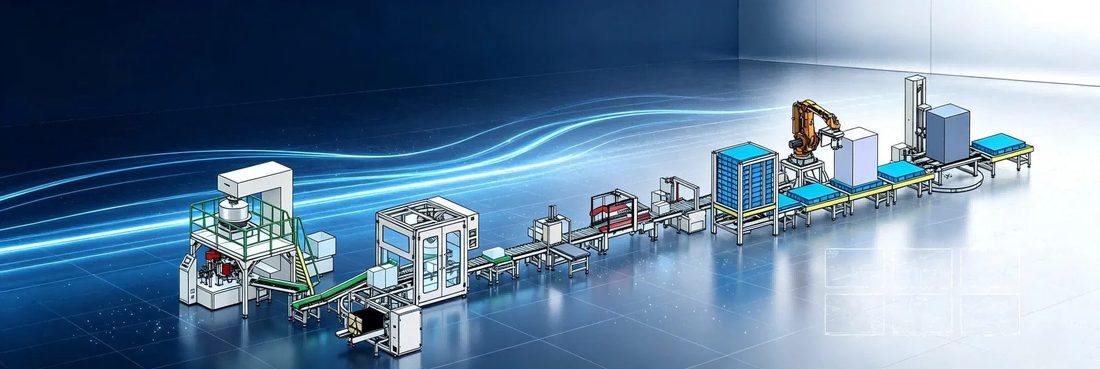
The turnkey solution we engineered includes integrated modules connected by food-grade stainless steel conveyors and controlled from a single HMI:
- Auger filler + VFFS machine for spice sachets (1g–50g), running up to 60 sachets/min on laminated rollstock with a photocell for pre-printed film, auger dosing accurate to ±1% on most blends.
- Piston filler + capping + labeling machine for sauce bottles (250ml–1L PET bottles), at up to 1,200 bottles/hour with automatic cap feeding, servo-controlled piston volumes and front-and-back labeling.
- Semi-automatic case erector + top-case sealer with hot-melt glue, feeding a low-level palletization station with a roller accumulation conveyor.
- Central HMI with recipe memory storing fill weight, film length, seal temperature, cap torque and label position per SKU, so an operator recalls a product code instead of dialing settings by hand.
All product-contact parts are 304 stainless steel with FDA-compliant seals, and the auger funnel and piston cylinders are quick-release for washdown. The electrical panels are wired for Mexico’s 220V/60Hz supply, the HMI and manuals are in Spanish, and the machine carries a CE-style guarding package that also satisfies the customer’s corporate safety audit.
Line Specifications at a Glance
| Parameter | Dry sachet module | Wet bottle module |
|---|---|---|
| Product | Spices, seasoning blends, chili powder | Salsa, mole, hot sauce, liquid condiments |
| Pack format | 3/4-side seal sachet, 1–50 g | PET bottle, 250 ml–1 L |
| Max speed | 60 sachets/min | 1,200 bottles/hour |
| Filling principle | Servo auger | Servo piston (with rotor option for paste) |
| Dosing accuracy | ±1% typical | ±0.5% at target volume |
| End seal | Heat seal, dust-control jaws | Induction cap sealing + screw cap |
| Contact material | 304 stainless, food-grade seals | 304 stainless, quick-release cylinders |
| Power | 220V / 60Hz, three-phase, wired for Mexico | |
How We Handled the Dry-and-Wet Mix
The detail buyers ask us about most is how we stopped spice dust from contaminating the sachet seals. The auger is fitted with a clamp-on dust extraction collar that pulls a small negative pressure at the funnel, and the forming tube carries an extended fin section so the longitudinal seal is formed well away from the powder drop zone. The VFFS jaw faces use serrated knurling that bites through the small amount of residual dust, and the operator runs a scheduled air blow of the seal area every two hours. The combination takes reject rates from the customer’s previous manual figure of 3–4% to a measured 0.6% during FAT.
For the wet side, the automatic linear filling machine for liquids was chosen over a timed-flow filler because the sauce viscosity changes with ambient temperature in a non-climate-controlled plant. A positive-displacement piston delivers the same volume whether the mole is cold and thick at 6 a.m. or warm at 2 p.m., and swapping a cylinder is a five-minute job for a different volume. For the thinnest products, the customer also keeps a 12-head piston filler configuration on a separate manifold, so they can scale up a single high-volume SKU without buying a second monoblock.
Why This Project Matters
Mexico’s food processing sector is one of the fastest-growing in Latin America. The country is a major exporter of prepared foods, and domestic demand for packaged spices, sauces and condiments continues to grow as urbanization accelerates and supermarket private-label ranges expand. Many mid-sized Mexican food producers are at the same stage this customer was — they have outgrown semi-automatic equipment but are not yet at the volume that justifies a fully automated European line.
This is the sweet spot for Chinese-built packaging equipment. A European line of equivalent capacity would run $600,000–$900,000; our turnkey solution came in under $180,000, including shipping, commissioning and a one-year warranty. The customer’s payback period is projected at 14 months based on labor savings alone, and under 11 months once the reduction in leaked sachets, overweight fills and reworked cases is included.
Project Timeline
| Stage | Timing | What was delivered |
|---|---|---|
| Specification & layout | June 2026 | Floor plan, SKU list, speed and utility requirements |
| Engineering & build | July–September | Mechanical build, electrical panel, Spanish HMI |
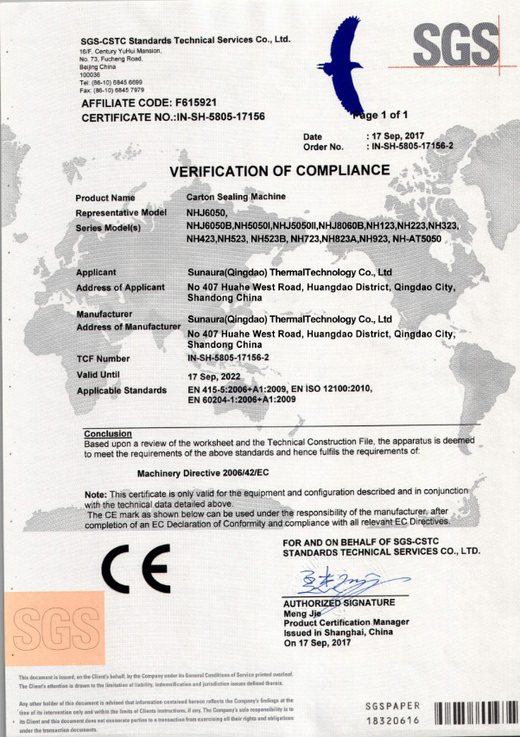
| FAT in Qingdao | Early October | 40 SKUs run, SGS-witnessed, 0.6% reject measured |
| Shipment | Late October | Two 40HQ containers to Manzanillo |
| Commissioning & training | Mid-November | Install, 7-day trial, operator training |
Commissioning, Training and Spare Parts
Our commissioning engineer will fly to Guadalajara for installation, operator training and a seven-day production trial. Training covers changeover between sachet and bottle modules, recipe setup, daily cleaning, and the handful of first-line adjustments that prevent most seal and fill issues — including the sealing fundamentals we explain in our flow wrapper sealing temperature, pressure and dwell-time guide. The customer also ordered a recommended spare parts kit — sealing jaws, auger sleeves, piston seals and conveyor belts — shipped with the machine so they are not waiting on international freight after commissioning.
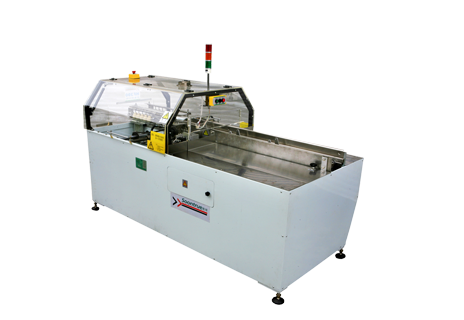
For customers moving fragile or unstable loads downstream, we often pair this kind of end-of-line cell with a pallet wrapper; the same integrator approach is described in our recent rotary-arm pallet wrapping and pallet-stability project. The carton handling in this order uses an automatic case erector with bottom sealing feeding a powered roller conveyor accumulation section, which is what lets one operator run both packing and palletizing.
What the Quotation Included, and How We Avoided Hidden Costs
One of the most common reasons a turnkey line goes over budget is scope that is agreed verbally but not written down. For this project we issued a line-by-line quotation so the customer could see exactly what was included and what was priced separately. The machine price covered the auger filler and VFFS, the piston filling/capping/labeling monoblock, the case erector and case sealer, the connecting conveyors, the central HMI, Spanish documentation, and the commissioning visit. It also included a documented set of mechanical, electrical and pneumatic interfaces between modules, which is what makes the line start as one system rather than a collection of machines.
Priced separately — and listed that way on purpose — were the spare parts kit, the air compressor, the nitrogen generator the customer chose to add later for modified-atmosphere sachets, and the stretch wrapper that will be added when throughput grows. Utilities (power, compressed air to the specified pressure and flow, and floor drainage) were the customer’s responsibility, with the exact values given in a site-utility sheet so there were no surprises at installation. This is the same discipline we recommend for any buyer evaluating a turnkey packaging line: a cheaper quotation that omits interfaces, commissioning or the correct electrical standard almost always costs more by the time the line is running.
Packaging Materials Tested During FAT
Because seal performance depends on film as much as on machine settings, the customer sent their actual sachet rollstock and bottle cap liners to Qingdao before the FAT rather than relying on our test film. We ran the four highest-volume spice blends and the three most difficult sauces (the thickest mole, the most acidic salsa and a low-viscosity hot sauce) on the real materials. On the sachet side this confirmed the seal-temperature window for each film and the dust-control setting; on the bottle side it confirmed cap torque, induction-seal foil selection and label adhesion on a slightly damp bottle surface after filling.
Testing on real materials matters because a line that passes on a generic film can fail the moment a buyer’s printed, thinner or recycled-content roll is loaded. It also gives the customer a documented baseline — fill weight, seal temperature, cap torque and reject rate for each SKU — that their team can reproduce on day one instead of rediscovering the settings during paid production.
Frequently Asked Questions
Can one line really pack both dry powders and wet sauces?
Yes, but only as two purpose-built modules sharing a conveyor, HMI and end-of-line system. You cannot pour wet sauce through an auger designed for powder. The economics work when the two products share a downstream case-packing and palletizing area, which is the case for most multi-SKU food producers.
How quickly can the line change between SKUs?
Within a module, a same-format change (different label or recipe) takes under 10 minutes using stored recipes. A full change from sachet to bottle is a production-schedule decision rather than a changeover, because the modules are parallel and the plant runs each on its own shift block.
What reject rate should I expect on spice sachets?
With dust extraction, extended fin seals and serrated jaws, a well-tuned line should run at under 1% seal rejects. During FAT this line measured 0.6%, against the customer’s previous 3–4% on manual equipment.
Is the HMI and documentation available in Spanish?
Yes. For this order the HMI, machine labels, operation manual and maintenance manual were supplied in Spanish; the commissioning engineer worked through a bilingual checklist with the local team.
What is the typical lead time for a line like this?
From approved layout to FAT-ready, roughly 10–14 weeks for this size of mixed line, followed by shipping and a week of on-site commissioning. Exact timing depends on the number of SKUs and whether SGS or third-party inspection is required.
What Comes Next
The line will be packed into two 40HQ containers at our Qingdao port facility and shipped to Manzanillo, Mexico, in late October. After commissioning, our after-sales and spare-parts support continues remotely, with remote HMI diagnostics and a named application engineer for the warranty period. The customer has already reserved a second build slot for a nitrogen-flushed sachet variant aimed at export orders, where the longer shelf life from modified-atmosphere packaging is expected to open up retail channels beyond the domestic market.
Planning an automated packaging line? Whether you pack spices, sauces, powders, liquids or solids, we engineer turnkey lines tailored to your product, speed and site conditions. Browse our liquid fillers, flow wrappers, case erectors and integrated packaging lines, or see the machines in person on our workshop page. Send your product and packaging requirements through the contact page and our engineering team will respond with a layout and quotation.