

When procurement teams request budget approvals for a new automatic packaging line, the conversation almost always starts with the machine price tag. A 20-foot end-of-line system looks expensive enough on its own — add integration, installation, and operator training, and the number climbs fast. Yet industry data from machinery manufacturers and packaging consultants consistently shows that the initial purchase price accounts for only 40 to 55 percent of what a packaging line actually costs over its service life. The remaining 45 to 60 percent comes from energy consumption, consumables, labor, maintenance, downtime, and lost production capacity that rarely make it into the spreadsheet before the order is placed.
At SunAura Machinery, we have engineered and commissioned packaging lines for food, chemical, new energy, and automotive parts factories across more than 30 countries. In our experience, the buyers who come back with regret are almost never the ones who paid 10 percent more for a better-built machine — they are the ones who chased the lowest quote and then discovered that the “discount” machine consumes 15 percent more film, breaks down twice as often, and requires a specialized technician on call every weekend.
This guide walks you through a practical total cost of ownership (TCO) framework specifically for automatic packaging lines. We will cover every cost line item most buyers forget to calculate, provide a real-world comparison table, and give you a checklist to take into your next supplier evaluation.
What “Total Cost of Ownership” Actually Means for Packaging Lines
Total cost of ownership is the complete financial picture of owning and operating a piece of equipment over its expected service life — typically 8 to 12 years for an industrial packaging line. It goes far beyond the invoice price and includes everything from the foundation concrete you pour before delivery to the spare parts you stock in your maintenance room.
For a packaging line, TCO breaks down into six major cost categories:
- Capital expenditure (CAPEX): machine purchase price, controls upgrade, integration engineering, installation, and site preparation.
- Energy costs: electricity, compressed air, vacuum, and heating consumed by every machine on the line.
- Consumables: packaging film, tape, strapping, hot melt glue, vacuum bags, and labels.
- Labor: operators, line attendants, maintenance technicians, and quality inspectors.
- Maintenance and spare parts: scheduled maintenance, wear parts, emergency repairs, and technical support contracts.
- Downtime and lost production: unplanned stoppages, changeover time, quality rejects, and underperformance vs. rated speed.

Step 1: Calculate the True CAPEX — Not Just the Machine Quote
Most procurement teams compare quotes line by line and pick the lowest. But the machine quote is rarely the full CAPEX. Here is what hides underneath:
Site Preparation and Civil Works
A heavy-duty case erector or robotic palletizer requires a reinforced concrete foundation, often 200 to 300 mm deep, leveled to within 1 mm per meter. If your factory floor was not engineered for this load, the foundation pour alone can add $8,000 to $25,000. Conveyor runs between machines need floor space that may require relocating existing workstations or storage racks.
Integration and Controls Engineering
Buying machines from three different vendors means three PLC protocols, three HMI screens, and a custom integration layer. The controls engineering for line synchronization — handshaking signals, conveyor speed matching, reject logic, and OEE data collection — typically costs 12 to 20 percent of the combined machine price. When you buy a turnkey line from a single supplier like SunAura Machinery integrated packaging lines, this integration cost is baked into the proposal, and you hold one vendor accountable for the whole system.
Installation, Commissioning, and Validation
Mechanical installation, electrical connection, dry commissioning, and production trial runs typically take 2 to 6 weeks for a multi-machine line. If the line runs at 60 boxes per minute and each box carries $8 of finished product, every week of delayed commissioning costs you over $400,000 in delayed output. Experienced suppliers commission faster — and they bring their own engineers so you do not burn your maintenance team’s overtime budget.
Step 2: Energy and Utility Costs — The Silent TCO Drain
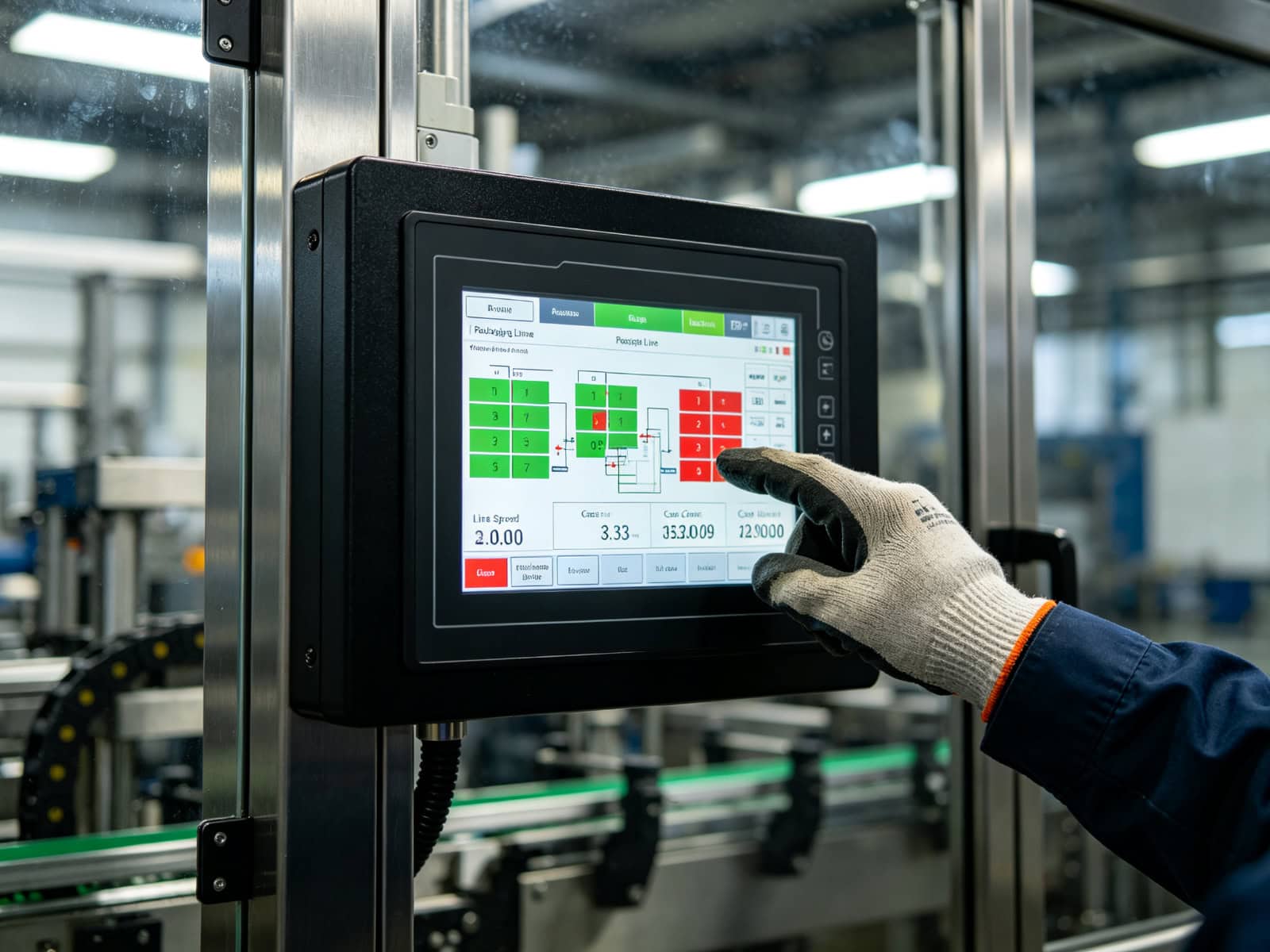
Energy is the most underestimated line item in packaging equipment purchasing. A typical automatic carton sealing and strapping line consumes 8 to 15 kW of continuous power. Add a shrink tunnel (30 to 60 kW), a vacuum sealer (5 to 12 kW), or a thermoforming machine (20 to 40 kW), and the annual electricity bill becomes a six-figure line item.
Compressed air is even more expensive. Many buyers do not realize that pneumatic actuators on a budget sealer or case former can consume 0.5 to 1.5 m³ of compressed air per minute. At typical industrial electricity rates of $0.10–$0.15 per kWh, a 1 m³/min air leak or overconsumption costs $2,000–$3,500 per year — per machine. Multiply that across a full line and you are looking at $10,000–$20,000 annually that no one budgeted for.
Servo-driven machines consume 30 to 50 percent less energy than equivalent pneumatic systems because servos only draw power when moving. If you are comparing two quotes and one specifies servo drives for the main motion axes, that premium pays for itself in 3 to 5 years through energy savings alone. This is one reason we recommend servo-driven thermoforming machines and high-speed servo pillow wrappers for lines running two or more shifts.
Step 3: Consumables — The Hidden Margin Killer
Packaging consumables look small on the invoice, but they scale linearly with production volume. A line running 50 boxes per minute for 20 hours a day uses roughly 600,000 boxes per month. If a cheaper case erector tears or jams even 0.5 percent of boxes, that is 3,000 lost boxes per month — at $0.80 each, that is $2,400 per month, or $28,800 per year.
Similarly, film and tape consumption varies significantly between machine designs. A well-built carton sealer applies tape at exactly the correct tension and overlap, wasting 3 to 5 percent less tape than a low-cost unit. Over a year, that savings can exceed the price difference between the two machines.
Action item for your supplier comparison: ask each vendor for their documented consumable consumption rates (tape meters per box, film grams per pack, strapping cycles per strap) under your actual product specifications. This is where the real cost difference shows up.
Step 4: Labor — How Automation Actually Changes Headcount
Automation is often sold as “labor saving,” but the TCO truth is more nuanced. An automatic line does not eliminate labor — it transforms it. Instead of three operators hand-sealing and hand-strapping, you now need one skilled line operator and one maintenance technician on call.
The key TCO question is: what is the loaded labor cost of each role in your factory? In Eastern Europe or Southeast Asia, a line attendant costs $25,000–$35,000 fully loaded per year. In Western Europe or North America, the same role costs $55,000–$75,000. The ROI of automation shifts dramatically depending on your labor geography. A $120,000 case erector that replaces two manual operators pays back in 18 months at $60,000/year labor, but takes over 5 years at $30,000/year.
Another often-missed factor is operator fatigue and error rate. Manual sealing and strapping is repetitive work with high turnover. Every operator ramp-up costs 40 to 80 hours of training time. Automated lines with HMI recipe selection reduce this ramp-up to 8 to 16 hours for a trained technician.
Step 5: Maintenance and Spare Parts — Budget 3–5% of CAPEX Annually
Industry standard for industrial packaging equipment is an annual maintenance budget of 3 to 5 percent of the original machine purchase price. This covers scheduled lubrication, belt replacement, sensor cleaning, seal replacement, and wear part rotation.
Where buyers get burned is not in scheduled maintenance — it is in unplanned downtime from parts availability. A cheap machine with no local parts support can sit idle for 3 weeks waiting for a custom gearbox to arrive from overseas. At 60 boxes/minute and $6 per box margin, that is $1.8 million in lost revenue. When evaluating suppliers, ask:
- What is the typical lead time for critical wear parts?
- Do they stock common spare parts at their regional service center?
- Are wear parts standard catalog components or custom-made?
- What does the annual service contract cover, and what is excluded?
At SunAura Machinery, we stock high-wear consumables (belts, heaters, sensors, grippers) in our Qingdao warehouse and ship most parts within 48 hours to our overseas customers. This kind of service transparency is part of the TCO conversation — it should be in your supplier comparison table, not just a footnote.
Step 6: Downtime and Lost Production — The Largest Hidden Cost
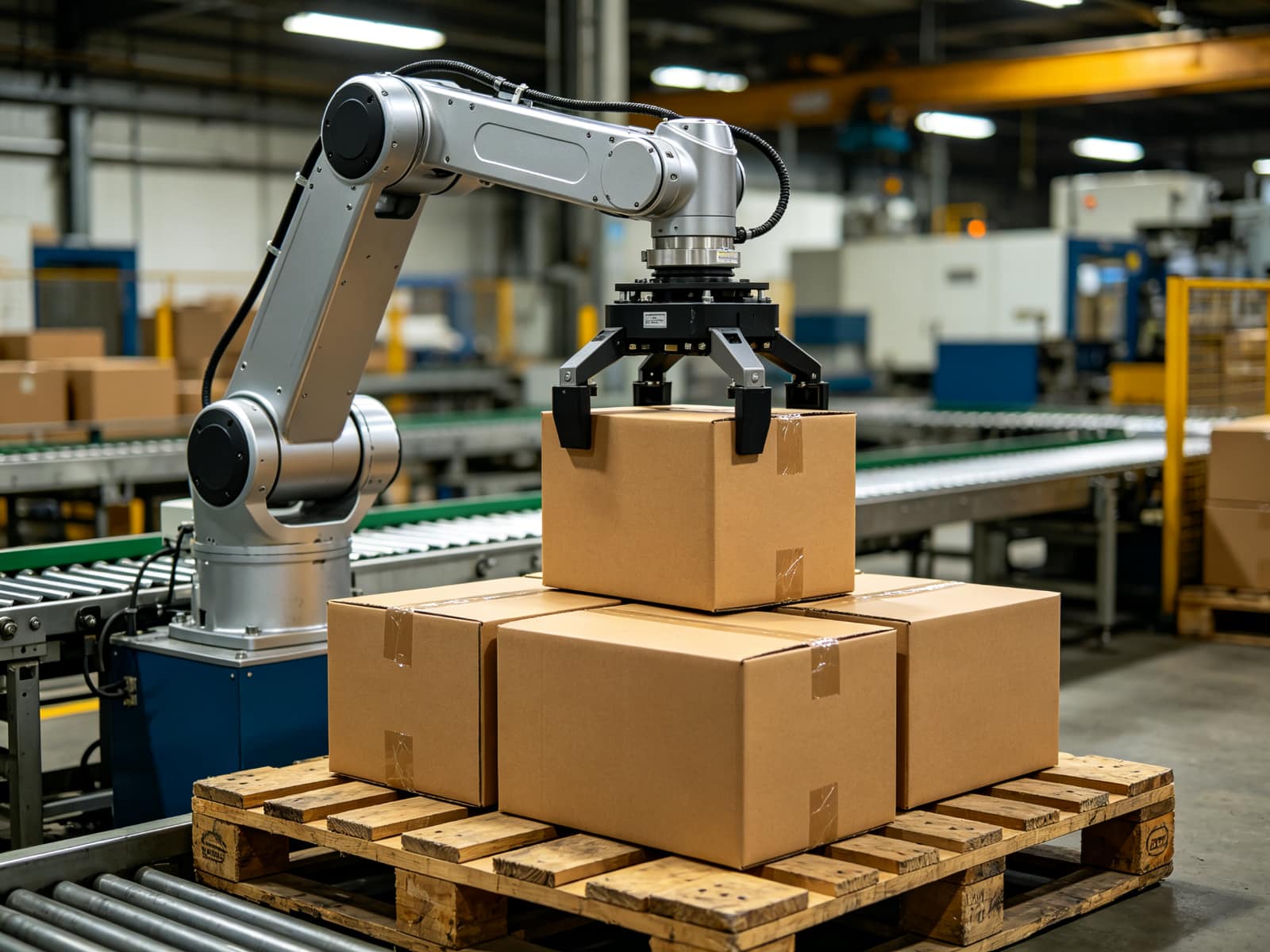
Downtime is the single largest TCO factor that never appears on a purchase quote. Every minute a packaging line is not running, your upstream production backs up and your downstream shipping delays.
Industry benchmarks for well-maintained automatic packaging lines show 92 to 96 percent OEE (Overall Equipment Effectiveness). A poorly integrated or low-quality line runs at 75 to 85 percent OEE. The difference: at 60 boxes/minute, a 10-percentage-point OEE gap equals 315,000 lost boxes per year. At $4 per box contribution margin, that is $1.26 million in lost revenue annually.
Sources of downtime that should be in your TCO model:
- Changeover time: switching between product sizes, film rolls, or case formats. Fast-changeover designs (quick-release guides, recipe-based HMI) cut changeover from 45 minutes to 10 minutes.
- Jams and misfeeds: poor product handling design. Quality sensors and automatic jam recovery reduce these dramatically.
- Quality rejects: under-filled bags, misaligned seals, or poorly sealed cases that must be reworked. Precision servo drives directly reduce rejects.
- Unexpected breakdowns: component failure. This is where build quality and parts availability matter most.
TCO Comparison: Budget Machine vs. Premium Machine Over 10 Years
Let us put numbers to it. Consider a typical end-of-line packaging system including a case erector, carton sealer, strapping machine, conveyor, and palletizer — configured for a food packaging factory running two shifts.
| Cost Category (10-Year Total) | Budget-Grade Machine | Premium Engineering Machine | Difference |
|---|---|---|---|
| Initial CAPEX (machines + install) | $280,000 | $420,000 | +$140,000 |
| Energy + compressed air | $95,000 | $62,000 | -$33,000 |
| Consumables (film/tape/strapping) | $180,000 | $145,000 | -$35,000 |
| Labor (1 operator + tech support) | $620,000 | $540,000 | -$80,000 |
| Maintenance + spare parts | $75,000 | $52,000 | -$23,000 |
| Downtime / lost production | $1,100,000 | $380,000 | -$720,000 |
| 10-Year TCO | $2,350,000 | $1,599,000 | -$751,000 |
The budget machine wins on sticker price by $140,000 upfront — but over a 10-year service life, it costs $751,000 more in total. The downtime line alone accounts for nearly the entire gap. This is why experienced packaging engineers tell procurement teams: the cheapest quote is almost never the cheapest line to own.
Your Packaging Line TCO Checklist
Before you send out RFQs, use this checklist to make sure every vendor responds to the same cost dimensions:
Technical Specification Checklist
- Actual rated speed under your product specs (not theoretical max speed)
- Energy consumption: kW per machine, and total line kW at full load
- Compressed air consumption: m³/min per machine
- Consumable consumption rates: tape meters/box, film grams/pack, strapping cycles/strap
- Changeover time between your top 3 product formats
- Expected OEE at steady-state production
- Noise level and guarding compliance (CE/UL where applicable)
Supplier and Service Checklist
- Spare parts inventory location and lead time for wear items
- Warranty terms: what is covered, what is excluded, duration
- Commissioning timeline from contract signing to production run
- Operator and maintenance training included (days, language, location)
- Remote diagnostics capability and response time
- Reference customers in your industry and region
Integration Checklist
- Who is responsible for line-wide controls integration?
- What protocol will machines communicate over (PROFINET, EtherNet/IP, etc.)?
- How is OEE data collected and displayed?
- What are the handshaking signals between machines?
- Who provides the connecting conveyor layout and motor sizing?
If you need help assembling a TCO model for your specific product mix and factory conditions, our engineering team at SunAura Machinery can review your product specs and provide a detailed cost projection — including realistic consumable and downtime estimates based on your target production rate.
Frequently Asked Questions
What percentage of TCO is typically the initial machine price for a packaging line?
For a fully automated end-of-line packaging system, the initial purchase price typically represents 40 to 55 percent of the 10-year TCO. The remaining 45 to 60 percent comes from energy, consumables, labor, maintenance, and — the largest factor — unplanned downtime and lost production. Budget-grade machines tend to fall at the lower end of this range, meaning their sticker price is an even smaller fraction of total cost because hidden costs are disproportionately higher.
How do I calculate downtime cost for my packaging line?
Multiply your line’s box-per-minute output by 60 minutes by your average contribution margin per box. That gives you the revenue lost per hour of downtime. For example: 60 boxes/min × 60 min × $4/box = $14,400 lost per downtime hour. Multiply by the expected annual downtime hours (benchmark: 2 to 5 percent of available production time for a well-maintained line). This single number usually dwarfs every other TCO line item.
Is a servo-driven packaging line worth the price premium?
Servo-driven machines typically carry a 20 to 40 percent price premium over pneumatic equivalents, but they deliver 30 to 50 percent energy savings, faster changeover (recipe-based vs. manual adjustment), higher speed repeatability, and significantly fewer wear parts. For lines running two or more shifts, the servo premium typically pays back in 2 to 4 years. For single-shift or low-speed applications, the payback may extend to 5 to 7 years. You can explore our servo pillow packaging machines and piston filling machines with servo drive to compare configurations.
How much should I budget for annual maintenance on an automatic packaging line?
Plan for 3 to 5 percent of the original machine purchase price per year. For a $300,000 line, that is $9,000 to $15,000 annually. This covers scheduled maintenance, wear parts, and consumable maintenance items (belts, seals, sensors). If you are buying a budget machine from a vendor with no local parts support, budget 6 to 8 percent to account for emergency shipping and expediting fees.
What is a realistic OEE target for an automatic packaging line?
Well-engineered, well-integrated lines running at stable production conditions typically achieve 92 to 96 percent OEE. Lines with frequent product changeovers or complex multi-format requirements run at 85 to 92 percent. If a supplier promises OEE above 97 percent, treat it with caution — no industrial packaging line runs continuously at that efficiency over a full year.
Should I buy a turnkey line from one supplier or piece together machines from multiple vendors?
A turnkey single-supplier line has lower integration risk, one point of accountability, faster commissioning, and typically better overall OEE — but may cost 10 to 15 percent more upfront. Multi-vendor sourcing can reduce initial price but multiplies integration engineering, control systems mismatch, and downtime during start-up. For lines where downtime cost is significant (high-margin products, high-speed lines), a turnkey supplier almost always wins on TCO. Explore our turnkey packaging line solutions to see how we scope integrated systems.
Conclusion: Stop Buying Machines — Start Buying Outcomes
The packaging equipment market rewards buyers who look past the initial invoice. A machine that costs $100,000 less upfront but loses $70,000 per year in downtime and wasted consumables is not a saving — it is a 7-year financial commitment to underperformance. The most successful factories we work with treat packaging equipment procurement as a 10-year ownership decision, not a 3-month purchasing decision.
Calculate your TCO honestly, include the line items your current spreadsheet is missing, and bring that comparison table to every supplier conversation. The right supplier will welcome it — because they know their machine’s operating costs, not just its selling price.
Beyond the numbers, successful TCO calculations depend heavily on how well the line integrates with your existing factory. Many of the cost overruns we see trace back to integration planning gaps, which we detail in our guide to 10 critical packaging machinery integration mistakes to avoid. For decisions about specific machine technology, see our servo-driven packaging equipment buying guide.
Ready to model your packaging line TCO? Send us your product specs, target output, and current packaging process, and our engineers will prepare a transparent cost projection — machine price, energy, consumables, and projected OEE — so you can compare apples to apples. Request a custom packaging line quote from SunAura Machinery today.