

Integrating a new packaging machine into an existing production line is one of the highest-risk projects a factory operations team undertakes. The machine itself may be spec’d to perfection, tested at the supplier’s factory, and delivered on schedule — but integration failures turn what should be a 2-week commissioning into a 3-month production nightmare. At SunAura Machinery, we have walked through packaging line installations in food, chemical, new energy, and automotive parts factories across four continents. In every underperforming integration, the root cause traces back to one of ten predictable mistakes made before the first bolt is tightened.
This guide is written from the perspective of equipment manufacturers and commissioning engineers who have seen integration go right and go very wrong. Each mistake below includes the cost consequence, the warning signs to watch for, and the corrective action you should take before you place the purchase order.
Mistake 1: Specifying the Machine in Isolation Instead of as Part of the Line
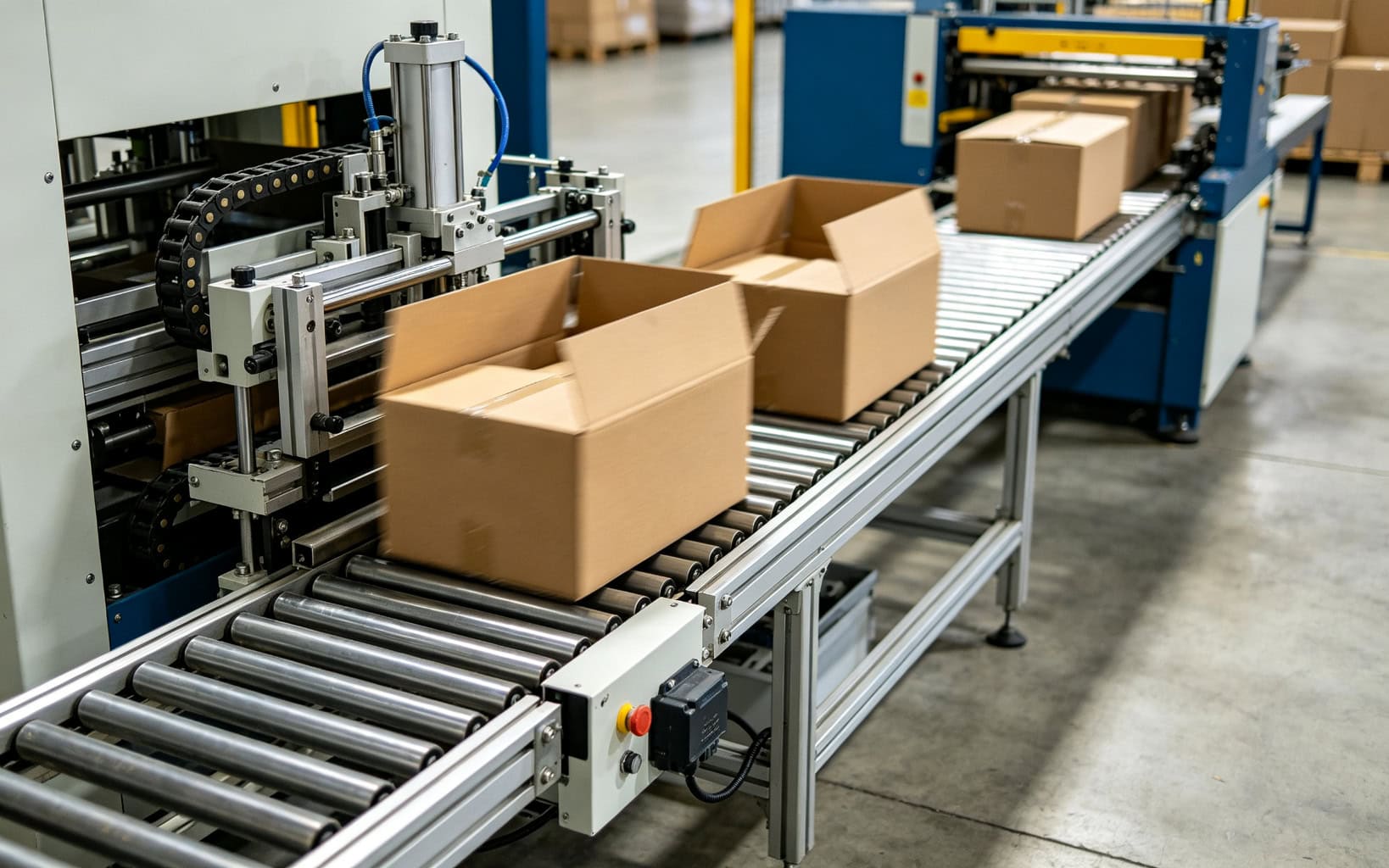
The most common integration failure starts at the RFQ stage. Procurement teams specify a case erector or carton sealer based on its standalone brochure speed, but never define how it will hand off to the existing conveyor, how the reject logic will work, or what signals the upstream filler needs to stop in case of a jam.
A machine rated at 30 cases per minute on the factory floor may only deliver 18 cpm when connected to a 20 cpm upstream line that stops every 12 minutes. The bottleneck moves, the downstream machine starves, and operators start overriding interlocks to “keep things moving.” This degrades safety and quality faster than most management teams realize.
Corrective action: Specify every machine on the line in the context of the line’s required throughput, not its standalone maximum. Include handoff heights, belt speeds, gap requirements, and stop/start handshake signals in the technical specification. Our engineers at SunAura packaging line integration always start with a full-line flow analysis before recommending a single machine.

Mistake 2: Ignoring Floor Space, Layout, and Material Flow
It sounds obvious, but every month we hear about a new machine that arrived and would not fit through the factory door, or whose discharge height was 200 mm off from the existing conveyor. Floor space and material flow problems are rarely caught until the rigging truck is backed up to the loading dock.
Common layout oversights include:
- Machine footprint measured without guarding, operator access panels, or maintenance swing-out doors
- Discharge height mismatched to existing conveyor height (±50 mm tolerance is typical; anything more requires expensive adapters)
- No clear path for forklift reel changes, film roll loading, or empty pallet staging
- Electrical panel located where it blocks a pedestrian walkway or fire exit
- No consideration for future line expansion or reconfiguration
Corrective action: Require the supplier to provide a detailed dimensioned layout drawing — top view and front view — including guarding, access space, and all utility connections. Walk the receiving area yourself and measure door widths, floor load ratings, and column locations. A 30-minute site survey prevents a 3-week installation delay.
Mistake 3: Underestimating Utility Requirements
Every packaging machine needs electricity, compressed air, and sometimes vacuum or cooling water. Integration failures happen when the factory discovers — after the machine arrives — that its 480V 3-phase circuit is not in place, or that the existing compressor cannot supply the required 1.2 m³/min of air at 6 bar.
Utility surprises are expensive to fix mid-installation:
- Running a new 60A 3-phase circuit: $3,000–$8,000 in electrical contractor labor
- Installing a new compressor or adding a 500L receiver tank: $5,000–$15,000
- Adding a vacuum pump for a pick-and-place head: $2,000–$5,000
- Drain and condensate management for pneumatic actuators: often forgotten entirely
Corrective action: Build a utility matrix before ordering. For each machine on the line, list voltage, phase, amperage, compressed air flow and pressure, vacuum requirement, exhaust, and drainage. Have your electrician and maintenance manager sign off that existing infrastructure can support the full load — or budget the upgrade into the project timeline.
Mistake 4: Mismatched Control Systems and Protocols
When you buy a machine from Vendor A and a conveyor system from Vendor B, you now have two PLCs that need to talk to each other. If one speaks PROFINET and the other only has discrete I/O, the “integration” becomes a tangle of relay logic and custom junction boxes that no one fully understands.
Control integration mistakes fall into three categories:
- Protocol mismatch: machines on different fieldbus networks (PROFINET, EtherNet/IP, DeviceNet, CC-Link) without a gateway.
- Signal ambiguity: “machine ready” means different things to different vendors. One machine’s “ready” signal excludes a fault condition that another machine treats as a stop request.
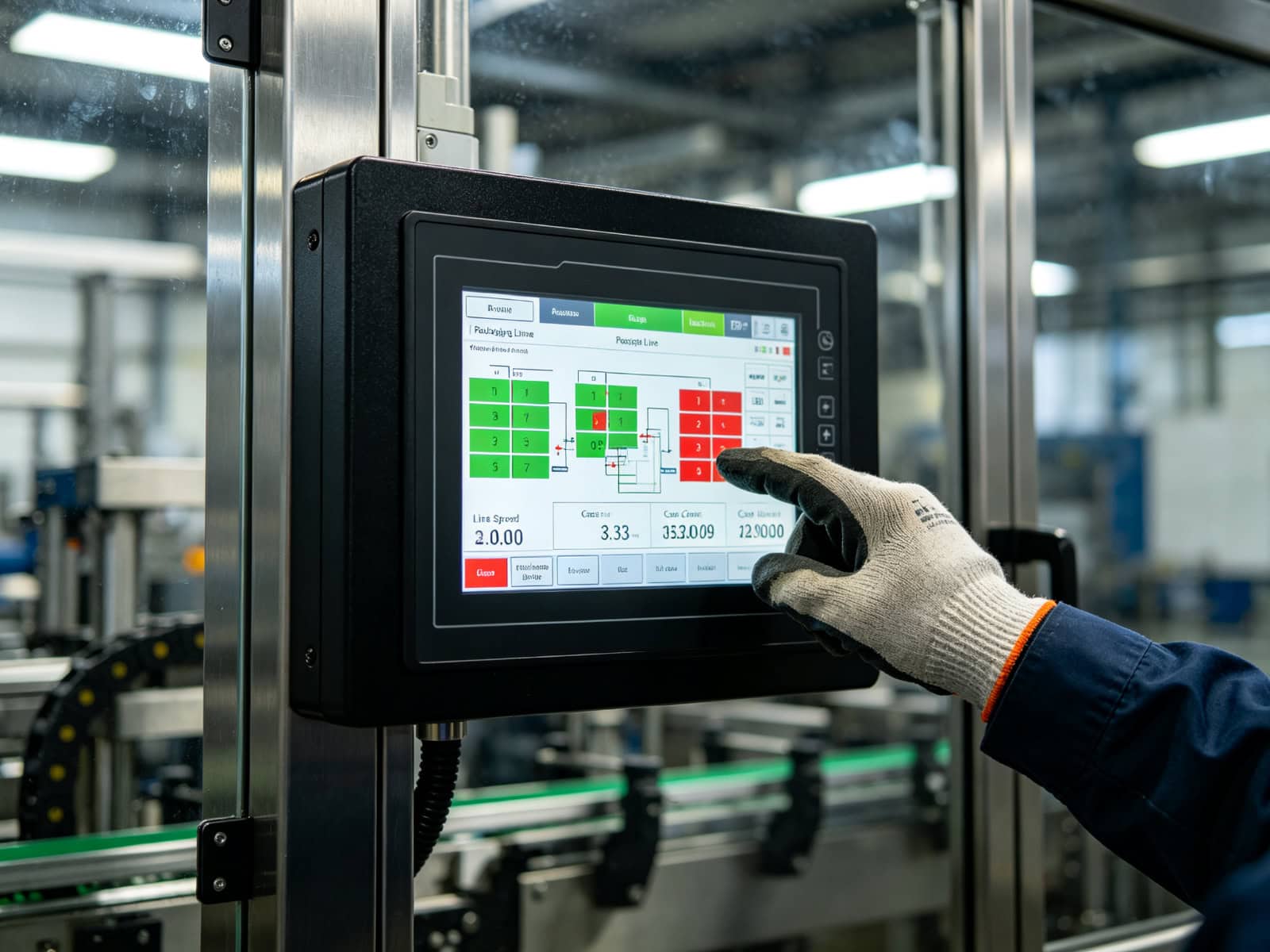
- No centralized HMI: operators bounce between three HMI screens to start, stop, or clear a jam on one integrated line.
Corrective action: In your RFQ, specify a single control architecture for the entire line. If you must mix vendors, require a system integrator who is responsible for the communications layer. A well-integrated line should start from a single HMI screen, with all machines sharing production data, fault codes, and OEE metrics. Our integrated conveyor systems and packaging lines ship with a unified control package so this problem never arises.
Mistake 5: Inadequate Operator and Maintenance Training
A new packaging line is only as capable as the people running it. We see this mistake on nearly every project: the supplier’s commissioning engineer spends 2 days training a “super user” who leaves the company 6 months later, leaving no one who knows how to change a recipe or clear a fault.
Training failures typically look like this:
- Training delivered only to engineering staff, never to floor operators
- No written standard operating procedures in the local language
- Maintenance team never shown how to perform basic preventive maintenance
- No spare parts checklist provided, so critical consumables are not stocked
- Only one “go-to” person knows the machine; vacation or turnover shuts the line down
Corrective action: Require a structured training program as part of the purchase contract. This should include: (1) operator training covering start-up, shutdown, recipe change, and fault reset — delivered on-site in the operators’ language; (2) maintenance training covering lubrication schedules, wear part replacement, and diagnostics; (3) printed manuals and quick-reference cards posted at the machine; (4) at least two operators and two maintenance technicians certified. At SunAura Machinery, every commissioning package includes this training curriculum, and we follow up 30 and 90 days after handover.
Mistake 6: No Clear Responsibility Boundaries Between Vendors
This is the integration mistake that causes the most finger-pointing. When a line consists of a case erector from Vendor A, a sealer from Vendor B, a conveyor from Vendor C, and a palletizer from Vendor D, every vendor blames the others when the line does not run at rated speed.
The classic scenario: the line runs at 22 cpm instead of the designed 30 cpm. Vendor A says the cases arrive late. Vendor B says the sealer jams because cases are misaligned. Vendor C says the conveyor speed matches the spec. Nobody owns the line-level problem.
Corrective action: Designate one responsible party for the entire line. This can be the lead machine vendor (who subcontracts the rest), an independent system integrator, or your own engineering department with clear authority. In your contracts, include a line-acceptance test clause: the line must run at rated speed for a continuous 8-hour production trial before final payment is released. This is why we recommend a turnkey supplier for multi-machine lines — one contract, one accountable team, one acceptance test.
Mistake 7: Skipping a FAT (Factory Acceptance Test)
A Factory Acceptance Test is a paid visit to the supplier’s facility before the machine ships, where you watch it run with your actual product or packaging materials. Skipping the FAT to save $5,000 in travel costs is one of the most expensive cost-saving decisions a factory can make.
What the FAT catches that site commissioning cannot:
- Machine does not handle your actual product dimensions at full speed
- Seal quality is inconsistent at production speed
- Film or web tracking drifts over a 30-minute run
- Safety interlocks do not function as designed
- HMI interface is confusing or missing critical alarms
Fixing a problem at the supplier’s factory costs almost nothing. Fixing it after the machine ships to your factory — with rigging, labor, and production downtime — costs 10 to 50 times more. We require every customer to attend a FAT for our automatic case erector systems and turnkey packaging lines, because it protects both parties.
Mistake 8: Forgetting About Spare Parts and Maintenance Strategy
New machines need spare parts — but which ones? Many factories place the order, arrange installation, and commission the line, only to discover after the first month of operation that a critical wear part needs replacement and has a 6-week lead time from the supplier.
Standard spare parts planning mistakes:
- No recommended spare parts list from the supplier
- Spare parts quoted separately at exorbitant prices after the machine order
- Wear parts are custom-made, with no second-source option
- No critical spares budget included in the project approval
- Sensors and actuators use proprietary connector types instead of standard M12/M8
Corrective action: Request a recommended spare parts list at the time of quotation, not after order. Include the cost of critical spares (heater bands, drive belts, gripper fingers, sensors, fuses) in the initial project budget. Ask whether wear parts are standard catalog items or proprietary. A machine that uses standard off-the-shelf components will cost less to maintain over its life than one that requires factory-only parts — this is a direct TCO factor we cover in our guide to calculating packaging line total cost of ownership.
Mistake 9: Ignoring Safety Guarding and Compliance Requirements
Safety is not a paperwork exercise — it determines whether your line can legally run. Integration projects frequently run into safety compliance gaps because the machine was designed for a different jurisdiction, or because interlocks between machines were not thought through.
Common safety integration failures:
- Guard doors on one machine stop that machine but not the upstream or downstream equipment
- E-stop buttons do not cascade through the entire line as required by ISO 13850 / EN 418
- Light curtains on packaging stations are not interlocked with the robot or feeder
- CE marking documentation does not cover the integrated system, only individual machines
- Lockout/tagout points are not defined across multi-vendor equipment
Corrective action: Engage a safety engineer during the design phase, not after installation. Require the line integrator to provide a risk assessment, machine guarding design, and CE/UL documentation for the complete integrated system — not just individual machines. The cost of a safety redesign after installation dwarfs the engineering cost upfront.
Mistake 10: No Clear Commissioning Plan and Acceptance Criteria
The final mistake is the most preventable: starting installation without a written commissioning plan and measurable acceptance criteria. Without this, “done” becomes whatever the schedule deadline dictates, and the line is signed off while still running at 70 percent of design speed.
A proper commissioning plan includes:
- Mechanical installation checklist (leveling, anchoring, guarding)
- Electrical and pneumatic connection verification
- Dry run: jog and test each axis without product
- Wet run: run actual product at 25%, 50%, 75%, and 100% of rated speed
- Quality verification: seal integrity, fill accuracy, case integrity, code legibility
- 8-hour continuous production run at rated speed with OEE target
- Documentation handover: as-built drawings, manuals, spare parts list, certificates
- Operator and maintenance training completion sign-off
Each phase should have a pass/fail criterion and a sign-off from both the supplier and the customer. Do not release final payment until the line passes the 8-hour continuous run at the agreed OEE. This single discipline eliminates 90 percent of post-commissioning disputes.
Packaging Line Integration Checklist Before You Order
Before you sign the purchase contract, work through this checklist with your engineering, maintenance, and operations teams:
Line and Process
- Full-line flow analysis with throughput, bottleneck, and accumulation points identified
- Product dimensions, weights, and packaging formats documented
- Line speed and OEE targets agreed by production management
- Future product format changes and expansion plans considered
Site and Utilities
- Floor space, ceiling height, and door access verified on-site
- Electrical supply, compressed air, and drainage confirmed
- Floor load rating and foundation requirements documented
- Pedestrian and forklift paths around the machine mapped
Vendor and Contract
- Single accountable party for the complete line
- FAT requirement included with product samples shipped to supplier
- 8-hour continuous line acceptance test in the contract
- Spare parts list and critical spares budget included
- Training plan with defined curriculum and certification
- Warranty scope and response time documented
Frequently Asked Questions
How long does it take to integrate a new packaging machine into an existing line?
For a single machine drop-in (same format, same handoff height, compatible control signals), integration typically takes 2 to 5 days including mechanical install, electrical connection, and commissioning. For a multi-machine line with new controls integration, plan for 4 to 12 weeks from delivery to full production. The schedule risk is almost always in controls and debugging, not mechanical installation.
Should I use a system integrator or buy from a single turnkey supplier?
If your line involves more than two machines from different manufacturers, a turnkey supplier or qualified system integrator is almost always the lower-risk choice. The integrator owns the line-level performance, controls integration, and acceptance test — eliminating the finger-pointing that plagues multi-vendor projects. For single-machine additions with clear interfaces, buying direct from the machine supplier can work if your internal engineering team has strong integration capability. Compare our turnkey packaging line solutions to see how a single-vendor approach works.
What is a Factory Acceptance Test and do I really need one?
A Factory Acceptance Test (FAT) is a paid verification visit to the supplier’s facility before the machine ships. You bring your actual product or packaging materials and watch the machine run at production speed. Yes, you need it — even for a single machine. A FAT costs $3,000–$8,000 in travel but typically saves $30,000–$150,000 in post-shipment modifications and production delays. For a complete line, a SAT (Site Acceptance Test) follows the FAT and verifies integrated performance on your factory floor.
How do I prevent my operators from bypassing safety interlocks?
Interlock bypassing happens when operators perceive the interlock as slowing down production without adding value. The fix is twofold: (1) design the line so that safe operation is also fast operation — well-positioned guard doors with quick latches, accessible reset buttons, and clear fault messaging; (2) train operators on what each interlock protects against, not just that they must not bypass it. Regular safety audits and near-miss reporting also help build a culture where bypassing is recognized as a risk, not a convenience.
What spare parts should I stock for a new packaging line?
Stock the items that wear fastest and have the longest lead time: drive belts, heater bands, sealing jaws, gripper fingers, photoelectric sensors, pneumatic seals, fuses, and contactors. A good supplier provides a recommended spares list with lead times. Budget 3 to 5 percent of the machine purchase price for initial critical spares. Keep consumables (film, tape, strapping) on your normal inventory system, not as project spares.
How do I measure integration success after go-live?
Track these metrics for the first 90 days: (1) OEE at rated speed vs. design target; (2) unplanned downtime hours per week; (3) changeover time between product formats; (4) quality reject rate; (5) first-pass yield. If any metric is below the acceptance criteria in your contract, the supplier is obligated to support the remediation. Do not assume the line will “improve on its own” — integration gaps compound over time.
Conclusion: Integration Is a Project, Not a Delivery
The difference between a packaging line that hits design speed in week two and one that struggles six months after installation is almost never the quality of the individual machines. It is the quality of the integration planning — the site survey, the control architecture, the acceptance test, the training plan, and the single accountable party who owns the result.
Do not let the excitement of new equipment blind you to the hard work of integration. Specify the line, not just the machines. Plan the utilities, not just the footprint. Require the FAT and the 8-hour run, not just the factory acceptance certificate. Train the operators, not just the engineers. These are the differences between a line that pays back on schedule and one that becomes a maintenance nightmare.
When evaluating specific machine technology for your integrated line, pay close attention to drive configuration — servo vs. pneumatic choices dramatically affect speed, accuracy, and energy use. Our servo-driven packaging equipment buying guide walks through how to match servo axes to your production output.
Planning a packaging line integration project? Our engineering team at SunAura Machinery provides full-line flow analysis, control integration, FAT/SAT coordination, and operator training as standard on every turnkey packaging line. Send us your product specs and existing layout, and we will map the integration path before you commit capital.