

If you are evaluating a new packaging machine and the supplier mentions “servo-driven,” the price jump is hard to miss. Servo-equipped machines typically cost 20 to 40 percent more than their pneumatic or mechanical equivalents. The question on every procurement manager’s mind is simple: is the servo premium justified for my production output?
At SunAura Machinery, we build both pneumatic and servo-driven packaging equipment — from high-speed servo pillow wrappers to servo piston filling machines and servo thermoforming systems. In this buying guide, we cut through the marketing language and give you the engineering framework to evaluate whether a servo configuration actually matches your production volume, product variety, and accuracy requirements. This is the same evaluation our applications engineers walk through with every customer inquiry.
What “Servo-Driven” Actually Means on a Packaging Machine
A servo motor is a closed-loop electric motor with integrated position feedback. Unlike a pneumatic cylinder that moves between two fixed end positions, a servo drive can stop at any intermediate position, accelerate and decelerate under precise control, and report its actual position back to the controller thousands of times per second.
On packaging equipment, servo drives typically replace pneumatic actuators in these motion functions:
- Film pull feed on flow wrappers and bag machines — servo-controlled film tension and length
- Seal jaw opening and closing on horizontal form-fill-seal machines
- Piston cylinder drive on liquid fillers — for volumetric accuracy
- Case erector tuck and fold arms — for precise flap timing
- Conveyor speed synchronization between machines on an integrated line
- Labeling head position — for precise label placement on round or square bottles
The key difference: a pneumatic system performs a sequence at whatever speed the air pressure allows. A servo system performs the same motion at the exact speed and position the recipe specifies — every single cycle. That precision is what justifies the price premium when your production depends on it.

When Servo Drives Pay for Themselves — and When They Do Not
The servo decision is not about brand loyalty or technical fashion. It is a cost-benefit calculation driven by your production conditions. Use this table as your starting framework:
| Production Factor | Servo Makes Sense | Pneumatic May Be Sufficient |
|---|---|---|
| Production speed | > 60 cycles/min on critical axes | < 30 cycles/min |
| Product format changeover | 3+ formats per week, recipe-driven changeover required | Single format, rare changeover |
| Filling accuracy requirement | ±0.5% or better (pharmaceutical, food, cosmetics) | ±1–2% acceptable (bulk industrial, chemicals) |
| Production shifts | 2–3 shifts/day (energy savings compound) | 1 shift/day, low utilization |
| Product variety per shift | Frequent size/format changes during shift | Dedicated single-product line |
| Energy cost in your region | High (> $0.12/kWh) | Low (< $0.08/kWh) |
| Quality reject cost per unit | High (premium food, pharma, electronics) | Low (commodity, bulk packaging) |
If your operation hits four or more “servo makes sense” rows, a servo-driven machine will almost certainly deliver positive ROI within 3 to 5 years. If you are in the pneumatic column, saving the 20–40 percent premium on the machine purchase is the right financial decision — and you should not let a sales engineer talk you into over-specifying.
How to Evaluate the Servo Configuration on a Supplier Quote
Not all “servo-driven” machines are created equal. A supplier can put one servo on the film pull and call the machine “servo” while the rest of the motion is still pneumatic. Here is what to ask in the technical specification:
1. How Many Servo Axes Are on the Machine?
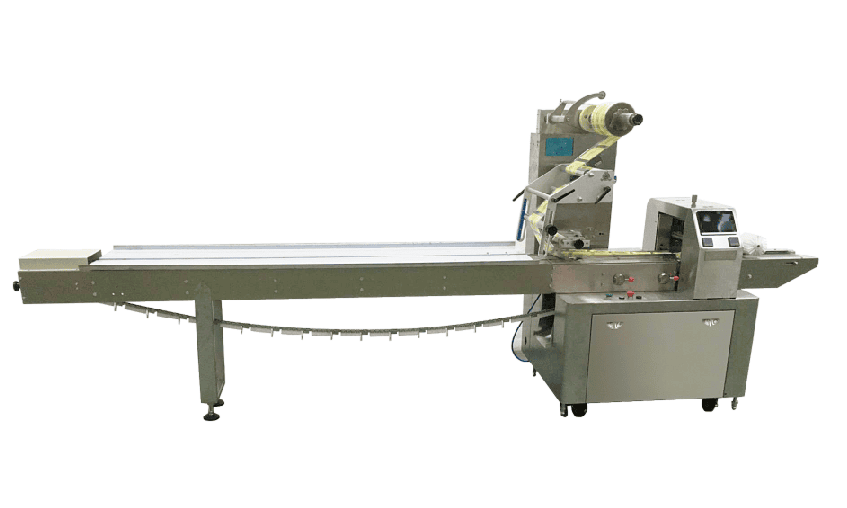
Count the servo drives. A basic flow wrapper may have 2 to 4 servo axes (film feed, end seal, cross seal, discharge). A fully servo high-speed wrapper may have 8 to 12 axes. If a quote says “servo-driven” but lists only one or two axes, you are looking at a partially servo machine — and the performance benefit will be partial as well.
2. What Brand of Servo Motors and Drives?
Servo system quality varies enormously. Industrial-grade brands (Siemens, Bosch Rexroth, Yaskawa, Panasonic, Delta) offer reliable performance, global service networks, and 10+ year spare parts availability. No-name or generic servo systems may save $3,000–$8,000 on the quote but create maintenance headaches 3 to 5 years later. Ask for the exact motor and drive model numbers in the technical documentation, not just “servo motors.”
3. Is the Control System Recipe-Driven?
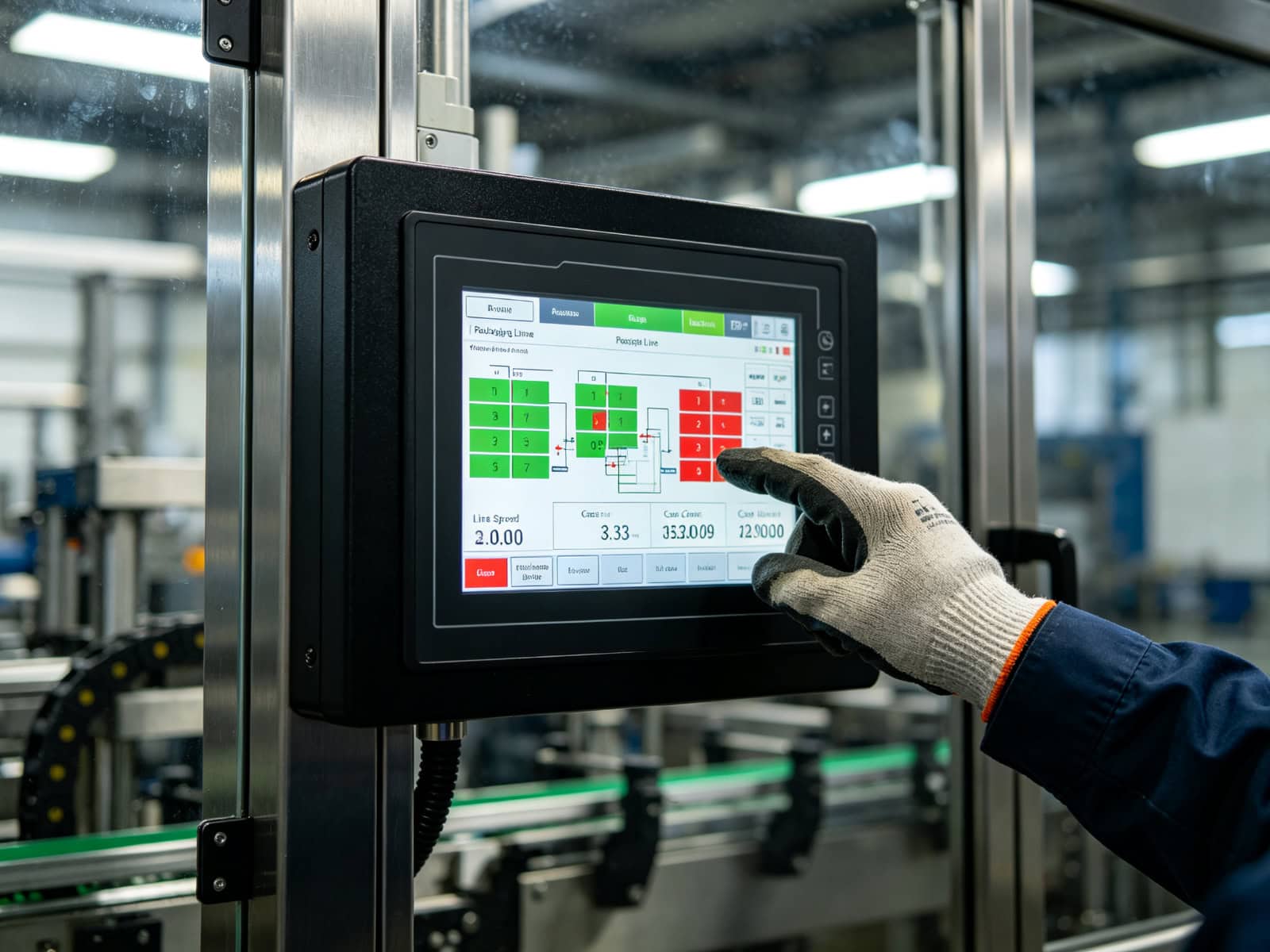
The real payoff of servo is not the motor itself — it is the recipe-based changeover. A fully servo machine stores product parameters (film length, seal temperature, jaw speed, positioning) in the HMI and recalls them at the touch of a button. A partially servo machine still requires manual mechanical adjustments for every format change. Ask for a demo or video of a format change: if the operator is turning hand cranks and measuring with a ruler, the servo investment is not delivering the changeover benefit.
4. What Is the Speed-Accuracy Tradeoff?
Servo machines are marketed with headline speed numbers, but speed without accuracy is worthless. Ask the supplier for:
- Maximum rated speed under your product specification (not theoretical max)
- Speed at which the machine holds target accuracy (fill accuracy, seal integrity, package length tolerance)
- Acceleration/deceleration profile — how fast can the machine stop and restart safely?
- Repeatability: how much does the actual cycle time vary at steady state?
A machine that runs 120 packs/min at ±1.5 g fill error is less valuable than one that runs 80 packs/min at ±0.2 g — especially if your product is high-value or regulated.
Energy and TCO: The Servo Premium Math
Servo motors consume only the energy required for the current motion. A pneumatic actuator runs at full compressed air pressure regardless of whether it is performing the critical motion or idling. The energy difference is significant.
Consider a typical servo piston filling machine running two shifts, 250 days per year:
- Pneumatic equivalent: ~6 kW continuous power + compressed air consumption = ~$14,500/year in energy
- Servo equivalent: ~3.2 kW continuous, no compressed air = ~$6,800/year
- Annual energy savings: ~$7,700
If the servo version costs $12,000 more upfront, the energy payback alone is about 18 months. Add changeover time savings (15 minutes per changeover × 2 changeovers/week × $120/hour loaded labor = $3,120/year) and quality reject reduction, and the total payback typically lands at 12 to 24 months for a two-shift operation.
For a deeper dive on all the cost factors beyond energy, see our guide to calculating total cost of ownership for packaging lines. The servo premium is one of the clearest TCO decisions in packaging equipment procurement.
Common Servo Configuration Mistakes Buyers Make
Mistake A: Over-Specifying Servo Axes You Will Never Use
Not every motion on a packaging machine needs a servo. A discharge conveyor that simply runs at constant speed does not need a servo drive — a geared AC motor with VFD is more cost-effective. If a supplier quotes a 10-axis servo machine for a low-speed, single-format application, they are selling you more machine than you need. Ask which axes are servo and why each one benefits from closed-loop control.
Mistake B: Under-Specifying Servo Power for Future Speed Increase
Conversely, buying a machine with undersized servo motors “to save money” creates a ceiling you cannot break. If your production plan calls for a 30 percent speed increase in 2 years, the servo motors and drives must have the thermal and torque headroom for that increase. Ask the supplier: what is the maximum speed this servo configuration can support? If you need a 15 percent speed headroom above your current target, build it in from day one — retrofitting a larger servo motor after installation is far more expensive than specifying it upfront.
Mistake C: Ignoring the Servo Vendor’s Service Network
Servo drives and motors are not generic components. If your supplier uses a servo brand with no local service or spare parts stock in your country, a drive failure can take 4 to 6 weeks to resolve. At your line speed, that downtime cost may exceed the entire servo price premium. Before you buy, ask: where are spare servo drives and motors stocked? What is the lead time for a replacement drive? Is remote diagnostics available?
Mistake D: Buying a Servo Machine Without Operator Training
A servo machine is a precision instrument, not a pneumatic device. Operators who do not understand servo positioning can cause quality issues, premature wear, and even drive damage through improper reset procedures. Ensure your training package covers: fault reset procedures, recipe editing basics, when to call maintenance vs. when to reset, and basic drive diagnostics. This is non-negotiable on a high-speed servo line.
Servo Configuration Evaluation Checklist
Use this checklist when comparing servo-equipped machine quotes. Every item should have a documented answer from the supplier.
Technical Specification
- Number of servo axes on the machine, with a function description for each
- Motor and drive brand, model numbers, and power ratings
- Maximum speed under your actual product specification
- Speed at which target accuracy is maintained
- Positioning repeatability (±mm or ±g) at rated speed
- Acceleration/deceleration profile and safe stop time
- Energy consumption: kW at idle, kW at full load, annual kWh estimate
Operational Capability
- Number of product formats stored in recipe memory
- Changeover time between formats (measured, not estimated)
- HMI brand and touchscreen size; remote access capability
- Programmable logic controller (PLC) brand and model
- Communications protocol (PROFINET, EtherNet/IP, etc.)
- Data output: OEE, energy, fault logs, production reports
Service and Support
- Local service center location and response time
- Spare parts stock list and lead time for critical items
- Warranty period on servo motors and drives (typically 12–24 months)
- Training program: operators and maintenance technicians
- Software update policy and cost
If you are evaluating servo equipment for a specific application — whether a servo thermoforming line, a high-speed pillow wrapper, or a multi-head filling system — our applications engineers at SunAura Machinery can help you map the servo configuration to your production target and budget. We are happy to walk through the trade-offs, even if you ultimately choose a different supplier.
Frequently Asked Questions
What is the typical price premium for servo-driven vs. pneumatic packaging equipment?
A servo-driven packaging machine typically costs 20 to 40 percent more than the equivalent pneumatic model. The exact premium depends on the number of servo axes: a basic wrapper with 2 servo axes may carry a 15 percent premium, while a fully servo high-speed system with 8+ axes can be 35 to 50 percent more. The premium pays back through energy savings, faster changeover, higher accuracy, and reduced downtime — typically within 2 to 4 years on a two-shift operation.
How do I know how many servo axes my machine needs?
Every motion that requires precise positioning, variable speed, or recipe-based adjustment benefits from a servo. Motions that simply open/close at fixed positions at low speed do not. Ask your supplier to list every motion axis on the machine and identify which are servo vs. pneumatic vs. gear-motor driven. If a critical motion (film feed, seal jaw, filling piston) is still pneumatic on a “servo” machine, you are not getting the full benefit.
Are servo motors reliable enough for 24/7 production?
Yes — industrial servo systems from major brands (Siemens, Yaskawa, Panasonic, Delta) are designed for continuous duty in 24/7 production environments. Expected service life is 8 to 15 years with preventive maintenance (gearbox lubrication, encoder inspection, cable check). The failure rate on quality servo systems is well below 1 percent per year. The reliability risk comes from no-name servo brands or from undersized motors running above their thermal rating — not from servo technology itself.
Can I upgrade a pneumatic machine to servo later?
Mechanically, you can replace pneumatic cylinders with servo actuators on some machines, but the cost of retrofitting is usually 60 to 80 percent of buying a new servo machine. The PLC, HMI, cabling, and control software all need upgrading. If you know you will need servo performance in the near future, it is almost always cheaper to buy the servo machine upfront. This is especially true for high-speed applications where the mechanical frame itself may not support servo-level speeds.
What accuracy should I expect from a servo piston filling machine?
A well-engineered servo piston filler delivers ±0.2 to ±0.5 percent volumetric accuracy at rated speed. Pneumatic piston fillers typically achieve ±1 to ±2 percent. For high-value liquids (essences, pharmaceuticals, food sauces), the servo accuracy pays for itself through reduced giveaway — overfilling by 1 percent on a $50/kg product running at 3,000 bottles/day adds up quickly. See our liquid filling machine range for servo vs. pneumatic configuration options.
How does a servo machine save energy compared to pneumatic?
Servo motors draw power proportional to the actual load — they use very little energy when idle or holding position. A pneumatic system consumes compressed air continuously, even during idle cycles, because air leaks and actuators bleed off pressure. Compressed air is also an expensive utility to generate: only about 10 to 15 percent of the electricity going into a compressor ends up as useful work at the actuator. Servo systems eliminate this inefficiency entirely, reducing energy consumption by 30 to 50 percent on the same machine function.
Conclusion: Match the Servo Configuration to Your Output, Not to a Brochure
The servo-driven packaging equipment market has no shortage of suppliers who will sell you more machine than you need — or, conversely, a “servo” machine with only one servo axis that delivers none of the expected benefits. The buying process comes down to one question: does this servo configuration match my production output, my product variety, and my accuracy requirements — at a price that pays back within my horizon?
Count the axes, name the brands, verify the recipe changeover, measure the accuracy at speed, and calculate the energy savings honestly. If the numbers work out, the servo premium is one of the best investments you can make in a packaging line. If they do not, a well-built pneumatic machine will serve you just as well at a lower acquisition cost.
Once you have selected the right servo configuration, the next critical step is integrating it cleanly with your existing production line. Our field engineers have documented the 10 most costly packaging machinery integration mistakes — review them before you finalize your installation plan.
Ready to evaluate your servo equipment options? Send us your production rate, product specifications, and format variety, and our applications engineers at SunAura Machinery will recommend the right servo configuration — no over-specification, no under-specification, just the right machine for your output.