

Shrink wrapping is one of the most versatile packaging processes in modern manufacturing. It bundles multipacks of beverages, protects printed materials from dust, seals cosmetic gift boxes, and stabilizes pallet loads for shipping. Yet when procurement teams search for a shrink wrapping machine, they quickly discover that “shrink wrap” covers a confusing range of equipment — L-bar sealers, side sealers, shrink tunnels, sleeve wrappers, and fully automatic continuous systems. Choosing the wrong type means buying a machine that runs too slow, uses the wrong film, or cannot handle your product shape.
At SunAura Machinery, we design and manufacture shrink wrapping machines for food, cosmetics, printed materials, and consumer goods factories. This guide walks you through every major type of shrink wrapping equipment, explains which film to use for which application, and gives you a practical decision framework to match the machine to your product and production volume.
How Shrink Wrapping Actually Works
Before comparing machines, understand the process. Shrink wrapping involves two stages:
- Sealing: the product is wrapped in plastic film and the film is heat-sealed at the seams, forming a bag or sleeve around the product.
- Shrinking: the sealed product passes through a heat tunnel where hot air causes the film to shrink tightly around the product, conforming to its shape.
The quality of the finished wrap depends on both stages: a poor seal creates leaks and weak seams; a poorly tuned tunnel causes over-shrinking (film wrinkles, product distortion) or under-shrinking (loose bag, poor appearance). The machine you choose must handle both stages well — not just one.
Types of Shrink Wrapping Equipment
1. L-Bar Sealers with Shrink Tunnel
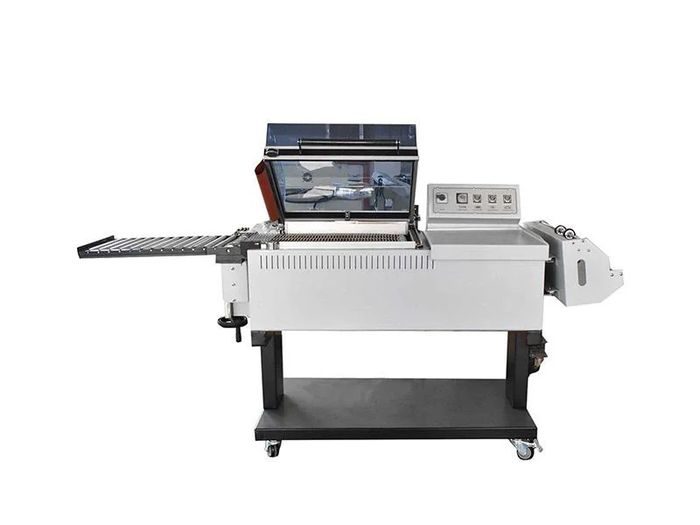
This is the entry-level system. An operator places the product onto a film shelf, pulls the film over the product, and lowers the L-shaped sealing arm. The machine seals three sides of the film in one motion, then the operator transfers the sealed product to a separate shrink tunnel. Speeds range from 6 to 15 cycles per minute.
Best for:
- Small to medium production runs (500–2,000 packs per day)
- Variable product sizes that change frequently
- Start-ups and small businesses testing shrink packaging
- Products with irregular shapes that need manual film placement
L-bar sealers are the most flexible and affordable entry point. They require an operator for every cycle, so labor cost per package is higher than fully automatic systems. But for low to medium volume, the flexibility and low capital cost make them the rational choice.
2. Continuous Side Sealers (Flow Shrink Wrappers)
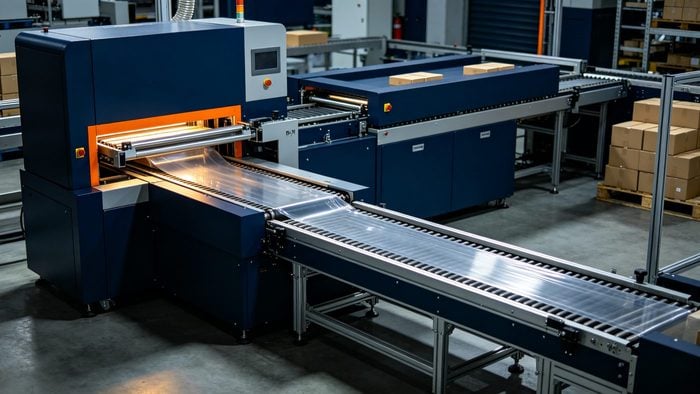
Side sealers feed products continuously through the machine on a conveyor. The film unwinds from a roll, folds around the product, seals the back seam continuously, and then seals the ends — all automatically. The product then passes through an integrated shrink tunnel. Speeds range from 20 to 60 packs per minute.
Best for:
- Medium to high volume (3,000–15,000 packs per day)
- Consistent product sizes with minimal changeover
- Multipack bundling (beverage cans, cosmetic sets, food trays)
- Lines where labor reduction matters
Side sealers are faster and more automated than L-bar systems but less flexible — changing product size requires adjusting film width and sealing positions. They are the workhorse of commercial shrink wrapping for consumer goods.
3. Sleeve Wrappers
Sleeve wrappers apply a band of film around the center or sides of a product bundle, leaving the ends open. They are commonly used for multipack beverage bundling and printed materials. The product is collated into a bundle, film is wrapped around the center, and the bundle passes through a shrink tunnel where the film contracts.
Best for:
- Multipack bundling of cans, bottles, jars, or boxes
- Products that do not need end-to-end wrapping
- High-speed production lines (40–80 packs per minute)
4. Fully Automatic Shrink Lines
Top-tier systems integrate automatic product collation, film feeding, sealing, shrinking, and exit conveyor in one fully automated line. Operators only monitor the machine and reload film rolls. These systems run at 40–100 packs per minute and are typically integrated with upstream filling, cartoning, or tray loading equipment.
Best for:
- High-volume food and beverage production (15,000+ packs/day)
- Dedicated product lines with minimal format changes
- Two-shift or three-shift operations
- Lines where upstream equipment controls the pace
Shrink Film Types: Which Material for Which Job?
The film you choose is as important as the machine. Three main materials dominate shrink packaging:
POF (Polyolefin) Shrink Film
The most versatile general-purpose shrink film. POF is clear, flexible, food-safe, and shrinks evenly at relatively low temperatures (120–160°C). It works well for printed materials, food packaging, cosmetics, and gift sets. Thickness typically ranges from 15 to 30 microns. POF is the default choice for most new shrink wrapping operations.
PVC Shrink Film
Cheaper than POF but less flexible. PVC shrinks at higher temperatures (140–180°C) and is more prone to brittle tearing in cold conditions. It is being phased out in food contact applications due to environmental concerns. Still used for non-food applications where cost is the primary driver.
PE (Polyethylene) Shrink Film
Thicker, stronger, and more puncture-resistant. PE film is used for heavy-duty bundling (pallet loads, building materials, multipack beverages in cold environments). It requires higher tunnel temperatures (160–200°C) and longer dwell times. PE is less transparent than POF but offers superior strength.
| Film Type | Typical Thickness | Shrink Temp | Best Applications | Relative Cost |
|---|---|---|---|---|
| POF | 15–30 microns | 120–160°C | Food, cosmetics, print, gifts | Medium |
| PVC | 30–50 microns | 140–180°C | Non-food, budget applications | Low |
| PE | 50–150 microns | 160–200°C | Heavy bundling, pallet wraps | Medium-High |
Shrink Tunnel Design: The Often-Overlooked Component
The shrink tunnel is where the magic happens — and where many budget machines cut corners. A well-designed tunnel has:
- Multi-zone heating: pre-heat zone, shrink zone, and cooling zone for controlled shrinkage
- Adjustable air velocity: different products require different airflow patterns
- Stainless steel interior: resists film residue buildup and is easy to clean
- Variable conveyor speed: adjusts dwell time for different film types and thicknesses
- Insulated walls: reduces energy waste and keeps the factory floor cool
A tunnel with poor airflow design causes uneven shrinking — tight on one side, loose on the other. A tunnel with weak insulation wastes 30–50% more electricity. When comparing shrink wrapping machine quotes, ask for the tunnel dimensions, heating kW rating, and conveyor speed range. A 3-meter tunnel with 12 kW heating is very different from a 1.5-meter tunnel with 6 kW heating.

Buying Decision: Match the Machine to Your Volume
Use this simple framework to narrow your options:
If you process under 1,000 packs per day
An L-bar sealer with a manual shrink tunnel is sufficient. You do not need automatic collation or high-speed film feeding. Focus on build quality and ease of film loading rather than speed. Total investment typically $3,000–$8,000.
If you process 1,000–5,000 packs per day
A semi-automatic side sealer with integrated tunnel is the sweet spot. It requires one operator to feed products but handles the sealing and shrinking automatically. Look for machines with recipe memory for quick size changeover. Investment typically $10,000–$25,000.
If you process 5,000–20,000 packs per day
A fully automatic side sealer with automatic film loading and collation. The operator monitors the machine rather than feeding every pack. Integration with upstream equipment (cartoner, tray loader, filler) is essential. Investment typically $25,000–$60,000.
If you process 20,000+ packs per day
A dedicated shrink line with automatic bundle counting, dual film reels, and downstream stacking/palletizing. This is a capital project, not a machine purchase. Work with an experienced supplier who can deliver a turnkey system. Our engineering team at SunAura Machinery designs custom shrink wrapping lines for high-volume food and beverage operations.
Common Pitfalls When Buying a Shrink Wrapping Machine
Pitfall 1: Underestimating Tunnel Energy Consumption
Shrink tunnels are among the most energy-hungry machines on a packaging line. A 12 kW tunnel running 8 hours a day consumes about 96 kWh per day. At $0.12/kWh, that is $1,150 per month in electricity alone. Insulated tunnels with variable-speed blowers reduce this by 30–40%. This running cost should be in your TCO calculation, not just the purchase price.
Pitfall 2: Buying the Wrong Film Width
Film comes in specific widths. If you buy a machine designed for 450mm film but your product requires 500mm width, you cannot just switch rolls. Confirm the film width range before ordering — and consider future product sizes that may require wider film.
Pitfall 3: Ignoring Maintenance Access
Film chains, sealing blades, and Teflon fabrics wear out. A machine where the sealing head requires 20 minutes of disassembly to change the Teflon fabric will cost you dearly in downtime. Look for quick-release sealing heads and tool-free film loading.
Pitfall 4: No Sample Run Before Purchase
Every product behaves differently in a shrink tunnel. Send your actual product samples to the supplier and ask them to run a test cycle. Watch the finished wrap: is it tight? Are there wrinkles? Does the seal look clean? A 30-minute sample run prevents months of disappointment after delivery.
FAQ: Shrink Wrapping Machine Questions
What is the difference between shrink wrapping and stretch wrapping?
Shrink wrapping uses heat to make plastic film contract tightly around a product. Stretch wrapping uses mechanical tension to stretch film around a pallet load. Shrink wrapping is for individual products or multipacks; stretch wrapping is for pallet loads. They use different machines, different films, and serve different purposes.
How long does it take to change from one product size to another?
On an L-bar sealer, a size change takes 2–5 minutes: adjust the film shelf, change the sealing size, and set the tunnel temperature. On an automatic side sealer, it takes 10–20 minutes: adjust film width, change sealing blades, set the product guide rails. Machines with recipe memory reduce this to 5–10 minutes by recalling all settings from the HMI.
Can shrink wrapping machines handle mixed product sizes on the same line?
L-bar sealers handle mixed sizes well because the operator adjusts manually for each product. Automatic side sealers require consistent product dimensions — mixing sizes on the same line causes jams and mis-seals. If you run frequent size changes, either use an L-bar system or invest in a fully automatic line with quick-change tooling.
What maintenance does a shrink wrapping machine need?
Daily: inspect sealing blades and Teflon fabric, check film threading. Weekly: clean tunnel interior, lubricate chains. Monthly: check heating element resistance, calibrate temperature sensors. The sealing blade and Teflon fabric are wear items — expect to replace them every 3–6 months. Keep spare parts on hand to avoid unexpected downtime.
Is POF film food-safe?
Yes, food-grade POF shrink film is FDA-approved for direct food contact. It is widely used in bakeries, confectionery, and frozen food packaging. Always specify food-grade film if your product touches the film directly — not all POF film is food-safe.
How much does a shrink wrapping machine cost?
L-bar sealers start at $2,000–$4,000 for basic models. Integrated L-bar + tunnel systems run $5,000–$12,000. Automatic side sealers with tunnel range from $15,000 to $50,000 depending on speed and automation level. Fully automatic high-speed lines can exceed $80,000. Get a detailed quote from our SunAura Machinery sales team for your specific application.
Conclusion: Match the System to Your Product and Volume
Shrink wrapping technology is not one-size-fits-all. An L-bar sealer that works perfectly for a small cosmetics studio will bottleneck a beverage factory at 10,000 cans per day. Conversely, buying a $50,000 automatic shrink line for a 500-packs-per-day operation wastes capital that should go elsewhere in the business.
Start with your actual daily volume, your product dimensions, and your film requirement. Then compare machine categories — not just brands. Request sample runs with your actual products, and calculate the total cost of ownership including energy, film, and maintenance. The right system will pay for itself through consistent packaging quality and reduced labor.
Shrink wrapping rarely works in isolation. The sealed packs typically move to a cartoning or tray loading stage before reaching a pallet wrapping machine for unitization. For upstream case handling, see our carton sealer buying guide.
Ready to find the right shrink wrapping machine? Send us your product dimensions, daily output, and film preference, and our applications engineers will recommend the optimal system — L-bar, side sealer, or fully automatic line — with a transparent quote and delivery timeline.
《“Shrink Wrapping Machine Guide: Types, Films, and How to Choose the Right System”》 有 1 条评论
[…] solutions that combine carton sealing with other downstream equipment, also see our guides to choosing the right shrink wrapping system and selecting a pallet wrapping […]