


October 6, 2026 | by Frank, SunAura Machinery Applications Engineering
When you buy a food packaging machine, one of the first questions your supplier will ask is: “Do you need 304 or 316 stainless steel?” Many buyers pick 316 because it sounds more premium — or worse, they don’t know the difference and just accept whatever the quote says. The wrong choice either costs you 25% more on materials you don’t need, or leaves you with rust spots on a machine that’s supposed to last 15 years.
After building food-grade packaging equipment for 15+ years, we’ve put together the practical guide we wish every buyer had before they ask for a quote. This isn’t a metallurgy textbook — it’s what you actually need to know to specify the right steel for your product, your washdown regime, and your budget.
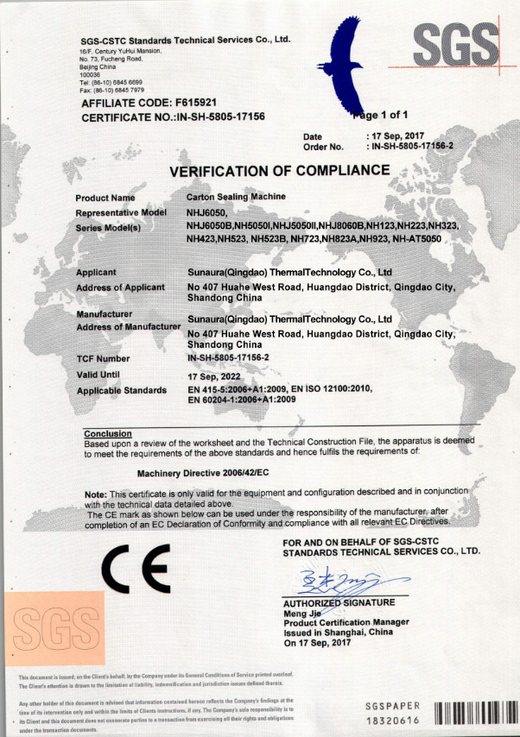
The material choice covered in this guide extends to forming machinery — the recently delivered cup forming thermoforming line runs PP and PET sheet where the food-contact considerations in section 3 apply directly.
The Core Difference: Molybdenum
Both 304 and 316 are austenitic stainless steels — the same family used in sinks, cutlery and kitchen equipment. Both contain roughly 18% chromium and 8% nickel. The difference is that 316 adds 2–3% molybdenum, a chemical element that dramatically improves resistance to pitting and crevice corrosion, especially in environments containing chlorides (salt, brine, citrus, certain cleaning chemicals).
That molybdenum is the only meaningful difference for most packaging machine buyers. It’s also why 316 costs about 25–30% more than 304.
| Property | 304 (18/8) | 316 / 316L (18/10/Mo) |
|---|---|---|
| Chromium | 18% | 16–18% |
| Nickel | 8% | 10–14% |
| Molybdenum | None | 2–3% |
| Pitting resistance (PREN) | ~18 | ~24 |
| Relative material cost | 1.0× (baseline) | 1.25–1.30× |
| Best for | Dry, mildly acidic foods; no harsh washdown | Salty, acidic, chloride-rich products; CIP cleaning |
When 304 Is Enough
For the majority of dry food packaging applications, 304 is the right choice. It’s cheaper, widely available, and more than adequate for the job.
Dry snack foods, biscuits, candy, nuts
Dry products like biscuits, cookies, candy, nuts and coffee don’t attack stainless steel. There’s no moisture, no salt brine, no acidic residue. A 304 contact surface will last 15+ years with normal cleaning. Our flow wrappers for biscuit and chocolate producers ship in 304 as standard.
Ambient-temperature products with no aggressive cleaning
If you clean the machine with warm water and mild detergent at the end of the shift — not with high-pressure caustic washdown — 304 is fine. Most bakery and dry-goods plants fall into this category.
When You Need 316L
Upgrade to 316L (the low-carbon version, preferred for welded food-contact surfaces) when any of the following apply:
Salty or brined products
Cheese, cured meats, olives, pickles, smoked fish and any product with a high salt content expose the machine to chloride ions. Chloride is the enemy of 304 — it causes pitting corrosion that starts as tiny rust spots and eventually becomes structural. Our vacuum machines for seafood and cured meat producers ship with 316L contact surfaces as standard.
Acidic products
Citrus, tomato sauce, vinegar-based products, fruit juices and wine have low pH. 304 handles mild acidity, but prolonged contact with pH below 4 starts to attack it. If you’re packaging sauces, dressings or acidic beverages, 316L is the safer call.
High-pressure caustic washdown (CIP)
Food safety audits increasingly require daily high-pressure washdown with caustic (NaOH) or acidic cleaners. Those chemicals are hard on 304. If your plant does full washdown cleaning every shift — typical for meat, dairy and ready-meal plants — 316L on all product-contact surfaces is worth the premium.
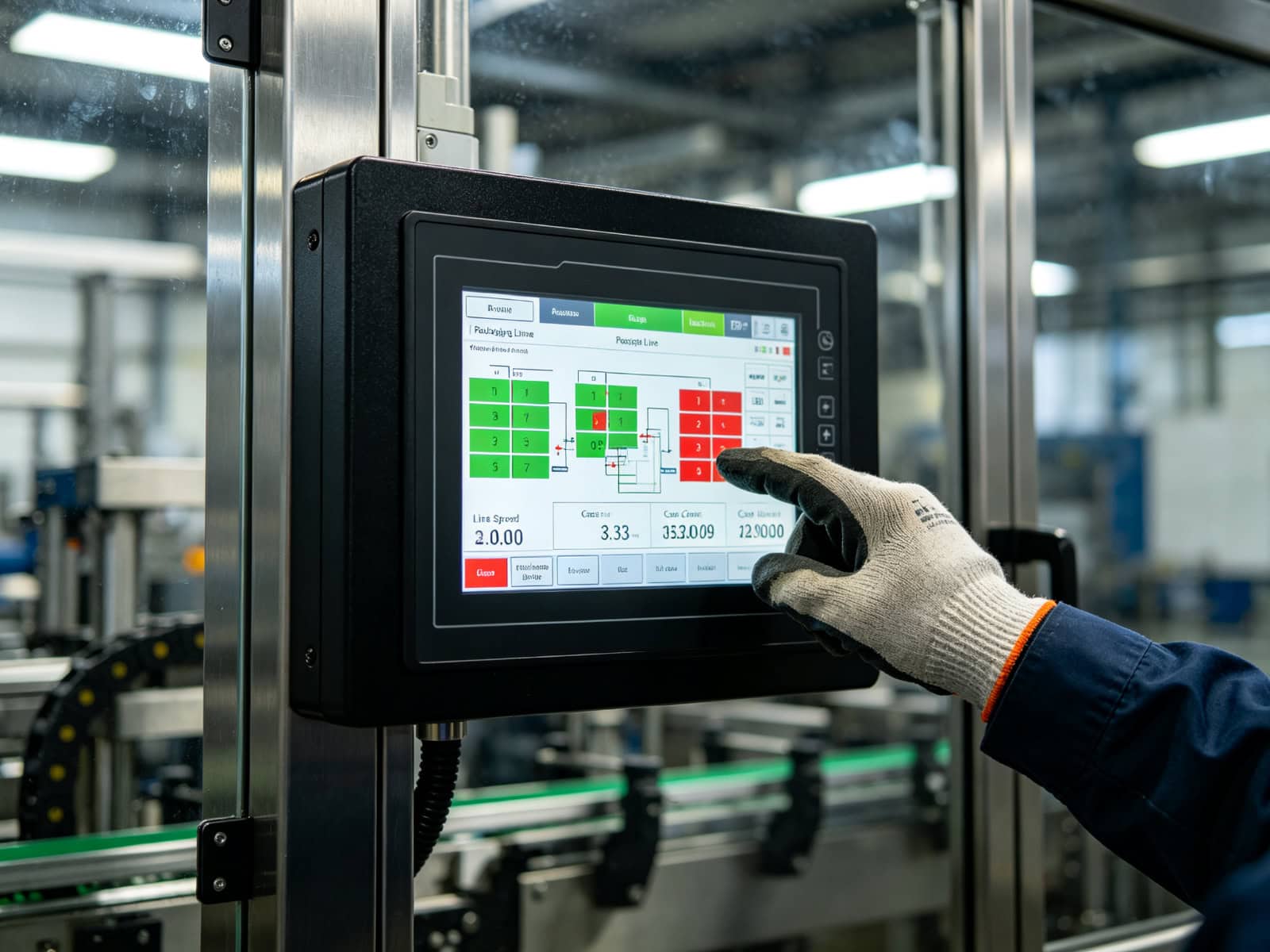
The Secret Factor: Surface Finish
Here’s what most buyers miss: surface finish matters more than steel grade for hygiene. A 304 surface with a proper No. 4 finish (Ra ≤ 0.8 µm) cleans better than a rough, scratched 316 surface that traps bacteria. EHEDG and 3-A sanitary standards specify a maximum surface roughness of Ra 0.8 µm for food-contact surfaces, with Ra 0.4–0.5 µm recommended for high-protein products like meat and dairy.
When you’re evaluating a machine, don’t just ask “304 or 316?” Ask also:
- What is the surface finish (Ra value) on product-contact surfaces?
- Are welds ground and polished flush, or left raw?
- Are there crevices, dead corners or hollow tubes where product can accumulate?
- What is the IP rating on the electrical cabinets near washdown zones?
A poorly finished 316 machine will fail a food safety audit faster than a well-finished 304 machine.
What We Specify on SunAura Machines
On our standard food-contact equipment:
- Frames and non-contact structures: 304 stainless steel with brushed finish
- Product-contact surfaces (standard): 304, No. 4 finish, Ra ≤ 0.8 µm
- Product-contact surfaces (upgrade): 316L, electropolished, Ra ≤ 0.5 µm — for meat, seafood, dairy and acidic products
- Electrical cabinets in washdown zones: IP65 rated
We provide mill test certificates for every stainless component on request, so your food safety audit team can verify the material grade independently.
Not sure which steel grade your product needs? Send us your product type, pH level, salt content and cleaning regime through the contact page, and our applications engineers will recommend 304 or 316L based on your actual process — not defaulting to the more expensive option. Browse our food-grade packaging lines and individual machines to see standard and upgraded material options. For more on equipment selection, see our spare parts guide and line layout guide.
The bottom line: 304 is fine for dry foods and light cleaning. Step up to 316L when your product is salty, acidic, or your plant does daily caustic washdown. But don’t overspend on 316 for a biscuit line — and don’t underestimate the importance of surface finish, which matters as much as the grade itself.