

October 8, 2026 | by Monica, SunAura Machinery Procurement & Quality
Buying packaging machinery from a Chinese manufacturer is a big decision — often a six-figure USD investment that will run on your production floor for 10–15 years. The difference between a good supplier and a bad one usually becomes obvious only after the machine ships. The factory audit is your one chance to see what you’re actually buying before you commit the deposit.
We’ve been on both sides of the audit table. As a manufacturer, we host buyers from 30+ countries every year who fly to Qingdao to walk our floor. As a buyer-facing team, we’ve seen which audit questions separate serious manufacturers from trading companies pretending to be factories. This is the checklist we wish every buyer would use when they visit.
Before You Arrive: Verify They’re Actually a Factory
The most common trick in Chinese packaging machinery exports is the trading company that dresses up as a factory. They rent a small showroom, take your order, then subcontract the build to an unknown workshop. You pay factory prices but get trading-company quality — and no real after-sales support.
Before you book your flight:
- Check the business license. Ask for the Chinese business license (营业执照) and verify the registered address matches the factory address you’re visiting. If they want to meet you at a hotel or a showroom “near the airport” instead of the actual factory, that’s a red flag.
- Ask for a live video tour. Not a pre-recorded video. Ask them to walk you through the workshop on a live call during Chinese working hours. Ask to see the welding shop, the assembly floor, and the testing bay. A real factory has a workshop; a trading company has a desk.
- Check their export history. Ask for the company’s import/export records (可通过海关数据或第三方平台查询). A real manufacturer has consistent monthly export volume; a trading company’s shipments are irregular.
What to Walk on the Audit Floor
| Area | What to Look For | Red Flag |
|---|---|---|
| Welding/fabrication shop | Stainless frames being welded, weld grinders, material stock | No welding equipment — frames are bought in from elsewhere |
| Assembly floor | Machines at various build stages, parts organized, labeled workstations | Floor looks empty — they build one machine at a time per order |
| Electrical cabinet build | Branded PLCs/servos (Siemens, Mitsubishi, Delta), neatly wired cabinets | Generic unbranded controllers, messy wiring |
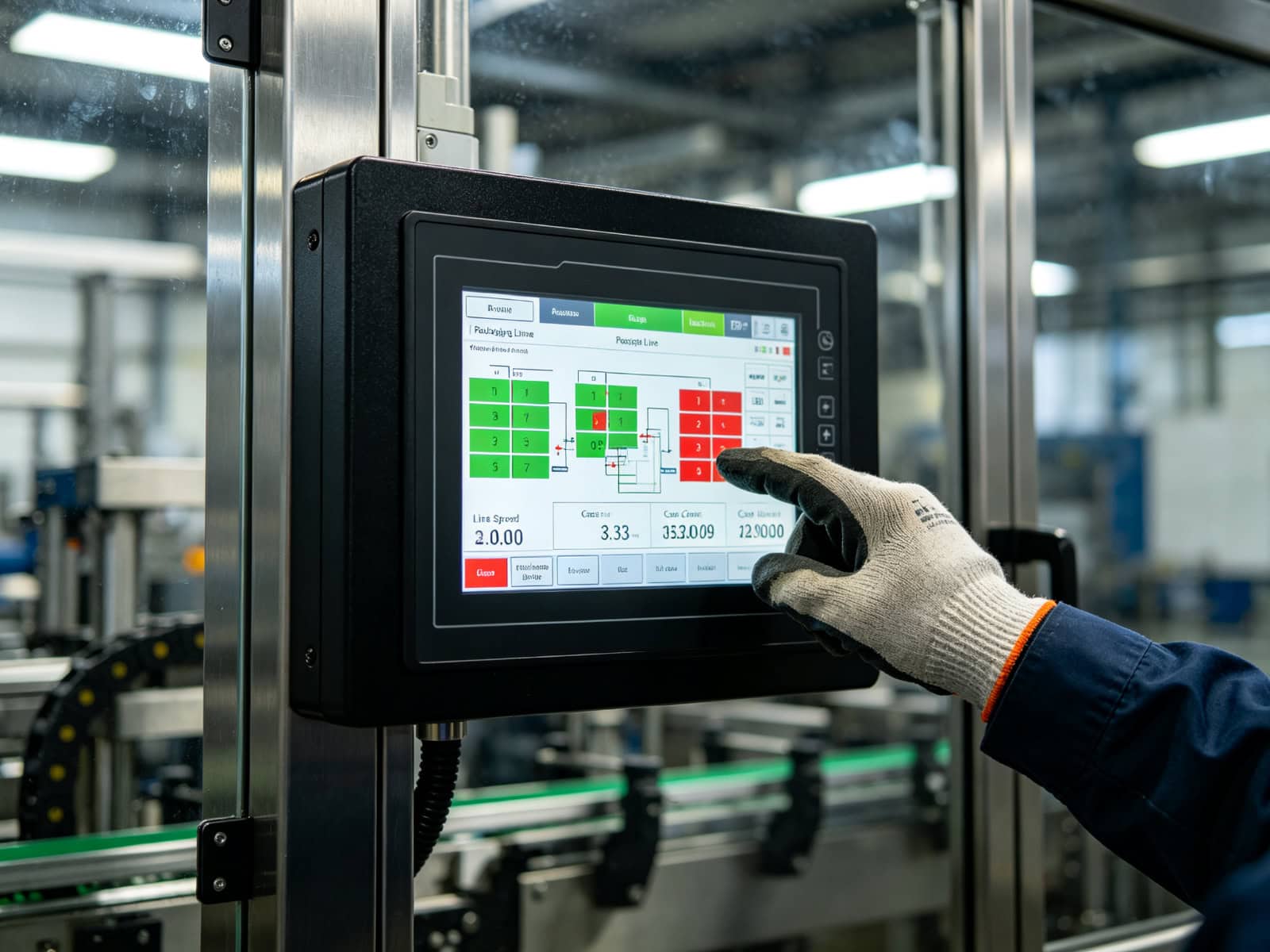
| Testing bay | A machine running loaded with product, test records on a clipboard | No running machines — they test unloaded for 10 minutes and ship |
| QC/inspection area | Calipers, surface roughness testers, inspection records | “QC” is one guy with a flashlight |
Questions That Separate Factories from Trading Companies
“Who welded this frame?”
If they can’t introduce you to the actual welders on the floor, they probably bought the frame from a subcontractor. Real factories have welders on staff. Ask to see the welding procedure specifications and NDT records for food-grade applications.
“Can I see a machine running with my product?”
Most serious manufacturers will test-run a machine with product before you ship. If they can only show you a machine running empty, or say “we’ll test it after you order,” that’s a warning. At SunAura, we ship customer product samples from abroad and run a full FAT with the actual product — not just water.
“Where do your electrical components come from?”
Ask specifically about the PLC brand, the servo motor brand, the contactors, and the sensors. If they say “good quality” or “famous brand” but can’t name the actual manufacturer, that’s a problem. We specify Siemens/Delta PLCs, Mitsubishi servos, and Schneider contactors — and we’re happy to show the component datasheets.
“How long is your warranty and what does it cover?”
A one-year warranty covering parts and labor is standard. A six-month warranty or “we’ll send parts but you pay shipping” is not. Ask specifically: does the warranty cover the PLC, the servos, the sensors, and the mechanical structure? Get it in writing.
Reference Calls: Don’t Skip This
This is the single most valuable step in the audit process. Ask the supplier for two or three reference customers in your country or region — not just a name, but a phone number and email. Call them. Ask: How long did the machine take to arrive? Did it work on arrival? How responsive was the supplier for spare parts? Would you buy from them again?
Suppliers who genuinely have happy customers will provide references freely. Suppliers who say “all our customers sign NDAs” or “we can’t share that” are hiding something. At SunAura, we routinely put prospective buyers in touch with existing customers in their region — including our Australian macadamia client, our Indonesian snack producer, and our Mexican food manufacturer.
If You Can’t Travel: Remote Audit Options
Not every buyer can fly to China. If you can’t make the trip:
- Hire a third-party inspection company (SGS, Bureau Veritas, TUV) to do a factory audit on your behalf. A one-day audit costs $300–$500 and is worth every penny.
- Do a live video walkthrough during Chinese working hours. Ask them to pan the camera across the workshop floor, open an electrical cabinet, and show a machine running.
- Require photos of your machine during build — weekly progress photos from frame welding through final testing. A factory that won’t send progress photos is a factory you can’t trust.
Planning a factory visit to SunAura? We host buyer audits at our Qingdao facility year-round. Book a visit through the contact page — we’ll arrange airport pickup, a full workshop walkthrough, a live FAT demonstration with your product samples, and a reference customer call. See our certifications and audit reports and workshop gallery before you arrive. For after-sales expectations, see our after-sales service page.
The bottom line: a factory audit isn’t a formality. It’s your insurance policy against a $100,000 mistake. Spend a day on the floor, ask the uncomfortable questions, call the references. The right supplier will welcome every question — because they have nothing to hide.