Cup Filling and Sealing: Form-Fill-Seal vs Pre-Made Cup vs Rotary Monoblock — Choosing for Yogurt, Dessert and Single-Serve Products
Three buyers called us in the same month with what sounded like the same requirement — fill and seal a cup — and all three needed different machines. One was making 150 g stirred yogurt at 900 cups per hour for a regional dairy and only needed to stop doing it by hand. One was making a high-protein dessert in a 120 g cup at 6,000 cups per hour and needed the seal to hold 45 days of chilled distribution. One was making a 90 g single-serve sauce cup for foodservice, filled hot at 85 °C, and needed the pack to survive a secondary retort-free hot-fill process without panel deformation. A form-fill-seal machine would have ruined the third buyer’s economics; a pre-made cup line would have been too expensive for the first; and a rotary monoblock would have been oversized for both.
This guide sets out how the three architectures actually differ, what each one costs in capital and consumables, where each one stops being the right answer, and what a buyer should measure before requesting a quotation. It is written from the perspective of the procurement decision rather than the machine catalogue, because the failure mode in cup filling is almost never “the machine cannot fill” — it is “the machine cannot fill this product, in this cup, at this seal integrity, for this price per pack”.
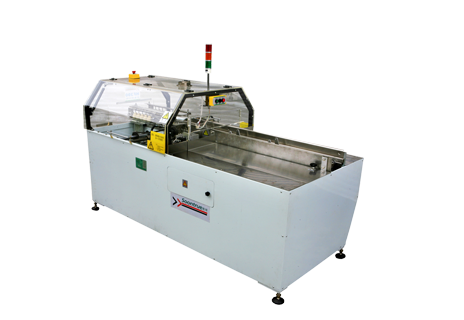
The Three Architectures, Stated Plainly
Form-fill-seal (FFS), inline. A roll of thermoplastic sheet is heated, vacuum or pressure formed into cups inside the machine, filled, sealed with a lidding film from a second roll, and cut. The cup is made on the line, so the buyer never buys cups and never stores them. The material is usually PP, PS, PET or PLA, at 0.6–1.2 mm gauge depending on the cup depth and the rigidity required. FFS is the cheapest architecture per pack at volumes above roughly 2,000 cups per hour, and it is the only one of the three that can change cup geometry without waiting for a cup supplier.
Pre-made cup lines. Cups arrive nested in sleeves or bags, are destacked, filled, sealed and optionally capped. The cup is a purchased component, so the buyer inherits the supplier’s tooling cost inside the cup price but avoids the forming station, the forming tools and the scrap generated during forming. Pre-made cups win when the cup is a brand asset — a printed, shaped or double-wall cup that has to look a specific way on shelf — and when volume is too low to justify forming tools.
Rotary monoblock. A carousel indexes the cup through fill, seal and often cap, lid or spoon-insert stations. It is a pre-made cup machine in most cases, though rotary FFS exists at the high end. The rotary layout gives more stations per square metre and much better seal dwell control because the sealing station can be large and mechanically independent. It costs more than an inline machine at the same output and is harder to expand later.
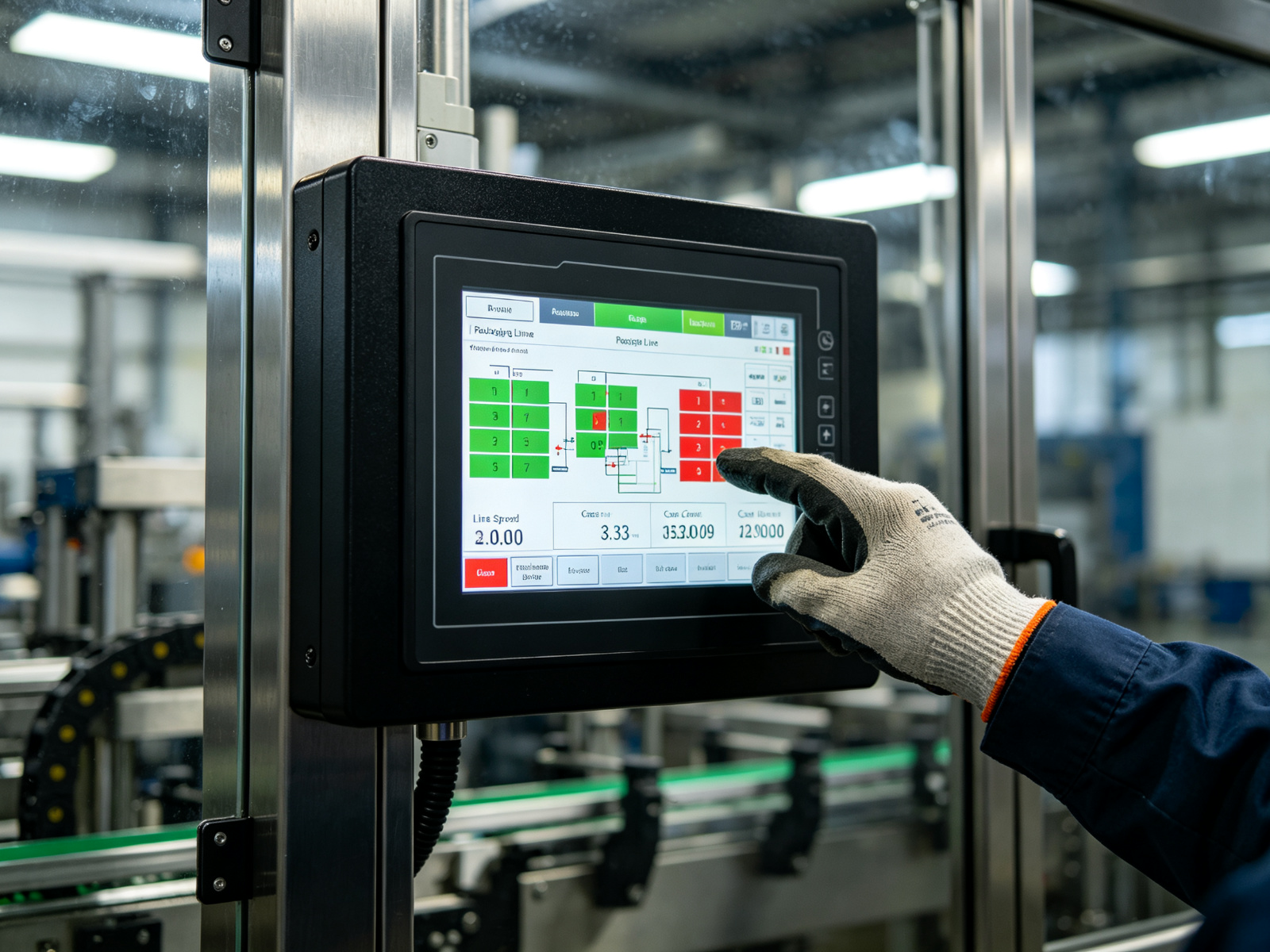
The Comparison That Decides Most Projects
| Dimension | Inline FFS | Pre-made cup (inline) | Rotary monoblock |
|---|---|---|---|
| Working principle | Cup formed from film on the line, filled, lidded, cut | Cup destacked, filled, lidded, optionally capped | Cup indexed through stations on a carousel |
| Typical output | 1,500–12,000 cups/h, single or multi-lane | 800–6,000 cups/h | 3,000–25,000 cups/h |
| Fill accuracy | ±1–2 % on volumetric or piston dosing | ±1 % with servo piston or net-weight dosing | ±0.5–1 % with servo dosing and checkweigh feedback |
| Seal integrity ceiling | Good; dwell time limited by index speed | Good; depends on sealer type (roller, platen) | Best; independent sealing station with long dwell and pressure control |
| Cup cost per unit | Low — film only, roughly 30–50 % of a pre-made cup | High — printed cup purchased from supplier | High — same cup, plus higher machine depreciation |
| Tooling needed | Forming tools per cup geometry, 3–6 weeks | Change parts per cup diameter, 1–3 weeks | Change parts per cup diameter, plus station plates |
| Changeover time | 60–180 min including forming tool change | 20–45 min | 30–90 min |
| Floor space | Long and narrow | Long and narrow | Compact footprint, large diameter |
| Best for | High volume, plain or lightly printed cups, cost-driven | Branded cups, low–mid volume, frequent SKU change | Very high volume, strict seal, multi-station (cap, spoon) |
| Main limitation | Cup shape constrained by forming; scrap during start-up; printed decoration limited | Cup price and lead time sit with a third party; nesting and destacking issues on thin cups | Capital cost and rigidity to a fixed cup diameter; poor fit for small batches |
| Price band (indicative) | USD 45k–120k for 2,000–6,000 cups/h | USD 35k–90k for 1,500–4,000 cups/h | USD 120k–300k for 6,000 cups/h upward |
Decision Framework: Start With the Seal, Not the Fill
In practice the seal requirement eliminates one or two architectures before any commercial discussion starts, and buyers who shop on filling speed first usually end up re-specifying. Work through these five gates in order.
Gate 1 — Shelf life and distribution. A 7-day chilled product can live with a platen seal and a moderate dwell. A 45-day chilled product needs a seal that survives temperature cycling, which pushes toward a rotary sealing station with controlled pressure and dwell, and often toward a thicker lidding film with a defined sealant layer. A hot-fill product at 85 °C needs a cup that will not panel at the fill temperature, which usually rules out thin-gauge FFS material and points to a pre-made PP cup with a heavier wall.
Gate 2 — Cup as a brand asset. If the cup must be printed offset in six colours, shaped, or double-walled for insulation, FFS cannot deliver it economically and pre-made is the answer. If the cup is a plain white or single-colour vessel and the brand lives on the lid, FFS is usually the cheaper route over three years.
Gate 3 — Volume and SKU count. Below roughly 2,000 cups per hour with more than four SKUs, pre-made inline wins: lower capital, faster changeover, no forming scrap. Above 6,000 cups per hour with one or two SKUs, FFS wins on cost per pack. Between those, the deciding factor is usually how often the cup geometry changes — FFS changeover at 60–180 minutes hurts a five-SKU rotation far more than it hurts a single-SKU dairy.
Gate 4 — Product behaviour. Yogurt at 3.5 % fat and 4.2 pH fills cleanly. A dessert with fruit pieces needs a piston filler with a wide port, or a dosing system that will not shear the pieces. A high-viscosity caramel or a sauce with particulates needs heated hoppers and jacketed lines. Sticky protein desserts foam, which means bottom-up filling and a deaerating rest before sealing. None of these change the architecture, but all of them change the dosing head and the price.
Gate 5 — Secondary operations. If the pack needs a screw cap, a spoon, a straw or a shrink sleeve, the rotary monoblock earns its cost because the stations are already there. Bolting a cap station onto an inline FFS is possible but rarely elegant, and it usually costs more than the difference to a rotary machine at the same output.
What to Measure Before You Ask for a Price
Nine inputs determine the quotation, and seven of them you already know. Cup diameter and depth, fill volume in millilitres, product viscosity and particle size, fill temperature, target cups per minute, number of SKUs and changeover frequency, shelf life and distribution condition, available floor space including the cup or film supply side, and the utilities available (steam, chilled water, compressed air, clean-in-place scope). Send those nine and the proposal becomes a specification. Send only “a cup filling machine” and the proposal becomes a guess with a price attached.
Selection Mistakes We See Repeatedly
Buying FFS for a branded cup. The machine works; the marketing does not. Formed cups cannot carry the print quality of a pre-made offset cup, and buyers discover this after the tooling is cut.
Buying pre-made for a cost-driven commodity. The cup price quietly becomes 55–65 % of the pack cost, and every cup supplier increase is a margin event the buyer cannot control.
Specifying output without specifying tolerance. A machine rated at 6,000 cups per hour at ±3 % is not the same machine as one rated at 6,000 cups per hour at ±1 %. The second one costs 30–40 % more and the first one gives away product on every pack.
Ignoring changeover in the volume calculation. A five-SKU line running 90-minute changeovers loses roughly 7.5 hours per week, which is more than the annual output difference between two adjacent machine sizes.
Assuming the sealing station is a commodity. It is the single component that decides shelf life. Buyers who compare machines on filling heads and treat the sealer as a detail end up relocating the problem to the retailer’s chiller cabinet.
So: Which One Should You Buy?
Choose inline FFS when the cup is plain or lightly decorated, the volume is above 2,000 cups per hour, the SKU count is low, and the shelf life can be met with a platen or roller seal. Choose a pre-made inline line when the cup carries the brand, the volume is under 6,000 cups per hour, and changeover speed matters more than cost per pack. Choose a rotary monoblock when the volume is above 6,000 cups per hour, the seal must hold a long chilled or hot-fill shelf life, and the pack needs a cap, spoon or sleeve in the same pass. In every case the architecture follows the seal and the cup, not the filler.
Cup forming and filling equipment sits alongside our high-speed cup forming machine and the filling range on the liquid filling machines page. Where the cup line feeds a complete front-end sequence, the integration is described under packaging lines, and the CE and hygiene documentation that ships with each unit is summarised under certifications and patents. Buyers can send cup dimensions, product data and target output through the contact form and receive a dosing and sealing recommendation with the tolerance it can actually hold.