

September 28, 2026 | by Ethan, Engineering Director at SunAura Machinery
Walk onto any mid-size production floor in 2026 and the same conversation surfaces, usually within the first ten minutes. The plant manager is short two to four operators on the end-of-line shift. The ones who are still there are 55 or older. The temp agency quotes $22–$28 an hour — and even then, nobody shows up for the night shift. Meanwhile, the shipping dock is rejecting pallets because the shrink wrap was applied by a tired operator at 2 a.m. End-of-line packaging automation stopped being a “nice-to-have” around 2024. In 2026, it’s the only part of the factory floor where a two-year payback is considered conservative.
After commissioning more than 120 integrated lines across food, detergent, hardware and building-material customers, I’ve seen which automation decisions pay back and which ones become very expensive shelf space. This guide lays out the framework we walk our customers through — not a sales pitch, but the same questions we ask when a new buyer sends us a factory layout.
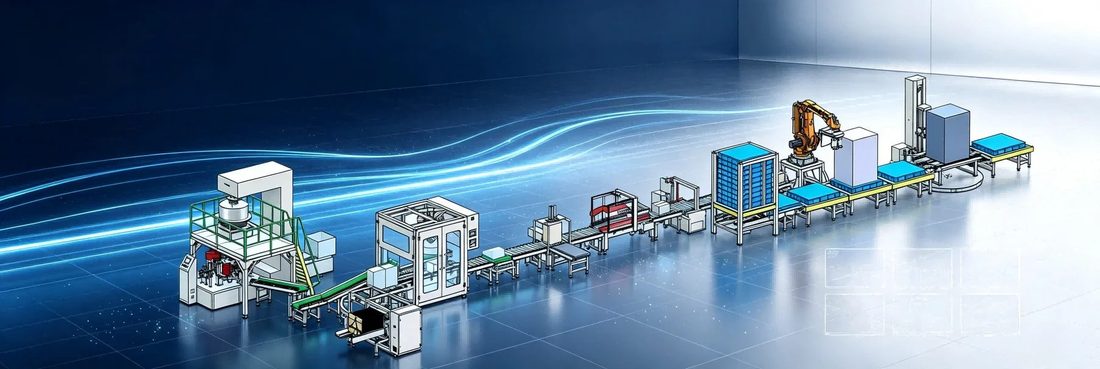
What “End-of-Line Packaging” Actually Covers
People use the term loosely. In factory-floor terms, the end-of-line is everything between the moment a finished product leaves your primary packaging machine (a filler, a flow wrapper, a thermoformer) and the moment a sealed, labeled pallet rolls onto a truck. It breaks into five sequential stages:
- Case erection — folding a flat corrugated blank into an open tray or RSC box (our case erectors cover this stage).
- Packout / loading — placing products into the case by hand, pick-and-place, or drop packer.
- Case sealing — tape or glue the box shut (the carton sealing machines stage).
- Unitization — strapping, taping corner edges, or label application (the strapping machines stage).
- Palletizing and stretch wrapping — stacking cases onto pallets and locking the load down with film (the palletizers and pallet wrappers stage).
Primary packaging — the machine that puts the product in its retail bag, bottle or blister — is a separate conversation. If you’re still choosing between a liquid filling machine and a pillow wrapper, read those buying guides first. This article assumes you’ve already solved primary packaging and the question is what happens after the product leaves that machine.
The Economic Case: Why 2026 Is the Inflection Point
Automation used to be a capacity decision. It isn’t anymore. It’s a labor-arithmetic decision. Pull the actual numbers from your own payroll — this is the math we walk every buyer through:
| Line item (per operator, fully loaded) | US / Western EU | Eastern EU / Latin America | Southeast Asia |
|---|---|---|---|
| Wages + benefits (annual) | $55,000–$75,000 | $22,000–$35,000 | $8,000–$15,000 |
| Shift coverage needed (3 shifts) | 3–4 operators | 3–4 operators | 3–4 operators |
| Annual labor cost per end-of-line station | $165,000–$300,000 | $66,000–$140,000 | $24,000–$60,000 |
| Typical automated station payback | 1.5–2.5 years | 3–5 years | 5–8 years |
The takeaway isn’t “automate everywhere.” It’s that the math has flipped in North America and Western Europe. A robotic palletizer that costs $45,000–$70,000 and replaces two operators across three shifts pays for itself inside two years — before you count reduced damaged-product claims, more consistent stretch wrap, or the fact that you can’t hire those operators anyway. In lower-wage regions, the payback stretches, which is why we usually recommend a phased approach there rather than a full lights-out cell.
The Automation Ladder: Pick the Rung That Matches Your Throughput
The single most common mistake we see is buyers over-buying. A 60-cases-per-minute line that needs a high-level gantry palletizer is wasting money; a 300-cases-per-minute line that buys a semi-automatic turntable wrapper is creating a bottleneck. Match the rung to your actual case rate, not to your ambitions for 2030.
Rung 1 — Manual packout, semi-automatic case sealing
You fill boxes by hand, run a semi-automatic carton sealer and a manual stretch wrap. This suits 1–2 shifts, under 800 cases per hour. It’s the right starting point for startups and contract packers who don’t yet know which SKUs will stick.
Rung 2 — Automatic case erection, manual packout, automatic sealing
Add an automatic case erector and an automatic strapping machine. One operator still loads product by hand, but the box forming and sealing happen automatically. This is the sweet spot for 800–1,500 cases/hour on two shifts — the most common configuration we ship.
Rung 3 — Automatic everything up to palletizing
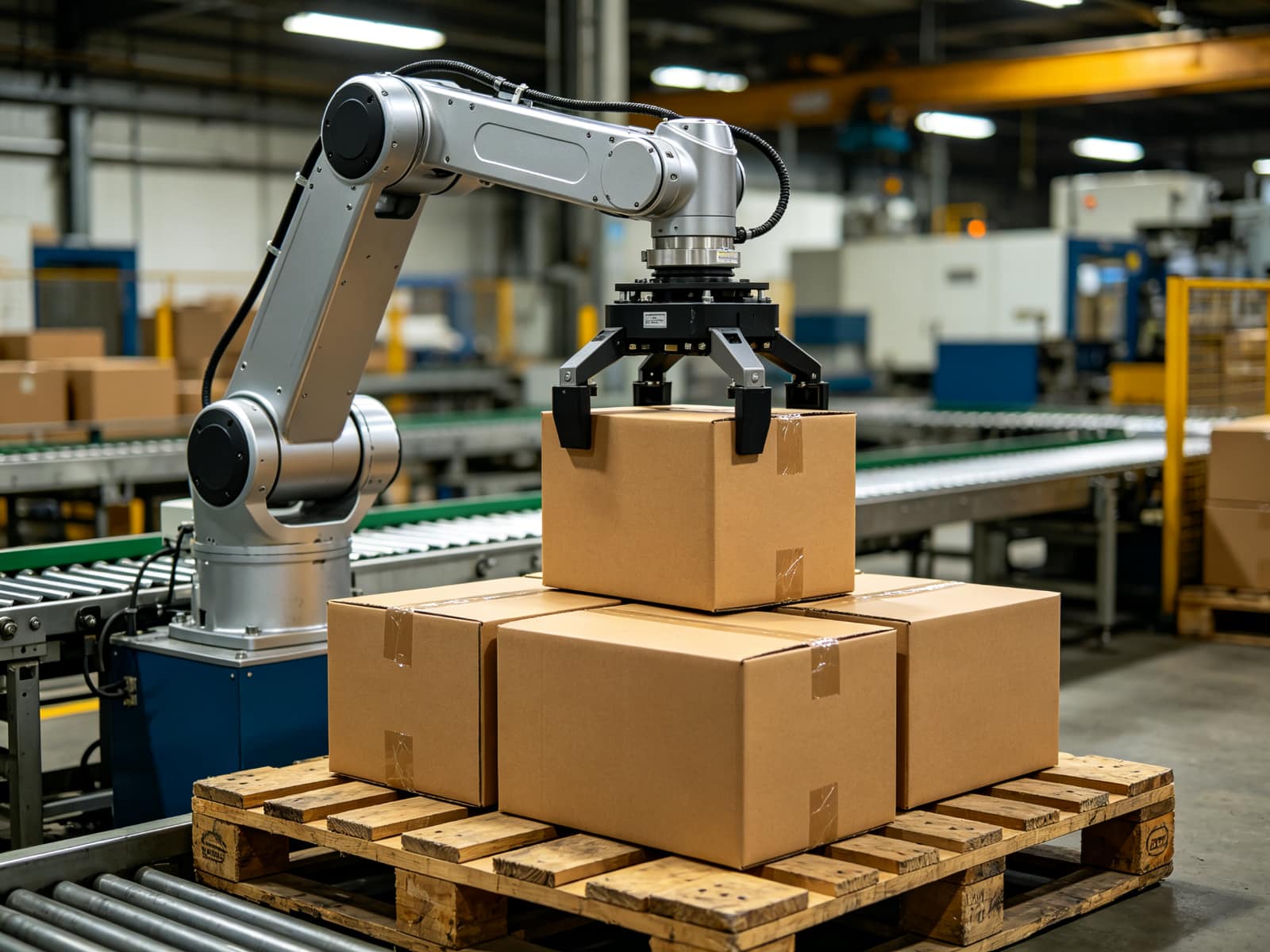
Add a robotic or high-level palletizer and an automatic stretch wrapper. One operator supervises the whole cell, occasionally swapping pallets and film rolls. This suits 1,500–3,000 cases/hour on three shifts. Most of our EU-bound customers land here.
Rung 4 — Integrated, tracked, Industry-4.0 ready
Conveyors with variable-frequency drives, a central HMI, barcode scanning for genealogy, and upstream/downstream signal handshaking with your filler or flow wrapper. This is what a turnkey packaging line project looks like when you’re running 3,000+ cases/hour and need OEE reporting. It’s also the rung where integration quality matters more than machine price.
The HMI Is Where Most Integration Projects Live or Die
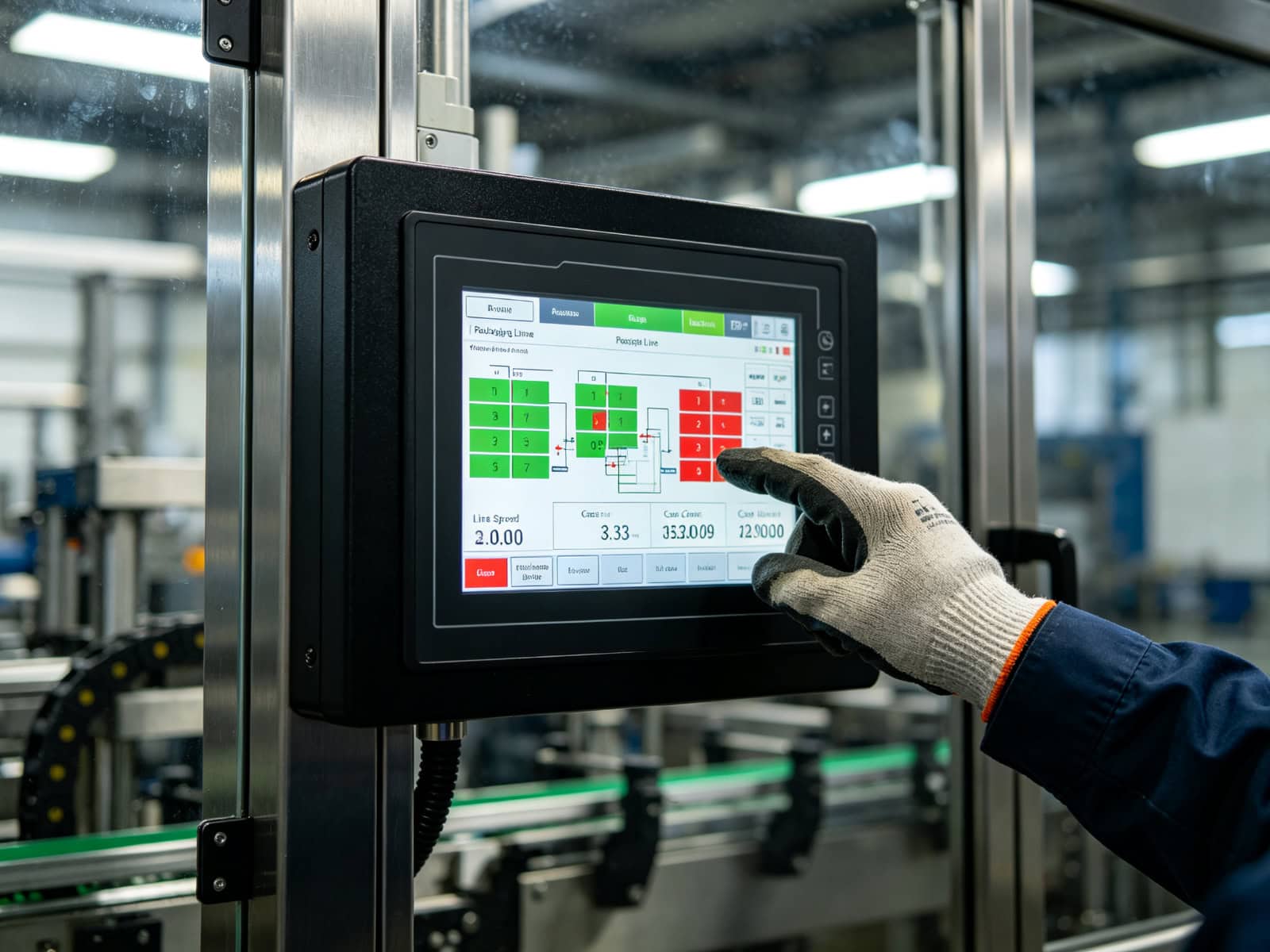
Here’s the detail buyers miss when they’re comparing quotations on price alone. Two lines can have identical servo motors and identical case speeds, and one of them will run at 92% OEE while the other sits at 68%. The difference is almost always the control layer: how the conveyor talks to the sealer, how the palletizer knows the upstream line has stopped, and what the HMI actually tells the operator at 2 a.m. when a case jams.
When you evaluate a supplier, ask three questions about the HMI before you ask about price:
Three questions that separate serious suppliers from catalog resellers
- Does the HMI show changeover time per SKU, or just total counters? If it can’t tell you how long SKU A took vs. SKU B, you can’t improve your changeover program.
- Can the machine send a fault code upstream — or stop the filler? A good end-of-line cell signals upstream before cases back up into your primary packaging. A cheap line just jams.
- Do you own the PLC program? Some suppliers lock the logic so you can’t tweak a timing parameter without flying in a technician. Get this in writing before PO.
Seven Traps That Blow Up ROI
After 120+ projects, the failures cluster. Here are the ones we see most often:
- Buying for the peak SKU, not the average. If 80% of your cases are 400×300×300 mm and one SKU is 1.2 m long, don’t buy a palletizer sized for the long SKU. You’ll pay 40% more and run slow 80% of the time. Design for the average; handle the exception SKU manually.
- Ignoring the conveyor. The cheapest parts on the quote — the conveyors — are where most bottlenecks hide. Under-engineered belts starve the sealer, and nobody notices until the line runs at 60% of nameplate speed. Pair any automated end-of-line with properly specified conveyor systems that account for accumulation, not just transport.
- Sizing the wrapper for empty pallets, not loaded ones. Stretch wrap film tension that works on a 200 kg pallet walks off a 1,200 kg load. Match the pre-stretch carriage to your heaviest, not your lightest, pallet.
- Under-buying spares. The first year will consume your seal-jaw brushes, sensor faces and film-roll core chucks. Budget 8–10% of machine cost in spares; our after-sales service package covers this, but buyers who skip it usually pay double in downtime.
- Assuming operators will use the HMI. If your operators are 55 and English is their second language, the HMI needs large icons, not nested menus. Spec this at order time, not after commissioning.
- Forgetting floor space. A robotic palletizer needs a safety fence and a pallet-drop zone. Measure the cell footprint — not just the machine footprint — before you sign. We send 3D layout files on request so buyers can drop the cell into their own AutoCAD.
- Assuming the cheapest quote is the one that ships. When you evaluate a packaging machinery manufacturer in China, the gap between the $38,000 quote and the $52,000 quote is usually not margin — it’s servo vs. pneumatic, painted mild steel vs. 304 stainless, and a PLC you can actually edit. Ask for a bill of materials, not a one-line price.
How to Run the ROI Numbers Yourself
You don’t need a consultant to pressure-test a quotation. Gather four numbers from your own operation and you’ll have a defensible payback estimate:
- Current end-of-line headcount and their fully loaded hourly cost (wages + benefits + payroll taxes + temp-agency markup).
- Cases per hour you actually ship (not the nameplate speed from your existing filler — what your ERP shows for the last 12 months).
- Damaged-product rate on pallets rejected by customers or 3PLs. Manual wrapping runs 2–5%; a properly tuned automatic wrapper drops that to under 0.5%.
- Scrap from case sealing errors — mis-taped boxes, crushed flaps, over/under-filled cases.
Subtract the new machine’s annual maintenance, power and consumables cost from the saved labor, saved damage and saved scrap. Divide the purchase price by that annual savings. That’s your rough payback. If the number comes in beyond 4 years, either you’re in a low-wage region (in which case start at Rung 2, not Rung 3) or the supplier has quoted you a Rung 4 cell for a Rung 2 problem. Both are fixable before you order.
Ready to size your own end-of-line cell? Send us your current throughput, case dimensions and a floor-plan sketch through the contact page. Our engineering team will send back a free Rung recommendation, a 3D layout, and a transparent BOM — no obligation. If you’d rather browse first, start with the turnkey packaging line solutions overview or the industry-specific solutions page. Existing customers can look up spare parts and remote-diagnostic options in the help center.
The bottom line is straightforward. In 2026, the question on most factory floors isn’t whether to automate the end-of-line. It’s whether you phase into it Rung by Rung — starting with an automatic case erector and sealer this quarter, adding the robotic palletizer next year — or whether you keep paying temp-agency premiums for a shift of workers who may not show up. We’ve built lines for both approaches, and the phased path almost always wins on cash flow. The full range of end-of-line packaging equipment we ship is on the product page; if you want to see where these cells actually run, the workshop gallery and company profile show our own floor in Qingdao.