
Fin Seal vs Lap Seal on Flow Wrappers: Why a Bakery Co-Packer Ran Two Back-Seal Styles Instead of One
The co-packer built its reputation on flow-wrapped bakery and snack products, and the new account seemed straightforward: a premium biscuit brand wanted a smooth, fully printed back with no raised seam, while an existing frozen product line relied on a foil laminate for a long shelf life. The team quickly discovered that the two jobs demanded different longitudinal seals, and that the choice was not a cosmetic preference but a constraint set by the film structure. The flat, film-efficient seam the biscuit brand wanted could not be formed on the foil laminate, and the strong, hermetic seam the frozen product needed left a folded ridge that interrupted the premium artwork. The decision every flow-wrap operation meets is the one this article turns into a selection guide: comparing the fin seal and the lap seal, how each is formed, where each earns its place, and why standardising on a single back-seal style across a mixed portfolio is a quietly expensive mistake.
At SunAura Machinery we supply the horizontal and vertical form-fill-seal machines that make these packs, and the honest framing is that the fin seal and the lap seal are the two ways to close the longitudinal seam, the seal that runs along the direction of the film and is usually called the back seal. Both are made at the same station just after the film has been formed into a tube, and they differ in which two surfaces of the film meet there. That structural difference determines which films can run, how much film each pack uses, how strong the seal is and what the finished back looks like, so it is an engineering and procurement decision rather than a packaging-styling detail.
How Each Back Seal Is Formed
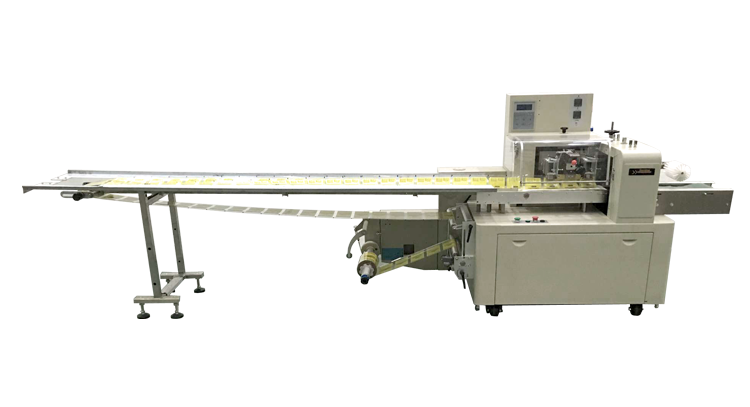
A fin seal is formed when the two longitudinal edges of the film are folded outward and brought together so that the inside face of one edge meets the inside face of the other, sealant against sealant. A pair of heated fin wheels on a flow wrapper, or heated bars on a vertical machine, pinches the two edges together as the film runs, producing a raised fin that stands off the pack and is usually folded flat against the back. Because the two mating surfaces are the same sealant layer meeting at the same temperature, the bond is strong and reliable. A lap seal is formed when the two edges are laid one over the other, so that the inside face of the top edge sits on the outside face of the bottom edge, and a heated bar presses the overlap against a backing surface. The seam lies flush with the pack and the edge of the outer film shows only as a single line across the print. The lap bond is therefore between the inner sealant and the outer film surface, and its strength depends on whether that outer surface is designed to seal.
The Film Decides: Why Most Laminates Are Fin-Only
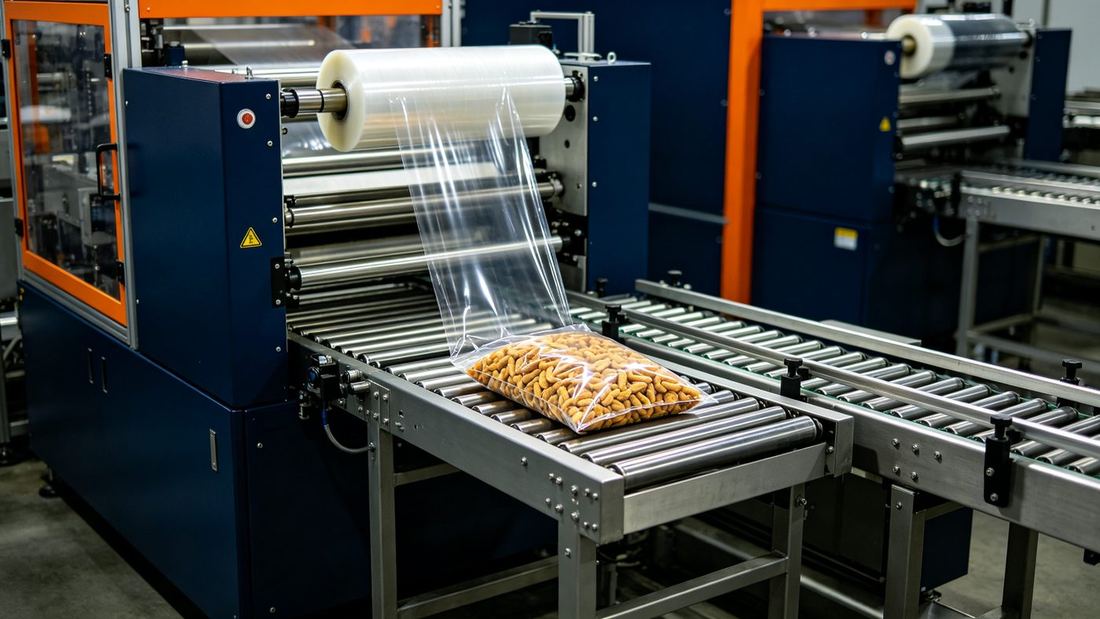
The single most important rule is that the film structure determines which seal can run, and the product matters only through the film it requires. A fin seal forms on any film whose inside face seals, which covers the vast majority of multi-layer laminates. A typical structure such as PET over aluminum over PE carries its sealant on the inside, while the outer PET is the print and barrier surface and is not designed to bond; the same holds for any laminate with a non-sealable print, paper or barrier layer on the outside. These films are fin-only, and that is why barrier, frozen and long-shelf-life products default to the fin seal. A lap seal needs a film that seals on both faces: a monolayer or coextruded polyethylene, a polypropylene with sealant on both sides, or a laminate the converter has deliberately built with a sealable outer layer. On a true two-side-sealable film either seal will form, but specifying a lap seal on a standard fin-only laminate simply will not bond, which is the common mismatch when a buyer selects a flat seam without checking the film. The same snack can run fin in a foil laminate and lap in a plain PE film, so the seal and the film have to be specified together.
Film Width, Seal Strength and the Material Economy
The two seals use different amounts of film, and the difference is geometry rather than marketing. To make a fin, each edge has to stand off the pack by the height of the fin before it can be sealed, so the web is wider than the pack circumference by two fin heights, with published industry estimates placing this extra width in the range of roughly twelve to twenty millimetres per pack. A lap seal adds only one overlap width, and supplier comparisons estimate that it saves on the order of ten to fifteen percent of film compared with a fin configuration on a suitable film. Across a high-volume run that saving is a genuine line item, but it is only available where the film seals on both faces. Strength points the other way. The fin is the stronger, more hermetic seal because it bonds sealant to sealant in a multi-layer join, while a lap bond is only as good as the outer layer’s ability to seal and can be more peel-prone at the edge. Where the back seal crosses the end seal, the film also stacks thicker under a fin, and the crimper jaws have to handle that crossover. The practical balance is that the fin buys barrier integrity and runs on nearly every laminate at the cost of extra film and a raised ridge, while the lap buys material economy and a flat printable back at the cost of a restricted film choice and a bond that depends on the outer layer.
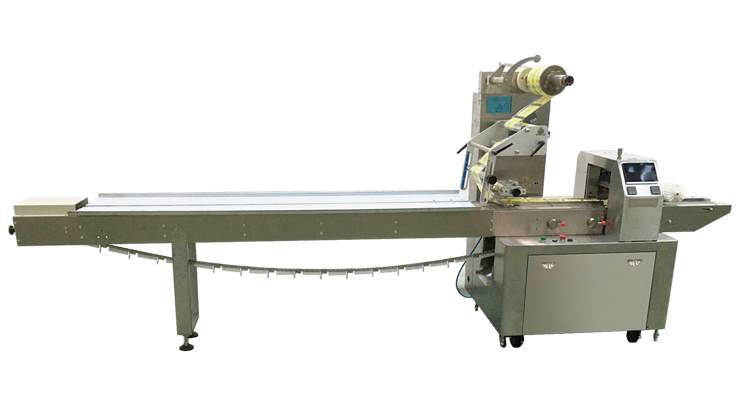
The back-seal choice is part of the wider packaging decision. The pillow and flow-wrap packaging machines rely on accurate portions that often come from the multihead weighing equipment for snacks and granules, while the thermoforming machines provide the rigid-tray alternative and the liquid filling machines handle products that stay in bottles rather than flexible film.
Selection Table: Fin Seal vs Lap Seal
| Dimension | Fin seal | Lap seal |
|---|---|---|
| Bonding surfaces | Inside to inside, sealant to sealant | Inside to outside, overlap |
| Finished profile | Raised fin, usually folded flat | Flat, smooth seam |
| Film compatibility | Most laminates, sealable inner face | Two-side-sealable films only |
| Film width | Extra two fin heights, about 12–20 mm | One overlap, less film |
| Material economy | Uses more film | Estimated 10–15% film saving |
| Seal strength | Strong, hermetic, multi-layer | Variable, depends on outer layer |
| Alignment tolerance | More forgiving | Needs precise tracking |
| Back artwork | Ridge interrupts print | Print runs straight across |
| Typical applications | Barrier, frozen, coffee, medical, dairy | Snacks, baked goods, premium retail pillow packs |
When Not to Choose Each Seal
Do not specify a lap seal for a barrier foil laminate or any film whose outer layer is not designed to seal, because the overlap will not bond and the pack loses the hermetic seal the product requires, and do not assume a lap seam will hold a long-shelf-life or frozen product without confirming the film is genuinely two-side-sealable. Do not choose a fin seal for a premium retail pack whose selling point is a flat, fully printed back, where the folded ridge interrupts the artwork and the extra film adds cost for a barrier the product may not need. Do not treat the seal as a parameter that can be switched on a running line, because moving between fin and lap changes the forming set and the back-seal station and is a tooling change rather than a recipe setting. Finally, do not pay for a sealable outer layer on a fin-only line, and do not force a single seal style across a portfolio that genuinely needs both; the co-packer’s biscuit and frozen products required different structures, and carrying the correct configuration for each was cheaper than compromising the seal or the artwork. If the product truly needs a rigid wall or reclosure that flexible film cannot provide, the correct answer is a tray or bottle rather than a different back seal.
Changeover, Forming Sets and Ordering the Right Configuration
Because the back-seal style is built into the forming set rather than selected on the screen, the way a plant runs multiple products changes the specification and the changeover plan. On a flow wrapper the default is the fin seal, because the fin wheels pinch the two edges together beneath the product, need no backing surface and run every film, while on a vertical machine forming polyethylene the default is the lap seal, with the forming tube acting as the anvil. Moving between the two is a tooling change to the forming box and the back-seal station, with the web width recut for the different geometry, so a co-packer that genuinely runs both styles should plan the spare forming sets and the changeover time rather than assume a single machine flips between them on a recipe. When ordering the machine, the seal and the film structure should be stated together, because the forming set is cut for one web width and that width depends on the seal; when ordering film, the converter should be told which back seal it will run, because only a lap seal needs the sealable outer face and there is no reason to pay for it on a fin line. A short approved trial on the actual film is the sensible acceptance step before artwork is finalised, since a seam that tracks correctly on a demonstration roll can drift at production speed and the overlap is less forgiving of misalignment than the fin.
Frequently Asked Questions
What is the difference between a fin seal and a lap seal?
A fin seal joins the two inside sealant surfaces face to face and leaves a raised fin, giving a strong hermetic bond that runs on most laminates. A lap seal overlaps one edge over the other and bonds the inner surface to the outer, leaving a flat seam and saving film, but it requires a film that seals on both faces.
Why can’t a foil laminate use a lap seal?
Because a typical foil laminate carries its sealant only on the inside and uses the outer layer for print and barrier, so the overlap has no sealable surface to bond. The fin seal joins the two inner sealant faces instead, which is why barrier and frozen products default to the fin.
How much film does a lap seal save?
Published supplier estimates place the saving in the range of ten to fifteen percent versus a fin configuration, because the lap needs only one overlap rather than two fin heights. The saving only applies on a two-side-sealable film and has to be weighed against the strength and barrier requirements.
Can the seal style be changed on an existing flow wrapper?
Only as a tooling change to the forming box and the back-seal station rather than a setting, so the seal and the film structure should be specified together at order time. The machine’s default on a flow wrapper is the fin seal because it runs every film and needs no backing surface.
Summary: Match the Back Seal to the Film and the Shelf Requirement
Choose a fin seal for barrier, frozen and long-shelf-life products on laminates, where the sealant-to-sealant bond gives the strongest hermetic seal and runs on nearly every film, accepting the extra film width and the folded ridge. Choose a lap seal for premium retail snacks and baked goods on two-side-sealable films, where the flat printable back and the film saving matter and the outer layer is confirmed to bond. The correct seal is the one the real film structure, barrier requirement and artwork demand, and a mixed portfolio that spans both genuinely needs the two configurations rather than a forced single standard.
The seal decision connects to the rest of the line. If you are deciding how the rigid packs are formed, see how to choose between vacuum, pressure and positive-negative pressure thermoforming, and if you are choosing how the filled container is protected, compare air-cooled and water-cooled induction sealing. If you want the back seal and forming set selected against your real films, products and speeds rather than a generic recommendation, send us your samples and artwork and we will confirm the configuration, film width and line balance — contact SunAura Machinery to start the review.
Source Material
This article was developed from, and reorganizes, published flexible-packaging and supplier material covering fin and lap seal formation, film-structure compatibility, film-width and overlap geometry, seal strength and hermeticity, artwork and forming-set requirements, and the tooling change needed to move between configurations. The figures and percentage claims are treated as indicative published estimates and supplier views rather than exact guarantees; the appropriate seal and film structure must be validated on the specific product, film and machine configuration.