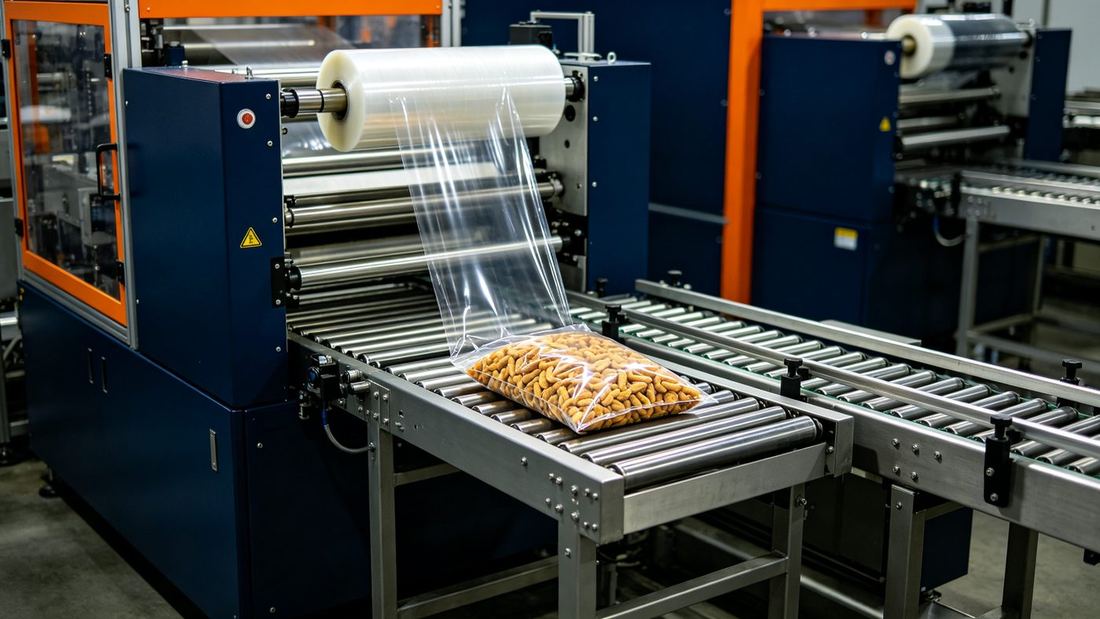
Buyers shopping for a powder packing machine usually compare bags per minute and price. The bigger decision is the dosing principle: auger, volumetric cup, or net weigh. Each works for a different powder flowability, accuracy target and bag size. This guide compares the three and tells you which one your product actually requires.
Quick Comparison: Three Powder Dosing Methods
| Dimension | Volumetric Cup | Auger Screw | Net Weigh (Gross / Net) |
|---|---|---|---|
| How it works | Fixed-volume cup drops powder by volume | Screw flight rotates a fixed number of turns | Powder weighed load cell during filling |
| Fill accuracy | ±1.5–3% by volume | ±0.5–1% | ±0.2–0.5% |
| Best powders | Free-flowing, consistent density (flour, sugar, salt) | Dusty, non-free-flowing (spice, protein, milk powder) | High-value, variable density (coffee, spice, chemical) |
| Bag size range | 50 g–1 kg (one cup size) | 5 g–5 kg | 100 g–25 kg |
| Top speed | 30–60 bags/min | 20–40 bags/min | 10–25 bags/min |
| Dust control | Poor (free fall) | Good (enclosed screw) | Medium (hopper vent required) |
| SKU flexibility | Poor (change cup per size) | Good (recipe recall on screw speed) | Good (recipe recall on target weight) |
| Upfront cost | Baseline | +30–60% | +100–200% |
| Main weakness | Density drift = weight drift | Slower than cup for free-flowing | Slowest, highest cost |
How to Choose, Step by Step
1. Is your powder free-flowing or not? Flour, sugar, salt and rice pour like water. Spices, protein powder, milk powder and cocoa cake together, aerate and stick. Free-flowing powders can use a volumetric cup. Non-free-flowing powders need an auger — a cup will bridge and give inconsistent doses.
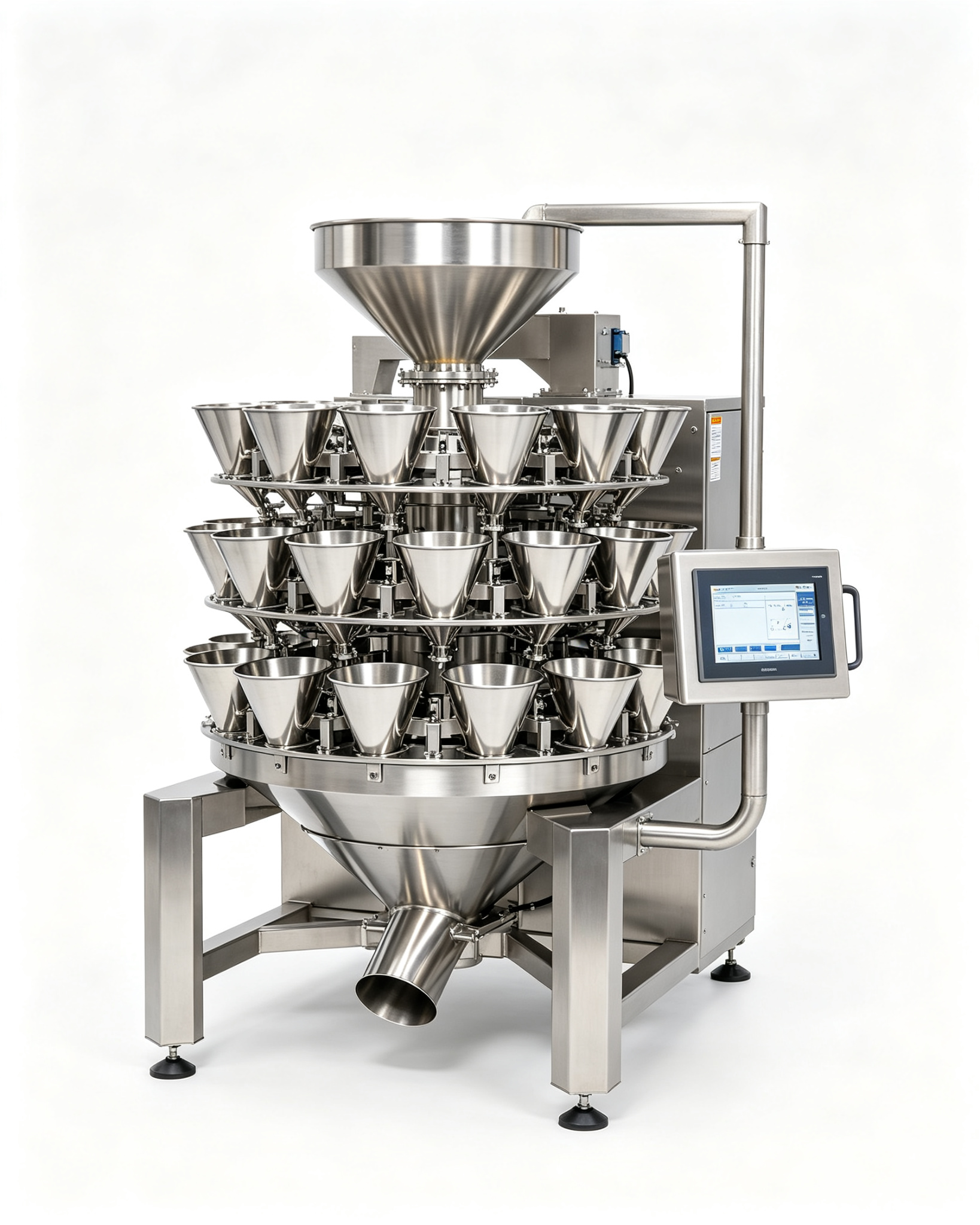
2. How accurate does the fill weight need to be? On a 500 g bag, ±2% means ±10 g — acceptable for flour but not for a 2 g spice packet. Cheap powders (flour, sugar) tolerate volumetric accuracy. Expensive powders (spice, coffee, pharmaceutical) need net weigh. Auger sits in between at ±0.5–1%.
3. Does bulk density change between batches? Volumetric cups measure volume, not weight. If your flour arrives from a different mill with 10% higher bulk density, the same cup now over-fills by 10%. Buyers who run multi-supplier powder should skip the cup and go auger or net weigh.
4. How dusty is the product? Protein, spice and milk powder generate explosive dust. A volumetric cup with free fall blows powder into the air. An auger moves powder through an enclosed tube, which is why dust-sensitive lines (and ATEX zones) specify auger.
Selection Checklist Before You Ask for Quotes
- Product name and typical bulk density.
- Flowability test (does it pour like water or cake?).
- Fill weight range and tolerance (e.g. 500 g ±2 g).
- Bag type (pillow, gusset, pre-made pouch).
- Target bags per minute.
- Number of SKUs and weight changes per shift.
- Dust risk and whether ATEX certification is required.
- Whether bulk density varies by supplier.
- Humidity / ambient conditions (powders cake in humid air).
- Upstream: silo, hand-feed or screw conveyor.
- Cleaning frequency between SKUs.
- Budget tier (baseline / mid / premium).
Common Buying Mistakes
Buying a volumetric cup for a dusty, non-free-flowing powder. Spice and protein powder bridge in a cup and over-dose. Buyers save on the filler and lose more in rejected bags and clean-up. Use an auger for non-free-flowing powders.
Buying net weigh for flour or sugar. Net weigh doubles the price and cuts speed in half. On a low-margin powder where ±2% is acceptable, the payback never arrives. Use a volumetric cup or auger.
Ignoring bulk density drift. Volumetric dosing is volume, not weight. When a new supplier delivers denser powder, every bag over-fills. Buyers who run multi-supplier powder should pay for a load cell, or calibrate the cup every batch.
Forgetting dust collection. Every powder filler vents dust. Without a vent filter on the hopper, powder accumulates on the floor, in the motor and in the electrical cabinet. Specify dust extraction with the filler, not as an afterthought.
Bottom Line
Free-flowing, low-value, single-density powder (flour, sugar, salt): volumetric cup. Non-free-flowing, dusty, mid-accuracy (spice, protein, milk powder): auger. High-value, variable-density, tight-tolerance (coffee, specialty spice, chemical): net weigh. Match the dosing principle to powder flowability and the cost of an over-filled bag — not to the machine brochure.
SunAura builds auger fillers, volumetric cup fillers and net weigh stations integrated with pillow packaging machines and upstream conveyors into complete lines. Send us your powder, fill weight and bags-per-minute target — we will spec the dosing method you actually need.
Packing powder and unsure whether auger, cup or net weigh fits your product? Send your powder type, fill weight and target bags/min to [email protected] or on WhatsApp. We will model the accuracy and payback against your product and bag cost.