
October 18, 2026 | by Frank, SunAura Machinery Application Engineering
A case erector is the unsung hero of any end-of-line packaging system. It takes flat, flattened cardboard blanks from a stack, folds them into square cases, and seals the bottom flaps — all at speeds of 10 to 30 cases per minute. Without it, someone has to stand at a table folding boxes by hand, a job that is slow, ergonomically punishing, and nearly impossible to staff reliably in 2026.
But not every case erector is the same. The right machine depends on your case sizes, speed requirement, whether you tape or glue the bottom, and how many SKUs you run. This guide walks through the key decisions before you buy.

How a Case Erector Works
Every automatic case erector follows the same sequence, though the mechanics differ between budget and premium models:
- Blank pick: A vacuum suction arm picks one flat case blank from the magazine stack.
- Case opening: The blank is pulled or pushed into a rectangular shape, with mechanical arms squaring the corners to 90 degrees.
- Flap folding: The minor (short) flaps are folded in, then the major (long) flaps.
- Bottom sealing: The bottom flaps are sealed — either with pressure-sensitive tape or hot-melt glue.
- Discharge: The open case exits on a conveyor, ready for product loading.
The whole cycle takes 2–6 seconds per case, depending on the model. The critical quality step is corner squaring — if the case isn’t perfectly square when the bottom seals, the case will be twisted, the top will not close properly, and it may fail on the pallet or in transit.
Key Decision 1: Tape vs. Glue Bottom Seal
| Feature | Tape Sealing | Hot-Melt Glue Sealing |
|---|---|---|
| Material cost | Lower (standard packing tape) | Higher (glue sticks + applicator maintenance) |
| Seal strength | Good, easily opened by hand | Stronger, tamper-evident |
| Changeover | Fast (swap tape roll) | Slower (nozzle cleaning, temperature warm-up) |
| Best for | General shipping, open-and-repack | Food, pharma, export / long-distance |
| Machine price | Lower | Higher by $3,000–$6,000 |
Most SunAura case erectors ship with tape sealing as standard. Hot-melt glue is available as an option for customers shipping heavy or export product.
Key Decision 2: Case Size Range
Every case erector has a minimum and maximum case size it can handle. This is determined by the magazine width, the arm stroke, and the flap folders. Before you request a quote, measure the following for every case you run:
- Case length (L): the longest dimension of the formed case
- Case width (W): the shorter dimension
- Case depth (D): height of the formed case
- Blank size (flattened): the flat cardboard dimension — this determines magazine compatibility
Standard automatic case erectors handle cases from about 200 mm long x 150 mm wide to 600 mm long x 500 mm wide. If you run cases outside this range (very small cartons or oversized shipping crates), you need a specialized machine.
Key Decision 3: Speed Requirement
| Class | Speed | Best For |
|---|---|---|
| Semi-automatic | 5–8 cases/min | Small factory, <500 cases/day |
| Standard automatic | 10–15 cases/min | Medium production, 500–2,000 cases/day |
| High-speed automatic | 20–30 cases/min | Large plant, 2,000+ cases/day |
Don’t over-buy speed. A 30-case/min machine costs significantly more than a 15-case/min model, and if your downstream packing operation only runs at 10 cases/min, the case erector will be idling half the time. Match the case erector speed to your bottleneck — usually the product loading or packing station.
Key Decision 4: Single Case Size vs. Frequent Changeover
If you run one or two case sizes year-round, a fixed-size case erector is the simplest and cheapest option. If you run 5, 10 or 20 different case SKUs, look for a machine with:
- Tool-free changeover: hand cranks or quick-release handles instead of wrench adjustments
- Recipe memory on HMI: save each case size as a program, so the operator selects it from a touchscreen
- Auto-width adjustment: servo-driven conveyor that automatically centers cases of different widths
Multi-SKU operations should budget 20–30% more for a servo-adjusted machine. The changeover time savings pays for itself within a year if you switch case sizes more than once a week.
Common Problems and What to Ask Your Supplier
- “What if my blanks vary in quality?” — Budget machines struggle with warped or slightly mis-sized blanks. Ask whether the vacuum arm has adjustable suction and whether the forming arms can handle minor blank variation.
- “What tape width and splice type?” — Most machines use 48 mm standard tape. Confirm the tape head is compatible with tape brands you can source locally.
- “What’s the magazine capacity?” — A standard magazine holds 150–250 blanks. If you run 24/7, you’ll need a taller magazine or automatic blank re-feed.
- “Does it integrate with my upstream/downstream equipment?” — The case erector needs signal handshakes: “case ready” to the packer, “case full” to the sealer. Make sure your supplier provides IO and protocols (Ethernet/IP, Profinet) that match your existing line.
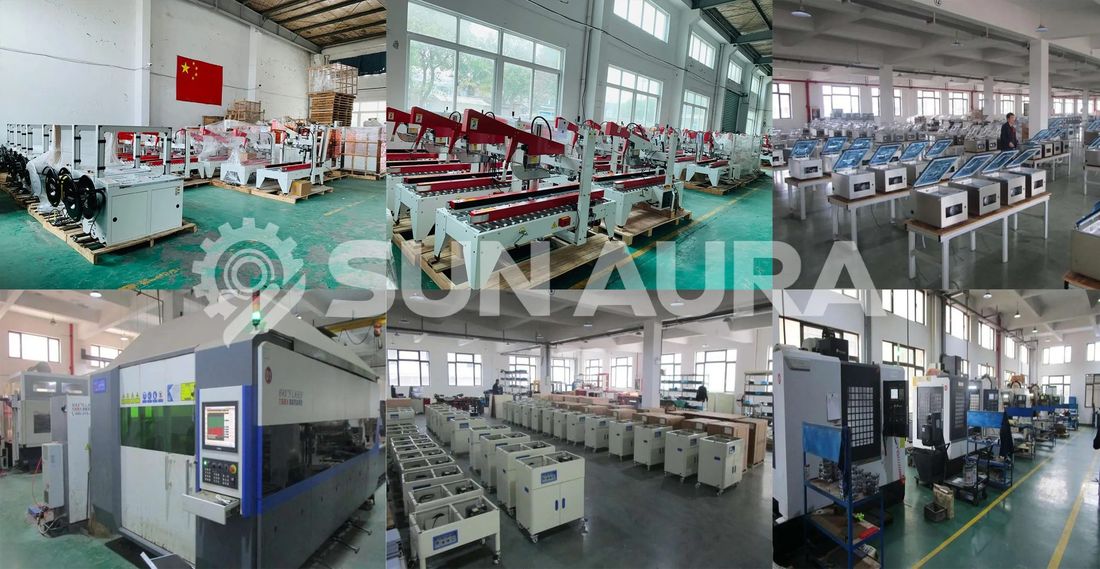
Ready to size a case erector for your line? Send us your case dimensions (L x W x D), target cases per minute, number of case SKUs, and whether you prefer tape or glue. We’ll recommend a specific model and send a layout. Browse our case erectors, see our workshop, or contact us for a quote.
The bottom line: a case erector is a low-cost, high-return automation investment — typically paying for itself in 12–18 months on reduced labor alone. The main risk is buying a machine that’s too narrow on case size range or too slow for your future growth. Give yourself 20% headroom on both speed and case dimensions, and you’ll have a machine that serves you for 10+ years.