Metal Detector vs X-Ray Inspection: How to Choose Contaminant Detection by Product, Packaging and Hazard
Somewhere on your line, a grinder blade is wearing, a sieve mesh is fraying, and a glass-lined pipe has a chip nobody has noticed yet. You cannot inspect every pack by hand, so the question is not whether to install foreign-material detection. It is which box to install. For most purchasing teams the decision collapses into a single, deceptively simple comparison: a metal detector or an X-ray inspection system. They look similar on a layout drawing — a stainless aperture, a reject arm, a control panel — and salespeople for both will promise peace of mind. They are not the same tool, and buying the wrong one either wastes capital or leaves a hole in your hazard analysis that a retailer audit will find.
This guide walks through the working principle behind each technology, the product and packaging conditions that make one fail, and the realistic cost and maintenance burden. We include a side-by-side selection table and, just as important, the situations where you should not buy either option as specified. If you are a quality manager defending a HACCP plan, a plant engineer sizing the aperture, or a procurement director comparing quotations, the aim is to leave you able to justify the choice on paper rather than on a hunch.
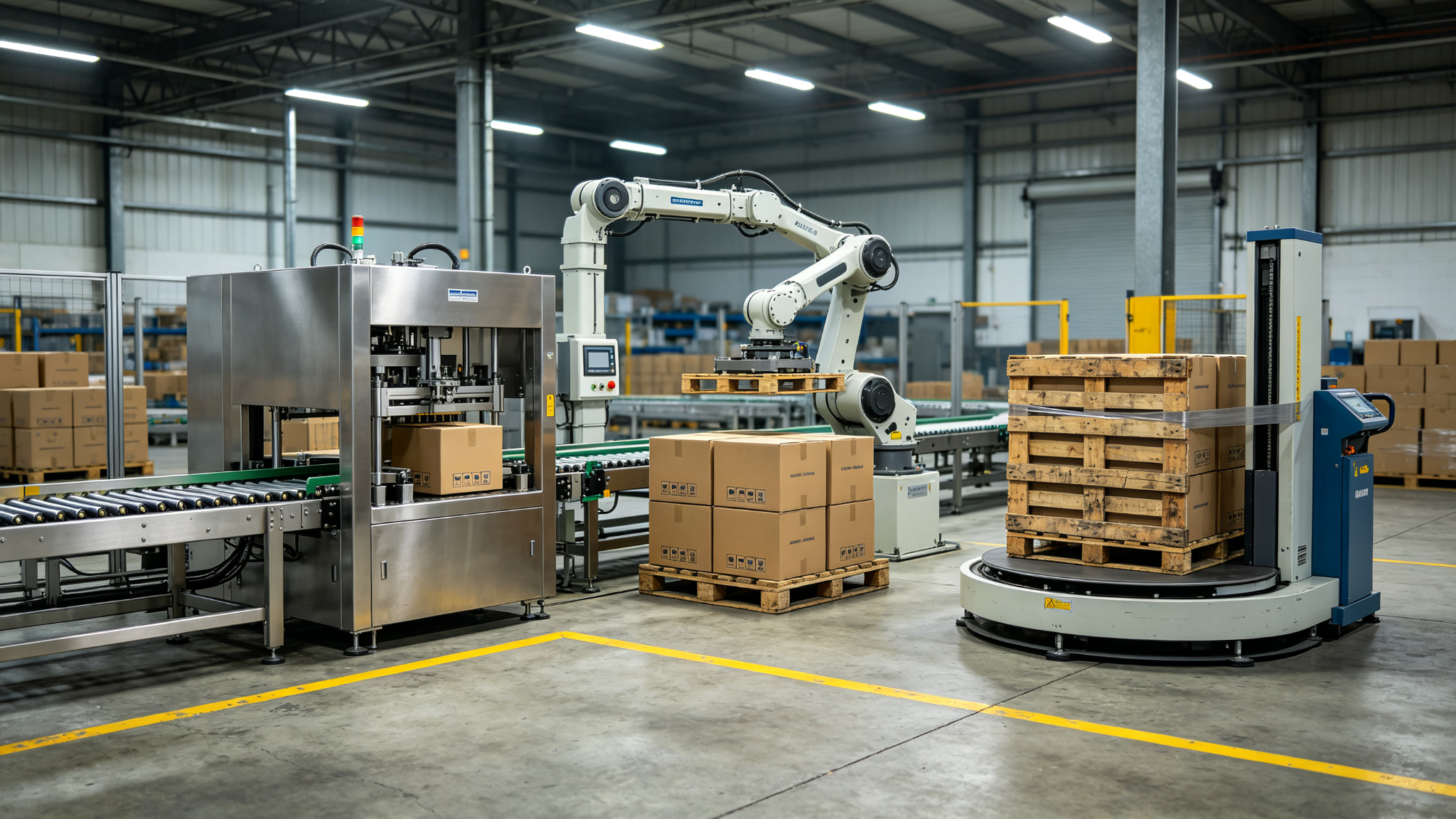
How Each Technology Actually Works
Metal detectors read an electromagnetic field
A metal detector passes the product through a coil arrangement that generates a balanced electromagnetic field. When a conductive or magnetic object enters that field it disturbs the balance, and the electronics flag the disturbance. A well-tuned unit can separate ferrous metal, non-ferrous metal such as brass or aluminium, and even some stainless grades, though stainless is harder to spot because it is a poor conductor and only weakly magnetic. The key limitation is structural: the detector responds to electrical and magnetic properties, so it only finds metal. It cannot see glass, stone, calcified bone, ceramic, or dense plastic fragments, no matter how sensitive the head is.
There is a second, subtler problem. The detector cannot distinguish a contaminant from a product that is itself conductive. Wet, salty, warm, or acidic goods — fresh meat, cheese, hot-filled sauces, brined products — generate a signal of their own, called the product effect. To stop the machine rejecting every pack, the operator widens the tolerance or lowers sensitivity, and small metal fragments can then pass through. Modern multi-frequency and multi-simultaneous-frequency heads reduce this effect considerably, and a competent supplier will run your actual product through a test unit before quoting, but they do not eliminate the physics. A detector that performs beautifully on a dry biscuit can struggle on a warm, salty chicken fillet.
X-ray systems image density
An X-ray system works on a different principle entirely. A generator emits a low-energy X-ray beam through the product and onto a sensor. Dense materials absorb more of the beam, so the sensor captures a grayscale image built from density differences. Software then compares regions of that image against learned thresholds and rejects anything that looks wrong. Because the trigger is density rather than conductivity, the system can flag metal, glass, mineral stone, ceramic, dense rubber and plastic, and calcified bone. It is also indifferent to the product effect that blinds metal detectors, which is why wet, salty, and warm goods are a natural X-ray application.
X-ray brings a second capability that metal detection cannot match: the same image can be used for quality checks unrelated to contaminants. A single machine can verify fill level, count components, estimate mass, detect a missing or broken item, spot a trapped-product seal defect, and confirm that a multipack is complete. For lines where giveaway, underfill claims, or missing-piece complaints are a recurring cost, that multi-function logic matters. It is not free — the algorithms have to be set up and validated for each SKU — but it means one inspection station can replace several manual checks.
The Packaging Material Changes Everything
Packaging is where a surprising number of metal-detector projects fail at the validation stage. Aluminium foil trays, metallised films, foil lids, and metalised stand-up pouches all sit inside the electromagnetic field and trigger it continuously. A conventional detector simply cannot inspect product inside a conductive wrapper, because the packaging itself is the largest signal in the aperture. There are specialised ferrous-in-foil detectors tuned to pick up magnetic iron and some stainless through foil, but they are blind to non-ferrous metal and aluminium contaminants, which limits their usefulness. If your product is wrapped in metallised film and you need broad contaminant coverage, the metal detector is the wrong technology before you even consider price.
X-ray handles this far more gracefully. Thin, uniform aluminium foil and metallised film create a light, even signature that the beam passes through, and the software subtracts that background to reveal denser objects inside. X-ray can also inspect product in cans and glass jars, including the difficult glass-in-glass case, with the caveat that the thick neck and base of a jar create defined blind zones that the detector geometry and line orientation have to account for. This is the reason foil-ready-meal, canned, and jarred goods tend to move toward X-ray even when the contaminant they worry about most is still metal.
Selection Table: Metal Detector vs X-Ray
| Dimension | Metal Detector | X-Ray Inspection |
|---|---|---|
| Contaminants found | Ferrous, non-ferrous, some stainless | Metal, glass, stone, ceramic, dense plastic, rubber, bone |
| Wet / salty / warm product | Product effect reduces sensitivity | Largely unaffected; holds sensitivity |
| Foil / metallised film | Standard unit cannot inspect; ferrous-in-foil is limited | Penetrates thin foil and film reliably |
| Cans and glass jars | Not practical | Yes, with neck/base blind-zone handling |
| Extra quality checks | None | Fill level, count, mass, missing parts, seal defects |
| Typical capital cost (estimate) | Lower, roughly a third to half of comparable X-ray | Two to three times the detector for a comparable aperture |
| Running cost | Low; modest power, simple parts | Higher; generator and detector service life, radiation checks |
| Setup and validation | Straightforward sensitivity testing | Per-SKU image algorithms and more involved validation |
| Maintenance skill | General electrical/mechanical team | Specialist vendor support often needed |
| Typical best fit | Dry, non-foil goods where metal is the main hazard | Mixed hazards, foil/can/jar packaging, retailer-driven lines |
The cost figures are deliberately given as ranges rather than fixed numbers. Aperture size, conveyor integration, reject type, hygienic rating, and the number of SKUs all move the quotation, and regional pricing and duties vary. Treat the table as a structural guide and ask vendors to quote against the same written specification so the comparison is like-for-like.
Where Metal Detection Still Wins
It would be a mistake to read this as a case for always buying X-ray. Metal detection remains the sensible, proven control for a large share of lines. If your product is dry and non-conductive — flour, cereal, biscuits, snack foods, pasta, powdered ingredients — and it is packed in plain film, paper, or cardboard, a metal detector is usually the cost-effective answer. If your realistic hazard, traced through a genuine HACCP review, is metal from grinders, mixers, sieves, slicers, or worn bearings, then the detector targets exactly the risk you have. The lower purchase price, simpler maintenance, and the fact that your own team can handle most upkeep all point the same way. For these applications the extra X-ray spend buys capability you will not use, and capital tied up in unused sensitivity is capital not spent elsewhere.
Metal detectors also have a role even on lines that ultimately add X-ray. A detector placed mid-line, just after a known metal-wearing process such as grinding or milling, protects the downstream equipment from a large broken component and catches it before it is shredded into smaller, harder-to-find pieces. Many well-run plants deliberately run both: a metal detector as an early equipment guard and an X-ray on the finished retail pack for comprehensive contaminant and quality coverage.
Where X-Ray Earns Its Premium
X-ray becomes the justified choice when the hazard profile or the packaging pushes beyond what a detector can do. If glass, stone, bone, or dense plastic is a credible risk — a glass-lined ingredient line, mechanically harvested produce with field stones, a seafood product with calcified bone, a rubber-gasket process — the detector physically cannot find those materials. If the product is canned, jarred, foil-wrapped, or in a metallised pouch, the detector cannot see into the pack. And if a major retailer or certification scheme expects X-ray on finished product, or a documented science-based alternative, the choice is often made for you at the commercial level rather than the engineering one.
Consider the seafood example that recurs in the industry. A frozen fish portion supplier ran a metal detector for years and still received bone complaints because bone is not metal and the detector never had a chance. Moving to X-ray on the finished retail pack caught calcified bone fragments and stray packaging material while simultaneously satisfying a large retailer’s foreign-material requirement. The same logic applies wherever the contaminant that actually generates complaints is non-metallic.
When Not to Buy — Reverse Advice
A trustworthy selection process has to say no as well as yes. Do not buy a standard metal detector if your product is sealed in foil or metallised film and you need anything beyond ferrous detection; you will discover the limitation during validation and own a machine that cannot do the job. Do not buy a metal detector on the assumption that it will catch glass or bone; it will not, and writing it into the HACCP plan as if it did is a compliance problem waiting to happen. Conversely, do not buy an X-ray system simply because it feels like the premium option if your product is dry, non-foil, and your only documented hazard is metal. In that case you are paying two to three times the price for contaminant coverage that does not correspond to any real risk, plus higher service costs and a more complex validation burden.
There is also a timing trap. Do not specify either machine against a datasheet alone without running your actual product, in its actual packaging, through a test unit. Product effect, pack geometry, and blind zones are only revealed with real samples. A quotation based on a generic description is the most common root cause of a failed factory acceptance test. And if the supplier cannot or will not do a product test before taking the order, that is itself a signal.
Cost, ROI and Procurement Risk
The honest financial case runs on avoided losses, not just sticker price. A single contaminant recall carries the cost of product withdrawal, logistics, customer penalties, and the slower-moving damage to a supplier relationship, and these can dwarf the difference between two quotations. X-ray’s case is strongest where the cost of a non-metal foreign-material incident is high or where a retailer mandate gates access to the shelf. The metal detector’s case is strongest where the risk is well-bounded metal contamination and the savings on capital and maintenance can be redirected to other line improvements.
Factor the lifecycle, not just the purchase. X-ray generators and sensors have finite service lives and typically need vendor support for replacement and radiation-safety checks, even though the low-energy beams used in food systems are heavily shielded and present no hazard to operators under normal use. Metal detectors are simpler, with fewer specialist consumables and a maintenance regime a general engineering team can manage. When you build the total-cost-of-ownership model, include calibration, validation labour, spare-parts availability, and the realistic response time of the supplier, not just the headline figure.
On a fully integrated line the detection station has to communicate with the reject mechanism, the upstream filler, and the data system, so think about integration early. Whether you are adding a check to a dedicated liquid filling line or a complete turnkey packaging line, the reject timing, pack spacing, and rejection-verification sensors have to be designed in rather than retrofitted. Downstream equipment, including the flow wrappers in the pillow packaging machine range, should be positioned so a rejected pack never travels beyond the detection point. SunAura Machinery engineers treat the detection point as part of the line architecture from the layout stage, which avoids the common problem of a detector bolted into a gap where there is no room for a proper reject bin.
Frequently Asked Questions
Can a metal detector find glass or stone?
No. A metal detector responds to electrical and magnetic properties, so it finds metal only. If glass, stone, ceramic, or bone is a credible contaminant in your hazard analysis, you need an X-ray system or a separate specific control, not a more sensitive metal detector.
Does foil packaging make inspection impossible?
It makes a standard metal detector impractical because the packaging itself triggers the field. Specialised ferrous-in-foil detectors handle magnetic metals but miss non-ferrous contaminants. X-ray penetrates thin foil and metallised film and is the usual choice for foil-wrapped, canned, and jarred products.
Do I need both a metal detector and an X-ray?
Often you do not, but running both is a legitimate design. A metal detector mid-line protects equipment from large metal components, while an X-ray on the finished pack covers the full contaminant range plus quality checks. The decision depends on your hazard analysis and budget rather than a universal rule.
How much more does X-ray cost to own?
As a rough guide, an X-ray system runs two to three times the capital cost of a comparable metal detector, with higher service costs and specialist support. Exact figures depend on aperture, throughput, hygienic rating, and SKU count, so request quotations against a single shared specification.
Is X-ray radiation a safety concern for operators?
Food-grade X-ray systems use low-energy beams inside fully interlocked, shielded cabinets. Under normal operation there is no meaningful exposure to staff, and routine radiation-safety checks confirm the shielding remains effective. The safety regime is about verifying the guards, not a hazard from open beams.
Conclusion: Match the Tool to the Hazard
The decision should be driven by the hazard and the packaging, not by which technology looks more impressive. Choose a metal detector when your product is dry and non-conductive, your packaging is non-foil, and a genuine HACCP review identifies metal as the realistic risk; it is the lower-cost, simpler-to-maintain control that does exactly that job. Choose X-ray when non-metal contaminants are credible, when foil, cans, or glass jars block a detector, when you want simultaneous fill and seal quality checks, or when a retailer requires it. If you are still weighing the two, the practical next step is a product test on real samples in real packaging. For help sizing the aperture, designing the reject station, and integrating detection into a new or existing line, talk to the SunAura Machinery engineering team before you commit to a quotation.
If your project also involves automated handling, the choice between robot geometries is a related decision worth reading up on — see our case on choosing a delta robot over a six-axis arm for high-speed loading, and if floor space is the constraint, our comparison of monoblock versus inline filling and capping layouts.
Sources and further reading
This article draws on industry technical material and supplier guidance, including Anritsu’s considerations for upgrading from metal detection to X-ray, the PPi Technologies Group comparison of X-ray and metal detection, and product and application guidance from inspection equipment manufacturers. Specific cost and performance figures are presented as estimated ranges and should be confirmed against quotations for your application.