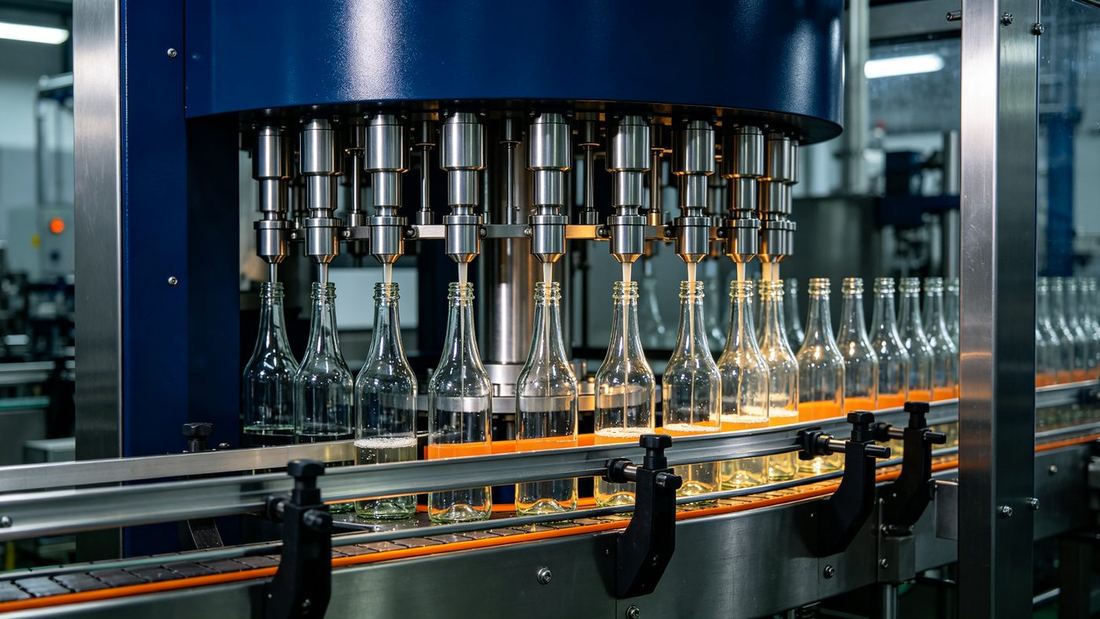
SunAura Machinery has commissioned a counter-pressure can filling and seaming line for a craft brewery in the Santiago valley, Chile. The brewery cans 330 ml and 500 ml Lagers, IPAs and stouts at 60–80 cans/min, distributing to restaurants and retail across Chile and Peru. The project replaced a small manual gravity filler that oxygenated the beer, produced variable fills, and could not keep up with summer demand.
A standard soft-drink can filler would have failed here on three points: it would over-oxygenate the beer, it would not hold counter-pressure during filling, and it would foam over on IPAs with high hop bitterness. This line was specified around beer reality.
Why Counter-Pressure — Not Gravity or Overflow
Beer holds dissolved CO₂. When you open a can or bottle, the CO₂ comes out of solution as foam. A gravity filler pours beer at atmospheric pressure, which makes the beer foam and pulls oxygen in. A counter-pressure filler first pressurises the can with CO₂ to match the tank pressure, then fills beer from the bottom up without degassing. That is why O₂ pickup stays under 50 ppb and the beer holds its shelf life.
| Filler type | O₂ pickup | Beer suitability | Why |
|---|---|---|---|
| Gravity / overflow | 200–500+ ppb | Not suitable | Foams over, oxygenates, flat in weeks |
| Isobaric / counter-pressure (this line) | Under 50 ppb | Selected | CO₂ pre-pressurise, bottom-up fill, no degassing |
| Hot-fill / aseptic | Low | Not suitable | Kills live yeast and off-flavours in craft beer |
Two Beer-Specific Details That Decide Quality
Bottom-up fill with foam purge. The filling valve reaches the can bottom and fills upward; when the beer reaches the can shoulder, a small head of foam (not air) pushes out the headspace before seaming. This is why the beer does not taste “wet” or “cardboard” after two months on a shelf.
Can rinsing and CO₂ purge before fill. Dust and air in the can are the largest source of O₂ pickup. The line includes a pre-rinse with sterile water and a CO₂ purge before the counter-pressure cycle. Skipping this step is the most common mistake craft breweries make when upsizing from a manual filler.
Who This Line Suits — and What We Would Specify Differently
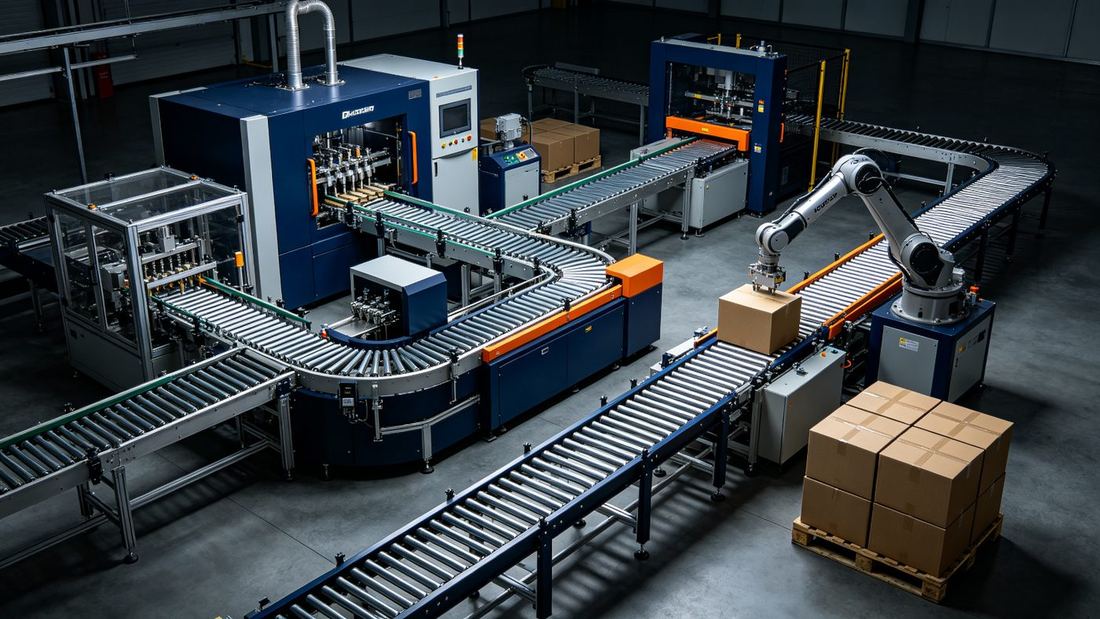
This configuration targets craft breweries and contract brewers at 60–120 cans/min running 330 ml and 500 ml cans of still or CO₂-carbonated beer, where O₂ pickup and foam control matter. Breweries below 30 cans/min are better served by a semi-automatic counter-pressure bench; breweries above 300 cans/min step to a rotary isobaric platform. For sparkling wine or cold brew coffee with lower carbonation, the counter-pressure logic still applies but the pressure set-point changes.
The line passed FAT at our Qingdao workshop with the customer’s actual beer, checked O₂ pickup and fill weight across a full run, and shipped with spare filling valves, seamer chucks and commissioning support covered under our after-sales service terms. For more on filling principles, see liquid filling machines.
Canning or bottling carbonated drinks and worried about O₂ pickup and foam? Send your product, cans/min and carbonation level to [email protected] or on WhatsApp. We will tell you whether counter-pressure filling is worth it for your speed and product. Browse our integrated lines and other commissioning news.