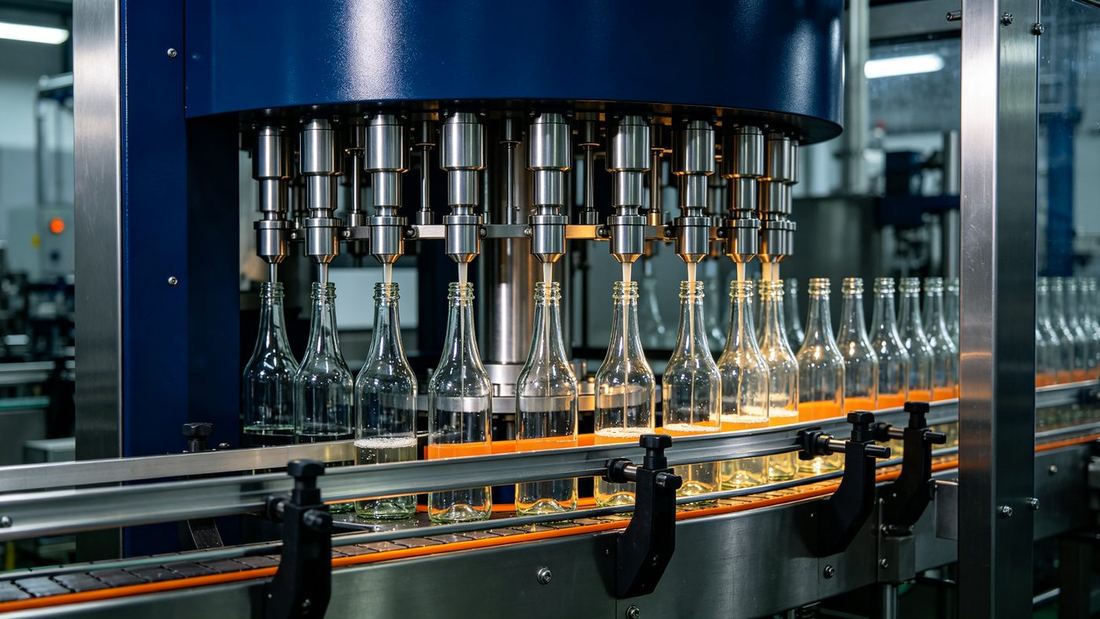
SunAura Machinery has commissioned a pre-made pouch filling and sealing line for a Thai ready-to-cook curry paste producer in Chiang Mai. The customer packs 200 g and 500 g red, green and massaman curry pastes in stand-up zipper pouches for supermarket retail across Thailand and export to the Gulf. The project replaced a semi-automatic tabletop piston filler that ran at 6 pouches/min, had stringing between fills, and could not zip seal consistently.
A rollstock form-fill-seal (FFS) machine would have looked cheaper, but it would have failed on three points: it cannot support a reclosable zipper, it struggles with high-viscosity paste without stringing, and it cannot run the customer’s pre-printed pouch graphics. This line was specified around paste-and-zipper reality.
Why Pre-Made Pouch — Not Rollstock FFS
Thai curry paste is a high-viscosity, oil-and-water emulsion. It needs a positive-displacement piston fill, not a gravity or flowmeter fill. It also needs a reclosable zipper for retail. Rollstock FFS forms a bag from a flat film roll and cannot add a zipper; pre-made pouch machines open a pre-zippered pouch, fill it and seal it. That is why this customer chose pre-made despite the higher per-pouch film cost.
| Dimension | Rollstock FFS | Pre-Made Pouch (this line) | Why it matters |
|---|---|---|---|
| Reclosable zipper | Not supported | Standard | Retail customers expect a reclosable pouch |
| Speed | Up to 60 pouches/min | 20–40 pouches/min | This customer needs 25 pouches/min, not 60 |
| Film waste at changeover | 10–20 m web | 5–10 pouches | Less waste on multi-SKU |
| High-viscosity fill | Possible but stringing-prone | Positive-displacement piston, anti-drip nozzle | Curry paste does not string between pouches |
| Printed pouch graphics | Print registration required | Pre-printed pouches accepted | Brand graphics land exactly on the pouch |
Two Paste-Specific Details That Decide Quality
Heated piston cylinder with anti-drip nozzle. Curry paste thickens as it cools. The piston cylinder runs jacketed at 45–50 °C to keep the paste fluid, and the nozzle cuts off cleanly with a suction-back so it does not drip onto the pouch seal. Without anti-drip, the seal is contaminated and the pouch leaks on the shelf.
Zipper seal jaw with independent temperature control. The zipper area of a stand-up pouch needs a lower seal temperature than the pouch back-seal; too hot and the zipper melts, too cold and it does not zip. The line runs two independent seal jaws — one for the pouch top, one for the zipper.
Who This Line Suits — and What We Would Specify Differently
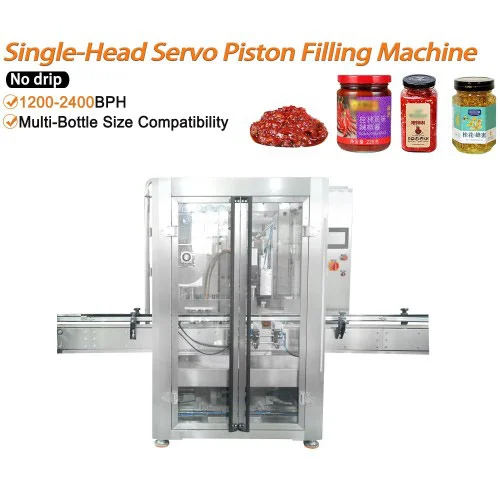
This configuration ready-to-cook pastes, sauces and marinades at 15–35 pouches/min running 200–1000 g stand-up zipper pouches. Buyers above 50 pouches/min on a single SKU are better served by rollstock FFS (and give up the zipper). Buyers below 10 pouches/min are better served by a tabletop piston filler. For thin liquids (juice, water), a flowmeter or overflow filler beats a piston.
The line passed FAT at our Qingdao workshop with the customer’s actual curry paste, checked fill weight and seal integrity across a full run, and shipped with spare seals, piston cups and commissioning support covered under our after-sales service terms. For more on filling principles, see liquid filling machines.
Packing thick pastes, sauces or marinades in zipper pouches? Send your product viscosity, pouch size and pouches/min to [email protected] or on WhatsApp. We will tell you whether pre-made pouch or rollstock FFS pays back for your SKU mix. Browse our integrated lines and other commissioning news.