
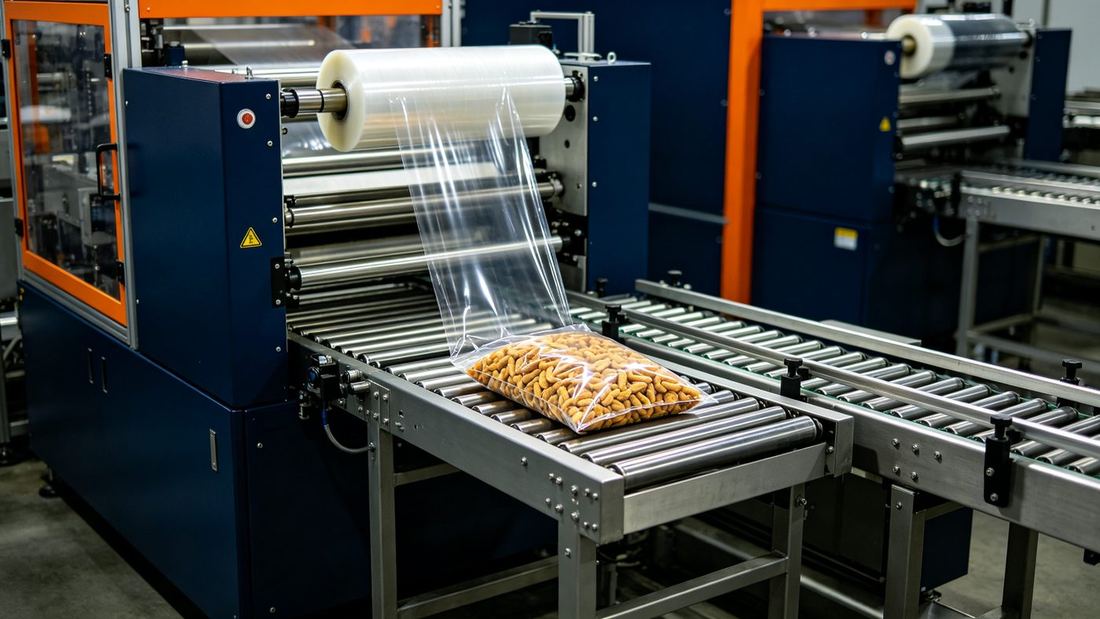
Buyers asking “what is the most sustainable packaging machine?” are usually asking the wrong question. The machine does not decide sustainability — the film format, packaging weight and end-of-life design do. What the machine decides is whether your chosen sustainable film can actually be sealed, filled and run at production speed without rejects. This guide compares the four main sustainable packaging routes and tells you which one your existing or new line can actually support.
Quick Comparison: Four Sustainable Packaging Routes
| Dimension | Multi-Layer Laminate (status quo) | Mono-Material PE / PP Film | Compostable (PLA / PBAT) | Refillable / Pouch-in-Bottle |
|---|---|---|---|---|
| Recyclability | Usually not recycled | Widely recycled in EU / US streams | Industrial compost only | Reusable / refill on-site |
| Barrier performance | Excellent (multi-layer EVOH) | Good (upgraded mono coatings) | Lower (moisture sensitive) | Best (rigid bottle reused) |
| Film thickness | 60–90 µm | 80–120 µm (thicker to compensate) | 80–150 µm | Rigid, reusable |
| Sealing window on existing flow wrapper | Wide | Narrower (heat-sensitive) | Very narrow (PLA melts early) | N/A (bottle) |
| Equipment upgrade needed | None | Seal temperature tuning + maybe better sealing jaws | Cooling drum + dedicated sealing profile | Dedicated refill station |
| Cost per pack | Baseline | +5–15% film cost | +30–60% film cost | Higher upfront, lower per-fill |
| Best products | All food types | Cookies, snacks, dry goods | Fresh produce, short-shelf-life | Liquid detergents, personal care |
| Main risk if wrong | Regulatory / brand greenwashing | Seal leaks on wrong machine | Film shrinks / deforms on seal | Consumer adoption |
How to Choose, Step by Step
1. What does the regulation actually require? The EU Packaging and Packaging Waste Directive (PPWR) pushes all packaging to be recyclable by 2030. The UK and California have similar rules. “Compostable” sounds greener but industrial compost infrastructure is thin; mono-material film actually reaches recycling streams. Buyers in the EU / UK market should default to mono-material unless the product is genuinely compost-friendly.
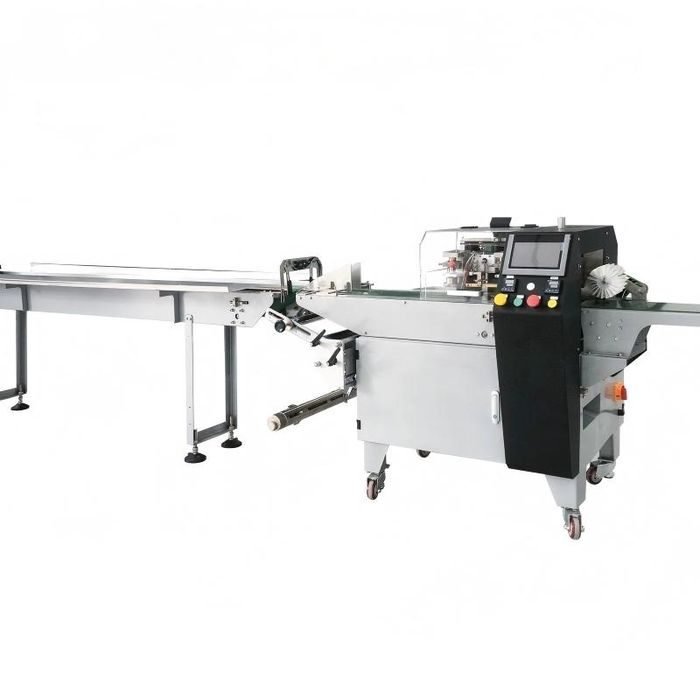
2. Will your current flow wrapper seal the new film? Mono-material and compostable films seal in a narrower temperature window than multi-layer laminate. On an old flow wrapper with fixed seal jaws, that means more leaks and more rejects. Before committing to a film switch, ask the machine supplier whether your existing model has servo-seal temperature control — if not, the upgrade cost matters.
3. Is your shelf life realistic for the barrier you have? Mono-material film has slightly higher OTR than multi-layer EVOH. A biscuit that had 9 months shelf life on laminate might drop to 6 months on mono. Buyers who shorten shelf life to win a sustainability claim sometimes find their retailers reject the pack. Match the film barrier to the actual distribution time.
4. Who is your customer? EU supermarkets and US retail buyers increasingly demand recyclability statements. D2C e-commerce buyers care more about the visual claim. B2B industrial customers rarely pay a premium. Match the sustainability route to the channel, not to the brand team’s preference.
Selection Checklist Before You Specify a “Sustainable” Line
- Target market: EU (PPWR), UK, California, or global export.
- Required recyclability claim (recyclable / compostable / refillable).
- Product shelf life in days, and OTR / WVTR requirement.
- Current film format (laminate / mono / compostable).
- Whether you are buying new equipment or upgrading existing.
- Seal temperature window of the chosen film.
- Whether the line needs to run multiple film types (SKU mix).
- Budget for film upgrade vs machine upgrade.
- Whether customers require a recyclability audit (e.g. How2Recycle label).
- End-of-life infrastructure in destination markets.
- Weight target per pack (lightweighting saves material directly).
- Whether refill / bulk format is realistic for the channel.
Common Buying Mistakes
Switching to compostable film on an old flow wrapper. PLA and PBAT films seal at 120–140 °C vs 160–180 °C for polyolefin. On a machine without sealed-jaw temperature control, the film shrinks and the seal leaks. Buyers pay 30–60% more for film and then lose product in rejects.
Claiming “recyclable” on a laminate that is not. Multi-layer PET/PE/AL laminates are not curbside recyclable in most markets. Greenwashing claims now trigger regulatory fines in the EU and UK. If you cannot prove the recyclability stream, do not put the claim on pack.
Assuming thicker film is always worse. Mono-material film is often 20–30 µm thicker than the laminate it replaces. The environmental win comes from recyclability, not from thickness — buyers who cut thickness to “save plastic” often lose shelf life and pay more in rejects.
Ignoring the machine’s role. A recyclable film on a machine that produces 5% rejects is worse environmentally than a laminate on a machine that produces 0.5% rejects. Ask for reject rates on the target film during FAT, not on a generic test film.
Bottom Line
EU / UK / California retail: mono-material PE or PP film on a flow wrapper with servo seal temperature control. Short-shelf-life fresh produce where industrial compost exists: compostable PLA / PBAT with a dedicated sealing profile. Reusable liquid formats (detergents, personal care): refillable bottle with a pouch or cartridge. Multi-layer laminate only where barrier genuinely cannot be matched — and expect that to narrow by 2030.
SunAura builds flow wrappers, pillow packaging machines and complete lines configured for mono-material and compostable film, with sealed-jaw temperature control as standard. Send us your target market and film choice — we will spec the sealing profile and line format that actually seals.
Switching to recyclable or compostable film and not sure whether your line can seal it? Send your film spec, target shelf life and packs/min to [email protected] or on WhatsApp. We will test the film on our FAT line and report seal integrity before you commit.