
Why a Bakery Chose a Delta Robot Over a 6-Axis Arm for High-Speed Flow-Wrapper Loading
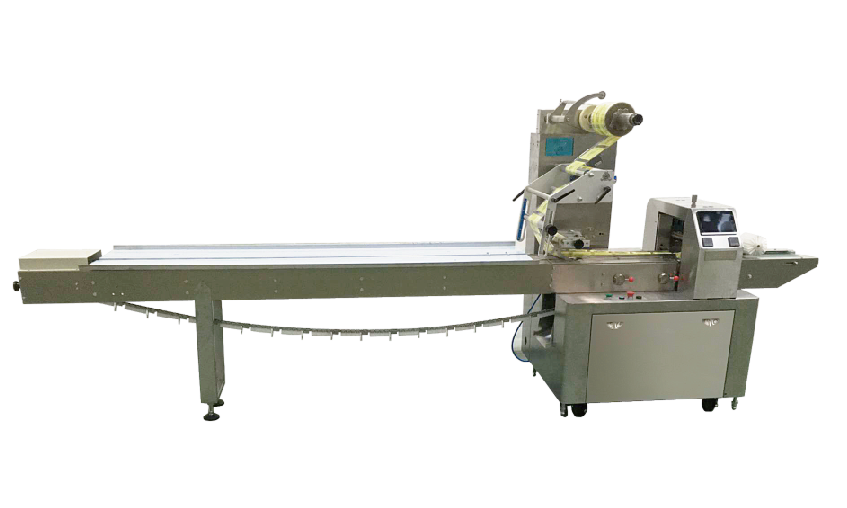
When a regional bakery in the Middle East decided to automate the loading of its new flow-wrapper line, the brief looked simple enough on paper: take wrapped buns and bread rolls from a cooling conveyor and place them, accurately and at speed, into the infeed flights of a horizontal flow wrapper. Two automation routes were on the table. One was a six-axis articulated arm, the familiar general-purpose robot that appears on welding, palletising, and machine-tending cells. The other was a delta robot, the ceiling-mounted parallel-link machine often called a spider robot. The quotations were not wildly apart, and both vendors promised reliable picking. The bakery chose the delta, and the reason is a useful lesson in how robot geometry, rather than the headline speed on a datasheet, decides whether a pick-and-place cell actually keeps up.
This article turns that project into a selection lesson rather than a project announcement. We compare the two robot geometries against the real demands of flow-wrapper loading, explain where each one earns its place, and set out the conditions under which you should not buy the delta — because it is very far from being the universal answer. The same logic applies to confectionery, snack, pharmaceutical blister, and any light-product picking cell where parts arrive on a moving belt.
The Metric That Matters Is Picks Per Minute, Not mm/s
The first thing the bakery’s engineering team had to unlearn was ranking robots by the peak tool-center-point (TCP) speed printed on the specification sheet. That number, often around ten thousand millimetres per second, describes the fastest the tool can move in a straight line. A pick-and-place cycle never reaches it. The real motion is a short, sharp repetition: descend onto the product, grip, lift, translate across, descend, release, and return. Over a stroke of a few hundred millimetres the arm spends almost all its time accelerating from rest, decelerating into the grip, and settling before it can let go. What governs throughput is how quickly the robot accelerates and settles a light mass over a short distance, and that is set by the geometry and how much mass the robot has to swing.
This is the point where the two designs diverge. A delta robot mounts all of its motors on the fixed overhead frame and moves only lightweight arms and the end effector, so the moving mass is small and the acceleration is high. A six-axis arm carries its wrist motors out at the end of the reach and swings the most mass, which makes it slower to accelerate over a short picking stroke even though its straight-line top speed can look just as impressive. The datasheet can show nearly identical mm/s while the real picks-per-minute figures differ by a wide margin.
What the Two Geometries Are Built For
Delta: light parts arriving on a moving belt
The delta is a parallel-linkage robot. Three or four arms connect the fixed overhead base to a common moving platform through parallelogram linkages, which keeps the tool pointing straight down while the platform moves within a dome-shaped working volume. With all the heavy motors stationary on the frame and only thin links moving, the design produces the fastest real pick rates of any common robot format for light products, typically in the rough range of 120 to 300 picks per minute depending on the stroke, payload, and whether vision is used. A vision-guided delta can track products on a moving conveyor, pick them on the fly, and place them into equally moving infeed flights without ever stopping the belt. That tracking ability is exactly what a flow-wrapper loading station needs.
The trade-offs are payload and workspace, and they are real. Most delta robots cap at a few kilograms, with larger models reaching toward the middle of a single-digit range and a handful of heavy-duty variants going higher. The reachable volume is a shallow, truncated cone rather than a full sphere, so the machine suits flat conveyor picking in a known lane rather than a large, deep work envelope. For the bakery, the products were light, the picking lane was well-defined, and the placement point sat directly across the conveyor, all of which played to the delta’s strengths.
Six-axis: orientation and reach above raw rate
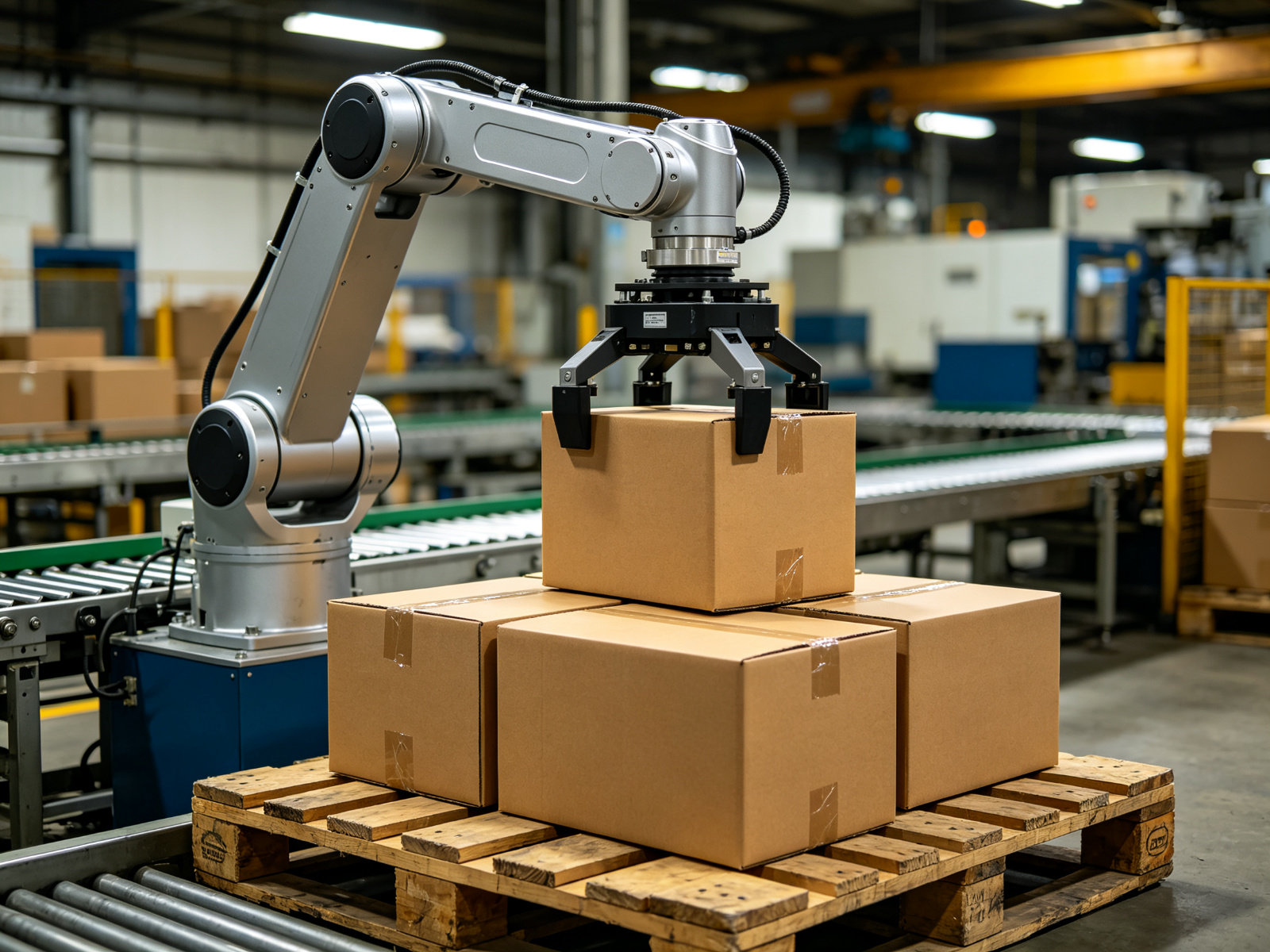
A six-axis articulated arm does something the delta cannot: present the tool at almost any angle. The wrist joints let it tilt, rotate, and flip a product in flight, pick from an inclined surface, and place into an angled pocket. It also spans a much wider payload range, from a few kilograms to well beyond fifty, and its spherical working envelope reaches around obstacles and into spaces a ceiling-mounted delta cannot cover. That flexibility is why it dominates general automation. It is not, however, competing for the pick-rate leadership, and buying one for a simple straight-down, straight-across pick-and-place job means paying for orientation capability the cell never uses while accepting a slower cycle on the light, short-stroke motion that actually sets the line’s pace.
Selection Table: Delta vs 6-Axis for Flow-Wrapper Loading
| Dimension | Delta Robot | 6-Axis Arm |
|---|---|---|
| Real pick rate (light parts) | High, roughly 120–300 picks/min | Lower, limited by orientation and settling |
| Payload sweet spot | Light, roughly 1–8 kg on most models | Wide, from a few kg to 50 kg+ |
| Moving belt tracking | Excellent with vision; picks on the fly | Possible, but slower over short strokes |
| Product orientation | Mostly vertical; limited tilt | Any angle, tilt, flip, rotation |
| Working volume | Shallow truncated cone | Large sphere, reaches around obstacles |
| Footprint | Ceiling-mounted, saves floor space | Floor or pedestal mount needs guarding space |
| Changeover | Recipe and vision model recall | Recipe plus possible tooling changes |
| Capital cost (estimate) | Moderate; purpose-built for high rate | Comparable to higher, but flexibility is the cost |
| Maintenance | Simple, few moving parts, washdown options | More joints and wrist components to service |
| Typical best fit | High-speed light sorting and wrapper loading | Heavy, complex, or reoriented handling |
The picks-per-minute and payload ranges are broad because they depend on the specific model, stroke length, gripper, and whether vision tracking is running. Use them to choose the geometry, then compare individual models within that geometry against the exact motion your cell requires, rather than treating the ranges as guarantees.
Why the Bakery’s Decision Was the Delta
Walk through the application against the table and the choice follows almost mechanically. The buns were light, well under the delta’s payload ceiling. They arrived on a flat conveyor in a defined lane and had to be placed straight down into the wrapper’s infeed flights with no tilt or flip. The wrapper set the pace, and any loading station that could not match its continuous motion would become the bottleneck. A vision-guided delta tracked the moving belt, picked on the fly, and sustained the high cycle rate with a small moving mass and low energy use. The ceiling mount also freed floor space in a room that was already crowded with the wrapper, cooling conveyors, and the downstream case packing equipment.
The six-axis arm could physically do the pick, but it would have been solving the wrong problem. Its orientation and reach advantages were unused because the product never needed to be tilted and the workspace was compact. Its heavier wrist assembly meant slower acceleration over the short picking stroke, so to hold the same throughput the project would have needed either a second arm or a reduced wrapper speed. Either route added cost against no benefit. The bakery bought the geometry that matched the motion rather than the robot that looked the most versatile.
When Not to Buy the Delta — Reverse Advice
The delta is the wrong answer under several clear conditions, and a good supplier will say so. Do not choose a delta if the product is heavy enough to approach or exceed the robot’s payload rating, especially once the gripper and any product acceleration are included; payload margin matters and an overloaded spider robot loses accuracy and life. Do not choose it if the part has to be tilted, flipped, or approached at an angle, because the parallel linkage keeps the tool vertical and cannot perform the wrist motions a six-axis arm manages. Do not choose it if the workspace is a large, deep, or obstructed envelope rather than a compact conveyor lane; the delta’s shallow dome will not cover it, and you will end up adding robots or repositioning the line.
There is also a hygiene dimension generic comparisons skip. In a bakery or any washdown environment, confirm the robot’s protection rating and suitability for food-area cleaning before purchase, and make sure the gripper and vision system are specified to the same standard as the arm. A ceiling-mounted delta that cannot be cleaned to the plant’s washdown regime creates a contamination problem above the very conveyor it is meant to serve. Finally, do not buy the robot against a theoretical cycle; run the actual product and the actual wrapper speed in a timed trial so the picks-per-minute claim is validated rather than assumed.
Cost, ROI and Procurement Risk
The financial case for the delta rested on labour and throughput. Manual loading of a high-speed wrapper is repetitive, tiring, and inconsistent, and it ties operators to a station where absence or fatigue immediately slows the line. Automating it stabilises the wrapper’s pace, reduces the labour needed at the infeed, and cuts the product damage that comes from hurried hand placement. The return is strongest where the line runs long shifts and the wrapper’s speed genuinely exceeds what a person can reliably feed. On a short, low-speed line with generous cycle time, the same automation may not pay back within an acceptable period, and simpler mechanical feeding or a smaller dedicated machine can be the more rational purchase.
SunAura Machinery supplies both geometries and treats the choice as an application question rather than a default. For high-speed, vision-guided picking the company’s automatic delta spider robot is built for the on-the-fly loading profile described here, while jobs that need orientation, heavier payloads, or a wide reach are handled by an automatic robotic arm for feeding and orienting. The robot is then integrated with the surrounding equipment rather than supplied as an isolated cell: the full range of pillow and flow packaging machines and high-speed models such as the servo reciprocating flow wrapper are matched to the robot’s tracking speed so the loading station and the wrapper behave as one system.
Frequently Asked Questions
Is a delta robot really faster than a six-axis arm?
For high-volume picking of light parts off a moving belt, yes in real terms. The delta’s small moving mass lets it sustain roughly 120 to 300 picks per minute over short strokes. A six-axis arm can show a similar or higher peak speed in mm/s, but it accelerates more slowly because it carries wrist motors at the end of the arm, so its real pick rate on this duty is lower.
When does a six-axis arm make more sense?
When the product is heavy, the workspace is large or obstructed, or the part has to be tilted, flipped, or approached at an angle. A delta cannot perform those wrist motions and has a limited payload and shallow working dome, so an articulated arm is the only geometry that covers orientation, reach, and heavier payload together.
How does the robot pick products that are moving?
With a vision system and conveyor tracking. A camera identifies each product and its position, the software synchronises the robot to the belt speed, and the delta picks on the fly and places the item into the moving infeed flights without stopping the conveyor.
What payload can a delta handle?
Most models handle light products in the range of roughly one to eight kilograms, with a few heavy-duty variants going higher. Include the gripper weight and keep a payload margin rather than specifying the robot right at its limit.
Is a delta suitable for washdown food areas?
Food-grade and washdown-rated models are available, but confirm the protection rating for the arm, gripper, and camera against your cleaning regime before purchase, and specify the whole cell to the same hygiene standard.
Conclusion: Match the Geometry to the Motion
The bakery’s decision was not a verdict that delta robots are better than six-axis arms in general. It was a recognition that each geometry is optimised for a different motion, and the application asked for exactly the motion the delta is built to deliver: a light product, a straight-down pick, a compact conveyor lane, and a high cycle rate set by a continuous wrapper. Choose the delta when those conditions hold and you need maximum picks per minute. Choose the six-axis arm when payload, reach, or orientation is the governing requirement, and accept the cycle trade-off because the flexibility is genuinely needed. The reliable way to settle it is a timed trial with your real product and wrapper speed. To discuss a vision-guided loading cell or compare the two geometries for your own line, contact the SunAura Machinery engineering team.
For the broader quality-control context around automated packaging, see our guide on metal detector versus X-ray inspection, and if a compact footprint rather than speed is driving your project, read our comparison of monoblock and inline filling and capping layouts.
Sources and further reading
This case draws on published robot selection material and manufacturer data, including format comparisons from Industrial Robotics Hub, robot selection guides from automation suppliers, and product specifications from articulated and delta robot manufacturers. The picks-per-minute and payload figures are presented as typical ranges and should be confirmed through a timed trial for the specific application.