Why a Small-Batch Cosmetics Brand Chose a Monoblock Fill-Cap Unit Over a Long Inline Line
A growing cosmetics brand does not start with a factory. It starts with a formulation, a small team, and a rented production room where every square metre is already spoken for. When one such brand approached us to move from hand filling to its first automated line, the team arrived assuming automation meant a long inline system: a filling machine, then a conveyor, then a separate capping machine, then another conveyor, laid out in a straight run like the lines they had seen in videos of large factories. That layout is correct for a high-volume single-product plant. It was the wrong answer for them, and the project became a clear example of why the choice between a monoblock and an inline configuration is decided by floor space, batch size, and SKU variety rather than by which looks more industrial.
This article uses the case to explain the two layouts as a selection decision. We compare how each is built, where each earns its cost, and the conditions under which you should not buy a monoblock — because a compact machine is a poor fit for a genuinely high-throughput line, and overselling the small option helps nobody. The reasoning applies to cosmetics, personal care, essential oils, tinctures, reagents, and any small-bottle operation running many SKUs in modest volumes.
What the Two Layouts Actually Are
Monoblock: several stations on one frame
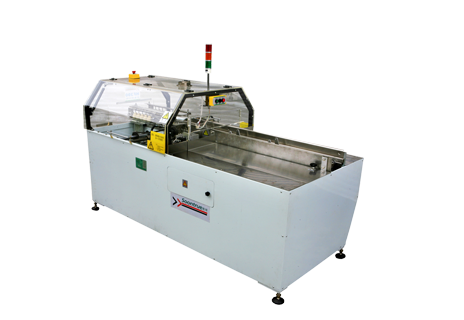
A monoblock, sometimes called a block or a two-in-one machine, mounts multiple process stations — filling and capping, and sometimes plugging or sealing — onto a single shared frame. Bottles enter on a starwheel or indexing dial and are carried around a compact circular path from one station to the next. The filler and the capper share the same drive logic, the same guarding, and the same control panel, and there is no long conveyor between them because the stations sit a few centimetres apart. The whole machine occupies a footprint closer to a single piece of equipment than to a production line, and it can often be fed and run by one operator. That integration is the entire point: the transport, framing, and control hardware that would be duplicated across separate machines is built once.
Inline: separate machines connected by conveyors
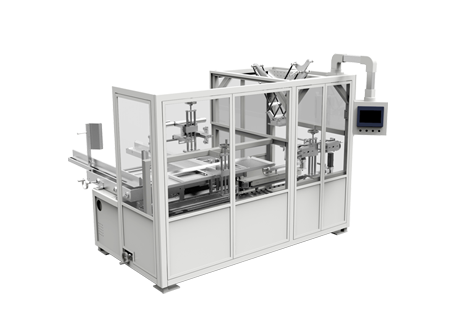
An inline system keeps each process as a separate, standalone machine connected by powered conveyors. A bottle is filled on the filling machine, conveyed to the capping machine, capped, and then conveyed onward to labeling or packing. Each machine can be specified, sized, and even sourced independently, and stations can be added or removed as the line evolves. The layout needs a long, straight run of floor space and enough accumulation between machines so a short stop at one station does not immediately halt the others. At high volume, where each station runs many heads and a dedicated operator, this separation is a strength: the line can be tuned, expanded, and serviced piece by piece, and a single machine can be changed without replacing the whole system.
Why Floor Space and Batch Size Govern the Choice
The cosmetics brand’s room ruled out the inline layout before the team had compared many specifications. A straight filling and capping line with conveyors and accumulation needs a run several times the length of a monoblock, plus access on both sides for operation and maintenance, plus room for the operator to load and clear each station. The available room could not provide that run without blocking aisles or siting a machine against a wall that needed to stay accessible. The monoblock’s circular footprint fit into a corner area the team had assumed was too small for any automation, and its single loading point meant one operator could both feed bottles and remove finished product.
Batch size and SKU variety pushed the same way. The brand produced a catalogue of serums, toners, and creams in several bottle sizes, often in short runs that changed over daily. An inline system has to be adjusted at every machine, and the conveyors between them re-timed, on each changeover. A monoblock stores the settings for each product as a recipe and indexes the bottles on a shared dial, so a change is largely a recipe recall plus a format-part swap. The shorter mechanical path also means fewer places a bottle can jam during a run of an unfamiliar product. For a plant whose competitive edge is flexibility across many small orders rather than volume on one hero item, that changeover simplicity is worth more than the higher peak speed of a long line.
Selection Table: Monoblock vs Inline
| Dimension | Monoblock | Inline Line |
|---|---|---|
| Footprint | Compact, roughly one machine’s area | Long straight run with access both sides |
| Operators needed | Often one at a single load point | One or more per station at high volume |
| Changeover across SKUs | Recipe recall; shared dial, few adjustments | Adjust each machine and re-time conveyors |
| Peak throughput | Moderate; limited by the shared dial | High; multiple heads and accumulation |
| Expansion | Harder; stations are integrated | Easy; add or swap a standalone machine |
| Capital cost (estimate) | Lower for the same functions; shared frame | Higher; duplicated frames, controls, conveyors |
| Installation | Quick; one machine to position and connect | Longer; multiple machines to align and time |
| Maintenance | One system, but a fault can stop both functions | Independent; one station can often keep running |
| Best product range | Small bottles, many SKUs, short batches | Stable products, long runs, high volume |
| Typical best fit | Startups, small plants, limited floor space | Established high-volume production |
Cost and throughput are given as relative terms because the exact figures depend on the number of heads, bottle format, level of automation, and the functions combined on the block. Compare quotations against a single specification that lists the same functions so the two layouts are judged on equal terms.
Why the Brand’s Decision Was the Monoblock
Measured against the table, the monoblock answered every constraint the brand actually had. It fit the available room with room to spare for aisles and cleaning. It combined filling and capping on one shared frame, so the capital budget paid for a single set of controls, guarding, and transport rather than duplicated hardware. One operator could run the machine, and the recipe-based changeover let the team switch between bottle sizes and formulations within a short window instead of treating each change as a half-day reset. The moderate throughput was not a limitation because the brand’s volumes were modest and the bottleneck was the variety of the catalogue, not the speed of any single product. The machine bought them a reliable, repeatable process that protected the product from the variability of hand filling without forcing them to lease a larger factory.
An inline line would have been a solution to a problem they did not have. The long footprint would not fit, the duplicated stations would have raised the price against functions they did not yet need, and the multi-machine changeover would have punished the very SKU flexibility their business depended on. Some of the team initially worried that choosing the smaller, integrated machine looked like a compromise. It was the opposite: it was the layout sized to the real operating conditions rather than the layout they imagined a serious manufacturer ought to own.
When Not to Buy a Monoblock — Reverse Advice
The monoblock is the wrong choice under several conditions, and these should be settled before the order. Do not choose it if your volumes are genuinely high and your product range is stable. The shared indexing dial caps the throughput, and a long inline line with multiple heads and accumulation between stations will outproduce it while letting each station run at its own pace. Do not choose it if you expect to expand the process soon by adding stations. Because the functions are integrated onto one frame, adding a new head or a separate process is difficult, whereas an inline system can absorb a new standalone machine without replacing what you already own. If growth is clearly going to require labeling, induction sealing, or a second filling stage within a short horizon, the separable layout is the more future-proof purchase even if it costs more now.
Consider the service risk as well. On a monoblock the filling and capping functions share a frame and a drive, so a fault in the common control or transport can stop both at once, while an inline line can often keep one station running while the other is attended. If uninterrupted output is critical and you lack a backup, weigh that single-point dependence. And as with any automated purchase, do not specify the machine on bottle dimensions alone; run the actual formulations, including the thickest cream and the most free-flowing liquid, on a test unit so the filling method and cap torque are validated across the full range rather than the easiest product.
Cost, ROI and Procurement Risk
The return case for the monoblock is built on consistency and saved labour as much as speed. Hand filling and hand capping vary with the operator, the hour, and the batch, and that variability shows up as underfill, leakage, and caps that are either too loose or overtightened. A block machine doses the same volume and applies the same torque on every bottle, which reduces giveaway, cuts rejected product, and gives the brand the batch consistency retailers expect before they will take a small supplier seriously. The lower capital cost and short installation also mean a startup reaches payback without financing a full line it cannot yet keep busy. The case weakens only where the plant runs long, stable shifts at high volume; there, the inline line’s throughput and independent expansion justify the larger investment.
SunAura Machinery offers both configurations and sizes them to the application. For the small-bottle, multi-SKU profile described here, the full-automatic small-bottle filling and capping two-in-one and the specialised reagent tube filling and capping two-in-one combine the two functions on a shared frame. Where a product needs a particular dosing method, the filling technology can be matched to the formulation using machines such as the single-head servo piston filler, and when volumes later grow the capping function can be scaled to a dedicated high-speed automatic bottle capping machine. The team’s advice is to size the first machine to the current catalogue and the current room while leaving a clear path to a separable line if the product range stabilises and volumes climb.
Frequently Asked Questions
What is the difference between a monoblock and an inline filling line?
A monoblock mounts filling and capping on one shared frame and moves bottles around a compact dial, so it has a small footprint and needs few operators. An inline line uses separate machines connected by conveyors, needs a long straight run, and offers higher throughput and easier expansion.
Is a monoblock cheaper for a small brand?
For the same functions, usually yes in capital terms. The shared frame, controls, and transport are built once rather than duplicated across separate machines, and installation is quicker. The saving is most meaningful where the plant would otherwise pay for inline capacity it cannot keep busy.
Can a monoblock grow with my production?
Within limits. Recipe-based changeover handles more SKUs and modest volume increases well, but adding entirely new process stations is hard because the functions are integrated. If you expect to add labeling, sealing, or more heads soon, an inline line that accepts standalone machines is the more expandable choice.
How many operators does a monoblock need?
Often just one, loading bottles at the single entry point and removing finished product, because the stations share a frame and a control panel. An inline line at high volume tends to need attention at each separate machine.
What happens if one function on the monoblock faults?
Because filling and capping share the frame and drive, a common fault can stop both functions at once. An inline line can sometimes keep one station running while the other is repaired, so weigh that single-point dependence if continuous output is critical.
Conclusion: Size the Layout to the Operating Conditions
The monoblock was not a consolation prize for a brand that could not yet afford a real line. It was the correct engineering answer for a small room, a varied catalogue, and short batches: compact, runnable by one operator, quick to change over, and priced for functions the plant actually used. Choose a monoblock when floor space is tight, SKUs are many, batches are short, and moderate throughput is enough. Choose an inline line when volumes are high, the product range is stable, and you need the separable stations, accumulation, and room to expand. The practical way to confirm it is to run your real bottles and formulations on both layouts before committing. To discuss a compact first line or plan a future path toward a separable system, contact the SunAura Machinery engineering team.
For the automated handling that can feed either layout, see our case on choosing a delta robot over a six-axis arm, and for the quality-control station that protects the finished product, read our guide on metal detector versus X-ray inspection.