Spindle vs Chuck vs Snap vs ROPP Capper: Choosing an Automatic Capping Machine by Closure, Torque and Throughput
Three requests reached the applications desk in one month, each using the words “automatic capping machine” and each describing a different closure. The first was a 500 ml PET beverage bottle with a flat continuous-thread cap at 180 bottles per minute. The second was a 30 ml glass dropper bottle for a serum, where the brand needed a documented torque value for a stability file. The third was an aluminium spirits closure that had to leave a broken tamper ring on first open. A single capping architecture cannot serve all three, and buying on cap diameter alone is how lines end up with cross-threaded caps, leaking closures or a machine that cannot run the advertised speed. This guide separates the four capping architectures that actually appear on B2B quotations — spindle, chuck, snap (press-on) and ROPP — and gives the decision conditions that belong in a purchase specification.
The four capping architectures, mechanically
Spindle (disc) capper. The bottle travels continuously through two to four pairs of spinning silicone or polyurethane discs that grip the cap skirt and rotate it as the container moves. There is no stop-and-index cycle, so the machine keeps pace with a moving conveyor. Torque is a function of disc pressure, disc speed and the number of wheel pairs, which makes spindle capping fast and forgiving on uniform screw caps but looser on precision. It is the default architecture for high-volume water, juice, household chemical and edible-oil lines running one closure for long shifts.
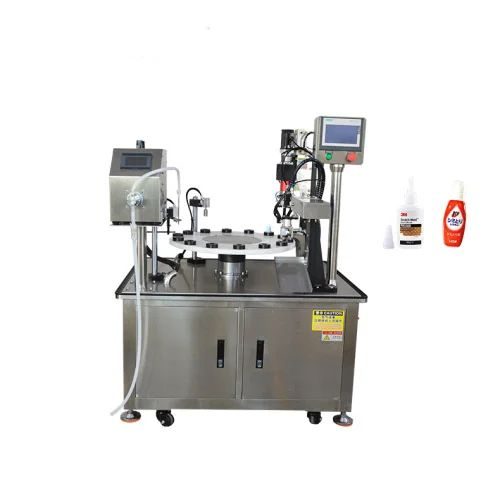
Chuck capper. A rubber-lined chuck head descends over the cap, surrounds the full circumference, and rotates to a set torque before a clutch or servo releases. Because the chuck grips the whole cap rather than brushing two sides of it, torque is the most repeatable of the four methods and the head can apply defined downward pressure to seat the closure first. Single-head inline chuck machines handle lower speeds; multi-head rotary (starwheel) chuck cappers carry four to eight heads and reach high throughput while keeping torque control. This is the architecture specified for pumps, trigger sprayers, flip-tops, child-resistant closures and premium cosmetics where cap surfaces must not be scuffed.
Snap (press-on) capper. No rotation is involved. A plunger or weighted belt presses a press-fit lid, plug, overcap or stopper straight down until an interference feature snaps into place. The controlled variable is vertical force, not torque, and the machine is sized by insertion force and the need to hold the container square during pressing. Snap cappers are common for plug seals, disc-top lids, press-on overcaps and closures that engage without threads.
ROPP capper. Roll-on pilfer-proof capping does not transmit torque through a clutch at all. A thread is formed when rollers press an aluminium shell against the bottle finish, then a separate roller severs and tucks the tamper-evident band. The controlled variables are roller depth and pressure, matched to the glass or PET finish. Because the closure is formed rather than simply tightened, ROPP is the standard for spirits, wine, olive oil and pharmaceutical bottles where a visible tamper ring and a consistent formed thread matter more than the lowest unit cost.
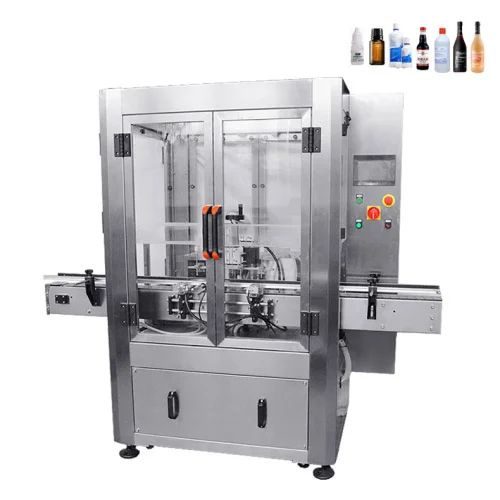
Comparison table: the four architectures side by side
| Criterion | Spindle (disc) | Chuck | Snap (press-on) | ROPP |
|---|---|---|---|---|
| How the cap is closed | Spinning discs brush the skirt in continuous motion | Chuck lowers, grips full cap, rotates to torque | Vertical plunger presses a press-fit feature home | Rollers form the thread and tamper band on aluminium |
| Controlled variable | Disc pressure and wheel speed | Application torque (clutch or servo) | Vertical insertion force | Roller depth and pressure |
| Typical inline speed | 40–200+ caps/min, scales with disc pairs | 10–60 caps/min single head; 80–240 caps/min rotary | Up to 100–300 caps/min by force head | 30–200+ caps/min; high-speed rotary reaches 400+ |
| Torque repeatability | Medium, roughly ±5–8% | Highest, roughly ±3–5% with servo | Not applicable (no torque) | Formed thread; torque set by bottle finish |
| Closures handled | Flat continuous-thread screw caps | Screw, pump, trigger, flip-top, child-resistant | Plugs, overcaps, disc-tops, press-on lids | Roll-on aluminium pilfer-proof shells |
| Cap surface treatment | Discs can mark soft or decorated skirts | Gentle: full-circumference grip, minimal scuffing | Gentle on top, no side contact | Metal is intentionally formed |
| Change parts per cap size | Rail and disc adjustment, often no dedicated parts | Chuck insert per cap style; starwheel on rotary | Plunger pad and guide parts | Roller set and cap-specific forming setup |
| Typical changeover | 8–15 min with recipe recall | 2–10 min single head; 20–40 min rotary multi-head | 10–20 min | 20–45 min, finish-specific |
| Torque documentation | Limited unless servo discs are added | Per-bottle log available on servo models | Force log only | Roller settings and seam inspection |
| Entry price position | Lowest for high-speed screw caps | Higher for rotary precision | Low for simple press heads | Mid, plus cap-specific tooling |
| Main limitation | Looser torque, struggles with pumps and triggers | Little middle ground between slow single and costly rotary | Cannot close threaded closures | Restricted to aluminium shells and matched finishes |
| Best for | High-volume uniform screw-capped bottles | Regulated, premium and awkward closures | Press-fit lids and overcaps | Spirits, wine, oil and pharma tamper evidence |
Scenario decision framework: work from the closure outward
1. Closure class first. If the closure is an aluminium roll-on shell, the decision is already made: specify ROPP and move straight to bottle-finish and tamper-band dimensions. If it is a press-fit plug or overcap with no thread, specify a snap capper and define insertion force. Only threaded closures create a spindle-versus-chuck decision.
2. Closure shape decides spindle versus chuck. A flat, uniform continuous-thread cap on a stable round bottle is a spindle candidate. A pump, trigger sprayer, flip-top, child-resistant cap or any closure with a protruding or decorated head needs a chuck, because discs cannot reliably grip an irregular skirt and will scratch finished surfaces. As a working rule, if the cap has anything other than a smooth round side wall, evaluate a chuck before a spindle.
3. Throughput sets the machine format. Below roughly 40–60 caps per minute, a single-head inline chuck or a small spindle is adequate and keeps the budget low. From 60 to 120 caps per minute, a multi-pair spindle is the cost-effective choice for screw caps. Above that, or whenever torque must be documented at speed, move to a rotary starwheel chuck capper. Do not specify a single-head machine and ask it to run at its peak rate for a full shift; the headline speed is a short-cycle number, not a sustained operating point.
4. Compliance and traceability override cost. If the product is regulated, or the brand files a stability study that references removal torque, specify servo torque with per-bottle logging and accept the premium. A magnetic-clutch spindle cannot produce the audit trail, and retrofitting closed-loop torque later is more expensive than specifying it at purchase.
5. Container stability is a hard constraint. Lightweight PET, tall thin bottles and unstable shapes need container stabilisers, neck grabbers or a starwheel index. A spindle that runs perfectly on a rigid 1 L jug can tip or spin a 30 ml vial. If the bottle cannot stand squarely through the disc section under its own weight, plan for holding tooling or choose an indexing chuck.
Pre-inquiry checklist: confirm these before requesting a quotation
- Closure class: screw, pump, trigger, flip-top, child-resistant, press-on, or roll-on aluminium — with cap drawings and neck-finish dimensions.
- Cap diameter range and whether one machine must run more than one cap size; list every SKU and its annual volume.
- Application and removal torque from the cap supplier, or the target insertion force for a press-fit closure.
- Target sustained throughput in caps per minute, not the peak figure, plus bottle spacing and conveyor speed.
- Container material and shape: PET, HDPE or glass; tall, light, square or unstable bottles need holding tooling.
- Whether torque or force values must be logged per bottle for compliance or customer audit.
- Cap presentation: bulk elevator, vibratory sorter, or manual placement; confirm whether a cap feeder is in scope.
- Available footprint and whether the capper must integrate with an existing filler, induction sealer or labeler on one line.
- Changeover frequency and the time allowed between SKUs, which decides whether quick-change tooling and recipe recall pay off.
Common selection mistakes and how to avoid them
Buying a spindle for an irregular closure. Discs are built for smooth round screw caps. Specifying them for pumps or triggers produces caps that are tightened inconsistently or scuffed, because the disc cannot seat the protruding head. Match the closure shape to a chuck instead of forcing the cheapest architecture.
Treating peak speed as operating speed. A capper rated to 200 caps per minute on a short test will not hold that rate across an eight-hour shift with cap-feeder interruptions. Size the machine at 70–80% of the rated figure against your sustained target, so the line has headroom rather than running at the limit.
Ignoring the cap feeder. The capping head is only as reliable as the cap supply. A missing or under-sized elevator or sorter becomes the bottleneck even when the capper is correctly sized. Confirm the feeder is included and that it handles the cap orientation, especially for asymmetric trigger and flip-top closures.
Forgetting changeover when running many SKUs. A rotary chuck that is excellent on one cap can spend more time being changed over than running if every order is a different bottle. For high-mix, low-volume work, prefer a flexible inline machine with recipe recall and quick-change parts over a fast but dedicated rotary unit.
Trusting JSON-LD or brochure images over the FAT. Marketing tables state capability; the factory acceptance test proves it. Require the supplier to run your actual caps and bottles at the sustained target rate and to record torque or force results during the FAT, rather than accepting a demonstration on a favourable sample.
Clear conclusions: what to choose and when
| If your situation is… | Choose… |
|---|---|
| High-volume, uniform flat screw caps on stable round bottles | Spindle (disc) capper, multi-pair for higher speed |
| Pumps, triggers, flip-tops, child-resistant or premium decorated caps | Chuck capper; rotary multi-head if speed is high |
| Small caps, fine threads, regulated product needing torque records | Servo chuck capper with per-bottle logging |
| Press-fit plugs, overcaps or disc-top lids with no thread | Snap (press-on) capper sized by insertion force |
| Aluminium spirits, wine, oil or pharma closure needing a tamper ring | ROPP capper matched to the bottle finish |
| Light vials or unstable bottles in a compact footprint | Rotary turntable or starwheel indexing machine with pockets |
| High-mix, low-volume catalogue with frequent changeovers | Flexible inline machine with recipe recall and quick-change parts |
The capping machine is the station that decides whether a sealed product reaches the shelf intact, so the architecture should be selected from the closure and the compliance requirement rather than from a single cap-diameter number. Bring the cap drawings, the sustained throughput and the torque documentation requirement to the first conversation, and the quotation can be engineered to the real application instead of a generic “automatic capper”. Review the current capping machine range, see how the capper sits inside a complete packaging line, and send your closure samples and target throughput through the contact desk for an application-matched configuration. Supporting compliance and FAT documentation is covered in the certifications and patents section, and commissioning and spare-parts planning is described under after-sales service.