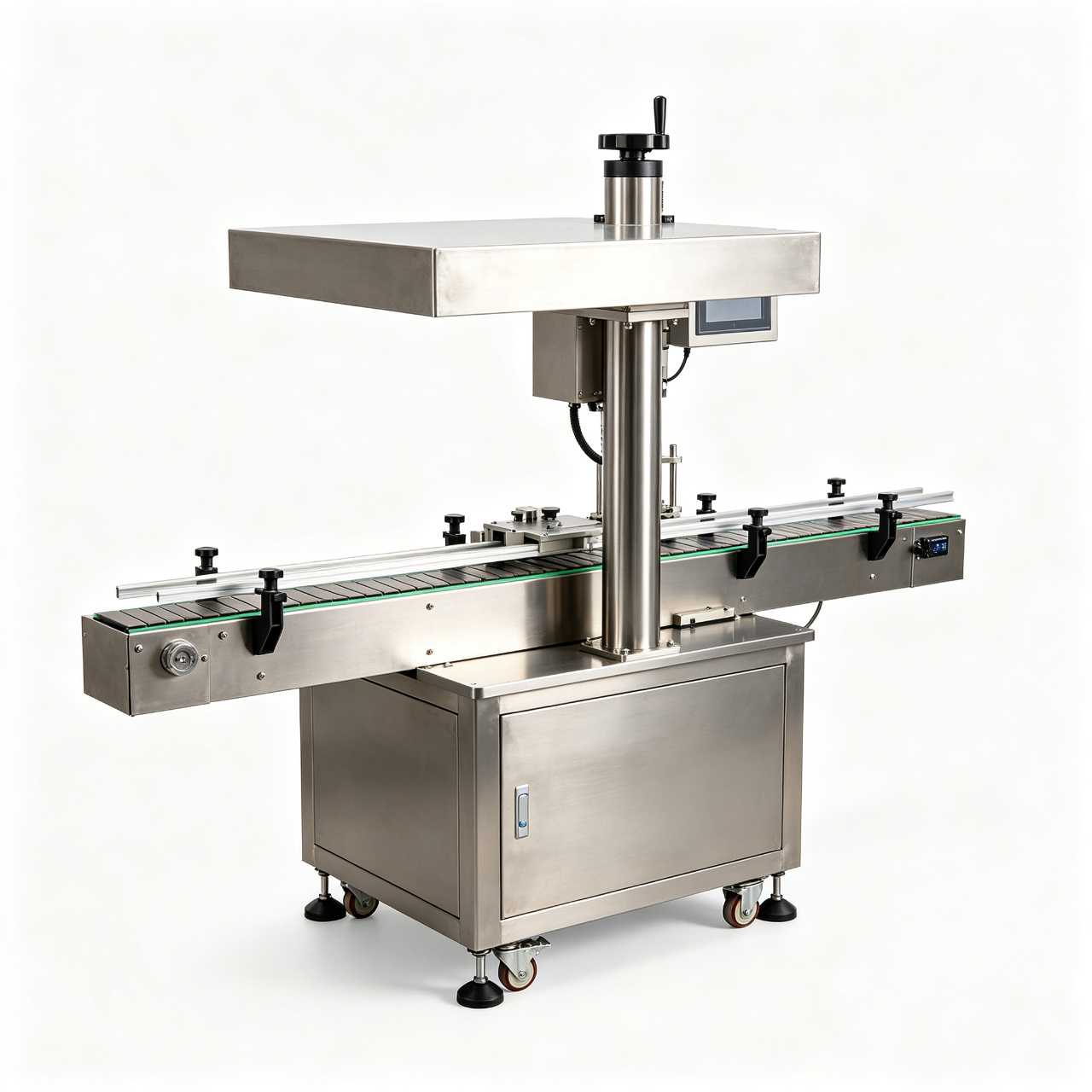
Qingdao, China — November 1, 2026 — SunAura Machinery has completed commissioning and operator training for an integrated piston filling, servo capping, induction sealing, and checkweighing line at a spice and sauce producer in the Gulf region. The line fills 250 g and 500 g glass jars of hot sauce and harissa at 60 jars per minute, with automatic rejection of under-filled and weak-seal jars.
What the customer bought was not four standalone machines. It was one synchronized front-end: a six-head servo piston filler, a spindle capping station, an inline air-cooled induction sealer, and a weight-check rejector on a common frame. That distinction matters, because buyers comparing prices of “a filler, a capper, a sealer” usually compare machines bought separately — and discover on day one that the sealing parameters, speed matching, and reject logic were never integrated.
Why the Integrated Line Beat Standalone Machines
| Dimension | Four Standalone Machines | SunAura Integrated Front-End |
|---|---|---|
| Speed matching | Filler, capper, and sealer each set at nominal speed; bottles back up or starve between units | Common conveyor and upstream/downstream signal exchange; line runs at one balanced rate |
| Seal parameters | Induction head tuned by the local integrator by trial and error; weak seals reach the customer | Power, gap, and conveyor speed locked on the customer’s actual caps and hot product during FAT and commissioning |
| Reject logic | Checkweigher and sealer each reject independently; no root-cause record | Under-fill, over-torque, and weak-seal jars logged and rejected at one station |
| Commissioning ownership | Buyer coordinates four vendors; finger-pointing on start-up | SunAura owns the whole front-end from installation to signed acceptance |
What Commissioning Actually Covered
Our commissioning team spent four days on site. Day one was mechanical and utility handover: conveyor level, air supply, and the induction head cooling circuit. Day two was recipe loading — the 250 g and 500 g jar programs with their own fill volume, torque, and seal power. Day three was the part most suppliers skip: seal validation on the customer’s real caps and hot product. Hot sauce at 80 °C changes the sealing window; a preset tuned on a cold sample under-seals on the running line. We tested 200 jars across both SKUs, measured foil contact, and adjusted power and line speed until the seal passed the pull-test consistently.
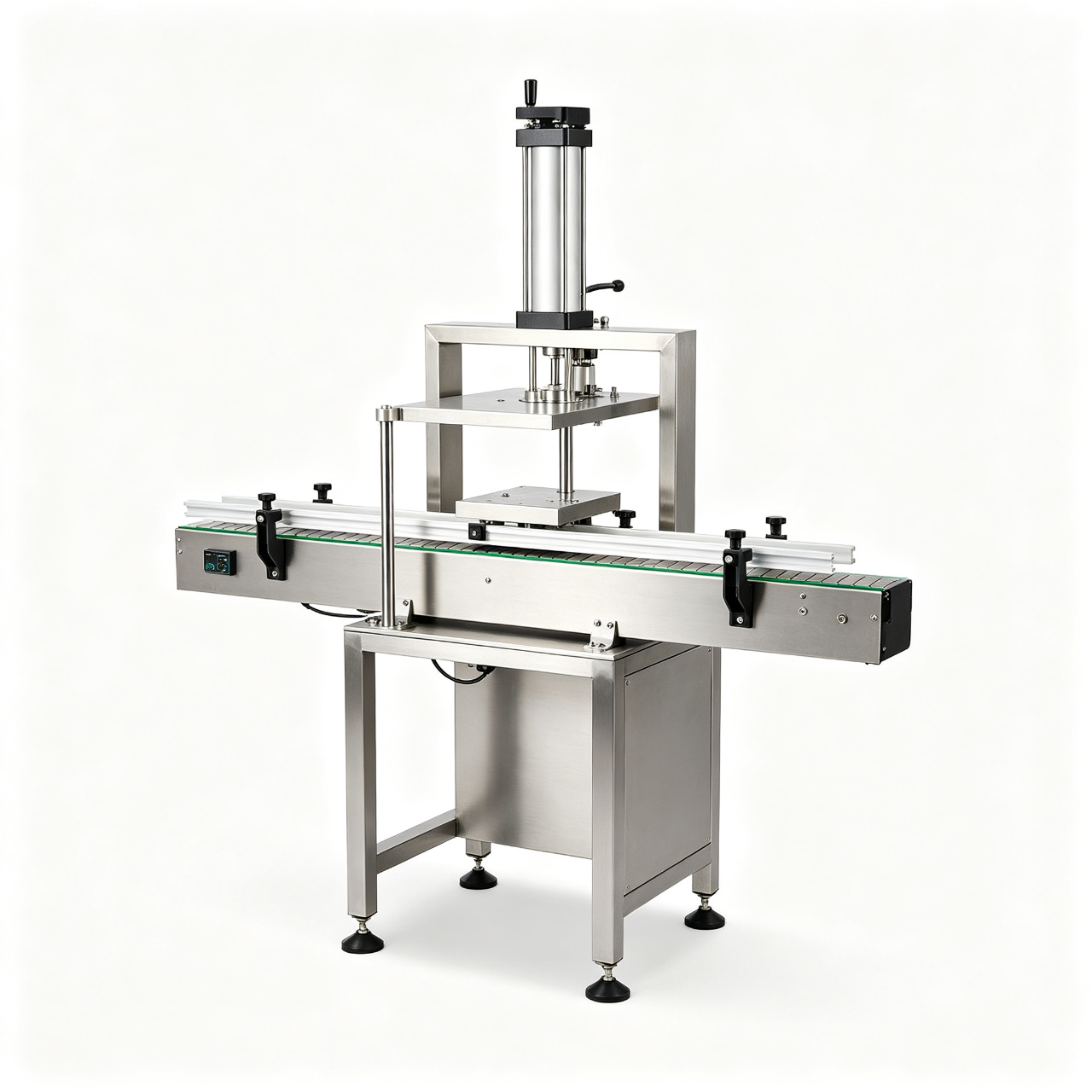
Day four was operator training: recipe recall, seal sampling every hour, reject bin management, and the daily checks — coil gap, liner position in the cap, and conveyor speed — that keep the seal rate above the customer’s QA target. The customer’s maintenance lead received the spare-parts list, wear schedule, and contact escalation path before the team left.
Who This Line Is For — and Who Should Not Buy It
This configuration suits producers filling viscous, particulate, or hot-filled products (sauces, pastes, dips, cosmetics creams) into jars at 40–120 jars per minute, where leak-free shipping and tamper evidence are non-negotiable. If you fill thin still water above 300 bpm, the water-cooled high-speed platform in our liquid filler selection guide is the more economical choice; a six-head piston line would be oversized.
We were explicit with the customer that the induction sealer adds value only because the liner specification came from their cap supplier. If you have not confirmed a foil-backed induction liner with your caps, the machine will not manufacture a seal for you — we tell buyers that before the order, not at commissioning.
Specifying a filling, capping and sealing line and unsure how the machines should talk to each other? Send us your product, jar range, target bph, and cap supplier details. We will lay out the integrated front-end, quote the commissioning scope, and respond within 48 hours. Contact [email protected] or use the contact form.
The Gulf spice line is now in production. SunAura delivers complete packaging lines from Qingdao with worldwide installation, operator training, and after-sales support. Review our build capacity in the workshop display and compliance documentation in certifications and patents.