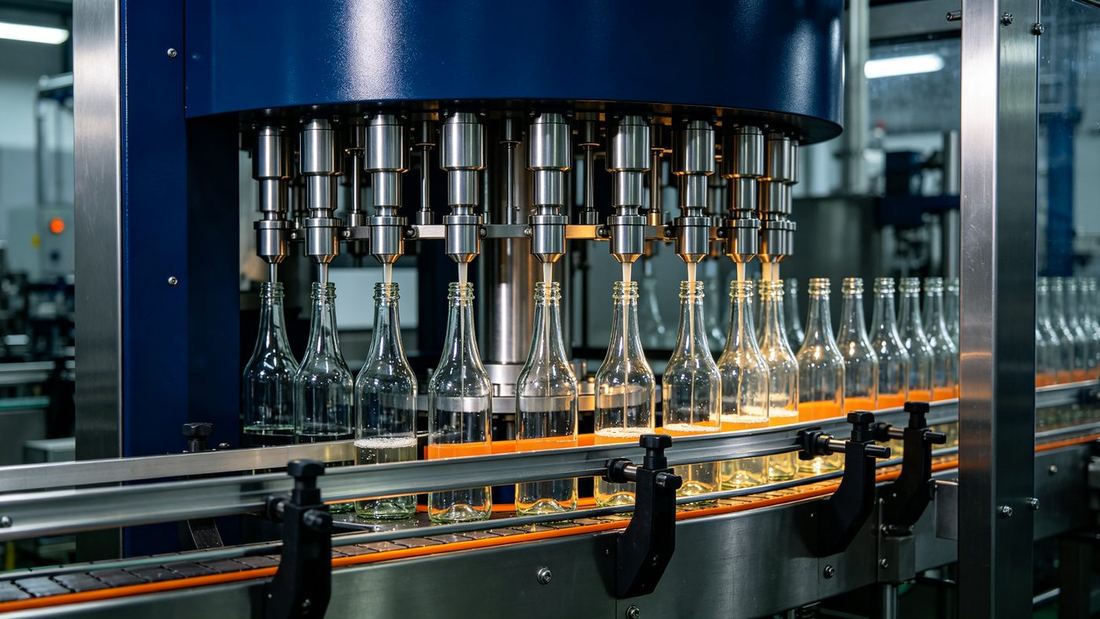
Qingdao, China — October 31, 2026 — SunAura Machinery has extended its servo piston filler platform into two certified builds, answering a recurring procurement gap: buyers in food and buyers in chemicals kept quoting the same “piston filler” category, but the machine that passes a dairy washdown audit is not the machine safe around flammable solvents. The new line is offered as a Sanitary Food-Grade build and a Corrosion-Resistant / ATEX-referenced chemical build, each with its own material declaration, electrical protection rating, and acceptance documentation pack.
The two builds share the same servo piston dosing core — repeatable volumetric accuracy of ±0.2–0.5% from 50 cPs to high-viscosity pastes. They diverge on the wetted path, enclosure, electrical classification, and the documents that ship with the machine. That divergence is exactly what buyers should compare when they receive piston filler quotes, because the price gap between the two is real and the wrong choice is not a cosmetic detail.
What Changes Between the Two Builds
| Dimension | Sanitary Food-Grade Build | Corrosion-Resistant / ATEX-Referenced Build |
|---|---|---|
| Wetted material | SUS316L product contact, 3A-style finish, clamp-on hygienic fittings | SUS316L with EPDM/Viton seals, PTFE-lined paths, corrosion-proof fasteners |
| Electrical protection | IP65 washdown, food-grade white coating, CIP/SIP compatible | Explosion-referenced wiring, sealed junction boxes, static grounding points; certified zones quoted per customer site classification |
| Best products | Sauces, dressings, honey, dairy, cream, shampoo, lotions | Solvents, paints and coatings, resins, detergents, agricultural chemicals |
| Documentation pack | Material certificates, washdown risk assessment, CE declaration, FAT protocol | ATEX-conformity file on request, seal chemical-resistance list, grounding certificate, CE declaration, FAT protocol |
| Buyer profile | Food, cosmetic, pharma-grade producers passing HACCP / BRC audits | Chemical and coatings manufacturers with zone-classified filling rooms |
Why This Matters for Buyers Comparing Quotes
A standard SUS304 piston filler at a lower price point looks identical on the nameplate to a SUS316L sanitary build, but it will fail a food customer’s supplier audit within minutes and will not survive repeated CIP washdown. Conversely, putting a food-grade white-coated machine into a solvent filling room ignores both seal compatibility and ignition-risk — a compliance issue that shows up at the insurer or the local safety authority, not on the day of installation.
For buyers, the practical question is no longer “piston filler, how much?” It is: what is my product chemistry, my washdown environment, and my site electrical classification? The same dosing core then lands in the correct enclosure. We tell buyers explicitly that the sanitary build is not approved for flammable solvents, and the chemical build is not the economic choice for a low-margin hot-sauce line.
FAT and Documentation Ship With Every Machine
Every unit of the new platform runs a Factory Acceptance Test with the customer’s own product before container loading: fill accuracy across the target volume range, seal integrity, recipe recall, and line integration checks with the buyer’s capping and labeling equipment. The FAT report, material certificates, CE declaration, wiring diagrams, and spare-parts list are handed over as a single package so the buyer’s site team and local integrator have the documentation needed for installation and audit. This is the same acceptance process we used on the recent servo capping and piston filler line for a South American sauce producer, extended to the chemical build.
Who Should Ask for Which Build
Choose the Sanitary Food-Grade build if you fill sauces, dairy, cosmetic creams, or similar products into washdown-rated rooms and face HACCP, BRC, or FDA-style supplier audits. Choose the Corrosion-Resistant / ATEX-referenced build if your product is flammable, aggressive, or solvent-based, and your filling room carries a zone classification. If you are unsure which one your product belongs to, send us the SDS sheet and your floor plan — our quality team will tell you the correct build before you compare prices, not after installation.
Specifying a piston filler and unsure which build matches your product? Send us your product, SDS sheet, and target bph. We will confirm the correct build, seal list, and FAT scope, and reply within 48 hours. Contact [email protected] or use the contact form.
The dual-build piston platform is in production now, with lead times aligned to our standard servo filler schedule. Existing customers can see the two builds side by side in the workshop display, review the compliance file in certifications and patents, and read more filling-machine selection guidance in the help center. Complete filling and capping lines ship from Qingdao with worldwide installation and after-sales support.