
On a food-grade beverage line, schedule a nozzle purge at every start-up and every long stop. The printer should self-monitor print quality and alert on the HMI; a weekly deep clean is typical. Skipping this is the most common cause of missed codes.
Should the code go on the bottle or the label?
If your retail customer or food-safety auditor requires traceability on the product itself, print directly on the bottle or base. If not, coding on the label after application is cheaper and simpler. Ask your largest customer before you buy.
Label material and adhesive choices buyers overlook
The labeler is only as good as the label stock it is fed. For beverage bottles, the three common face stocks are clear BOPP, white BOPP and paper. Clear BOPP gives the “no-label look” that premium water and cold-brew brands want, but it shows every imperfection on the bottle and the print must be reverse-registered. White BOPP is forgiving, printable on standard flexo, and survives condensation on cold bottles. Paper labels are cheaper but bleed and soften on wet or chilled packs. The adhesive matters as much: a permanent all-temperature adhesive sticks through refrigeration and a warm truck, while a removable adhesive lets the bottle be relabelled. Tell the labeler supplier your storage and distribution temperature range, not just your artwork, because the wrong adhesive causes labels to curl at the edges long after the line is running.
Common labeling faults and how they are fixed
| Fault | Common cause | Fix |
|---|---|---|
| Label skewed / off-angle | Bottle not centered on wrap belt | Adjust guide rails and back-pressure; check starwheel wear |
| Label trailing edge lifts | Adhesive temperature or wrap pressure too low | Warm label pad; increase wrap hold time |
| Backing liner breaks | Peel angle too sharp or liner damaged | Adjust peel plate angle; inspect incoming roll |
| Coding smudges on wet bottle | CIJ ink on condensation | Blow-dry before coder; use fast-drying ink |
| Code missing on random bottles | Clogged nozzle / trigger mis-fire | Auto-purge; check encoder signal and vision rejects |
| Labels applied to empty bottles | Sensor not triggered by fill level | Re-set bottle sensor; integrate to filler count |
Changeover and spare-parts planning
A co-packer running several SKUs a week lives or dies by changeover. Specify tool-free change parts: quick-release starwheels, snap-on guide rails and a one-touch wrap-pad swap, so a bottle change is a recipe recall plus five minutes of mechanical checks rather than an hour with Allen keys. Hold a spare set of the wear parts that touch the bottle — belts, pads, pressure rollers — because these are the items that wear first and cause drift. Buyers also forget that the coder has consumables: ink cartridges, solvent and the nozzle filter. Keep a two-week buffer on site, because a labeler without ink stops the whole line even when the printer itself is fine. SunAura ships the change parts and a recommended spares kit with the cell, and trains the line operators on the fault table above during commissioning.
What buyers get wrong at quotation stage
The most expensive mistake is sending a labeler supplier one bottle photo and asking for a price. You need to supply the full range of containers the line will ever touch — including the awkward shapes, the narrow-neck glass and the chilled PET that sweats — because the labeler’s change parts and wrap station are sized to the hardest bottle, not the hero one. The second mistake is under-specifying the coding and verification: quoting a labeler alone, then discovering the CIJ printer, the vision camera and the reject gate cost as much as the labeler itself. The third is forgetting space. A labeler needs infeed and outfeed conveyor, a label-roll loading aisle, and a reject bin; buyers who squeeze it into a leftover two metres of line usually cannot load film safely. When SunAura quotes a labeling cell, we ask for the container range, the coding requirements and a layout sketch up front, because that is what turns a sticker machine into a reliable end-of-line station.
Linking the labeler to the filler and capper
A labeler should never run open-loop. It needs to know when a bottle is present, when a bottle is out of spec, and when the line has stopped. On this project the labeler received the filler’s output signal so it skips empty or under-filled bottles rather than wasting labels on them, and it tied into the capper’s reject logic so a capped-but-unlabeled bottle never leaves the cell. The conveyor between capper and labeler is sized to buffer a few seconds of production, so a momentary label splice does not stop the filler. These are the integration details that separate a standalone sticker machine from a reliable line station. When you buy a labeler as part of a full line from SunAura, the filler, capper, labeler and coder are commissioned together and tested as one system at FAT, so the interfaces are proven before shipment.
Operator training matters more than the machine
Even the best labeler drifts when operators do not know how to thread the web, set the peel angle and read the alarm codes. SunAura commissions include on-site training for the line operators and maintenance team: how to load a label roll, how to change a bottle recipe, how to run a purge on the coder, and how to clear a jam safely with the guards interlocked. A line where only one technician understands the labeler is a line that stops whenever that technician is absent. Budget for training and a documented SOP with the line, and the labeler will hold its accuracy across shifts.
Summary
A beverage labeling line is not a sticker machine; it is the precision station that turns filled and capped bottles into sellable product. Specify it around your full container range, integrate the coder and vision into one HMI recipe, and plan for fast changeovers if you run multiple SKUs. SunAura Machinery delivered this cell as part of a line that links the filler, capper, labeler and CIJ coder under one control system, with FAT on the co-packer’s own bottles. To scope a pressure-sensitive labeling, coding and inspection line for your bottles, contact our engineering team with your container range, target output and coding requirements.
Related reading
For variable SKUs and short runs, pressure-sensitive wins on changeover and label inventory. For very long, stable runs on a single bottle, hot melt or cold glue can lower the label unit cost. Tell the builder your SKU count and run lengths before choosing.
How often do CIJ printheads need cleaning?
On a food-grade beverage line, schedule a nozzle purge at every start-up and every long stop. The printer should self-monitor print quality and alert on the HMI; a weekly deep clean is typical. Skipping this is the most common cause of missed codes.
Should the code go on the bottle or the label?
If your retail customer or food-safety auditor requires traceability on the product itself, print directly on the bottle or base. If not, coding on the label after application is cheaper and simpler. Ask your largest customer before you buy.
Label material and adhesive choices buyers overlook
The labeler is only as good as the label stock it is fed. For beverage bottles, the three common face stocks are clear BOPP, white BOPP and paper. Clear BOPP gives the “no-label look” that premium water and cold-brew brands want, but it shows every imperfection on the bottle and the print must be reverse-registered. White BOPP is forgiving, printable on standard flexo, and survives condensation on cold bottles. Paper labels are cheaper but bleed and soften on wet or chilled packs. The adhesive matters as much: a permanent all-temperature adhesive sticks through refrigeration and a warm truck, while a removable adhesive lets the bottle be relabelled. Tell the labeler supplier your storage and distribution temperature range, not just your artwork, because the wrong adhesive causes labels to curl at the edges long after the line is running.
Common labeling faults and how they are fixed
| Fault | Common cause | Fix |
|---|---|---|
| Label skewed / off-angle | Bottle not centered on wrap belt | Adjust guide rails and back-pressure; check starwheel wear |
| Label trailing edge lifts | Adhesive temperature or wrap pressure too low | Warm label pad; increase wrap hold time |
| Backing liner breaks | Peel angle too sharp or liner damaged | Adjust peel plate angle; inspect incoming roll |
| Coding smudges on wet bottle | CIJ ink on condensation | Blow-dry before coder; use fast-drying ink |
| Code missing on random bottles | Clogged nozzle / trigger mis-fire | Auto-purge; check encoder signal and vision rejects |
| Labels applied to empty bottles | Sensor not triggered by fill level | Re-set bottle sensor; integrate to filler count |
Changeover and spare-parts planning
A co-packer running several SKUs a week lives or dies by changeover. Specify tool-free change parts: quick-release starwheels, snap-on guide rails and a one-touch wrap-pad swap, so a bottle change is a recipe recall plus five minutes of mechanical checks rather than an hour with Allen keys. Hold a spare set of the wear parts that touch the bottle — belts, pads, pressure rollers — because these are the items that wear first and cause drift. Buyers also forget that the coder has consumables: ink cartridges, solvent and the nozzle filter. Keep a two-week buffer on site, because a labeler without ink stops the whole line even when the printer itself is fine. SunAura ships the change parts and a recommended spares kit with the cell, and trains the line operators on the fault table above during commissioning.
What buyers get wrong at quotation stage
The most expensive mistake is sending a labeler supplier one bottle photo and asking for a price. You need to supply the full range of containers the line will ever touch — including the awkward shapes, the narrow-neck glass and the chilled PET that sweats — because the labeler’s change parts and wrap station are sized to the hardest bottle, not the hero one. The second mistake is under-specifying the coding and verification: quoting a labeler alone, then discovering the CIJ printer, the vision camera and the reject gate cost as much as the labeler itself. The third is forgetting space. A labeler needs infeed and outfeed conveyor, a label-roll loading aisle, and a reject bin; buyers who squeeze it into a leftover two metres of line usually cannot load film safely. When SunAura quotes a labeling cell, we ask for the container range, the coding requirements and a layout sketch up front, because that is what turns a sticker machine into a reliable end-of-line station.
Linking the labeler to the filler and capper
A labeler should never run open-loop. It needs to know when a bottle is present, when a bottle is out of spec, and when the line has stopped. On this project the labeler received the filler’s output signal so it skips empty or under-filled bottles rather than wasting labels on them, and it tied into the capper’s reject logic so a capped-but-unlabeled bottle never leaves the cell. The conveyor between capper and labeler is sized to buffer a few seconds of production, so a momentary label splice does not stop the filler. These are the integration details that separate a standalone sticker machine from a reliable line station. When you buy a labeler as part of a full line from SunAura, the filler, capper, labeler and coder are commissioned together and tested as one system at FAT, so the interfaces are proven before shipment.
Operator training matters more than the machine
Even the best labeler drifts when operators do not know how to thread the web, set the peel angle and read the alarm codes. SunAura commissions include on-site training for the line operators and maintenance team: how to load a label roll, how to change a bottle recipe, how to run a purge on the coder, and how to clear a jam safely with the guards interlocked. A line where only one technician understands the labeler is a line that stops whenever that technician is absent. Budget for training and a documented SOP with the line, and the labeler will hold its accuracy across shifts.
Summary
A beverage labeling line is not a sticker machine; it is the precision station that turns filled and capped bottles into sellable product. Specify it around your full container range, integrate the coder and vision into one HMI recipe, and plan for fast changeovers if you run multiple SKUs. SunAura Machinery delivered this cell as part of a line that links the filler, capper, labeler and CIJ coder under one control system, with FAT on the co-packer’s own bottles. To scope a pressure-sensitive labeling, coding and inspection line for your bottles, contact our engineering team with your container range, target output and coding requirements.
Related reading
Yes, provided the bottle range is within the machine’s container-height and diameter window and you swap the change parts (starwheels, guide rails, wrap pads) between formats. Recipe-based machines make this a five- to fifteen-minute changeover.
Pressure-sensitive or hot-melt labeling for a new beverage brand?
For variable SKUs and short runs, pressure-sensitive wins on changeover and label inventory. For very long, stable runs on a single bottle, hot melt or cold glue can lower the label unit cost. Tell the builder your SKU count and run lengths before choosing.
How often do CIJ printheads need cleaning?
On a food-grade beverage line, schedule a nozzle purge at every start-up and every long stop. The printer should self-monitor print quality and alert on the HMI; a weekly deep clean is typical. Skipping this is the most common cause of missed codes.
Should the code go on the bottle or the label?
If your retail customer or food-safety auditor requires traceability on the product itself, print directly on the bottle or base. If not, coding on the label after application is cheaper and simpler. Ask your largest customer before you buy.
Label material and adhesive choices buyers overlook
The labeler is only as good as the label stock it is fed. For beverage bottles, the three common face stocks are clear BOPP, white BOPP and paper. Clear BOPP gives the “no-label look” that premium water and cold-brew brands want, but it shows every imperfection on the bottle and the print must be reverse-registered. White BOPP is forgiving, printable on standard flexo, and survives condensation on cold bottles. Paper labels are cheaper but bleed and soften on wet or chilled packs. The adhesive matters as much: a permanent all-temperature adhesive sticks through refrigeration and a warm truck, while a removable adhesive lets the bottle be relabelled. Tell the labeler supplier your storage and distribution temperature range, not just your artwork, because the wrong adhesive causes labels to curl at the edges long after the line is running.
Common labeling faults and how they are fixed
| Fault | Common cause | Fix |
|---|---|---|
| Label skewed / off-angle | Bottle not centered on wrap belt | Adjust guide rails and back-pressure; check starwheel wear |
| Label trailing edge lifts | Adhesive temperature or wrap pressure too low | Warm label pad; increase wrap hold time |
| Backing liner breaks | Peel angle too sharp or liner damaged | Adjust peel plate angle; inspect incoming roll |
| Coding smudges on wet bottle | CIJ ink on condensation | Blow-dry before coder; use fast-drying ink |
| Code missing on random bottles | Clogged nozzle / trigger mis-fire | Auto-purge; check encoder signal and vision rejects |
| Labels applied to empty bottles | Sensor not triggered by fill level | Re-set bottle sensor; integrate to filler count |
Changeover and spare-parts planning
A co-packer running several SKUs a week lives or dies by changeover. Specify tool-free change parts: quick-release starwheels, snap-on guide rails and a one-touch wrap-pad swap, so a bottle change is a recipe recall plus five minutes of mechanical checks rather than an hour with Allen keys. Hold a spare set of the wear parts that touch the bottle — belts, pads, pressure rollers — because these are the items that wear first and cause drift. Buyers also forget that the coder has consumables: ink cartridges, solvent and the nozzle filter. Keep a two-week buffer on site, because a labeler without ink stops the whole line even when the printer itself is fine. SunAura ships the change parts and a recommended spares kit with the cell, and trains the line operators on the fault table above during commissioning.
What buyers get wrong at quotation stage
The most expensive mistake is sending a labeler supplier one bottle photo and asking for a price. You need to supply the full range of containers the line will ever touch — including the awkward shapes, the narrow-neck glass and the chilled PET that sweats — because the labeler’s change parts and wrap station are sized to the hardest bottle, not the hero one. The second mistake is under-specifying the coding and verification: quoting a labeler alone, then discovering the CIJ printer, the vision camera and the reject gate cost as much as the labeler itself. The third is forgetting space. A labeler needs infeed and outfeed conveyor, a label-roll loading aisle, and a reject bin; buyers who squeeze it into a leftover two metres of line usually cannot load film safely. When SunAura quotes a labeling cell, we ask for the container range, the coding requirements and a layout sketch up front, because that is what turns a sticker machine into a reliable end-of-line station.
Linking the labeler to the filler and capper
A labeler should never run open-loop. It needs to know when a bottle is present, when a bottle is out of spec, and when the line has stopped. On this project the labeler received the filler’s output signal so it skips empty or under-filled bottles rather than wasting labels on them, and it tied into the capper’s reject logic so a capped-but-unlabeled bottle never leaves the cell. The conveyor between capper and labeler is sized to buffer a few seconds of production, so a momentary label splice does not stop the filler. These are the integration details that separate a standalone sticker machine from a reliable line station. When you buy a labeler as part of a full line from SunAura, the filler, capper, labeler and coder are commissioned together and tested as one system at FAT, so the interfaces are proven before shipment.
Operator training matters more than the machine
Even the best labeler drifts when operators do not know how to thread the web, set the peel angle and read the alarm codes. SunAura commissions include on-site training for the line operators and maintenance team: how to load a label roll, how to change a bottle recipe, how to run a purge on the coder, and how to clear a jam safely with the guards interlocked. A line where only one technician understands the labeler is a line that stops whenever that technician is absent. Budget for training and a documented SOP with the line, and the labeler will hold its accuracy across shifts.
Summary
A beverage labeling line is not a sticker machine; it is the precision station that turns filled and capped bottles into sellable product. Specify it around your full container range, integrate the coder and vision into one HMI recipe, and plan for fast changeovers if you run multiple SKUs. SunAura Machinery delivered this cell as part of a line that links the filler, capper, labeler and CIJ coder under one control system, with FAT on the co-packer’s own bottles. To scope a pressure-sensitive labeling, coding and inspection line for your bottles, contact our engineering team with your container range, target output and coding requirements.
Related reading
SunAura Machinery Ships Pressure-Sensitive Wrap-Around Labeling and Inkjet Coding Line to Southeast Asian Beverage Co-Packer
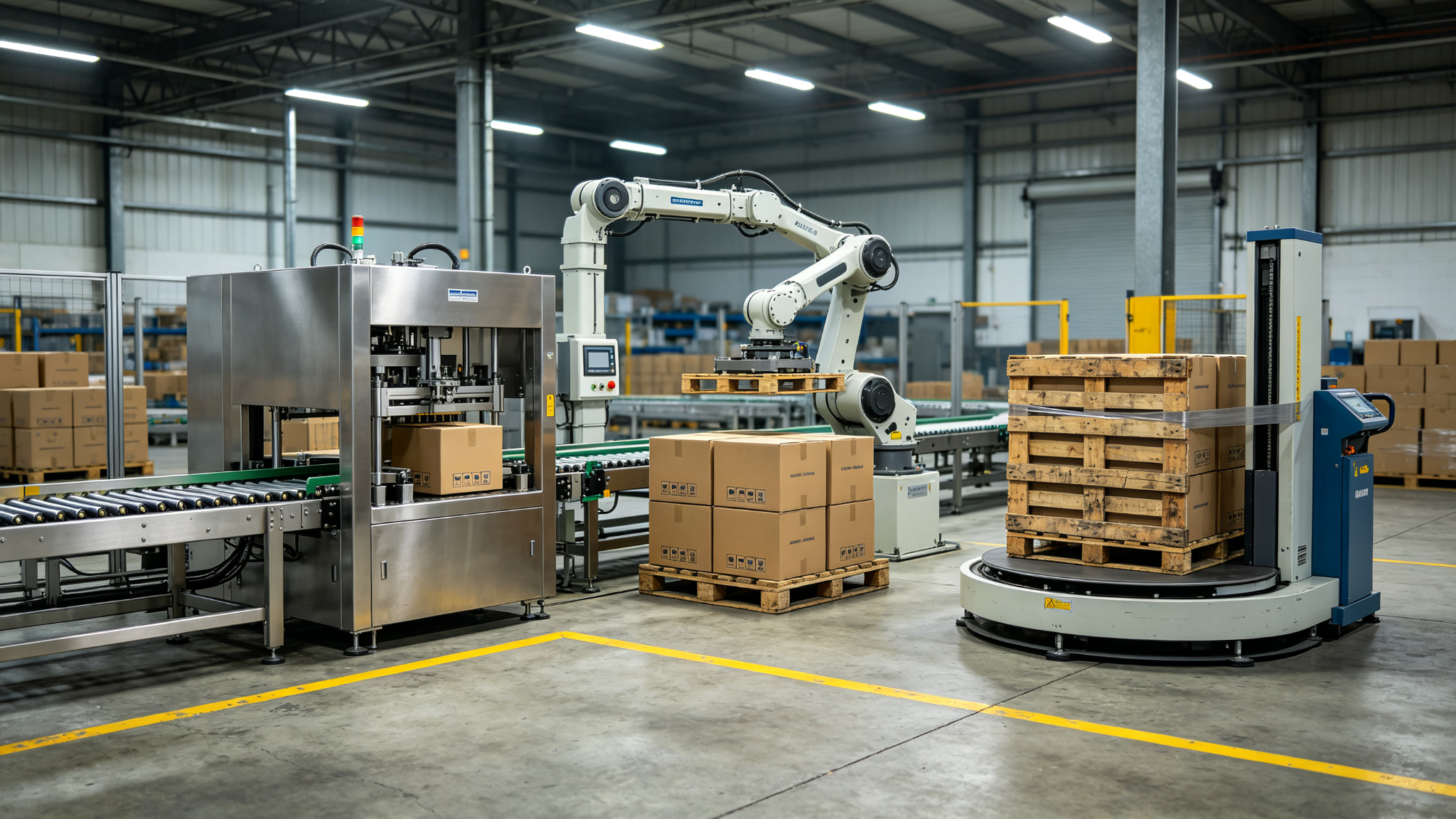
For contract beverage packers, the labeling station is where most line complaints start. Bottles arrive from the filler at full speed, and the label has to land straight, at the right spot, on round, oval and square containers with a single changeover. When the label drifts by a few millimetres, the customer rejects the whole batch. When the batch code is illegible or missing, the load is stopped at the distributor’s receiving dock. SunAura Machinery has just commissioned a turnkey pressure-sensitive wrap-around labeling and inkjet coding line for a Southeast Asian co-packer running sparkling tea, flavoured water and cold-brew coffee in PET and glass, at up to 120 bottles per minute.
Why the labeling station is the bottleneck on a beverage line
Most buyers size a beverage line around the filler and capper, then bolt a labeler on at the end as an afterthought. That is backwards. The filler and capper are forgiving: a bottle that is a little off still goes through. The labeler is not. Wrap-around pressure-sensitive labels demand the bottle be presented at a fixed orientation, the label web be peeled at the exact angle, and the sensing be triggered within milliseconds. Get one of those wrong and the line produces rejected labels, torn backing paper, or bottles that are simply skipped. The co-packer’s previous line ran a reconditioned labeler that needed two operators babysitting it; the new SunAura cell runs unattended through a full shift.
What a modern pressure-sensitive labeling machine actually does
A pressure-sensitive labeler feeds labels from a roll on a silicone belt, peels each label off its backing liner at a sharp edge, and applies it to the container as the container rotates on a wrap station. For round bottles, a wrap belt or rollers spin the bottle through a fixed label pad until the label overlaps on itself. For oval and square bottles, a vacuum drum or a roll-on brush lays the label flat across the flat face. The “pressure-sensitive” part means the label is already adhesive-coated; the machine only has to position it correctly and press it down. There is no glue pot, no heating, no cooling tunnel — which is why modern beverage plants prefer PS labeling over cold glue or hot melt for short-to-medium runs.
Wrap-around vs front-and-back vs sleeve labeling: which to choose
| Method | Best for | Changeover | Label cost | Typical speed |
|---|---|---|---|---|
| Wrap-around PS | Round bottles, full-body look, small batch variety | Quick, recipe-based | Medium | up to 200 bpm |
| Front-and-back PS | Rectangular/oval bottles, panel branding | Quick | Medium | up to 150 bpm |
| Sleeve (PVC/OPS) | Canned multipacks, tamper-evident neck bands | Slow, steam tunnel | Higher | up to 600 bpm |
| Cold glue | Glass jars, long stable runs, lowest label cost | Slow, glue setup | Low | up to 400 bpm |
For the co-packer, who changes SKUs several times a week and runs both PET and glass, wrap-around PS was the clear choice. A sleeve line would have locked them into one bottle shape and a steam tunnel they did not have space for; cold glue would have made every changeover a messy forty-minute job. The SunAura cell handles three label formats on two bottle families, with recipe recall on the HMI.
Integrating the inkjet coder: don’t treat it as a separate device
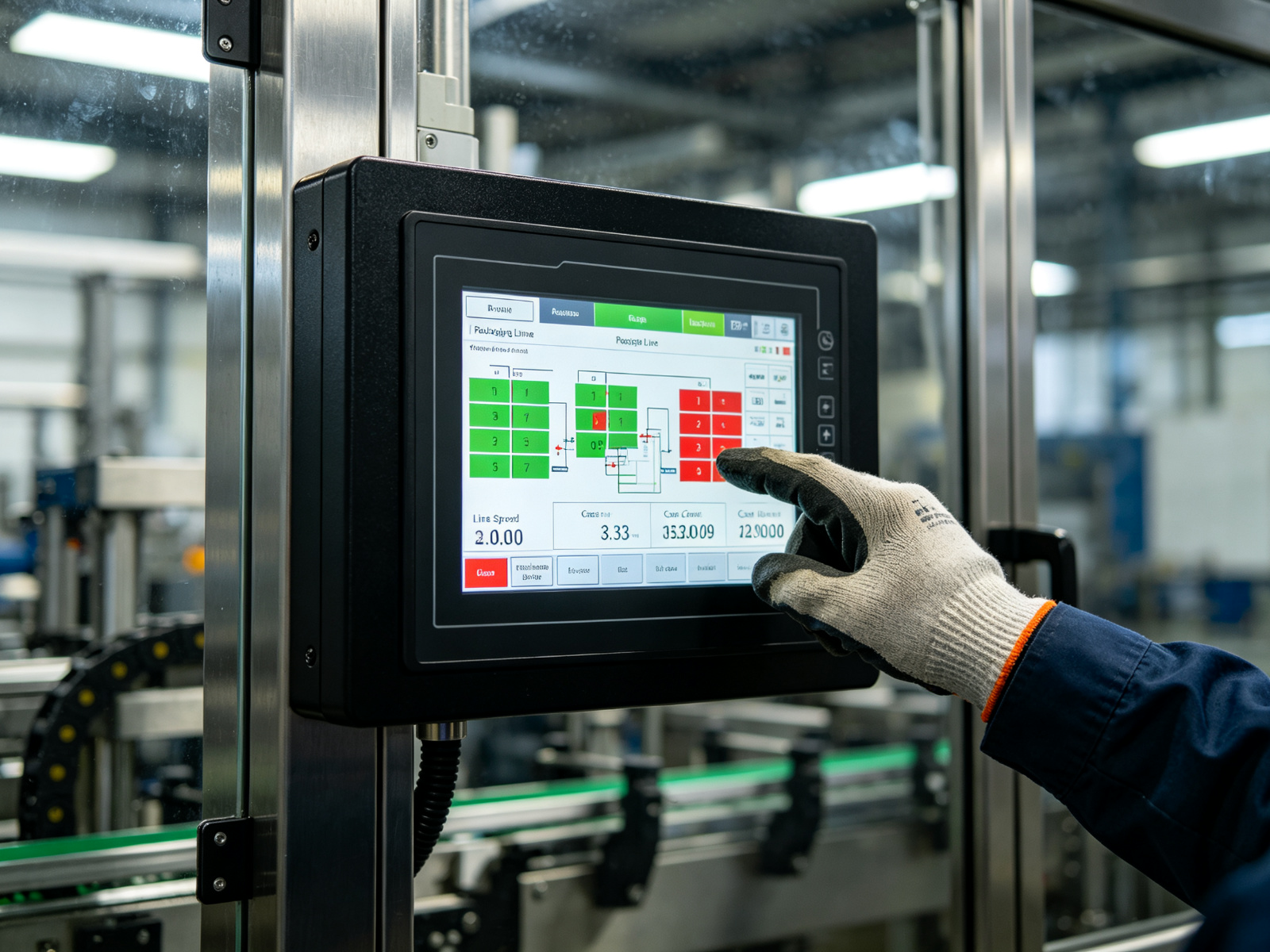
The second part of this line is the batch and best-before coding. A continuous inkjet (CIJ) printer mounts before the labeler, spraying the batch number, manufacture date and expiry directly onto the unlabelled bottle or the bottom. The co-packer needed this because some retail customers demand the code on the glass itself, not on the label. The printer is triggered by the same encoder that drives the labeler, so the code always lands at the same relative position. Buyers often buy the coder as a standalone box and then discover it does not talk to the line’s HMI, cannot pull batch data from the ERP, and alarms nobody when a nozzle clogs. On this line the coder feeds back its status and rejection signal to the line PLC, and a vision check verifies the code on every bottle.
Buying checklist: what to specify on a beverage labeling line
- The full list of container shapes, diameters and heights, not just the hero bottle.
- Label roll width, maximum label length, and whether you use split backing or fan-fold.
- Required changeover time target (e.g. under 15 minutes, no tools).
- Whether the coder must print on glass, PET or the label itself, and the print resolution needed for 2D codes.
- Reject handling: where off-label or uncoded bottles go, and how they are counted.
- Integration to the upstream linear filling machine and capping machine via one HMI recipe.
Cost and payback
A single-head wrap-around PS labeler with a CIJ coder and vision check, integrated to an existing filler and capper, sits in a mid-range capital band relative to a full bottle line. The payback at the co-packer came from two places: removing the two operators who previously babysat the old labeler, and cutting the batch-rejection rate. Illegible or missing codes were previously costing the line a few rejected pallets a quarter; with inline vision and auto-reject, that dropped to near zero. As a rule of thumb, a labeler that doubles as a coding and verification station pays for itself within 12–18 months when you factor in labour and rejection waste.
FAQ
Can one labeler handle both PET and glass bottles?
Yes, provided the bottle range is within the machine’s container-height and diameter window and you swap the change parts (starwheels, guide rails, wrap pads) between formats. Recipe-based machines make this a five- to fifteen-minute changeover.
Pressure-sensitive or hot-melt labeling for a new beverage brand?
For variable SKUs and short runs, pressure-sensitive wins on changeover and label inventory. For very long, stable runs on a single bottle, hot melt or cold glue can lower the label unit cost. Tell the builder your SKU count and run lengths before choosing.
How often do CIJ printheads need cleaning?
On a food-grade beverage line, schedule a nozzle purge at every start-up and every long stop. The printer should self-monitor print quality and alert on the HMI; a weekly deep clean is typical. Skipping this is the most common cause of missed codes.
Should the code go on the bottle or the label?
If your retail customer or food-safety auditor requires traceability on the product itself, print directly on the bottle or base. If not, coding on the label after application is cheaper and simpler. Ask your largest customer before you buy.
Label material and adhesive choices buyers overlook
The labeler is only as good as the label stock it is fed. For beverage bottles, the three common face stocks are clear BOPP, white BOPP and paper. Clear BOPP gives the “no-label look” that premium water and cold-brew brands want, but it shows every imperfection on the bottle and the print must be reverse-registered. White BOPP is forgiving, printable on standard flexo, and survives condensation on cold bottles. Paper labels are cheaper but bleed and soften on wet or chilled packs. The adhesive matters as much: a permanent all-temperature adhesive sticks through refrigeration and a warm truck, while a removable adhesive lets the bottle be relabelled. Tell the labeler supplier your storage and distribution temperature range, not just your artwork, because the wrong adhesive causes labels to curl at the edges long after the line is running.
Common labeling faults and how they are fixed
| Fault | Common cause | Fix |
|---|---|---|
| Label skewed / off-angle | Bottle not centered on wrap belt | Adjust guide rails and back-pressure; check starwheel wear |
| Label trailing edge lifts | Adhesive temperature or wrap pressure too low | Warm label pad; increase wrap hold time |
| Backing liner breaks | Peel angle too sharp or liner damaged | Adjust peel plate angle; inspect incoming roll |
| Coding smudges on wet bottle | CIJ ink on condensation | Blow-dry before coder; use fast-drying ink |
| Code missing on random bottles | Clogged nozzle / trigger mis-fire | Auto-purge; check encoder signal and vision rejects |
| Labels applied to empty bottles | Sensor not triggered by fill level | Re-set bottle sensor; integrate to filler count |
Changeover and spare-parts planning
A co-packer running several SKUs a week lives or dies by changeover. Specify tool-free change parts: quick-release starwheels, snap-on guide rails and a one-touch wrap-pad swap, so a bottle change is a recipe recall plus five minutes of mechanical checks rather than an hour with Allen keys. Hold a spare set of the wear parts that touch the bottle — belts, pads, pressure rollers — because these are the items that wear first and cause drift. Buyers also forget that the coder has consumables: ink cartridges, solvent and the nozzle filter. Keep a two-week buffer on site, because a labeler without ink stops the whole line even when the printer itself is fine. SunAura ships the change parts and a recommended spares kit with the cell, and trains the line operators on the fault table above during commissioning.
What buyers get wrong at quotation stage
The most expensive mistake is sending a labeler supplier one bottle photo and asking for a price. You need to supply the full range of containers the line will ever touch — including the awkward shapes, the narrow-neck glass and the chilled PET that sweats — because the labeler’s change parts and wrap station are sized to the hardest bottle, not the hero one. The second mistake is under-specifying the coding and verification: quoting a labeler alone, then discovering the CIJ printer, the vision camera and the reject gate cost as much as the labeler itself. The third is forgetting space. A labeler needs infeed and outfeed conveyor, a label-roll loading aisle, and a reject bin; buyers who squeeze it into a leftover two metres of line usually cannot load film safely. When SunAura quotes a labeling cell, we ask for the container range, the coding requirements and a layout sketch up front, because that is what turns a sticker machine into a reliable end-of-line station.
Linking the labeler to the filler and capper
A labeler should never run open-loop. It needs to know when a bottle is present, when a bottle is out of spec, and when the line has stopped. On this project the labeler received the filler’s output signal so it skips empty or under-filled bottles rather than wasting labels on them, and it tied into the capper’s reject logic so a capped-but-unlabeled bottle never leaves the cell. The conveyor between capper and labeler is sized to buffer a few seconds of production, so a momentary label splice does not stop the filler. These are the integration details that separate a standalone sticker machine from a reliable line station. When you buy a labeler as part of a full line from SunAura, the filler, capper, labeler and coder are commissioned together and tested as one system at FAT, so the interfaces are proven before shipment.
Operator training matters more than the machine
Even the best labeler drifts when operators do not know how to thread the web, set the peel angle and read the alarm codes. SunAura commissions include on-site training for the line operators and maintenance team: how to load a label roll, how to change a bottle recipe, how to run a purge on the coder, and how to clear a jam safely with the guards interlocked. A line where only one technician understands the labeler is a line that stops whenever that technician is absent. Budget for training and a documented SOP with the line, and the labeler will hold its accuracy across shifts.
Summary
A beverage labeling line is not a sticker machine; it is the precision station that turns filled and capped bottles into sellable product. Specify it around your full container range, integrate the coder and vision into one HMI recipe, and plan for fast changeovers if you run multiple SKUs. SunAura Machinery delivered this cell as part of a line that links the filler, capper, labeler and CIJ coder under one control system, with FAT on the co-packer’s own bottles. To scope a pressure-sensitive labeling, coding and inspection line for your bottles, contact our engineering team with your container range, target output and coding requirements.