
Not always, but matching them to the same supplier avoids the interface argument. SunAura supplies the cell, the case sealer and the palletizer so the conveyor heights, signals and recipes line up before shipment.
What if my cases are irregular or lightweight?
Robotic packing is actually better than drop packing for irregular or lightweight cases, because the arm controls placement rather than dropping from a height. Vacuum and gripper choices are tested on your actual bags at FAT.
Summary
The Medellin roaster chose robotic case packing because three shifts, a high SKU mix and downstream palletizing made manual and semi-automatic options more expensive in three years than the robot. If you are packing by hand on more than one shift, or changing box sizes several times a day, a robotic cell is worth budgeting; if you run a single fixed box on one shift, keep people or buy a drop packer. Send us your bags-per-minute and case range and we will size whether a robotic cell pays back — or tell you honestly if it does not.
Sources
Industry figures referenced: Robotiq Cascade Coffee palletizing case study (about 13-month ROI); GOJON 2026 packaging automation guide (robotic stacking 20–35 cases/min, 50–75% labor reduction, 12–24 month ROI); HIJ Machinery case packer vs manual ROI analysis. All third-party figures are published references; the Medellin figures are this project’s own.
Related reading
Yes, as long as the vacuum gripper and case pattern are stored as recipes. Changeover is usually under two minutes from the HMI, with no mechanical change parts for most bag ranges.
Do I need a case sealer and palletizer as part of the same cell?
Not always, but matching them to the same supplier avoids the interface argument. SunAura supplies the cell, the case sealer and the palletizer so the conveyor heights, signals and recipes line up before shipment.
What if my cases are irregular or lightweight?
Robotic packing is actually better than drop packing for irregular or lightweight cases, because the arm controls placement rather than dropping from a height. Vacuum and gripper choices are tested on your actual bags at FAT.
Summary
The Medellin roaster chose robotic case packing because three shifts, a high SKU mix and downstream palletizing made manual and semi-automatic options more expensive in three years than the robot. If you are packing by hand on more than one shift, or changing box sizes several times a day, a robotic cell is worth budgeting; if you run a single fixed box on one shift, keep people or buy a drop packer. Send us your bags-per-minute and case range and we will size whether a robotic cell pays back — or tell you honestly if it does not.
Sources
Industry figures referenced: Robotiq Cascade Coffee palletizing case study (about 13-month ROI); GOJON 2026 packaging automation guide (robotic stacking 20–35 cases/min, 50–75% labor reduction, 12–24 month ROI); HIJ Machinery case packer vs manual ROI analysis. All third-party figures are published references; the Medellin figures are this project’s own.
Related reading
Typical compact cells handle 15–35 cases per minute depending on the case pattern, bag weight and robot reach. Speed is limited by how many picks per case the pattern requires, not by the robot itself.
Can the robot handle different bag sizes?
Yes, as long as the vacuum gripper and case pattern are stored as recipes. Changeover is usually under two minutes from the HMI, with no mechanical change parts for most bag ranges.
Do I need a case sealer and palletizer as part of the same cell?
Not always, but matching them to the same supplier avoids the interface argument. SunAura supplies the cell, the case sealer and the palletizer so the conveyor heights, signals and recipes line up before shipment.
What if my cases are irregular or lightweight?
Robotic packing is actually better than drop packing for irregular or lightweight cases, because the arm controls placement rather than dropping from a height. Vacuum and gripper choices are tested on your actual bags at FAT.
Summary
The Medellin roaster chose robotic case packing because three shifts, a high SKU mix and downstream palletizing made manual and semi-automatic options more expensive in three years than the robot. If you are packing by hand on more than one shift, or changing box sizes several times a day, a robotic cell is worth budgeting; if you run a single fixed box on one shift, keep people or buy a drop packer. Send us your bags-per-minute and case range and we will size whether a robotic cell pays back — or tell you honestly if it does not.
Sources
Industry figures referenced: Robotiq Cascade Coffee palletizing case study (about 13-month ROI); GOJON 2026 packaging automation guide (robotic stacking 20–35 cases/min, 50–75% labor reduction, 12–24 month ROI); HIJ Machinery case packer vs manual ROI analysis. All third-party figures are published references; the Medellin figures are this project’s own.
Related reading
SunAura Machinery Installs Robotic Case Packing Cell for Colombian Coffee Roaster: When Robotic Pick-and-Place Beat Manual Packing
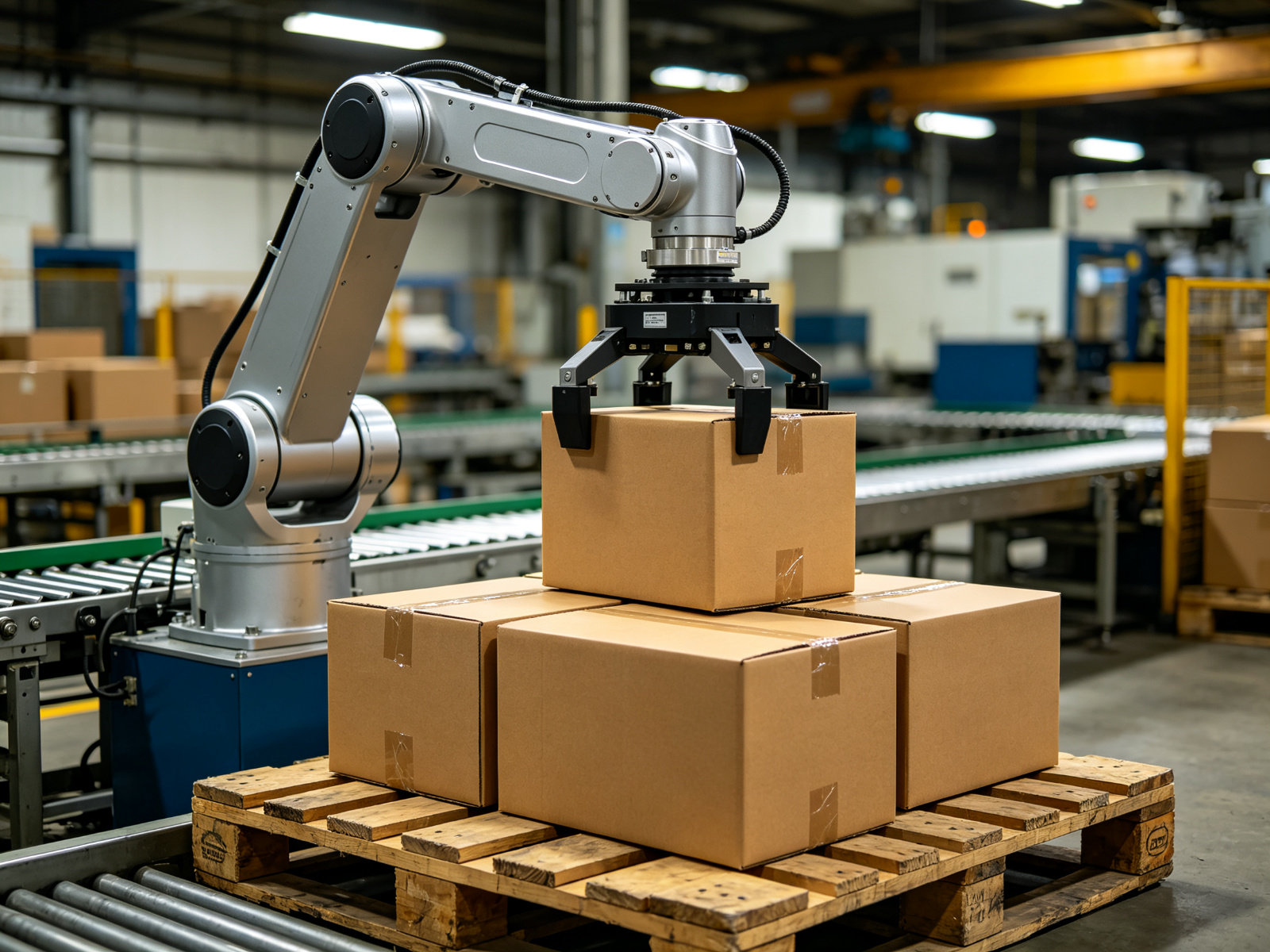
A specialty coffee roaster in Medellin was running three shifts of people hand-packing 250 g and 1 kg roast bags into shipper cases. The line made coffee well; the case packing station did not. Bags went in crooked, cases left with missing bags, and the two people at the pack station were the bottleneck every time a shift changed. SunAura Machinery designed and commissioned a compact robotic case packing cell that picks bags off a conveyor, collates them into a pattern, and drops them into RSC cases — with the same robot handing cases to a downstream palletizer. This is the story of why they chose robotic over keeping manual packing, and the numbers that decided it.
The decision: three options on the table
When the roaster asked for a budget, the engineering team laid out three realistic options. The first was to keep hand packing and add another body per shift. The second was a semi-automatic case erector and drop-pack station where a person places bags into a chute and the machine bottoms the case. The third was a fully robotic case packer that picks bags from the conveyor and loads them by recipe. The choice came down to throughput, mix, labor cost, and how the cell would feed the palletizer next door.
| Manual packing | Semi-automatic drop pack | Robotic case packer | |
|---|---|---|---|
| Typical speed | 6–10 cases/min per person | 10–15 cases/min | 15–35 cases/min |
| People per shift | 2–3 | 1 (loads bags) | 0 (operator watches the line) |
| Changeover between bag sizes | Instant | 5–15 min (chute guides) | Recipe on HMI, 1–2 min |
| Upfront cost | Low (labor only) | Medium | Higher capital |
| Footprint | Variable | Medium | Compact, guarded cell |
| Best when | <5 cases/min, seasonal | 1 product, steady run | Multi-SKU, multi-shift, growing |
Why manual packing loses at three shifts
Hand packing feels like the cheap option because there is no machine to buy. The arithmetic changes at three shifts. Two people per shift across three shifts is six positions, and at a Colombian manufacturing wage plus benefits, that is a recurring annual cost that never goes away. Industry experience cited by packaging automation suppliers puts manual case packing at roughly 6–10 cases per minute per person, and robotic cells at 20–35 cases per minute while cutting line labor by 50–75% with a payback commonly inside 12–24 months. The Robotiq case study at Cascade Coffee, a similar specialty roaster, reported an ROI of about 13 months after palletizing alone, and the Napco case study freed eight operators from manual stacking to run higher-value equipment. Those are published references, not our numbers, but they line up with what we saw on the Medellin line: once you run more than one shift, the wage bill overtakes the machine payment.
Why they skipped the semi-automatic option
A semi-automatic drop packer is the right tool for a line that runs one box size for hours. It is cheaper than a robot and simple to maintain. But the roaster packed a high mix: 250 g bags, 500 g bags, 1 kg bags, occasional sampler cartons, and retail display boxes. A drop packer needs different chutes and guides for each bag-and-case combination, and every changeover is a mechanical change. On a line that changed SKUs several times a day, the semi-automatic cell would have spent more time being changed over than running. The robotic option instead stores each bag pattern as a recipe: select the SKU on the HMI and the robot’s arm path, grip and case pattern switch in under two minutes. That is the deciding difference for multi-SKU plants — and the reason a compact robotic cell from the palletizer range often wins over a dedicated drop packer when the bag format changes often.
How the robotic cell was integrated
The filled bags exit the weigher and pillow wrapper onto a centering conveyor. A vision camera confirms bag presence and orientation before the robot picks. The robot arm uses a vacuum gripper matched to the bag film, collates the required number of bags into the case pattern (for example, four across by two high), and lowers them into an erected RSC case waiting on a powered roller. The case then travels to a case sealer and onto the existing palletizer. SunAura builds the filling and bagging equipment on the same line — the linear filling and capping equipment upstream shares the same PLC recipe logic — so the robot, the weigher and the palletizer all read the same product code. That matters: when the operator selects “250 g light roast” on the HMI, the bagger, the robot pattern and the palletizer layer all change together. No one has to tell the robot a separate recipe.
When robotic case packing is the wrong choice
Be honest about this. A robotic case packer is over-spec if you run fewer than a few hundred cases a day on a single shift, or if your product is so irregular that the robot gripper cannot be solved cheaply. If you pack one fixed box size for months and never change, a semi-automatic drop packer or even a well-run manual station will give you the same output for less capital. The payback math also weakens in a low-wage region where three people cost less than the robot’s annual depreciation; in that case, stage the investment and automate the palletizing first, since that is the heaviest and most injury-prone task. SunAura will tell a customer this on the quotation call rather than selling a robot they do not need.
ROI on the Medellin line
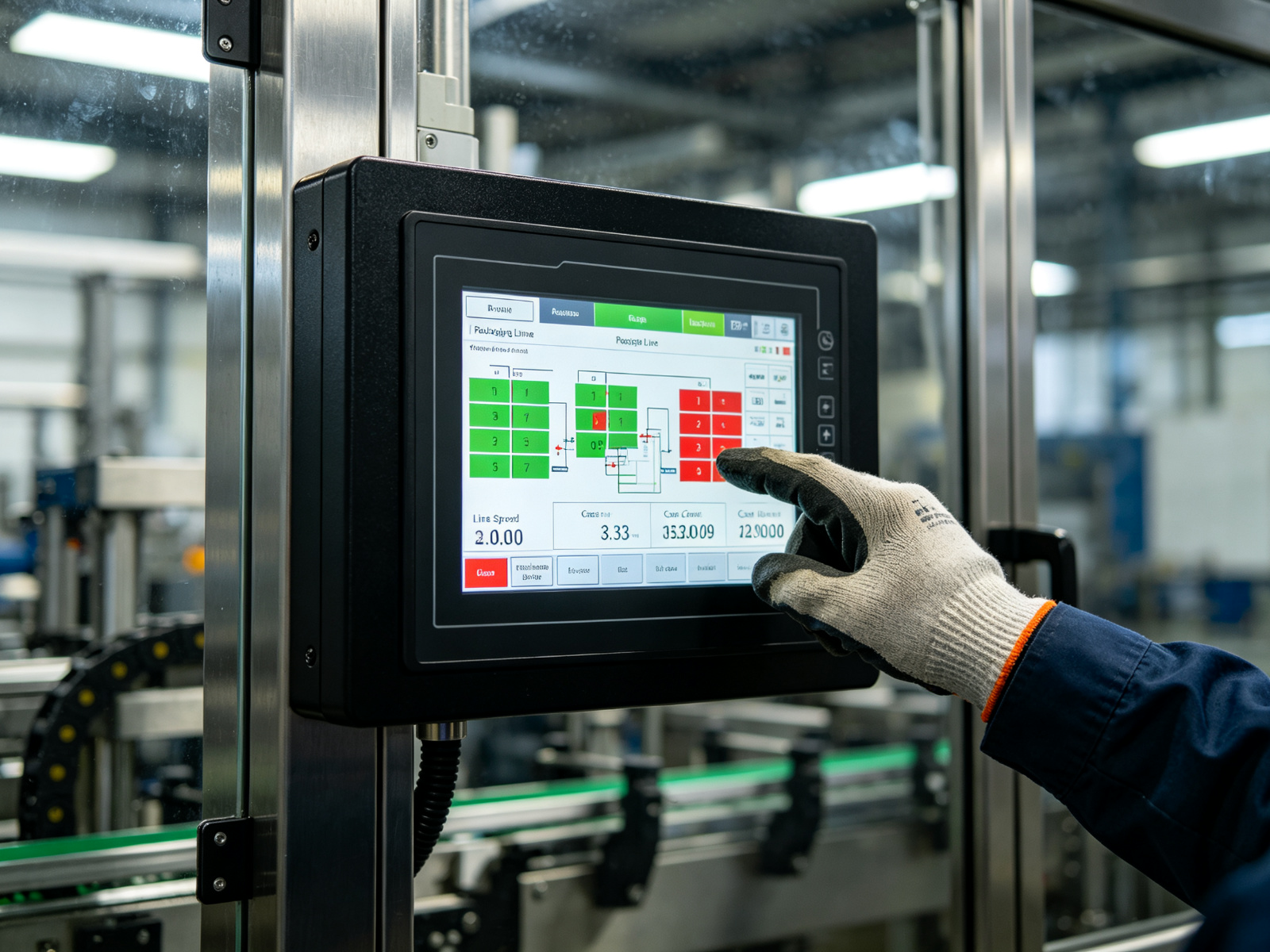
The roaster replaced six manual packing positions (two per shift, three shifts) with one supervisory operator. They also stopped writing off damaged cases from crooked bag loading and reduced the palletizer jams that came from badly loaded cases. Using the industry-typical range of 12–24 month payback for robotic packing, and their own local labor rates, the controller calculated payback inside the range they had budgeted. The other benefit was less visible: operators moved from repetitive lifting to line supervision, quality checks and roast floor work, which reduced turnover on the hardest position in the plant.
Gripper and vision: the two things that make or break the cell
The arm itself is rarely the problem. The gripper and the infeed are. For pillow bags of roasted coffee, a single vacuum cup rarely works — the bag is crinkly, the seam varies, and a cup that grips the top seal will often drop the bag when the bag flexes. SunAura specifies a multi-cup vacuum bar with a soft gasket, set to pick the flat panel rather than the gusseted edge, and adds a bag-present sensor so a missed pick triggers a re-pick instead of an empty case. Vision is the second piece: a compact camera above the infeed confirms bag orientation and triggers a flip if a bag arrives reversed. Without it, the robot will pack bags with the date code facing the inside of the case, which is a customer-complaint waiting to happen.
FAT: test your worst bag, not your best
Buyers often test a case packer on the one bag that runs perfectly, then discover on site that the 1 kg bag with a one-inch valve, the sampler carton, and the occasional crushed bag all jam. At factory acceptance test, we ask the customer to bring the three products they worry about most: the lightest bag, the heaviest bag, and the worst case pattern. We run them for a couple of hours each, on the actual conveyor speed, and we photograph the case interiors. If the robot cannot load a case straight on the shop floor in Medellin, it will not load it straight at your plant either. The FAT also confirms the HMI recipe changeover time — the two-minute number is not a vendor promise, it is a measured value.
Maintenance and spare parts to budget for
A robotic case packer is low on daily labor but not zero on maintenance. Budget for vacuum filters and suction pads as wear parts — coffee dust is abrasive and pads wear faster in a roaster than in a clean room. The case magazine guides need a monthly check for wear, and the case erector tape head needs routine tape-kernel changes. Most cells use a standard four-axis SCARA or delta arm with a 12–20 kg payload; the arm itself is almost never the failure point. The things that actually stop a line are a jammed bag on the infeed, a mis-fed case, or a dirty vacuum pad — all fixable in minutes if the HMI tells the operator which one. SunAura ships a spare-parts kit sized for the first year, and the PLC logs fault codes so the local technician can diagnose before calling us.
Layout, safety and footprint
Robotic cells need a fenced area, but modern cells use light curtains and safety scanners instead of a full cage, which saves floor space and lets the operator load the case magazine without opening a door. Plan the infeed conveyor length carefully: the robot needs enough bags queued to keep picking, but not so many that bags back up into the wrapper. The cell we installed in Medellin sits between the bagger outfeed and the case sealer, with the palletizer directly downstream — one operator walks the line, watches both HMI screens, and refills the case magazine. When you ask for a layout, give us the bagger speed, the case size range and the palletizer infeed height, and we will draw the cell to fit rather than asking you to move existing equipment.
Budgeting the cell: what the price tag does not include
When you ask for a quote on a robotic case packer, the machine price is the visible part. Budget separately for: the infeed and outfeed conveyors between your existing equipment, the electrical and air connections, safety guarding and light curtains, a spare-parts kit for the first year, and installation and commissioning days. A good supplier presents these as line items rather than burying them, because the buyer who only compares robot arm prices ends up short. On the Medellin line, we also planned the software integration: the cell’s PLC reads the line signal from the bagger so the robot waits for a bag rather than picking at empty air. That integration is what makes the cell run unattended; a robot bolted next to a manual conveyor without line signals just creates a different bottleneck.
FAQ
How fast can a robotic case packer run?
Typical compact cells handle 15–35 cases per minute depending on the case pattern, bag weight and robot reach. Speed is limited by how many picks per case the pattern requires, not by the robot itself.
Can the robot handle different bag sizes?
Yes, as long as the vacuum gripper and case pattern are stored as recipes. Changeover is usually under two minutes from the HMI, with no mechanical change parts for most bag ranges.
Do I need a case sealer and palletizer as part of the same cell?
Not always, but matching them to the same supplier avoids the interface argument. SunAura supplies the cell, the case sealer and the palletizer so the conveyor heights, signals and recipes line up before shipment.
What if my cases are irregular or lightweight?
Robotic packing is actually better than drop packing for irregular or lightweight cases, because the arm controls placement rather than dropping from a height. Vacuum and gripper choices are tested on your actual bags at FAT.
Summary
The Medellin roaster chose robotic case packing because three shifts, a high SKU mix and downstream palletizing made manual and semi-automatic options more expensive in three years than the robot. If you are packing by hand on more than one shift, or changing box sizes several times a day, a robotic cell is worth budgeting; if you run a single fixed box on one shift, keep people or buy a drop packer. Send us your bags-per-minute and case range and we will size whether a robotic cell pays back — or tell you honestly if it does not.
Sources
Industry figures referenced: Robotiq Cascade Coffee palletizing case study (about 13-month ROI); GOJON 2026 packaging automation guide (robotic stacking 20–35 cases/min, 50–75% labor reduction, 12–24 month ROI); HIJ Machinery case packer vs manual ROI analysis. All third-party figures are published references; the Medellin figures are this project’s own.