

QINGDAO, China — September 24, 2026 — SunAura Machinery has launched a new series of robotic palletizers designed for end-of-line automation in food, pharmaceutical, and consumer goods factories. The new series includes four models covering payload capacities from 40kg collaborative robots to 180kg heavy-duty industrial robots — giving customers a range of options for palletizing cartons, bags, trays, and bundled products.
The new robotic palletizer series expands SunAura’s existing palletizer product line, which previously focused on gantry and low-level layer palletizers. The addition of robotic arm palletizers addresses customer demand for flexible, compact palletizing cells that can handle multiple product types and change patterns quickly.
New Model Range
| Model | Robot Type | Payload | Reach | Cycle Time | Best Application |
|---|---|---|---|---|---|
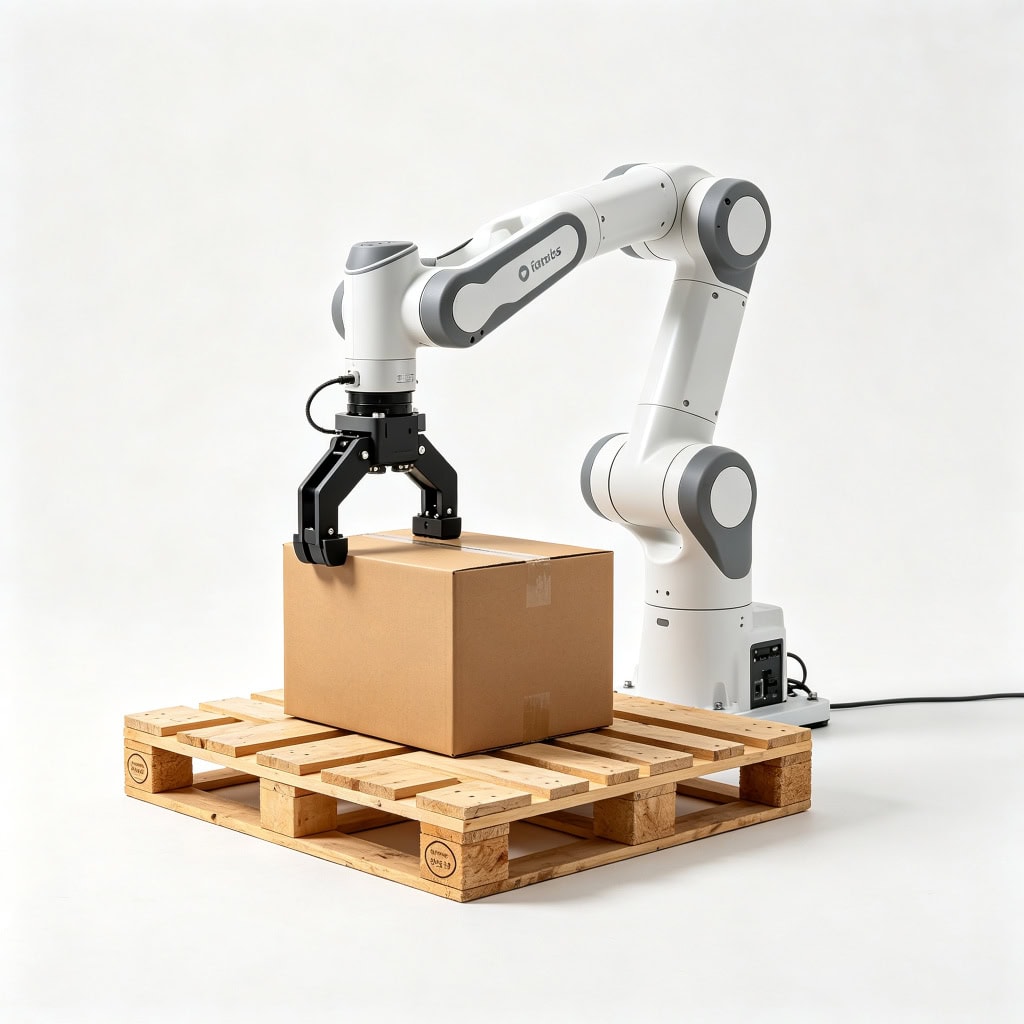
| SR-40C | Collaborative robot (cobot) | 40 kg | 1,800 mm | 6–8 cycles/min | Small cartons, bags, light loads |
| SR-120R | 4-axis industrial robot | 120 kg | 2,600 mm | 10–12 cycles/min | Standard cartons, cases, trays |
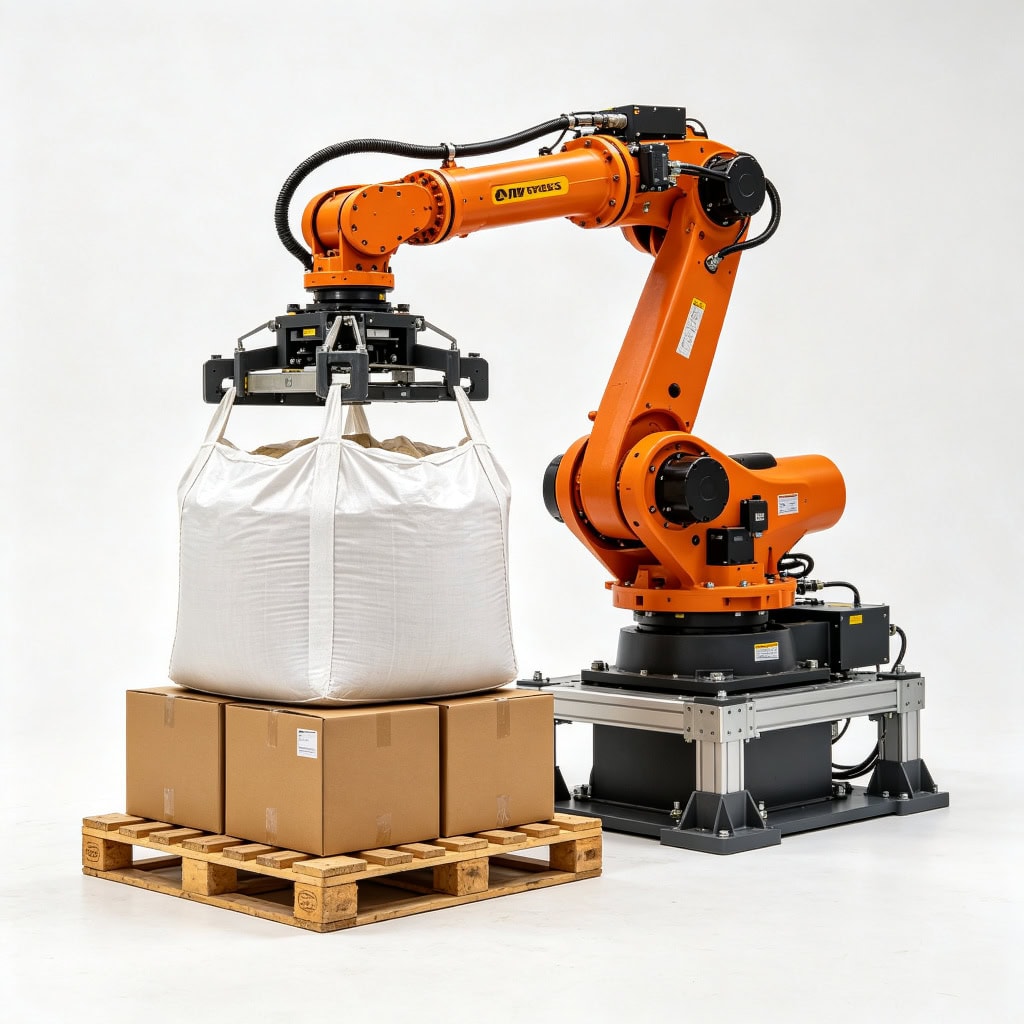
| SR-180R | Heavy-duty industrial robot | 180 kg | 3,200 mm | 8–10 cycles/min | Heavy bags, bulk sacks, pallet loads |
| SR-DUAL | Dual-station robot cell | 120 kg × 2 | 2,600 mm | 18–22 cycles/min | High-volume, two-pallet simultaneous |
Key Features
All four models share a common platform with these features:
- Automatic pattern builder: HMI software allows operators to build pallet patterns by entering carton dimensions, layers per pallet, and number of layers. The robot calculates the optimal layer pattern automatically.
- Quick-change end-of-arm tooling: vacuum grippers, fork grippers, and clamp grippers swap in under 10 minutes. Tool changeover between cartons and bags does not require tools.
- Pre-programmed patterns: standard pallet patterns (block, column, interlocked, pinwheel) are pre-loaded. Custom patterns can be taught by leading the robot arm manually.
- Safety integration: industrial robots include safety scanners and light curtains that stop the robot if a person enters the work zone. The collaborative model (SR-40C) has built-in force sensing and does not require a safety cage.
- Integration with upstream equipment: communicates over PROFINET/EtherNet/IP with case packers, conveyors, and pallet wrappers. Automatic slave mode pauses the robot when the upstream line has no product.
“Robotic palletizers are growing faster than any other palletizing technology because they offer flexibility that gantry machines cannot match,” says the SunAura engineering director. “A gantry machine is fast but dedicated to one product size. A robot can switch between 20 different pallet patterns in seconds — that is essential for contract packers and e-commerce operations that handle many SKUs.”
Typical Applications
The new robotic palletizer series is designed for a range of end-of-line applications:
Food processing: bags of rice, flour, sugar, and pet food are palletized by the SR-180R. Vacuum gripper end-of-arm tooling handles open-mouth bags without damaging the product. The SR-120R handles cartons of bakery, frozen food, and prepared meals.
E-commerce and fulfillment: the SR-40C collaborative robot works alongside pack stations, palletizing mixed-SKU orders. The cobot does not need a safety cage, saving floor space in compact fulfillment centers.
Pharmaceutical and cosmetics: the SR-120R with stainless steel cover handles cartons of bottles, vials, and cosmetic products. Cleanroom-compatible versions are available on request.
Building materials and hardware: the SR-180R handles bags of cement, boxes of tiles, and bundles of hardware. Heavy-duty fork grippers handle loads up to 180kg per pick.
Robot vs. Gantry Palletizers: Which to Choose?
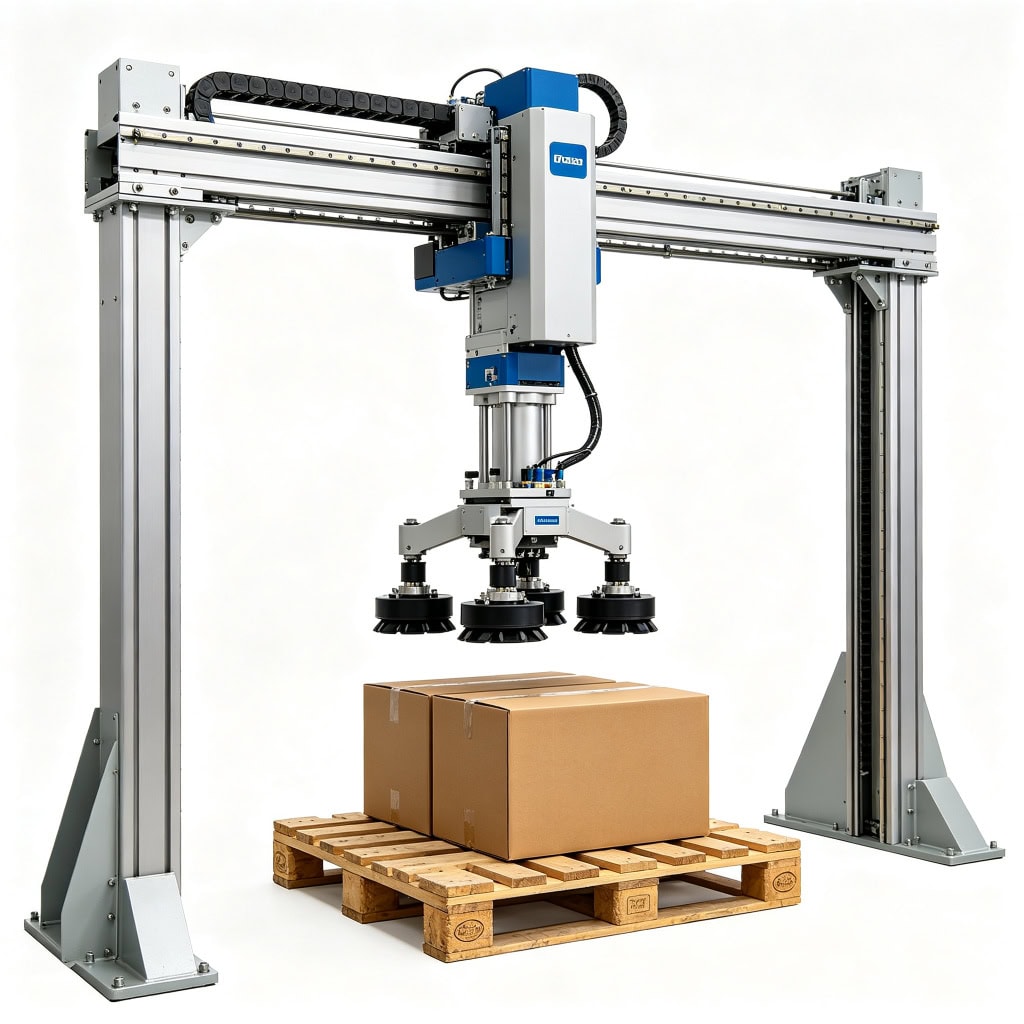
Customers often ask whether a robotic palletizer or a gantry (layer) palletizer is the right choice. The answer depends on your product variety and throughput:
| Factor | Robotic Palletizer | Gantry/Layer Palletizer |
|---|---|---|
| Best for | Multi-SKU, frequent changes | Single product, high volume |
| Speed | 6–22 picks/min | 20–40 cases/min (full layer) |
| Changeover time | 30 seconds (recipe select) | 30–60 minutes (tooling change) |
| Footprint | Small (4 × 4m) | Large (8 × 6m) |
| Typical price | $40,000–$100,000 | $80,000–$200,000 |
If you run fewer than 5 product sizes at moderate speed, a robotic palletizer offers the best flexibility and value. If you run a single product at maximum speed with no changeover, a gantry layer palletizer is faster. For more detail, see our guide to pallet wrapping machine selection — the partner to any palletizer.
Market Context: Robotic Palletizing Growth
The launch comes at a time when robotic palletizing is one of the fastest-growing segments in packaging automation. Labor shortages in manufacturing have pushed more factories toward automated palletizing — a job that is physically demanding, repetitive, and difficult to staff. According to industry analysts, the global robotic palletizing market grows at roughly 10–12% annually, driven by e-commerce growth, food processing, and consumer goods manufacturing.
For factory managers, the economic case is straightforward: a manual palletizer earns $3,000–$4,000 per month, works one shift, and cannot sustain the pace of a production line running 24/7. A robotic palletizer costs $50,000–$100,000, runs two or three shifts with minimal supervision, and pays back through labor savings within 18–36 months. The collaborative model (SR-40C) lowers the entry barrier for small and medium factories that previously could not justify a full industrial robot cell.
Frequently Asked Questions
How long does it take to install and commission a robotic palletizer?
Factory installation typically takes 1–2 days once the robot cell is delivered. On-site commissioning and operator training takes 2–3 days. Total time from delivery to production run is 3–5 days. For integrated systems (conveyors + case packer + palletizer), commissioning takes 1–2 weeks.
What is the difference between a collaborative robot and an industrial robot for palletizing?
A collaborative robot (cobot) has built-in force sensing and stops automatically if it contacts a person. It does not need a safety cage, saving floor space. However, cobots have lower payload (up to 40–50kg) and slower cycle times. Industrial robots handle 120–180kg at higher speeds but require safety scanners or cages. Choose a cobot for light loads and compact spaces; choose an industrial robot for heavy loads and high speed.
Can the robot handle different pallet patterns?
Yes. The HMI software includes a pattern builder where operators enter carton dimensions, pallet size, and number of layers. The robot generates the optimal layer pattern automatically. Standard patterns (block, interlocked, pinwheel) are pre-programmed. Custom patterns can be taught by leading the robot arm manually.
What end-of-arm tooling is available?
Three standard tool types: vacuum grippers (for cartons and flat products), fork grippers (for bags and sacks), and clamp grippers (for trays and unstable loads). Tool changes take under 10 minutes with no tools required. Custom tooling is available for special applications.
How much floor space does a robotic palletizer need?
The SR-40C cobot cell needs approximately 4 × 3 meters including infeed conveyor and pallet staging. The SR-120R industrial robot cell needs 5 × 5 meters. The SR-DUAL dual-station cell needs 6 × 5 meters. All cells include a safety scanner zone that stops the robot if a person enters the work area.
Availability and Support
All four robotic palletizer models are available for ordering. Factory lead time is 4–6 weeks. Each system includes:
- Factory acceptance testing with customer product samples
- On-site installation and operator training
- 12-month parts warranty
- Remote diagnostics capability
- CE certification documentation
Robotic palletizers are the final step after case erection, carton sealing, and strapping. Our new modular conveyor systems connect the palletizer to upstream equipment.
For complete end-of-line integration, robotic palletizers are paired with our case erectors, carton sealers, strapping machines, conveyors, and pallet wrappers. See our turnkey packaging line solutions for a complete system. To request a quote or schedule a factory demonstration, contact the SunAura sales team.
About SunAura Machinery
SunAura Machinery is a packaging equipment manufacturer based in Qingdao, China. The company’s palletizer product line now includes gantry palletizers, low-level and high-level layer palletizers, collaborative robots, 4-axis industrial robots, and dual-station robot cells. All equipment is CE certified and exported to 100+ countries.
Editorial note: Specifications are subject to change without notice. Contact SunAura Machinery for current configuration options.