
At minimum: lot/batch number, manufacture date and best-before/expiry, in a format readable to both humans and scanners. Many retailers now require a scannable 2D Data Matrix carrying the same data. Confirm with your target market’s food authority.
How often should we clean the CIJ nozzle?
Run an auto-purge at start-up and after every long stop. Schedule a manual deep clean weekly, and rely on the printer’s drop-quality monitor to flag clogs early before packs leave the line.
GS1 and 2D Data Matrix: what retailers actually ask for
Beyond a human-readable date, most large grocery and pharmacy retailers now require a scannable 2D Data Matrix on pack, encoded to GS1 standards. The matrix carries the GTIN, the batch/lot and the expiry date in a form a scanner can read instantly. This is not a nice-to-have: it is what lets a retailer trace a recalled pack back to your production line in seconds, and it is increasingly demanded on export shipments. It changes the printer choice because not every CIJ head can print a crisp 2D matrix at speed — you need a high-resolution head and, crucially, a vision camera that verifies the matrix actually scans. If your target customer specifies GS1-DataMatrix, build that requirement into the coder spec from the start; retrofitting verification to a printer that cannot produce the code is impossible.
Batch genealogy and MES integration
A coder that prints the right batch number is only half the system. The other half is genealogy: recording which packs, which cases and which pallets belong to which run, so that if a raw-material batch is recalled, you can pull the exact finished-goods lots. This works best when the coder, the filler and the case packer share one line PLC and the HMI recipe carries the batch ID. At the end of a run, the line logs the batch, the pack count, the shift and the operator, and the case barcode matches the inner packs. For smaller plants, this can be as simple as the PLC writing the run record to a CSV; for larger ones, it feeds directly into the MES. Either way, the principle is the same: never let an operator type the batch into the printer by hand. That single step removes the most common human error in traceability.
Washdown and food-grade coding
On dairy, meat and ready-meal lines, equipment is hosed down regularly. A standard CIJ printer and its cables are not washdown-rated, and water ingress kills the board and contaminates ink. Specify IP65-rated printheads and stainless steel enclosures, mount the printer so the washdown does not direct water at it, and use food-grade ink approved for incidental food contact. For TTO on wet film, make sure the ribbon and head are sealed. The cost difference is small, but a non-rated coder in a washdown zone is a recurring failure point and an audit finding. SunAura supplies food-grade coder packages with the filler-capper-labeler line, rated for the washdown environment the customer actually runs.
Choosing by surface: a quick decision table
If you are still unsure which coder fits your line, start from the pack surface rather than the technology. Glass, rigid PET and coated cartons can take a laser for a permanent code. Uncoated, mixed or chilled plastic is safer with CIJ. Flexible pouches and flow-wrap webs want TTO. Metal cans and aluminium are fine for CIJ, and some work with fibre lasers. If you run more than one surface, do not force one printer to do everything: most real lines end up with a CIJ on the rigid-pack section and a TTO head on the flexible-pack section, each triggered by the machine that makes that pack. The point is to size the coder to the pack, not to buy a box and hope it works on everything. Bring SunAura samples of your actual packs to FAT — that is where we prove which printer marks them cleanly, not on a datasheet.
Maintenance and spares that keep the line running
Coders are consumable machines, and the maintenance schedule is what separates a reliable station from a daily problem. For CIJ: run the start-up purge, keep a spare ink cartridge, solvent bottle and nozzle filter on site, and replace the inline filter at the interval the printer manual specifies. For TTO: clean the thermal head with a recommended swab, inspect the ribbon path for wear, and keep a spare head. For laser: keep the lens clean and the fume extraction filters changed, because a smoky lens leaves faint codes. Most importantly, calibrate the vision camera periodically against a known good and a deliberately bad code, so verification stays honest. A coder that is not maintained will silently start producing borderline codes, and by the time the customer complains, thousands of packs have left the plant. SunAura includes the recommended spares list and a maintenance checklist with every coded line.
Audits: what the customer’s auditor will check
When a retail customer or food-safety auditor walks your line, they do not look at the printer brand; they look at three things. First, that the code on the pack matches the batch and expiry in your records. Second, that there is a reject mechanism and a log of rejected packs. Third, that you have a documented changeover procedure proving the code is updated when the batch changes. A coder integrated to the line HMI recipe answers all three automatically, because the batch is set by the recipe and the rejects are counted. A manually-typed coder answers none of them convincingly. If you export to large retail or pharma buyers, this audit-readiness is the real reason to integrate coding, not just the convenience.
Summary
Batch coding is a traceability and compliance station, not a sticker. Choose CIJ for rigid mixed-material packs, laser for permanent ink-free codes on a known material, and TTO for flexible webs. Add vision verification and auto-reject, and pull batch data from the line recipe rather than typing it in. SunAura Machinery integrates coders and inspection cameras into the filler-capper-labeler line under one HMI, with FAT on your own packs. To spec a coding and traceability station for your line, contact our engineering team with your pack materials, required code format and target speed.
Related reading
Usually you need two: a high-speed CIJ on the bottle line and a heavier-duty case coder at the end of the line, because cases move slower and need larger characters. Mixing them on one device compromises both.
What batch data must be printed for export food?
At minimum: lot/batch number, manufacture date and best-before/expiry, in a format readable to both humans and scanners. Many retailers now require a scannable 2D Data Matrix carrying the same data. Confirm with your target market’s food authority.
How often should we clean the CIJ nozzle?
Run an auto-purge at start-up and after every long stop. Schedule a manual deep clean weekly, and rely on the printer’s drop-quality monitor to flag clogs early before packs leave the line.
GS1 and 2D Data Matrix: what retailers actually ask for
Beyond a human-readable date, most large grocery and pharmacy retailers now require a scannable 2D Data Matrix on pack, encoded to GS1 standards. The matrix carries the GTIN, the batch/lot and the expiry date in a form a scanner can read instantly. This is not a nice-to-have: it is what lets a retailer trace a recalled pack back to your production line in seconds, and it is increasingly demanded on export shipments. It changes the printer choice because not every CIJ head can print a crisp 2D matrix at speed — you need a high-resolution head and, crucially, a vision camera that verifies the matrix actually scans. If your target customer specifies GS1-DataMatrix, build that requirement into the coder spec from the start; retrofitting verification to a printer that cannot produce the code is impossible.
Batch genealogy and MES integration
A coder that prints the right batch number is only half the system. The other half is genealogy: recording which packs, which cases and which pallets belong to which run, so that if a raw-material batch is recalled, you can pull the exact finished-goods lots. This works best when the coder, the filler and the case packer share one line PLC and the HMI recipe carries the batch ID. At the end of a run, the line logs the batch, the pack count, the shift and the operator, and the case barcode matches the inner packs. For smaller plants, this can be as simple as the PLC writing the run record to a CSV; for larger ones, it feeds directly into the MES. Either way, the principle is the same: never let an operator type the batch into the printer by hand. That single step removes the most common human error in traceability.
Washdown and food-grade coding
On dairy, meat and ready-meal lines, equipment is hosed down regularly. A standard CIJ printer and its cables are not washdown-rated, and water ingress kills the board and contaminates ink. Specify IP65-rated printheads and stainless steel enclosures, mount the printer so the washdown does not direct water at it, and use food-grade ink approved for incidental food contact. For TTO on wet film, make sure the ribbon and head are sealed. The cost difference is small, but a non-rated coder in a washdown zone is a recurring failure point and an audit finding. SunAura supplies food-grade coder packages with the filler-capper-labeler line, rated for the washdown environment the customer actually runs.
Choosing by surface: a quick decision table
If you are still unsure which coder fits your line, start from the pack surface rather than the technology. Glass, rigid PET and coated cartons can take a laser for a permanent code. Uncoated, mixed or chilled plastic is safer with CIJ. Flexible pouches and flow-wrap webs want TTO. Metal cans and aluminium are fine for CIJ, and some work with fibre lasers. If you run more than one surface, do not force one printer to do everything: most real lines end up with a CIJ on the rigid-pack section and a TTO head on the flexible-pack section, each triggered by the machine that makes that pack. The point is to size the coder to the pack, not to buy a box and hope it works on everything. Bring SunAura samples of your actual packs to FAT — that is where we prove which printer marks them cleanly, not on a datasheet.
Maintenance and spares that keep the line running
Coders are consumable machines, and the maintenance schedule is what separates a reliable station from a daily problem. For CIJ: run the start-up purge, keep a spare ink cartridge, solvent bottle and nozzle filter on site, and replace the inline filter at the interval the printer manual specifies. For TTO: clean the thermal head with a recommended swab, inspect the ribbon path for wear, and keep a spare head. For laser: keep the lens clean and the fume extraction filters changed, because a smoky lens leaves faint codes. Most importantly, calibrate the vision camera periodically against a known good and a deliberately bad code, so verification stays honest. A coder that is not maintained will silently start producing borderline codes, and by the time the customer complains, thousands of packs have left the plant. SunAura includes the recommended spares list and a maintenance checklist with every coded line.
Audits: what the customer’s auditor will check
When a retail customer or food-safety auditor walks your line, they do not look at the printer brand; they look at three things. First, that the code on the pack matches the batch and expiry in your records. Second, that there is a reject mechanism and a log of rejected packs. Third, that you have a documented changeover procedure proving the code is updated when the batch changes. A coder integrated to the line HMI recipe answers all three automatically, because the batch is set by the recipe and the rejects are counted. A manually-typed coder answers none of them convincingly. If you export to large retail or pharma buyers, this audit-readiness is the real reason to integrate coding, not just the convenience.
Summary
Batch coding is a traceability and compliance station, not a sticker. Choose CIJ for rigid mixed-material packs, laser for permanent ink-free codes on a known material, and TTO for flexible webs. Add vision verification and auto-reject, and pull batch data from the line recipe rather than typing it in. SunAura Machinery integrates coders and inspection cameras into the filler-capper-labeler line under one HMI, with FAT on your own packs. To spec a coding and traceability station for your line, contact our engineering team with your pack materials, required code format and target speed.
Related reading
If your bottles are PET and you want a permanent, ink-free code, test a laser on the actual bottle. If bottles are mixed or change often, CIJ is more forgiving. Add a vision camera either way.
Can one coder handle bottles and cases?
Usually you need two: a high-speed CIJ on the bottle line and a heavier-duty case coder at the end of the line, because cases move slower and need larger characters. Mixing them on one device compromises both.
What batch data must be printed for export food?
At minimum: lot/batch number, manufacture date and best-before/expiry, in a format readable to both humans and scanners. Many retailers now require a scannable 2D Data Matrix carrying the same data. Confirm with your target market’s food authority.
How often should we clean the CIJ nozzle?
Run an auto-purge at start-up and after every long stop. Schedule a manual deep clean weekly, and rely on the printer’s drop-quality monitor to flag clogs early before packs leave the line.
GS1 and 2D Data Matrix: what retailers actually ask for
Beyond a human-readable date, most large grocery and pharmacy retailers now require a scannable 2D Data Matrix on pack, encoded to GS1 standards. The matrix carries the GTIN, the batch/lot and the expiry date in a form a scanner can read instantly. This is not a nice-to-have: it is what lets a retailer trace a recalled pack back to your production line in seconds, and it is increasingly demanded on export shipments. It changes the printer choice because not every CIJ head can print a crisp 2D matrix at speed — you need a high-resolution head and, crucially, a vision camera that verifies the matrix actually scans. If your target customer specifies GS1-DataMatrix, build that requirement into the coder spec from the start; retrofitting verification to a printer that cannot produce the code is impossible.
Batch genealogy and MES integration
A coder that prints the right batch number is only half the system. The other half is genealogy: recording which packs, which cases and which pallets belong to which run, so that if a raw-material batch is recalled, you can pull the exact finished-goods lots. This works best when the coder, the filler and the case packer share one line PLC and the HMI recipe carries the batch ID. At the end of a run, the line logs the batch, the pack count, the shift and the operator, and the case barcode matches the inner packs. For smaller plants, this can be as simple as the PLC writing the run record to a CSV; for larger ones, it feeds directly into the MES. Either way, the principle is the same: never let an operator type the batch into the printer by hand. That single step removes the most common human error in traceability.
Washdown and food-grade coding
On dairy, meat and ready-meal lines, equipment is hosed down regularly. A standard CIJ printer and its cables are not washdown-rated, and water ingress kills the board and contaminates ink. Specify IP65-rated printheads and stainless steel enclosures, mount the printer so the washdown does not direct water at it, and use food-grade ink approved for incidental food contact. For TTO on wet film, make sure the ribbon and head are sealed. The cost difference is small, but a non-rated coder in a washdown zone is a recurring failure point and an audit finding. SunAura supplies food-grade coder packages with the filler-capper-labeler line, rated for the washdown environment the customer actually runs.
Choosing by surface: a quick decision table
If you are still unsure which coder fits your line, start from the pack surface rather than the technology. Glass, rigid PET and coated cartons can take a laser for a permanent code. Uncoated, mixed or chilled plastic is safer with CIJ. Flexible pouches and flow-wrap webs want TTO. Metal cans and aluminium are fine for CIJ, and some work with fibre lasers. If you run more than one surface, do not force one printer to do everything: most real lines end up with a CIJ on the rigid-pack section and a TTO head on the flexible-pack section, each triggered by the machine that makes that pack. The point is to size the coder to the pack, not to buy a box and hope it works on everything. Bring SunAura samples of your actual packs to FAT — that is where we prove which printer marks them cleanly, not on a datasheet.
Maintenance and spares that keep the line running
Coders are consumable machines, and the maintenance schedule is what separates a reliable station from a daily problem. For CIJ: run the start-up purge, keep a spare ink cartridge, solvent bottle and nozzle filter on site, and replace the inline filter at the interval the printer manual specifies. For TTO: clean the thermal head with a recommended swab, inspect the ribbon path for wear, and keep a spare head. For laser: keep the lens clean and the fume extraction filters changed, because a smoky lens leaves faint codes. Most importantly, calibrate the vision camera periodically against a known good and a deliberately bad code, so verification stays honest. A coder that is not maintained will silently start producing borderline codes, and by the time the customer complains, thousands of packs have left the plant. SunAura includes the recommended spares list and a maintenance checklist with every coded line.
Audits: what the customer’s auditor will check
When a retail customer or food-safety auditor walks your line, they do not look at the printer brand; they look at three things. First, that the code on the pack matches the batch and expiry in your records. Second, that there is a reject mechanism and a log of rejected packs. Third, that you have a documented changeover procedure proving the code is updated when the batch changes. A coder integrated to the line HMI recipe answers all three automatically, because the batch is set by the recipe and the rejects are counted. A manually-typed coder answers none of them convincingly. If you export to large retail or pharma buyers, this audit-readiness is the real reason to integrate coding, not just the convenience.
Summary
Batch coding is a traceability and compliance station, not a sticker. Choose CIJ for rigid mixed-material packs, laser for permanent ink-free codes on a known material, and TTO for flexible webs. Add vision verification and auto-reject, and pull batch data from the line recipe rather than typing it in. SunAura Machinery integrates coders and inspection cameras into the filler-capper-labeler line under one HMI, with FAT on your own packs. To spec a coding and traceability station for your line, contact our engineering team with your pack materials, required code format and target speed.
Related reading
Batch Coding and Traceability on Packaging Lines: Continuous Inkjet, Laser and Thermal Transfer Overprinting Compared
Every food, beverage, pharma and cosmetics pack that leaves your factory carries a batch number, a manufacture date and an expiry date. When a product is recalled, the traceability of that code — and the system that printed it — is what decides whether you recall one pallet or one supermarket aisle. Yet coding is the most under-specified station on most packaging lines: buyers choose a printer on price, bolt it on, and discover six months later that the code smudges on wet bottles, that it cannot print a 2D barcode a retailer demands, or that nobody checked the print quality. This guide lays out how to choose and integrate a packaging line date coder that actually passes audits.
The three mainstream coding technologies
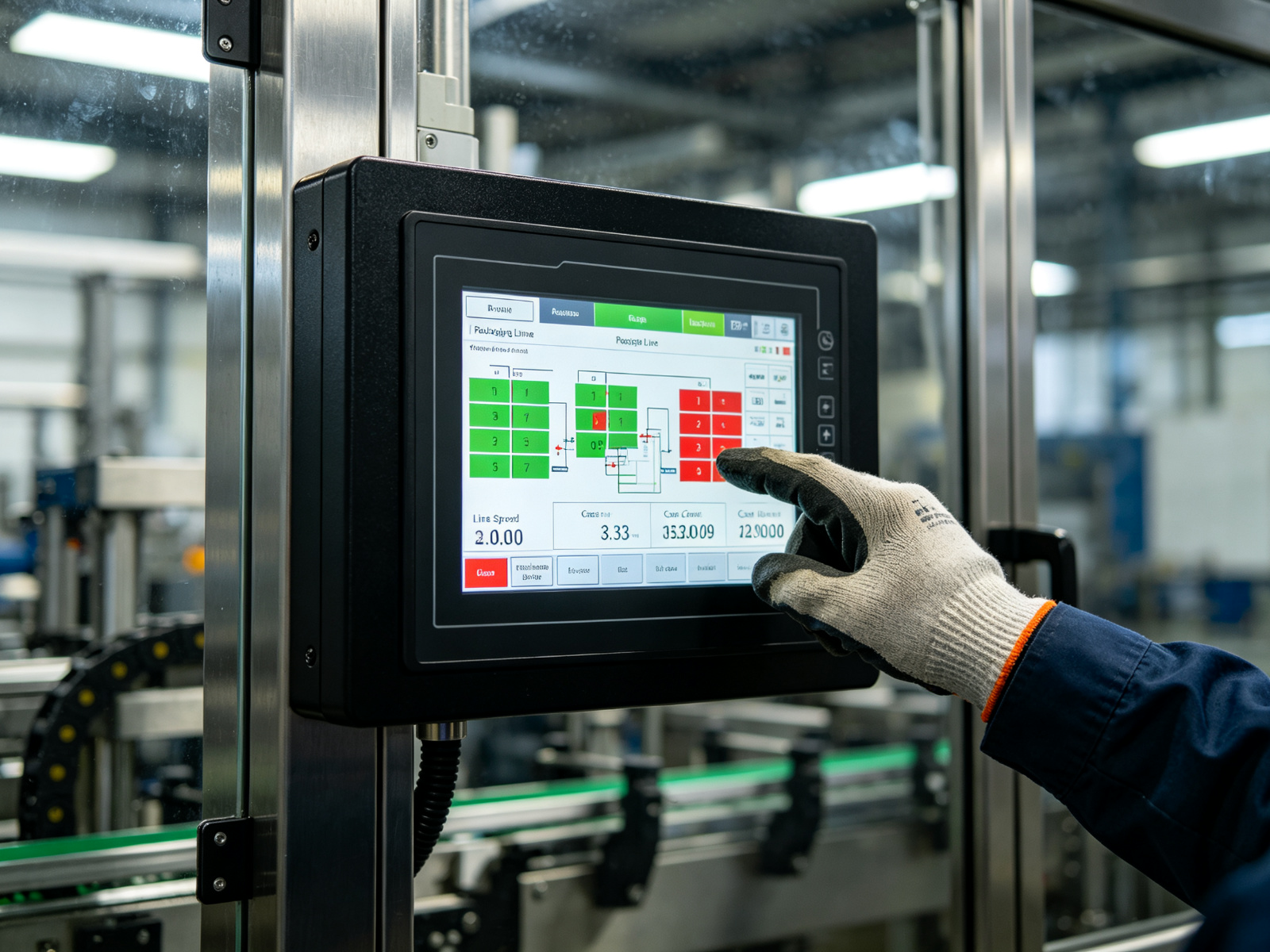
Almost every pack code you see is made by one of three technologies. Continuous inkjet (CIJ) fires tiny ink droplets from a nozzle onto a moving surface without contact. Laser coding ablates or foams the packaging surface with a focused beam. Thermal transfer overprinting (TTO) uses a heated print head to melt ink from a ribbon onto flexible film or labels. Each is built for a different surface and speed.
| Technology | Best surfaces | Speed | Running cost | Typical use |
|---|---|---|---|---|
| CIJ (continuous inkjet) | Bottles, cans, cartons, metal, plastic (non-contact) | High (up to hundreds/min) | Ink + make-up solvent | Date/batch on bottles and cases |
| Laser | Glass, PET, coated cartons, certain films | High | Low (no consumable) | Permanent codes on premium bottles |
| TTO | Flexible film, labels, flow-wrap web | Medium (web speed) | Ribbon | Best-before on pouches and flow wrap |
Continuous inkjet: the workhorse
CIJ printers are the default on bottling and canning lines because they print on almost anything, non-contact, at high speed. The printer mounts over the conveyor and sprays the code as the pack passes. The downside is consumables: ink and solvent, and the nozzle needs regular purging. CIJ is the right choice when you code rigid packs (bottles, cans, jars, cases) across mixed materials. It is less ideal on very wet or greasy surfaces, where ink may bead, and on porous paperboard, where it bleeds. Buy a CIJ with a printhead that self-monitors drop quality and alarms before a streak becomes a missed code.
Laser coding: permanent but material-specific
A laser does not use ink, so running cost is near zero and the code is permanent — a big plus for premium beverages and pharma, where tampering or re-dating is a risk. But laser is material-dependent: it foams PET, etches glass, and marks coated cartons, but it barely marks plain uncoated plastic. A laser also needs guarding and fume extraction. If your line runs one material at high volume and you want a tamper-proof, ink-free code, laser is excellent. If you switch bottle plastics often, test each one before committing, because the wrong combo leaves an invisible mark.
TTO: the right tool for flexible packs
On pouches, sachets and flow-wrapped bars, the code is printed directly on the film web as it forms. TTO lays a ribbon over the film and a thermal head burns the image through. It produces crisp, high-resolution codes — including small 2D barcodes — and is cheaper to maintain than people expect. The constraint is that it prints on the moving web, so it is tied to the packaging machine’s speed. SunAura commonly integrates TTO heads onto thermoforming and flow-wrap lines, where the coder pulls its trigger from the machine encoder and the print position is registered automatically.
Don’t forget verification: the camera that protects you
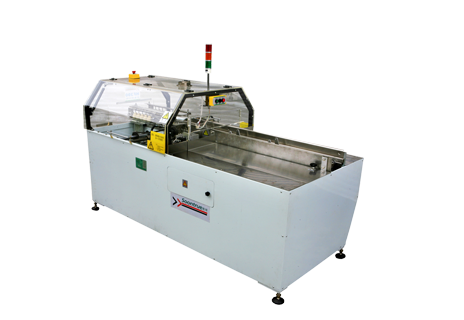
A coder that prints a bad code is worse than no coder, because it ships product that looks coded but is unreadable. Modern lines add a vision camera after the printer that checks every code: presence, legibility, correct date format, and 2D barcode readability. Packs that fail are automatically rejected and counted. This is what food-safety auditors look for — not just that you print a code, but that you verify and quarantine the bad ones. If your retail customer demands GS1-standard barcodes on pack, the camera also confirms the barcode scans before the case is sealed.
Integrating the coder with your line control
The cheapest coding box is a standalone device: an operator types today’s batch number into the printer keyboard at shift start. The risk is human error — a typo, a wrong date, a batch that was not updated after a changeover. The robust approach is to have the coder pull batch, product and shift data from the line PLC or MES, triggered by the recipe selected on the HMI. When the operator selects “product X, run 124”, the coder already knows the batch and date. This is the same control architecture that links the filling machine, capping machine and labeler on a SunAura line, so coding becomes one more controlled station rather than a manual clipboard step.
Cost by technology
A basic CIJ printer sits at the entry level, with recurring ink and solvent cost. A laser printer costs more upfront but saves on consumables over the line’s life. TTO heads are inexpensive but need a compatible web machine. The hidden cost is not the printer: it is rejection, rework and recall risk from a code that fails. When you budget, price in the verification camera and the integration, not just the print head. Most payback calculations that ignore rejected product understate the cost of a cheap coding decision.
FAQ
CIJ or laser for a new bottled water line?
If your bottles are PET and you want a permanent, ink-free code, test a laser on the actual bottle. If bottles are mixed or change often, CIJ is more forgiving. Add a vision camera either way.
Can one coder handle bottles and cases?
Usually you need two: a high-speed CIJ on the bottle line and a heavier-duty case coder at the end of the line, because cases move slower and need larger characters. Mixing them on one device compromises both.
What batch data must be printed for export food?
At minimum: lot/batch number, manufacture date and best-before/expiry, in a format readable to both humans and scanners. Many retailers now require a scannable 2D Data Matrix carrying the same data. Confirm with your target market’s food authority.
How often should we clean the CIJ nozzle?
Run an auto-purge at start-up and after every long stop. Schedule a manual deep clean weekly, and rely on the printer’s drop-quality monitor to flag clogs early before packs leave the line.
GS1 and 2D Data Matrix: what retailers actually ask for
Beyond a human-readable date, most large grocery and pharmacy retailers now require a scannable 2D Data Matrix on pack, encoded to GS1 standards. The matrix carries the GTIN, the batch/lot and the expiry date in a form a scanner can read instantly. This is not a nice-to-have: it is what lets a retailer trace a recalled pack back to your production line in seconds, and it is increasingly demanded on export shipments. It changes the printer choice because not every CIJ head can print a crisp 2D matrix at speed — you need a high-resolution head and, crucially, a vision camera that verifies the matrix actually scans. If your target customer specifies GS1-DataMatrix, build that requirement into the coder spec from the start; retrofitting verification to a printer that cannot produce the code is impossible.
Batch genealogy and MES integration
A coder that prints the right batch number is only half the system. The other half is genealogy: recording which packs, which cases and which pallets belong to which run, so that if a raw-material batch is recalled, you can pull the exact finished-goods lots. This works best when the coder, the filler and the case packer share one line PLC and the HMI recipe carries the batch ID. At the end of a run, the line logs the batch, the pack count, the shift and the operator, and the case barcode matches the inner packs. For smaller plants, this can be as simple as the PLC writing the run record to a CSV; for larger ones, it feeds directly into the MES. Either way, the principle is the same: never let an operator type the batch into the printer by hand. That single step removes the most common human error in traceability.
Washdown and food-grade coding
On dairy, meat and ready-meal lines, equipment is hosed down regularly. A standard CIJ printer and its cables are not washdown-rated, and water ingress kills the board and contaminates ink. Specify IP65-rated printheads and stainless steel enclosures, mount the printer so the washdown does not direct water at it, and use food-grade ink approved for incidental food contact. For TTO on wet film, make sure the ribbon and head are sealed. The cost difference is small, but a non-rated coder in a washdown zone is a recurring failure point and an audit finding. SunAura supplies food-grade coder packages with the filler-capper-labeler line, rated for the washdown environment the customer actually runs.
Choosing by surface: a quick decision table
If you are still unsure which coder fits your line, start from the pack surface rather than the technology. Glass, rigid PET and coated cartons can take a laser for a permanent code. Uncoated, mixed or chilled plastic is safer with CIJ. Flexible pouches and flow-wrap webs want TTO. Metal cans and aluminium are fine for CIJ, and some work with fibre lasers. If you run more than one surface, do not force one printer to do everything: most real lines end up with a CIJ on the rigid-pack section and a TTO head on the flexible-pack section, each triggered by the machine that makes that pack. The point is to size the coder to the pack, not to buy a box and hope it works on everything. Bring SunAura samples of your actual packs to FAT — that is where we prove which printer marks them cleanly, not on a datasheet.
Maintenance and spares that keep the line running
Coders are consumable machines, and the maintenance schedule is what separates a reliable station from a daily problem. For CIJ: run the start-up purge, keep a spare ink cartridge, solvent bottle and nozzle filter on site, and replace the inline filter at the interval the printer manual specifies. For TTO: clean the thermal head with a recommended swab, inspect the ribbon path for wear, and keep a spare head. For laser: keep the lens clean and the fume extraction filters changed, because a smoky lens leaves faint codes. Most importantly, calibrate the vision camera periodically against a known good and a deliberately bad code, so verification stays honest. A coder that is not maintained will silently start producing borderline codes, and by the time the customer complains, thousands of packs have left the plant. SunAura includes the recommended spares list and a maintenance checklist with every coded line.
Audits: what the customer’s auditor will check
When a retail customer or food-safety auditor walks your line, they do not look at the printer brand; they look at three things. First, that the code on the pack matches the batch and expiry in your records. Second, that there is a reject mechanism and a log of rejected packs. Third, that you have a documented changeover procedure proving the code is updated when the batch changes. A coder integrated to the line HMI recipe answers all three automatically, because the batch is set by the recipe and the rejects are counted. A manually-typed coder answers none of them convincingly. If you export to large retail or pharma buyers, this audit-readiness is the real reason to integrate coding, not just the convenience.
Summary
Batch coding is a traceability and compliance station, not a sticker. Choose CIJ for rigid mixed-material packs, laser for permanent ink-free codes on a known material, and TTO for flexible webs. Add vision verification and auto-reject, and pull batch data from the line recipe rather than typing it in. SunAura Machinery integrates coders and inspection cameras into the filler-capper-labeler line under one HMI, with FAT on your own packs. To spec a coding and traceability station for your line, contact our engineering team with your pack materials, required code format and target speed.