
±0.5–1% on stable, free-flowing powders. On sticky or variable-density powders, expect 1–2% without gravimetric feedback.
Do I need explosion-proof?
For fine organic powders (flour, sugar, protein), ask about ATEX or dust-ex rated enclosures. This is a safety question, not a dosing one — but it sits on the same machine.
Summary
Auger for non-free-flowing fine powders; volumetric cup for cheap uniform granules at speed; gravimetric for expensive powders where giveaway matters. Match the dosing method to your powder’s flow, value and required accuracy. Send us your powder, bag size and speed and we will spec the dosing head that hits your target weight — and tell you if a cheaper method will do.
Related reading
Volumetric cup is fastest on uniform granules; auger is fastest on fine powders; gravimetric is slowest because it weighs every bag.
How accurate is an auger filler really?
±0.5–1% on stable, free-flowing powders. On sticky or variable-density powders, expect 1–2% without gravimetric feedback.
Do I need explosion-proof?
For fine organic powders (flour, sugar, protein), ask about ATEX or dust-ex rated enclosures. This is a safety question, not a dosing one — but it sits on the same machine.
Summary
Auger for non-free-flowing fine powders; volumetric cup for cheap uniform granules at speed; gravimetric for expensive powders where giveaway matters. Match the dosing method to your powder’s flow, value and required accuracy. Send us your powder, bag size and speed and we will spec the dosing head that hits your target weight — and tell you if a cheaper method will do.
Related reading
Many auger fillers can be upgraded with a load cell under the bag clamp, turning them into semi-gravimetric fillers. This is a common and cost-effective upgrade if accuracy is the problem.
Which is fastest?
Volumetric cup is fastest on uniform granules; auger is fastest on fine powders; gravimetric is slowest because it weighs every bag.
How accurate is an auger filler really?
±0.5–1% on stable, free-flowing powders. On sticky or variable-density powders, expect 1–2% without gravimetric feedback.
Do I need explosion-proof?
For fine organic powders (flour, sugar, protein), ask about ATEX or dust-ex rated enclosures. This is a safety question, not a dosing one — but it sits on the same machine.
Summary
Auger for non-free-flowing fine powders; volumetric cup for cheap uniform granules at speed; gravimetric for expensive powders where giveaway matters. Match the dosing method to your powder’s flow, value and required accuracy. Send us your powder, bag size and speed and we will spec the dosing head that hits your target weight — and tell you if a cheaper method will do.
Related reading
Powder Filling: Auger vs Volumetric Cup vs Gravimetric Filler — Which Dosage Method Fits Your Product?
Buyers shopping a powder filling line almost always start by asking “how many bags a minute?” That is the wrong first question. The right question is: how does the machine actually measure the powder? Auger fillers, volumetric cup fillers and gravimetric fillers dose the same powder three completely different ways, and the wrong choice shows up as giveaway, dust, or a rework rate that eats your margin. This guide compares the three by accuracy, product type, speed, dust and cost — and tells you when to walk away from each.
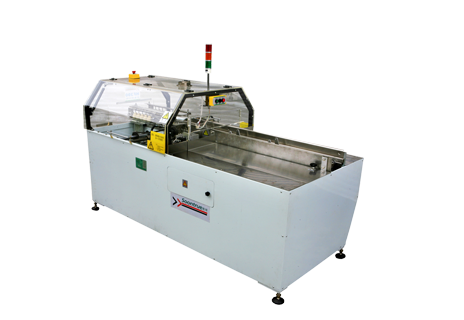
How each filler measures the powder
An auger filler rotates a flighted screw for a set number of turns, dispensing a fixed volume of powder per rotation. A volumetric cup filler uses a fixed-size cup that fills by volume and dumps into the bag; changing the dose means changing the cup. A gravimetric filler weighs the bag on a load cell as it fills, stopping the auger or cup when the target weight is reached. The first two measure volume; the third measures weight. The difference matters because powder density changes with humidity, batch and settling.
| Auger filler | Volumetric cup filler | Gravimetric filler | |
|---|---|---|---|
| Dosing principle | Fixed screw rotations | Fixed cup volume | Load-cell weight |
| Accuracy | ±0.5–1% on free-flowing powders | ±1–2%, drifts with density | ±0.1–0.2%, self-correcting |
| Speed | Medium–high | High (simple mechanism) | Lower (weighs every bag) |
| Dust | Moderate (closed auger) | High (cup dumps) | Moderate |
| Product tolerance | Non-free-flowing, sticky, fine powders | Free-flowing, granular, uniform density | Any powder, but best for high-value |
| Relative cost | Medium | Lowest | Highest |
| Changeover | Recipe change on HMI | Swap the cup (mechanical) | Recipe change on HMI |
| Best for | Spices, flour, protein, chemicals | Rice, grains, seeds, uniform granules | Expensive powders, strict net-weight |
Auger: the workhorse for non-free-flowing powders
The auger filler is the default for spices, flour, milk powder, protein powder and chemicals. It handles powders that do not flow freely — sticky, fine, compressible — because the screw forces the dose rather than letting gravity do it. It is reasonably fast, reasonably accurate, and it seals the powder inside the auger tube, which controls dust. The weakness: accuracy drifts if powder density changes between batches, and the auger and funnel have to be taken apart for cleaning between flavors or products. SunAura specifies auger fillers on most powder lines we build, paired with a pillow bagger for stand-up or pillow pouches.
Volumetric cup: cheap and fast for uniform granules
The volumetric cup filler is the simplest and cheapest dosing method. A row of cups rotates under a hopper, fills to the top, and dumps into the bag below. It is fast, it is cheap, and it has one big weakness: it measures volume, not weight. If the powder settles, or humidity changes, or the batch density shifts, every bag is off by the same percentage. Cup fillers are correct for uniform, free-flowing granules where giveaway is cheap — rice, seeds, pet food, sugar. They are wrong for expensive fine powders, where a 2% giveaway on a high-value product is real money.
Gravimetric: when giveaway is expensive
A gravimetric filler weighs each bag as it fills. The load cell tells the auger to slow down near the target and stop on weight. Accuracy is ±0.1–0.2%, and the machine self-corrects for density changes. The trade-off is speed and cost: weighing every bag slows the cycle, and the load cell, controller and precision dosing are expensive. Gravimetric earns its cost when the powder is expensive — spices, pharmaceutical powders, protein supplements — or when net-weight regulations are strict. If your product is cheap grains, gravimetric is overkill; if it is expensive powder, the giveaway saved pays for the machine in a year.
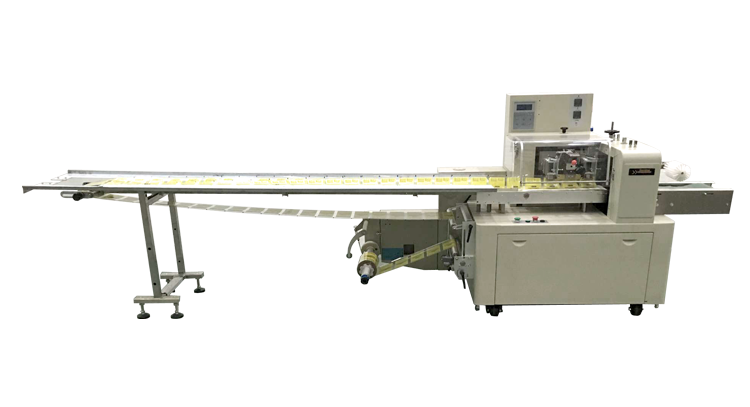
Dust: the detail that stops powder lines
Powder lines fail on dust, not on dosing. Fine powder escapes at the dosing head, coats the conveyor, and eventually causes explosions, electrical faults and housekeeping complaints. The auger head is the cleanest of the three, because the powder stays inside the tube until it drops into the bag. The volumetric cup is the dustiest, because the cup opens and dumps in the open. The gravimetric filler is as clean as the auger it drives, but the weigh hopper adds another place for powder to settle. SunAura specifies a dust extraction hood at every dosing head, and a closed conveyor between the filler and the bagger. Without extraction, even the best dosing accuracy does not matter — the line will be stopped for cleaning every shift.
Cleaning and changeover
If you run multiple powders a shift — spices in the morning, protein in the afternoon — cleaning time is your production loss. Auger fillers come apart with tri-clamp fittings; the auger, funnel and tube wash down in minutes. Cup fillers are also quick to strip. Gravimetric fillers have more parts to clean around the load cell. For a single-SKU plant, cleaning is a non-issue. For a co-packer running ten products a day, the time to strip and reassemble the dosing head is the number that decides — not the speed on the spec sheet.
Product examples: what we actually spec
Concrete cases: a spice producer in South Asia uses an auger filler with a small screw for 50g jars and a larger screw for 500g bags — the screw size matches the dose. A rice mill uses a volumetric cup filler at 30 bags a minute for 5kg bags, because rice flows uniformly and giveaway is cheap. A protein supplement brand uses a gravimetric auger filler because 500g of protein powder is expensive, and a 1% giveaway on a 100,000-bag run is real money. SunAura specifies the dosing head based on your product’s flowability, value and required accuracy — not on the spec sheet. The same bagger can take an auger, a cup or a gravimetric head; the choice is yours to make on day one, before the machine is built.
Giveaway: the cost nobody measures
Every bag you fill over target is giveaway. A 500g bag filled to 510g is 2% giveaway — on a 100,000-bag year, that is 2,000 kg of powder you gave away. At $10/kg for protein, that is $20,000 a year. A volumetric cup filler that drifts 2% on density is giving away that money every year. A gravimetric filler that holds ±0.2% saves it. Buyers price the machine once; giveaway runs every shift. When you compare quotes, ask for the expected accuracy at your target dose, and calculate the giveaway cost over five years. That number, not the machine price, is the real TCO.
What not to buy
Do not buy a volumetric cup filler for fine, expensive, non-free-flowing powders — the accuracy drift will cost you more than the machine saved. Do not buy a gravimetric filler for cheap rice or pet food; the speed loss and machine cost cannot be justified. Do not buy an auger filler without a dust extraction hood. And do not size the dosing head to the bag size without testing the actual powder — a flour that aerates differently in summer than in winter will change the dosing result. Run the actual powder through the test head before you order.
Pairing with the bagger
The dosing head and the bagger have to talk. On a pillow or pre-made pouch line, the filler drops the dose into the open bag, the bagger seals it. If the filler is slow, the bagger waits; if the bagger is slow, the filler backs up. SunAura sizes the dosing cycle to the bagger speed and programs both on one HMI. Buy the filler and bagger from one supplier, or the handoff between them becomes your integration project. A powder line with a German filler and a Chinese bagger that do not talk is the classic expensive mistake.
Washdown and food-grade design
Powder lines in food and pharma need stainless steel and washdown design. The filler hopper, auger and contact parts should be 304 or 316 stainless, with no ledges where powder can build up. Avoid painted steel and exposed fasteners inside the product zone. If your product is allergenic (nuts, dairy, gluten), the filler must strip down completely between runs — no hidden crevices. SunAura designs the dosing head for tool-free disassembly, so the operator can take it apart in minutes, not with a wrench. On a multi-allergen line, the time to strip and clean the filler is the difference between running two products a day and ten.
Testing before you order
Buyers should ask for a test run with their actual powder. A reputable supplier will run your product through a test filler and show you the accuracy, the dust level and the changeover time. Do not trust a spec sheet that promises ±0.5% on “typical powders” — every powder behaves differently. The test run is also where you see the dust extraction, the washdown design and the HMI. If a supplier refuses a test run, that is information about the supplier. SunAura runs customer powder at our workshop before FAT, and we ship the test results with the machine.
Pairing with checkweighing
Even the best dosing head needs a checkweigher downstream. The checkweigher catches the bags that drifted — a mis-timed auger, a powder bridge, a bad batch — and rejects them. On a gravimetric filler, the checkweigher confirms the dose. On a volumetric cup filler, it is the only net-weight control you have. SunAura pairs every powder line with a checkweigher that feeds back to the filler: if the checkweigher sees a trend of under-fill, the auger turns an extra half revolution. That closed loop is what holds accuracy over a 24-hour run, not the dosing head alone.
Bag and pouch compatibility
The dosing head has to match the bag. A pillow bag takes an auger drop from above. A stand-up pouch with a zipper needs a cleaner drop and often a degassing nozzle. A pre-made pouch on a rotary bagger needs the dosing head to reach into the pouch opening without spilling. A drum or bulk bag needs a bulk filler with a foot-pedal control. SunAura designs the dosing head around the bag you are sealing on your bagger — not the other way around. If you change bag types later, confirm the dosing head still reaches; a head that works on a pillow bag may not reach a stand-up pouch.
FAQ
Still choosing between auger, cup and gravimetric? The three questions that settle it: does your powder flow freely (granular vs fine sticky), how expensive is it (cheap bulk vs high-value), and how strict is your net-weight tolerance. Once those three are answered, the dosing method is usually obvious — the rest is matching the head to your bagger and speed.
Can I add gravimetric weighing to an existing auger filler?
Many auger fillers can be upgraded with a load cell under the bag clamp, turning them into semi-gravimetric fillers. This is a common and cost-effective upgrade if accuracy is the problem.
Which is fastest?
Volumetric cup is fastest on uniform granules; auger is fastest on fine powders; gravimetric is slowest because it weighs every bag.
How accurate is an auger filler really?
±0.5–1% on stable, free-flowing powders. On sticky or variable-density powders, expect 1–2% without gravimetric feedback.
Do I need explosion-proof?
For fine organic powders (flour, sugar, protein), ask about ATEX or dust-ex rated enclosures. This is a safety question, not a dosing one — but it sits on the same machine.
Summary
Auger for non-free-flowing fine powders; volumetric cup for cheap uniform granules at speed; gravimetric for expensive powders where giveaway matters. Match the dosing method to your powder’s flow, value and required accuracy. Send us your powder, bag size and speed and we will spec the dosing head that hits your target weight — and tell you if a cheaper method will do.