
Automatic Bag Palletizer
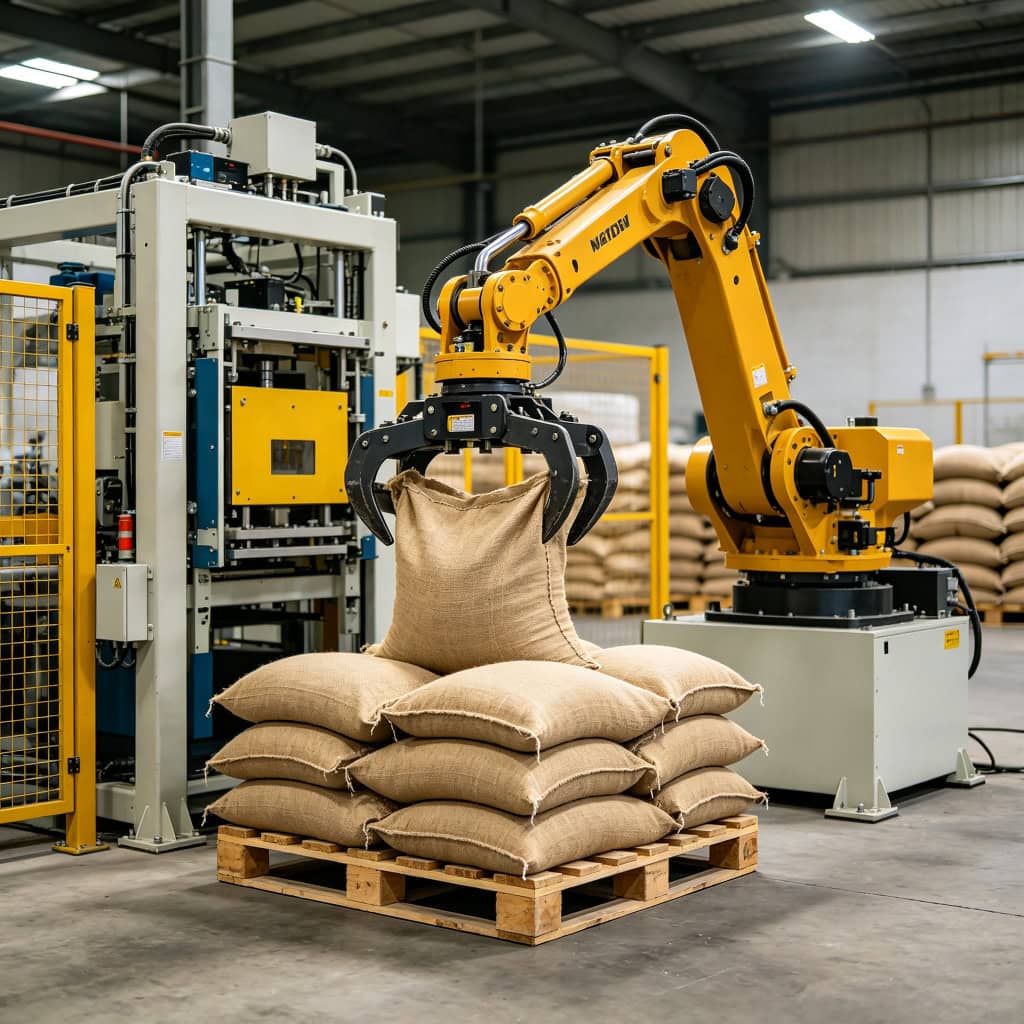
The SunAura SNA-ABP800 automatic bag palletizer handles 10–50 kg woven PP, paper, and PE bags at up to 800 bags per hour with a dust-proof, fully enclosed design. A programmable gripper head — mechanical clamp or vacuum — places each bag in a pre-programmed pattern, building stable, square stacks for cement, fertilizer, grain, and chemical powder applications.

Product Description
The SunAura SNA-ABP800 is a fully automatic bag palletizer purpose-built for open-mouth sack handling in heavy-duty industrial environments. Woven PP sacks, paper valve bags, and PE bags weighing 10–50 kg are picked from the infeed conveyor by a programmable gripper head and placed onto the pallet in a staggered interlocking pattern. The machine is fully enclosed with dust-tight panels — critical for cement, fly ash, chemical powder, and animal feed operations where airborne dust is both a safety hazard and a maintenance burden.
Two gripper configurations are available: a mechanical clamp for rigid paper and valve bags, and a vacuum cup array for soft woven PP and PE bags. The gripper rotates 90° between rows so bags lay flat and interlock on the pallet, producing a stack that wraps cleanly and survives forklift transport. Up to 20 pallet patterns are stored in the PLC, and changeover between bag types takes place from the touchscreen HMI without mechanical adjustment for standard sizes.
The SNA-ABP800 handles stacks up to 1800 mm high on standard 1200×1000 mm pallets. The frame is welded heavy-gauge steel with dust-resistant bearing seals and sealed linear guides. Every unit undergoes a full load test with customer-supplied bags before shipment. CE-compliant guarding and interlocked access doors come standard.
Technical Specifications
| Model | SNA-ABP800 Automatic Bag Palletizer |
|---|---|
| Capacity | Up to 800 bags / hour |
| Bag Weight Range | 10 – 50 kg per bag |
| Bag Types | Woven PP, paper valve, PE laminated, open-mouth sacks |
| Gripper Type | Mechanical clamp or vacuum cup array (selectable at order) |
| Pallet Patterns | Programmable, up to 20 recipes stored in PLC |
| Max Stack Height | 1800 mm (on pallet, including pallet) |
| Pallet Size | 1200 × 1000 mm (Eur), customizable |
| Power Supply | 380 V, 3-phase, 50 / 60 Hz (factory-set to order) |
| Dust Protection | Fully enclosed dust-proof design, sealed bearings and linear guides |
| Control | PLC + color touchscreen HMI, recipe storage |
| Certification | CE Certified, ISO 9001 factory |
Key Features & Benefits
- Handles 10–50 kg bags across all sack types: Woven PP, paper, and PE bags are all within the gripper’s reach — no separate machine for different bag materials.
- Dust-proof enclosed design: Sealed panels, dust-tight bearings, and covered linear guides keep cement, powder, and chemical dust out of the drive train — essential for long service life in dusty environments.
- Mechanical clamp or vacuum gripper: Choose the gripper best matched to your bag type. Clamp grips rigid paper and valve bags; vacuum handles soft woven PP without tearing.
- 20 programmable pallet patterns: Staggered, interlocking, and brick patterns stored as recipes. Rotate 90° between rows for maximum stack stability on uneven loads.
- Up to 800 bags/hour: Matches the discharge rate of most bagging machines — no upstream bottleneck when bags are automatically palletized.
- Heavy-duty welded frame: Built for 24/7 operation in cement, fertilizer, and grain facilities. Welded steel construction resists vibration and impact over millions of cycles.
- Automatic bag singulation: Separates bags from the infeed conveyor at a controlled pitch so the gripper always picks one bag cleanly.
- CE-compliant enclosed guarding: Interlocked access doors and safety switches prevent operator entry during operation — meets European machinery safety standards for dusty industrial environments.
Application Industries
Cement Plants
50 kg cement and mortar bags in woven PP or paper sacks — dust-proof construction protects the machine from cement dust contamination.
Fertilizer Factories
NPK, urea, compound fertilizer, and lime in woven PP bags — high dust resistance and heavy-duty frame suit continuous bagging lines.
Grain Mills
Flour, rice, sugar, and animal feed in paper or woven PP sacks — gentle gripper handling prevents bag rupture and product loss.
Chemical Powder
Plastic resin, washing powder, pigments, and mineral powders in sealed bags — enclosed design prevents product escape and cross-contamination.
Animal Feed
Poultry feed, pet food, and livestock feed in 20–40 kg woven bags — handles high-volume bagging lines in feed mills and grain co-ops.
Mining & Minerals
Limestone powder, gypsum, talc, and sand bags — robust construction tolerates abrasive, dusty materials around the bagging station.
Load compatibility: Open-mouth and valve bags weighing 10–50 kg in woven PP, paper, or PE. For rigid cases or cartons, see our High-Level or Low-Level Case Palletizer. For very heavy bags over 50 kg, see our Heavy-Duty Robotic Palletizer 180kg.
How Automatic Bag Palletizing Works
Bag palletizing uses a pick-and-place gripper that lifts each sack from the infeed conveyor and lays it onto the pallet in a programmed pattern. On the SNA-ABP800, the cycle runs automatically as bags arrive from the bagging machine:
- Bags arrive on the infeed conveyor. The upstream bagging machine fills, seals, and drops bags onto the inclined infeed conveyor, which feeds them into the singulation station.
- Bag singulation. A timing screw or lug separator spaces bags at a controlled pitch so the gripper always picks one bag at a time without collision.
- Gripper picks the bag. The mechanical clamp closes on the bag’s top edge, or the vacuum array seals to the bag surface. Sensors confirm a secure grip before lifting.
- Bag rotates and places on pallet. The gripper rotates 90° (per recipe) and lowers the bag onto the pallet in the programmed position. Bags are placed flat, not on edge, for stack stability.
- Layer builds and repeat. Bags are placed row by row across the pallet. When the layer is complete, the lift descends by one bag thickness and the next layer begins. The cycle repeats to 1800 mm stack height.
Is This the Right Bag Palletizer for You?
The SNA-ABP800 is the right fit if your operation matches all four of the following. If you fall outside any of them, our team can recommend a different SunAura model:
- Bags, not cases or cartons: This machine handles open-mouth and valve sacks. If your product ships in corrugated cases, see our Case Palletizers instead.
- Throughput under 800 bags/hour: At 800 bags/hour, this matches most single-bagging-machine lines. If you run two bagging machines in parallel, consider our Heavy-Duty Robotic Palletizer for dual-line feeding.
- Dusty or powdery product: The dust-proof enclosure is designed for cement, powder, and granular products. If your product is dry and clean (e.g., dry grain), the dust protection is still beneficial for machine longevity.
- Bag weights 10–50 kg: The gripper and frame are rated for this range. Bags over 50 kg (e.g., bulk sacks) require a robotic palletizer with higher payload.
Troubleshooting Guide — Common Issues & Solutions
Bag palletizers in dusty industrial environments face unique challenges — dust ingress, bag slippage, and pattern misplacement are the most common. Below are the issues our service team diagnoses most often. Always lock out energy sources before servicing the gripper or infeed.
| Problem | Possible Causes | Solutions |
|---|---|---|
| Bag slips or drops from gripper mid-cycle | Gripper pressure too low; vacuum cups worn; bag surface dusty or wet; bag seal weak. |
|
| Stack leans or collapses | Bag pattern not interlocked; bags placed too far apart; pallet warped; bag fill uneven. |
|
| Gripper does not pick up bag | Bag not centered under gripper; singulation pitch off; bag too thin for clamp; vacuum generator weak. |
|
| Dust accumulation inside machine | Enclosure seals worn; exhaust fan not cycling; infeed boot missing; cleaning schedule missed. |
|
| Bag placed crooked on pallet | Gripper rotation off; bag twisted at pickup; placement position drift; encoder lost. |
|
| Machine stops with “pallet full” alarm too early | Stack height sensor misaligned; pallet not seated; recipe layer count wrong. |
|
If the issue persists after trying these steps, email photos and a short 10-second video of the problem to [email protected] — our engineers usually diagnose the root cause within one business day.
Frequently Asked Questions
What bag types can this palletizer handle?
It handles woven PP sacks, paper valve bags, PE laminated bags, and open-mouth bags weighing 10–50 kg. The gripper configuration is selected at order time: mechanical clamp for rigid paper and valve bags, vacuum cup array for soft woven PP and PE. We recommend sending sample bags to our factory for gripper selection testing.
How many bags per hour in real operation?
Rated capacity is up to 800 bags/hour. Actual output depends on bag size, pattern complexity, and how fast your bagging machine delivers. Most single-bagger lines run 400–600 bags/hour in production. We match the palletizer speed to your bagging machine during design.
Is the dust-proof design really necessary?
Yes, for cement, powder, and chemical applications. Unsealed palletizers in dusty environments experience bearing failure, guide rail wear, and electrical contact issues within 12–18 months. The SNA-ABP800’s sealed design and enclosed panels extend service life to 5+ years before major overhaul.
Can it handle 50 kg cement bags reliably?
Yes. The heavy-duty welded frame and mechanical gripper are rated for 50 kg bags at full cycle rate. The gripper clamp pressure is field-adjustable. Every unit is load-tested at our factory with customer-supplied bags before shipment.
How does changeover work between different bag sizes?
Pallet patterns are stored as recipes on the HMI. Select the new bag recipe and the gripper placement positions update automatically. Mechanical guide adjustment is only needed if the new bag size differs by more than 50 mm in width or length.
What is the lead time for a bag palletizer?
Standard models ship in 30–45 days from Qingdao. Custom gripper configurations (vacuum vs. clamp) add 5–7 days. We provide a factory acceptance test video before shipment so you can see the machine running on your bags.
Why Buy From SunAura Machinery
48,000㎡ Own Factory
In-house manufacturing in Qingdao, China — no middlemen, no trader markup.
CE Certified
All machines meet European safety standards with full documentation.
ISO 9001:2015
Quality management system certified across the entire production process.
SGS Audited Factory
Third-party audited manufacturing facility with 20+ national patents.
12-Month Warranty
Full warranty covering parts and labor from the date of shipment.
Lifetime Support
Technical guidance via email, WhatsApp, and remote video for the machine’s life.
Spare Parts in 48h
Genuine parts shipped worldwide via DHL/FedEx within 48 hours.
100+ Countries Served
Trusted by packaging lines across cement, fertilizer, grain, and chemicals.
Get a Factory-Direct Quote in 24 Hours
Tell us your bag type, bag weight, and bagging machine output — our engineers reply with a model recommendation, FOB price, and lead time within one business day. Every machine is built in our 48,000㎡ Qingdao factory, CE & ISO 9001 certified.
Email [email protected]Related Palletizers
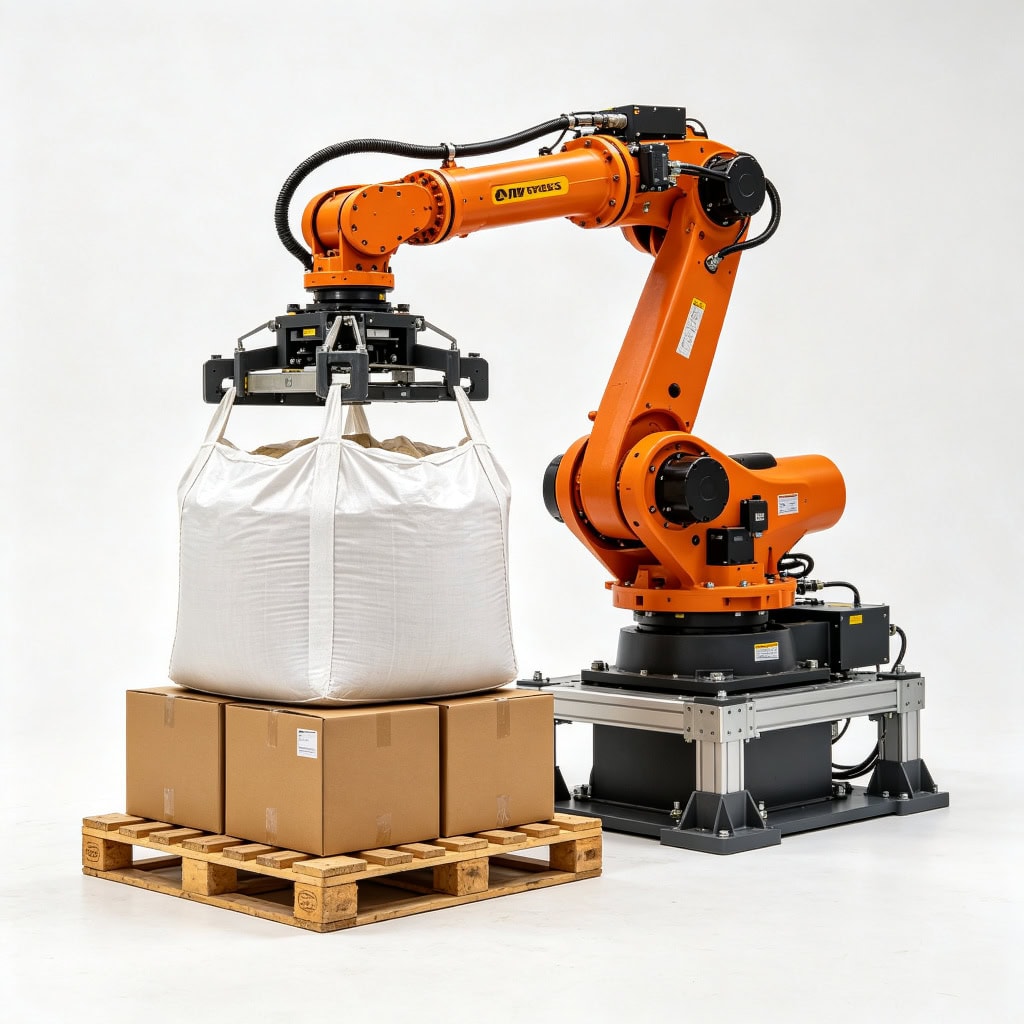
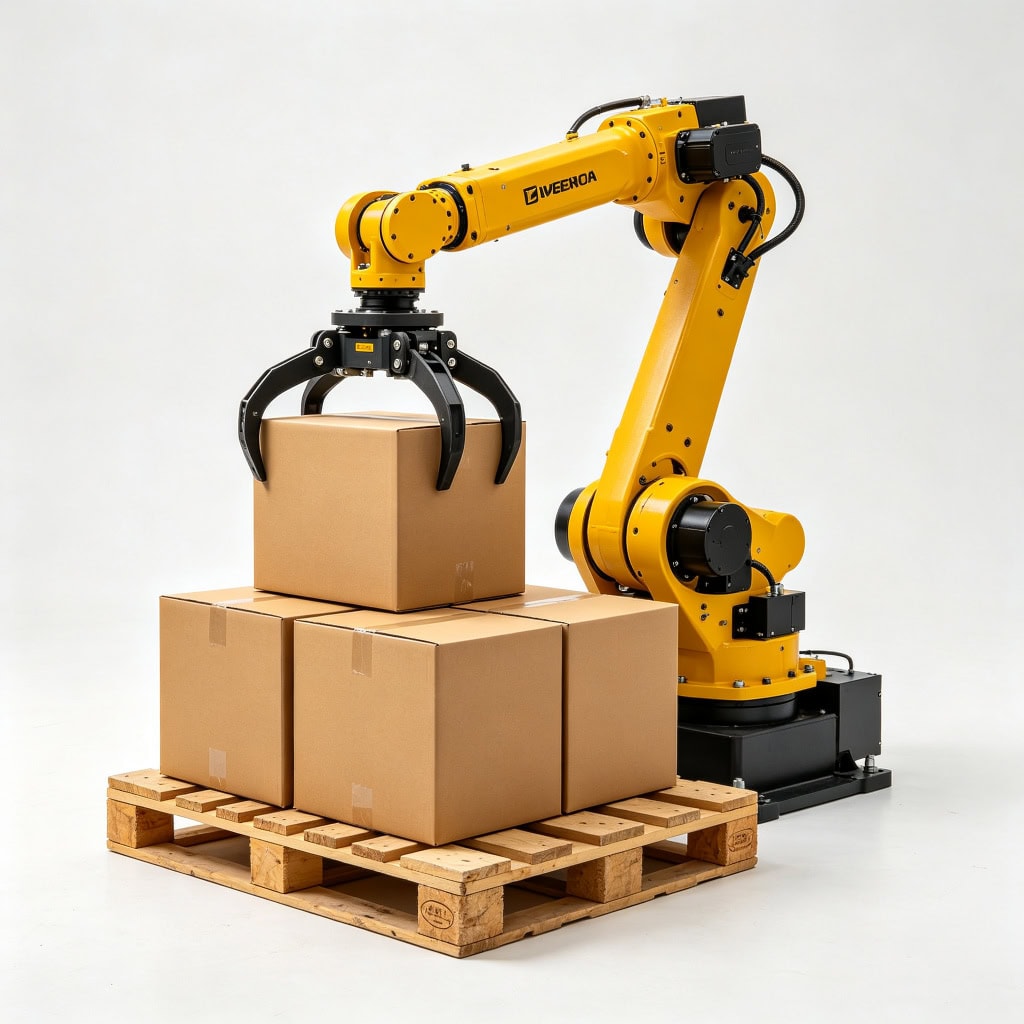
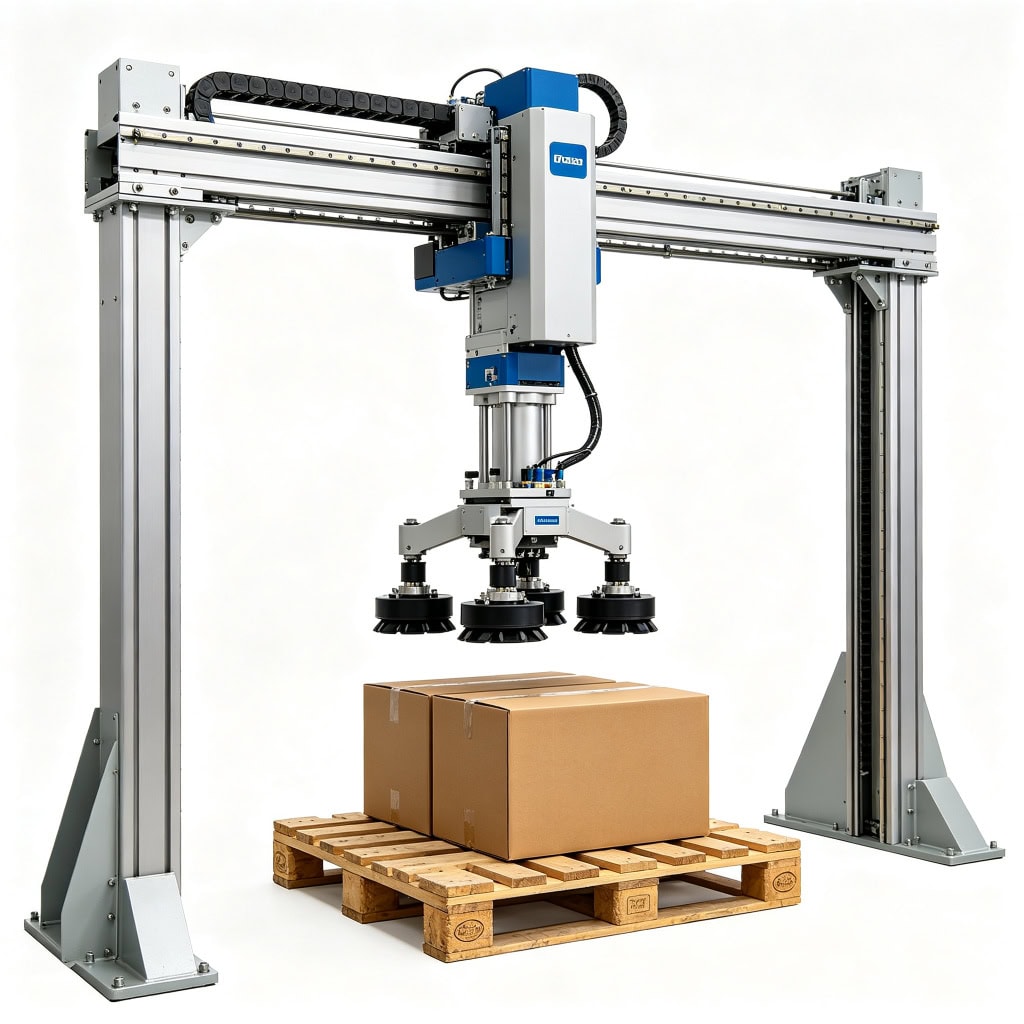
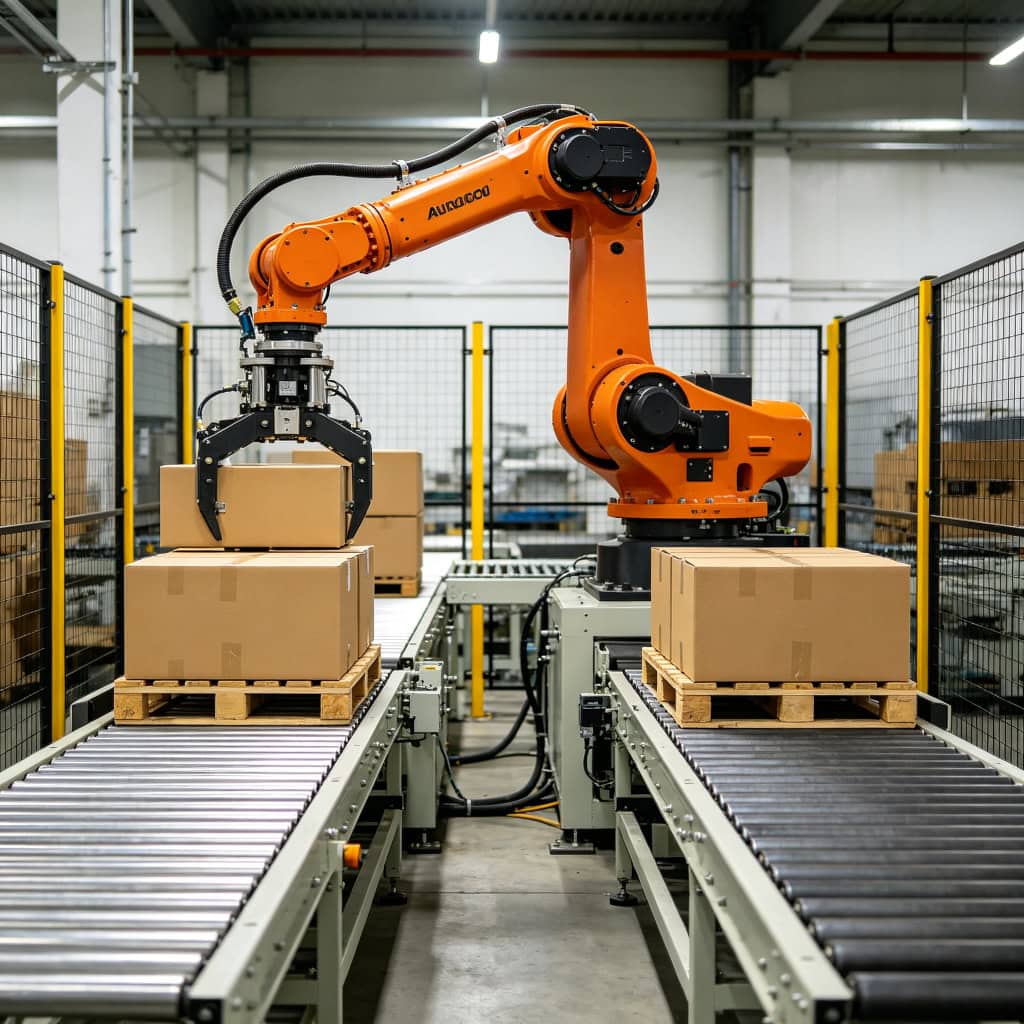
Browse the full range on the palletizers landing page. Also explore our high-level layer palletizers and low-level case palletizers to build a complete end-of-line solution.