Filling Nozzle Selection: Bottom-Up Dive vs Top-Fill vs Overflow Nozzles for Foaming, Viscous and Narrow-Neck Products
Most buyers spend their time comparing the dosing technology on a filling line and treat the nozzle at the end as a detail the supplier will sort out. That is usually the wrong order of attention. The metering system can be perfectly accurate and the line can still make a mess: foam creeping over the neck and contaminating the threads, a viscous product stringing and dripping onto the bottle shoulder, a thin liquid splashing against the bottom, or a nozzle that simply will not clear a narrow opening. The nozzle is where the measured dose actually meets the container, and choosing the wrong one turns an otherwise capable filler into a line of rejects, torque problems and label contamination. This guide compares the three nozzle configurations buyers actually decide between — bottom-up dive nozzles, top-fill nozzles and overflow nozzles — and explains where each one earns its place and where it creates more problems than it solves.
At SunAura Machinery we specify filling nozzles as part of the complete filling, capping and sealing line rather than as an afterthought, and the honest framing is that the nozzle is a product-specific component. There is no universal head that handles a foaming detergent, a thick paste and a free-flowing spirit equally well. The right choice is set by the product’s foaming behavior and viscosity, the bottle’s neck diameter and fill height, the target speed, and whether the container needs a precise visual level or a precise net weight. Treating nozzle selection as a procurement decision in its own right, rather than a line item on the quotation, is how experienced engineers avoid a long commissioning period.
Why the Nozzle Controls More Than You Think
The nozzle does three jobs at once. It directs the stream so the product lands inside the container without splashing or contacting the neck threads, it manages the cut-off at the end of the fill so nothing drips onto the bottle, and it shapes how the liquid behaves as the container fills — whether air is entrained into the product and whether foam builds. A nozzle that performs the first job well but fails the second will leave a film of product on the rim, which then prevents the cap from sealing correctly, contaminates the induction foil or pressure-sensitive liner, and grows into a quality and leakage problem. A nozzle that fills accurately but entrains air will generate foam that rises into the neck, forcing the operator to slow the line or accept under-filled bottles. The reason nozzle selection matters is that these failures happen downstream of the actual measurement, so they are invisible on a fill-volume report and only show up on the running line.

Bottom-Up Dive Nozzles: Filling From Below the Surface
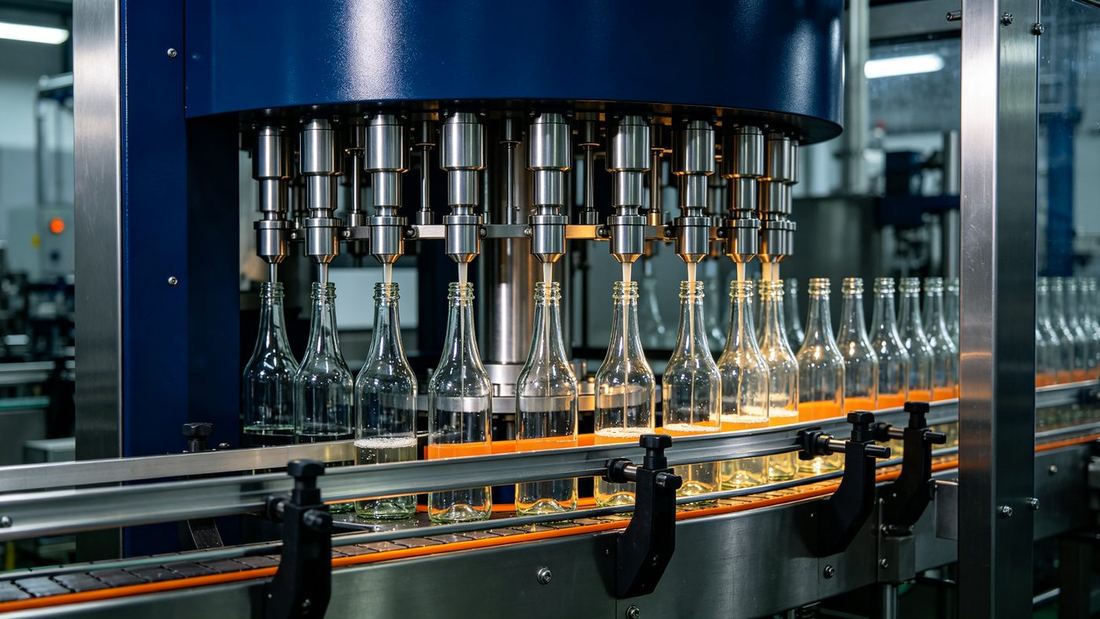
A bottom-up or dive nozzle is mounted on a mechanism that lowers the tip close to the bottom of the empty container, starts the fill, and then rises in a controlled profile as the liquid level climbs, keeping the tip just below the surface. Filling under the surface means the product is not falling through air, so it does not entrain air and does not generate the foam that a falling stream creates. This is the configuration to reach for first when the product foams, when the liquid is viscous and would otherwise splash or fold in air, or when the bottle has a narrow neck that leaves little room for a turbulent stream. The submerged fill also keeps the product away from the neck threads, which matters for any container that depends on a clean rim for capping or induction sealing. Dive nozzles are commonly paired with a suck-back function that reverses the flow at the end of the stroke to pull the last product back into the tip, preventing stringing and dripping on thick or sticky products.
The trade-off is mechanical and in speed. The nozzle has to travel, so the machine needs a lifting axis and the timing of the rise has to be tuned to the product and the fill height, which adds a setup parameter and a changeover step. The dive profile must be matched to the bottle geometry, and very short or very wide containers can make the travel awkward. Bottom-up filling is also slower than a fixed top-fill head because the nozzle motion adds cycle time. The configuration is justified when foam, viscosity or neck clearance would otherwise cause defects; it is unnecessary cost and complexity for a thin, non-foaming liquid that fills cleanly from above.
Top-Fill Nozzles: Simple, Fast, Above the Surface
A top-fill nozzle is fixed above the container and delivers the product in a falling stream from a set height, with no travel axis. It is the simplest and fastest configuration, with fewer moving parts, less to clean and the quickest changeover, and it is the correct default for free-flowing, non-foaming or low-foaming liquids that tolerate a short fall — spirits, water, many thin household chemicals and similar products. Because there is no dive mechanism, a top-fill head can run at high speed and index bottles quickly, and it is forgiving across a range of bottle heights as long as the stream is aimed correctly. It is the lowest-cost option and the easiest to maintain, which is why it appears on so many standard fillers.
The limitation is exactly what the dive nozzle solves. A falling stream entrains air, so foaming products will build a head that rises into the neck, and a long drop will splash thin liquids against the bottle wall and onto the shoulder. Viscous or stringy products do not cut cleanly from a fixed tip, so they drip and thread unless the nozzle has a strong suck-back and a properly sized orifice. Top-fill heads also need adequate vertical clearance between the tip and the liquid, and a bottle that fills close to the rim leaves little margin. The simple head is a strong choice when the product genuinely cooperates; forcing it onto a foaming or thick product is a classic under-specification that surfaces only during production.
Overflow Nozzles: Filling to a Visual Level
An overflow nozzle works on a different principle suited to rigid containers that must show a consistent fill level rather than a precise net weight. The nozzle seals against the bottle mouth and fills the container until the liquid reaches a calibrated return port, at which point excess product is drawn back through the overflow channel to the supply tank, so every bottle ends up at the same visual height regardless of small variations in the bottle’s internal volume. This is the standard configuration for glass bottles and clear containers where the consumer sees the fill line, and it handles foaming thin liquids well because the foam and excess product are carried away through the return rather than left on the rim. Overflow filling gives a clean, repeatable cosmetic level and is widely used for beverages, sauces and personal-care products in transparent packaging.
The important boundary is that overflow is a level-fill, not a weight-fill. Because the bottle is filled to a port and the excess returns, the actual net content varies with the container’s internal volume, so it is not the right choice where a precise net weight is the controlling specification or where lightweight, inconsistent bottles would produce giveaway. The return path also means product is recirculated, which has to be managed for hygiene and for any product that does not tolerate being returned to the tank. Overflow nozzles seal against the mouth, so the neck finish has to be compatible, and the configuration is generally aimed at thin to medium liquids rather than thick pastes that will not flow freely through the return.
Orifice Size, Cut-Off and Suck-Back: The Details That Decide the Result
Beyond the three configurations, a handful of nozzle details determine whether the line actually runs. The orifice diameter is sized to the product: a thin liquid uses a smaller opening for a clean cut-off, while a viscous product or one with soft particles needs a larger bore to avoid pressure build-up and shearing. A nozzle that is too small for a thick product will cause slow fills, dripping and excessive force; one that is too large for a thin liquid will not cut cleanly and will leave drops on the bottle. The cut-off at the end of the fill is equally important, and most heads address it with a suck-back or vacuum-back function that pulls the trailing product away from the tip. For sticky, stringy products a positive shut-off valve at the nozzle, combined with a dive profile, is often the difference between a clean rim and a contaminated one.
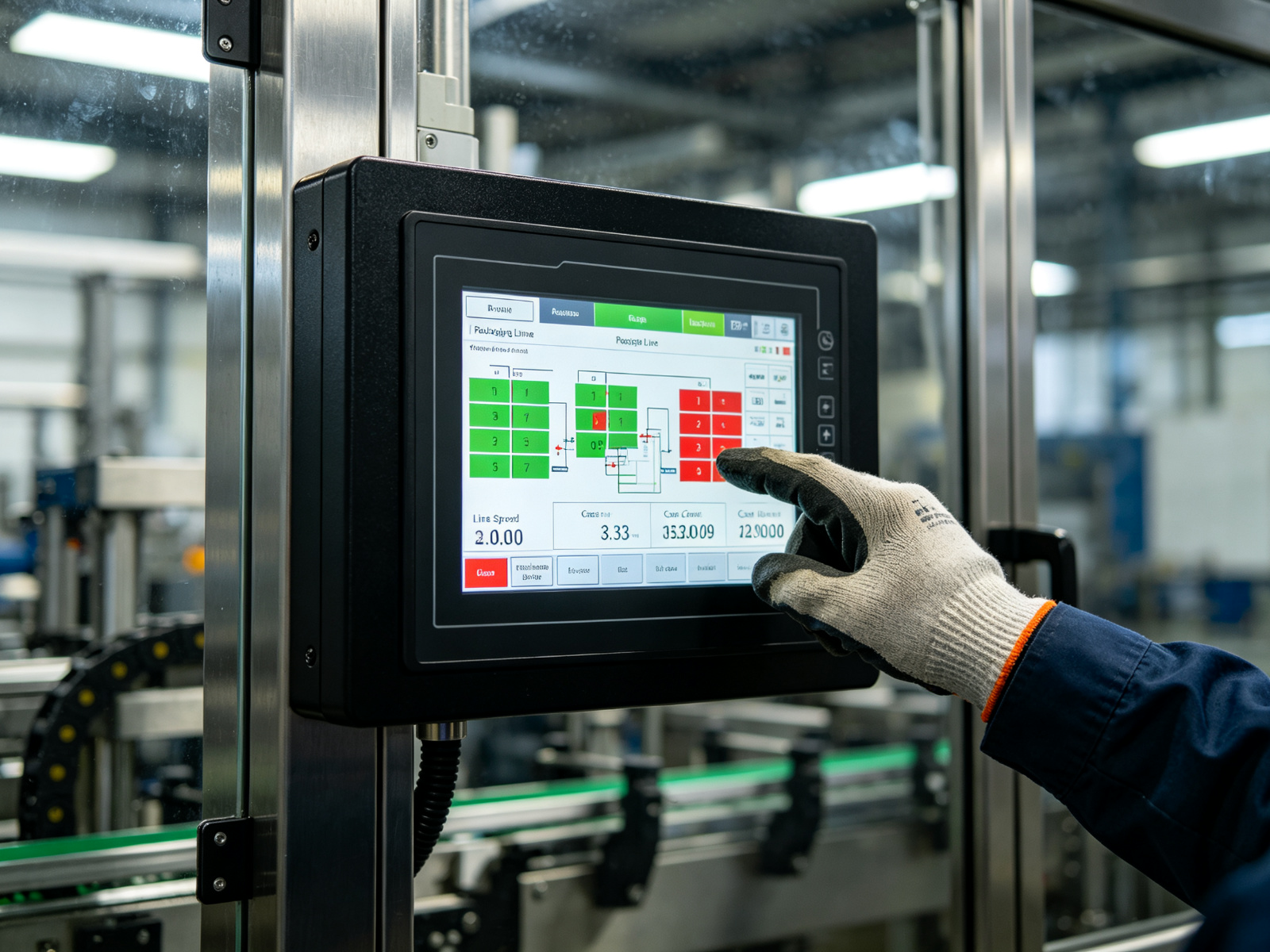
These details have to be confirmed against the real product rather than a generic specification, which is why a reliable supplier tests the actual liquid on the actual container. The nozzle also has to be specified as part of a coherent sequence with the equipment around it. The liquid filling machines and their nozzle arrays only deliver clean seals when the containers are presented consistently and then handed to the automatic bottle capping equipment, while the labeling line has to run on bottles whose shoulders are free of product. For heavier free-flowing products dosed by weight, the multihead weighing equipment sets the portion that the downstream packaging then protects.
Selection Table: The Three Nozzle Configurations Compared
| Dimension | Bottom-up dive nozzle | Top-fill nozzle | Overflow nozzle |
|---|---|---|---|
| Fill principle | Tip rises under the surface | Fixed head, falling stream | Fill to a return port, excess recirculates |
| Foaming products | Strong; no air entrainment | Weak; foam rises to neck | Good; foam carried away |
| Viscous / stringy | Strong with suck-back | Needs strong shut-off, can drip | Limited; needs free flow |
| Control target | Net weight / volume | Net weight / volume | Consistent visual level |
| Relative speed | Lower; nozzle travels | Highest; fixed head | Moderate; return cycle |
| Price / complexity | Higher; lift axis and tuning | Lowest; simplest head | Moderate; return plumbing |
| Changeover difficulty | Moderate; profile per bottle | Low; aim and height only | Moderate; neck seal and port |
| Maintenance burden | Lift axis, seals, valve | Minimal; few moving parts | Return channel, seals, hygiene |
| Typical industries | Chemicals, sauces, foaming goods, pharma | Spirits, water, thin chemicals | Beverages, glass, clear-packaged goods |
When Not to Choose Each Nozzle
Do not specify a bottom-up dive nozzle for a simple, thin, non-foaming product running at high speed, because the travelling axis adds cost and cycle time for a problem the product does not have; the fixed top-fill head is faster and cheaper when the liquid cooperates. Conversely, do not assume a top-fill nozzle is adequate for a foaming detergent, a viscous paste or a narrow-neck bottle, because the falling stream will foam, splash or drip into the threads and the savings on the head will be paid back in rejects, slowed production and sealing failures. Do not use an overflow nozzle where a precise net weight is the legal or commercial specification, or on inconsistent lightweight bottles where level-fill creates giveaway, and do not recirculate a product through the return path if it cannot hygienically tolerate being returned to the tank. Finally, do not treat the nozzle as generic across the whole portfolio: a plant that runs both foaming and free-flowing products often needs more than one head or a modular filler, and specifying a single configuration for every SKU is a procurement shortcut that fails on the floor.
Cost, Risk and the Procurement Decision
The nozzle itself looks like a small part of the budget, but its cost of ownership runs through the whole line. A cheap fixed head applied to the wrong product generates foam-related under-fills, contaminated rims that fail capping and sealing, and product loss from dripping, all of which are recurring rather than one-off. The higher cost of a dive or overflow configuration is justified when it removes those defects and allows the line to run at its rated speed. When evaluating suppliers, ask for the engineering detail rather than accepting a generic head: the orifice size and shut-off for each product, whether the nozzle seals against the specific neck, the achievable speed with the dive profile, and how the per-product settings are stored and recalled. A supplier who tests the actual liquid and container and documents the nozzle configuration is buying down commissioning risk; a supplier who assumes one head covers every product is pushing that risk onto the buyer.
Frequently Asked Questions
Which nozzle stops a product from foaming during filling?
A bottom-up dive nozzle is the most reliable answer because it fills below the surface without a falling stream, so it does not entrain air. For thin foaming liquids in rigid bottles, an overflow nozzle also works by carrying the foam and excess product away through the return port. A fixed top-fill head is the weak option for foam because the falling stream aerates the product.
Can a top-fill nozzle handle a thick or sticky product?
Only with a correctly sized orifice, a positive shut-off and a strong suck-back, and even then it is a compromise. Thick and stringy products are better served by a dive nozzle that keeps the tip below the surface and pulls the trailing product back at cut-off, which prevents dripping and thread contamination.
Why does an overflow filler give the same level but not the same weight?
Because it fills to a calibrated return port and recirculates the excess, so the controlling variable is the visual height in the bottle. Small differences in the container’s internal volume therefore produce different net weights. Overflow is the right choice for level-sensitive clear packaging, while a dive or top-fill head is used where net weight is the specification.
Do I need a different nozzle for every bottle I run?
Not necessarily a different configuration, but the orifice, dive height and shut-off often have to be tuned to the product and neck, and those settings are stored as recipes. Products that differ sharply in viscosity or foaming may genuinely require different heads, which is why a modular filler is worth evaluating for a broad SKU range.
Summary: Match the Nozzle to the Product and the Bottle
Choose a bottom-up dive nozzle for foaming, viscous or narrow-neck products where keeping the tip below the surface and applying suck-back prevents air entrainment, splashing and dripping, accepting the slower cycle and the extra axis. Choose a top-fill nozzle for free-flowing, non-foaming liquids where speed and simplicity matter and the product tolerates a short fall, and keep it off foaming and thick products. Choose an overflow nozzle for rigid, clear containers that demand a consistent visual level, and avoid it where a precise net weight is required. The correct nozzle is the one matched to the real foaming behavior, viscosity, neck geometry and control target, and getting it specified up front is far cheaper than fixing rejects on a running line.
The nozzle decision sits alongside the other choices on the line. If you are deciding how the product is moved before it reaches the head, see how to choose between peristaltic, gear and magnetic pump filling, and for products packed in single-serve flexible formats, compare stick packs, sachets and pillow bags. If you want the nozzle and head selected against your real products, bottles and speeds rather than a generic configuration, send us your samples and pack list and we will confirm the setup, line speed and compatibility — contact SunAura Machinery to start the review.