
No. Metal collapsible tubes are mechanically crimped, not welded. Use a tail crimper.
Is ultrasonic sealing quieter than heat-jaw?
The high-frequency whistle needs a sound cover, but overall it is comparable. Specify an acoustic guard for operator comfort.
Summary
Ultrasonic for laminate ABL/PBL tubes in cosmetics and pharma; heat-jaw for simple PE tubes on budget lines; mechanical crimping for metal collapsible tubes. Match the sealer to the tube material, not the other way around. Specify the denester, filler, coder, vacuum option and outfeed in the same line order to avoid integration surprises. Send us your tube type, diameter and speed and we will spec the right tube sealing section — and tell you if a cheaper option will do.
Sources
Technical ranges referenced: Ultrasonic Food & Consumer Packaging sealing application notes (Herrmann Ultrasonics, Weber Ultrasonics); Norden and Axomatic heat-jaw tube sealer product pages; Kalix and Norden cosmetic tube filling line literature; PMMI ProSource tube sealer buyer directory. The Bangkok cosmetics configuration is this project’s own. Speed ranges and reject figures are industry estimates.
Related reading
- Horizontal vs vertical cartoner for confectionery
- Air rinse vs water rinse bottle washer buying guide
Typically 1–3 years of production before re-plating. It is a wear part; keep a spare.
Do metal tubes need ultrasonic sealing?
No. Metal collapsible tubes are mechanically crimped, not welded. Use a tail crimper.
Is ultrasonic sealing quieter than heat-jaw?
The high-frequency whistle needs a sound cover, but overall it is comparable. Specify an acoustic guard for operator comfort.
Summary
Ultrasonic for laminate ABL/PBL tubes in cosmetics and pharma; heat-jaw for simple PE tubes on budget lines; mechanical crimping for metal collapsible tubes. Match the sealer to the tube material, not the other way around. Specify the denester, filler, coder, vacuum option and outfeed in the same line order to avoid integration surprises. Send us your tube type, diameter and speed and we will spec the right tube sealing section — and tell you if a cheaper option will do.
Sources
Technical ranges referenced: Ultrasonic Food & Consumer Packaging sealing application notes (Herrmann Ultrasonics, Weber Ultrasonics); Norden and Axomatic heat-jaw tube sealer product pages; Kalix and Norden cosmetic tube filling line literature; PMMI ProSource tube sealer buyer directory. The Bangkok cosmetics configuration is this project’s own. Speed ranges and reject figures are industry estimates.
Related reading
- Horizontal vs vertical cartoner for confectionery
- Air rinse vs water rinse bottle washer buying guide
On an ultrasonic machine, yes — change the parameter recipe. On a heat-jaw machine, you may need different jaw temperatures. Test both tube types before buying.
How long does the ultrasonic sonotrode last?
Typically 1–3 years of production before re-plating. It is a wear part; keep a spare.
Do metal tubes need ultrasonic sealing?
No. Metal collapsible tubes are mechanically crimped, not welded. Use a tail crimper.
Is ultrasonic sealing quieter than heat-jaw?
The high-frequency whistle needs a sound cover, but overall it is comparable. Specify an acoustic guard for operator comfort.
Summary
Ultrasonic for laminate ABL/PBL tubes in cosmetics and pharma; heat-jaw for simple PE tubes on budget lines; mechanical crimping for metal collapsible tubes. Match the sealer to the tube material, not the other way around. Specify the denester, filler, coder, vacuum option and outfeed in the same line order to avoid integration surprises. Send us your tube type, diameter and speed and we will spec the right tube sealing section — and tell you if a cheaper option will do.
Sources
Technical ranges referenced: Ultrasonic Food & Consumer Packaging sealing application notes (Herrmann Ultrasonics, Weber Ultrasonics); Norden and Axomatic heat-jaw tube sealer product pages; Kalix and Norden cosmetic tube filling line literature; PMMI ProSource tube sealer buyer directory. The Bangkok cosmetics configuration is this project’s own. Speed ranges and reject figures are industry estimates.
Related reading
- Horizontal vs vertical cartoner for confectionery
- Air rinse vs water rinse bottle washer buying guide
SunAura Machinery Specifies an Ultrasonic Tube Sealer for a Bangkok Cosmetics Co-Packer: Why Ultrasonic Beat Heat-Jaw Sealing for Laminate Cosmetic Tubes
A cosmetics co-packer in Bangkok came to us with a problem that sounds small until your line stops: their existing tube sealer was burning the seam on laminate toothpaste and skincare tubes, leaving melted plastic on the jaw and seams that split open when customers squeezed the tube. They asked us to compare two ways to seal the bottom of a cosmetic tube: heat-jaw sealing and ultrasonic sealing. We specified ultrasonic. This article explains why — and when heat-jaw sealing is still the correct, cheaper choice.
How each tube sealer works
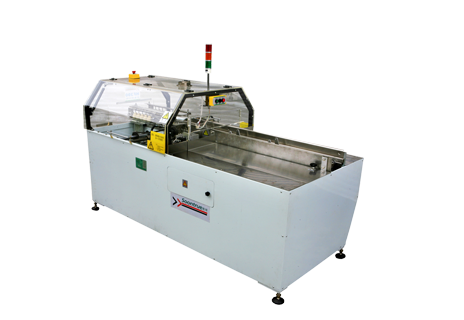
A heat-jaw (hot-jaw) tube sealer grips the filled tube between two heated platens, melts the inner plastic layer, and crimps the seam with vertical or horizontal ribs. It has been the standard for plastic tubes for 40 years. An ultrasonic tube sealer grips the tube between a stationary anvil and a vibrating sonotrode running at 20–40 kHz; the high-frequency vibration heats the plastic internally by molecular friction, melting it without external heat. The two machines look similar on the outfeed but work on different physics, and they suit different tube materials.
| Ultrasonic sealer | Heat-jaw sealer | |
|---|---|---|
| Best tube material | Laminate (ABL/PBL), barrier tubes | Polyethylene plastic tubes, simple mono-material |
| Seal quality | Cold seam, no burn, clean | Can burn or thin on thick laminate |
| Speed | 40–120 tubes/min | 30–80 tubes/min |
| Energy use | High-frequency, short burst | Continuous platen heat |
| Warm-up time | None | 10–20 min |
| Maintenance | Sonotrode and anvil wear, clean | Platens wear, replace covers |
| Relative cost | Higher | Lower |
| Best for | Cosmetics, pharma, premium laminate | Simple PE tubes, low-cost lines |
Why ultrasonic won in Bangkok
The product was ABL (aluminum barrier laminate) tubes for toothpaste and skincare — tubes with a thin aluminum layer between plastic outer layers. Heat-jaw sealing on ABL tubes is finicky: the outer plastic melts before the inner layer flows, the aluminum does not melt, and the seam burns or delaminates. The Bangkok co-packer was getting 2–3% rejected seams from the old heat-jaw machine. The ultrasonic sealer vibrates the plastic molecules together without heating the outside, so the ABL seam comes out flat, clean and cold. We paired it with a linear piston filler for the viscous cream and a tube coding station that prints batch numbers before sealing. Rejected seams dropped below 0.5%.
When heat-jaw sealing is still the right call
Heat-jaw sealing is not obsolete. If your tubes are simple polyethylene (PE) mono-material tubes — the inexpensive tubes used for hand cream, caulk, or budget cosmetics — the heat-jaw sealer is cheaper, faster to maintain, and does the job perfectly. PE melts cleanly between heated platens, and the vertical crimp ribs look the part. For a low-cost tube line running 30 tubes a minute on PE tubes, an ultrasonic sealer is a 2x over-spec. SunAura still ships heat-jaw sealers for PE tube lines where the product and budget fit. We do not push ultrasonic on a customer who does not need it.
What ultrasonic sealing cannot do
Ultrasonic works by vibrating the plastic; it does not seal metal tubes. Metal (aluminum collapsible) tubes are crimped with a mechanical tail crimper, not sealed at all. It also struggles with very soft or foamy products that squeeze out of the tube end during sealing — the product residue between the layers prevents a clean weld. If your tube is metal, use a tail crimper. If your product is foamy, add a vacuum or air evacuation step before sealing. And if your tubes are very large (over 50mm diameter), the sonotrode has to be longer and the machine gets expensive — at that point a heat-jaw sealer may be the more practical choice.
Tube type: ABL, PBL, and PE — what changes
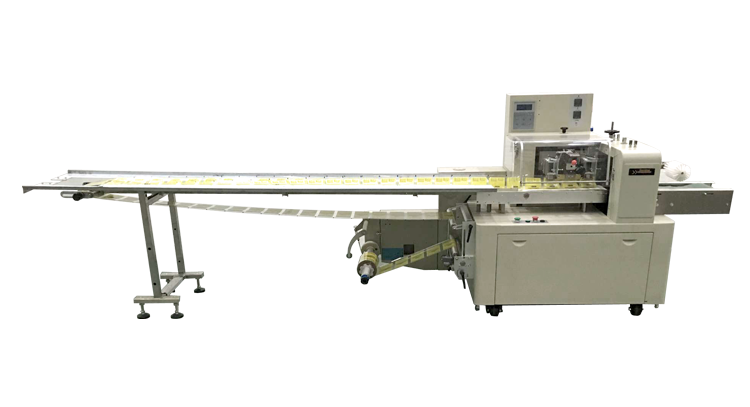
ABL (aluminum barrier laminate) tubes have an aluminum layer for oxygen and light barrier; they are used for premium skincare and toothpaste. PBL (plastic barrier laminate) tubes use an EVOH plastic layer instead of aluminum; they are more recyclable but harder to seal. PE mono-material tubes are simple, cheap, and used for budget products. The sealer has to match the tube: ultrasonic handles ABL and PBL cleanly; heat-jaw handles PE. When you buy tubes from a supplier, ask which sealer the tube is designed for. Sealing a PBL tube on a heat-jaw sealer without testing is a common and expensive mistake — the EVOH layer does not melt like PE, and the seam fails in the field.
Seal geometry: vertical ribs, horizontal ribs, butterfly
The crimp pattern on the sealed tail is both functional and brand. Vertical ribs are the standard; horizontal ribs lock the seam against squeezing; butterfly (elliptical) patterns are used on premium tubes. The sealer head determines the pattern. Changing pattern means changing the anvil. For a cosmetics line, the seal pattern is part of the brand look, so specify it at quote time. SunAura stocks common anvil patterns and can cut custom anvils for premium brands.
Warm-up, cleaning and operator handling
Heat-jaw sealers need 10–20 minutes to warm up in the morning; that is lost production on a one-shift plant. Ultrasonic sealers seal on the first tube. Both need cleaning between product runs, because product residue on the jaws causes weak seams. For a food-grade or pharma line, specify stainless covers and quick-release jaws so cleaning takes minutes, not an hour. And both need a tube denester or pre-feeder: running tubes by hand on a high-speed sealer is a two-operator job.
Tube filling and sealing integration
The sealer is only one station on a tube line. The full section includes: a tube denester (which picks tubes from a magazine and presents them neck-up), a filling nozzle that descends into the tube and fills from the bottom up to avoid entrapped air, a coding or printing station that marks the batch number on the sealed tail, the sealer itself, and a take-off conveyor. For cosmetic creams and toothpaste, the filler is a piston filler for viscous product. For thin lotions, a volumetric pump filler works. If you buy only the sealer, you still need the rest of the line. SunAura builds the whole tube section as one integrated frame, so the tubes move from denester to outfeed without handoff issues.
Vacuum and product entrapment
Viscous creams and gels trap air when filled into tubes. If that air is not removed, the tube gurgles when the customer squeezes it, and product can push out during sealing. Premium tube lines add a vacuum sealing station: the sonotrode or jaw pulls a vacuum on the tube before sealing, removing the air and giving a flat, clean seam. For toothpaste and premium skincare, vacuum sealing is expected. For budget hand cream, it is optional. Specify it at quote time — retrofitting vacuum to an existing sealer is not practical.
Tube denesting and orientation
Tubes arrive from the supplier in bulk or in stacked nests. A denester picks one tube at a time and presents it neck-up to the filler. On a high-speed line, a bulk hopper with a vibratory bowl or a vacuum pick-and-place denester handles the tubes; on a low-speed line, an operator loads a magazine. Tubes also have to be oriented — the crimp seam on the tail has to line up with the sealing anvil. A photo-eye detects the seam and rotates the tube to the correct position. Buying the sealer without the denester and orienter means an operator standing at the machine all day. Specify them at quote time.
Tube materials trend: recyclable mono-material
Brand owners are moving away from ABL laminate (which contains aluminum and is hard to recycle) toward PBL (plastic barrier laminate) and mono-PE tubes. PBL uses an EVOH barrier layer instead of aluminum; mono-PE tubes are fully recyclable. The sealing challenge: EVOH does not melt like PE, and mono-PE needs a controlled heat profile. Ultrasonic sealing handles PBL cleanly, because it vibrates the plastic layers together without burning the EVOH. Heat-jaw sealing on PBL needs a precise temperature profile and often fails in the field. If your brand has a recyclable-tube target, ultrasonic is the future-proof choice.
What not to buy
Do not buy a heat-jaw sealer for ABL or PBL laminate tubes — you will burn seams. Do not buy an ultrasonic sealer for simple PE tubes at low speed — it is 2x the price you do not need. Do not buy the sealer without the tube filler, coding and outfeed. And do not forget the tube cap tightening step: tubes need their caps checked before they go on the shelf. SunAura quotes the whole tube line — denester, filler, coder, sealer, outfeed — as one integrated section.
Budgeting the tube line
An ultrasonic tube sealer costs roughly 50–100% more than a heat-jaw sealer on the machine price, but it pays back on seam rejects. A cosmetics line with 3% rejected seams on ABL tubes loses product, rework and customer trust; the ultrasonic sealer pays for itself in a year on reject reduction alone. For a PE tube line at low speed, the heat-jaw sealer’s lower price wins. Ask for the whole-line cost, including the denester, filler, coder and outfeed — the sealer is the last 20% of the section.
FAQ
Can I switch between ABL and PE tubes on one sealer?
On an ultrasonic machine, yes — change the parameter recipe. On a heat-jaw machine, you may need different jaw temperatures. Test both tube types before buying.
How long does the ultrasonic sonotrode last?
Typically 1–3 years of production before re-plating. It is a wear part; keep a spare.
Do metal tubes need ultrasonic sealing?
No. Metal collapsible tubes are mechanically crimped, not welded. Use a tail crimper.
Is ultrasonic sealing quieter than heat-jaw?
The high-frequency whistle needs a sound cover, but overall it is comparable. Specify an acoustic guard for operator comfort.
Summary
Ultrasonic for laminate ABL/PBL tubes in cosmetics and pharma; heat-jaw for simple PE tubes on budget lines; mechanical crimping for metal collapsible tubes. Match the sealer to the tube material, not the other way around. Specify the denester, filler, coder, vacuum option and outfeed in the same line order to avoid integration surprises. Send us your tube type, diameter and speed and we will spec the right tube sealing section — and tell you if a cheaper option will do.
Sources
Technical ranges referenced: Ultrasonic Food & Consumer Packaging sealing application notes (Herrmann Ultrasonics, Weber Ultrasonics); Norden and Axomatic heat-jaw tube sealer product pages; Kalix and Norden cosmetic tube filling line literature; PMMI ProSource tube sealer buyer directory. The Bangkok cosmetics configuration is this project’s own. Speed ranges and reject figures are industry estimates.
Related reading
- Horizontal vs vertical cartoner for confectionery
- Air rinse vs water rinse bottle washer buying guide