
October 20, 2026 | by Ethan, SunAura Machinery Applications Engineering
A multihead weigher is almost always sold on the strength of its accuracy, but in a real line the accuracy is only as good as the integration around it. The same 18-head machine can run at 90 weighments per minute with giveaway near zero on one install, and at 45 weighments with constant underweight rejects on the line next door — not because of a difference in the load cells, but because of how the product arrives, how the buckets discharge, and how the bagger is timed. The companion multihead weighers selection guide covers head count and accuracy; this guide covers the integration that makes those numbers real: the upstream feed, the combination and discharge timing, the transition into the bag or wrapper, the downstream takeaway, and the way the whole line is balanced. If you are specifying a weighing-packing line, the decisions below decide whether the rated machine speed ever becomes the actual shift output.
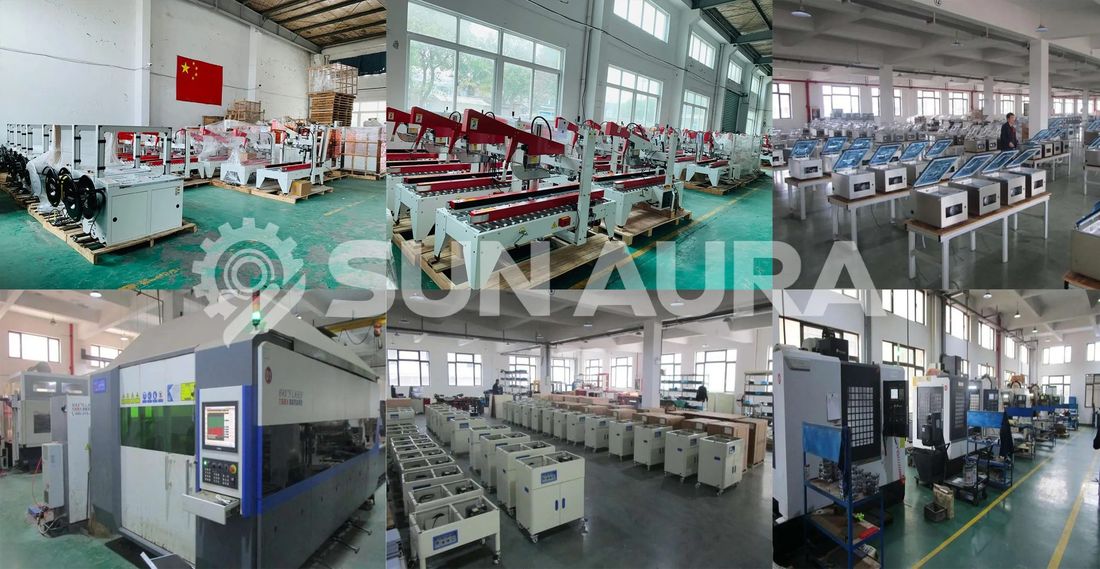
How a Multihead Weigher Actually Works
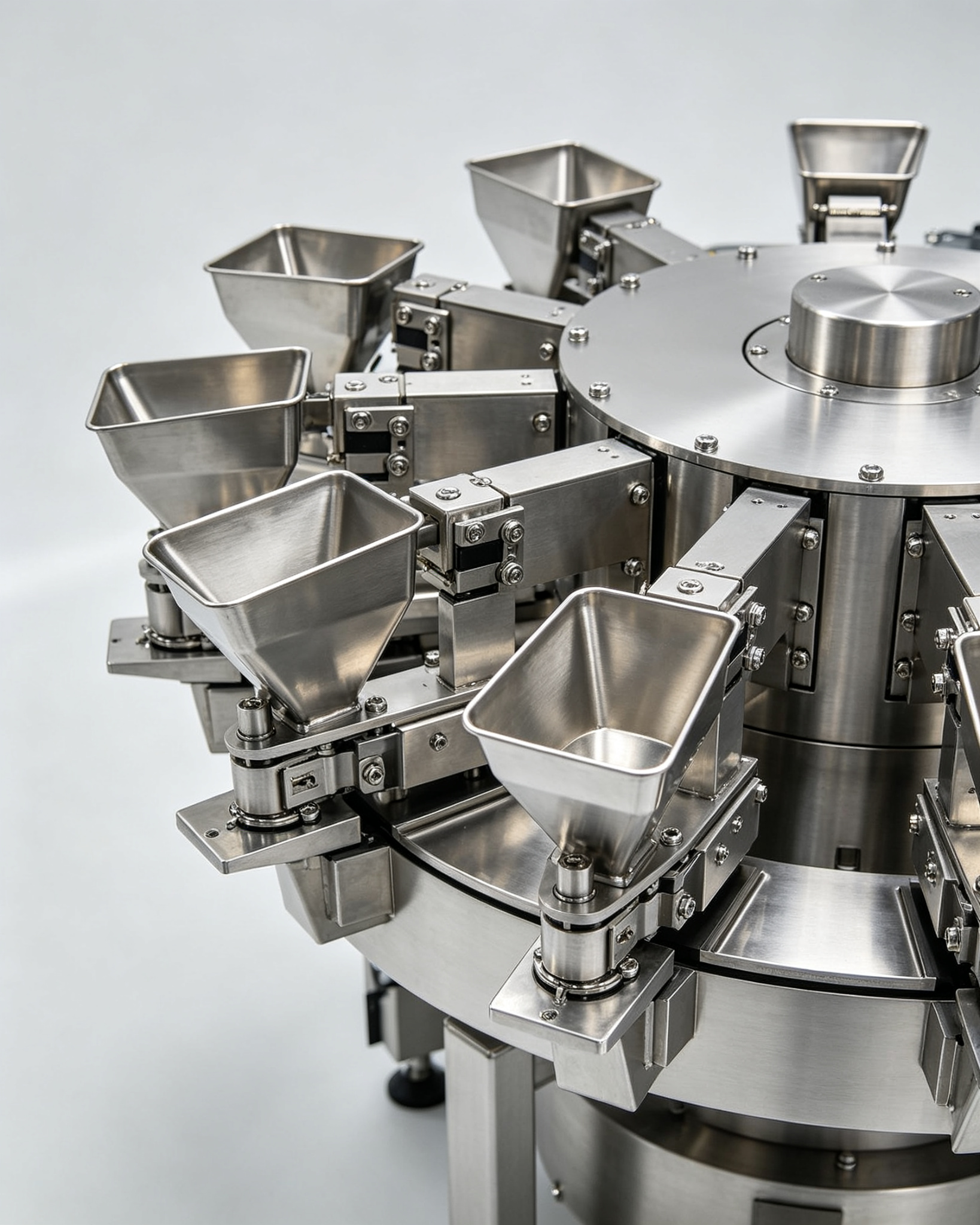
Understanding the integration starts with the machine’s internal logic. Product is distributed from a top dispersion feeder into a ring of feed pans, which drop into a ring of weigh buckets, often with a set of booster or memory buckets below them. Every weigh bucket sits on a load cell that reads its contents. The controller looks across all buckets and selects the combination that most closely matches the target weight, fires those buckets into the discharge chute, and re-fills them. The “multihead” advantage is combinatorial: with 18 heads there are so many possible combinations that the target can be met far more precisely than a single linear scale, and the standard model in the range is the 18-head multihead weigher used for most snack, confectionery, frozen and hardware applications.
Two consequences follow. First, the machine needs a steady, even supply of product to the top pan; starve it and the combination options shrink, which raises both giveaway and rejects. Second, accuracy is decided in milliseconds: the feed pans must fill the buckets to a consistent small fraction of the target, the buckets must settle and be read before the next combination, and the discharge must land in the bag without waiting. These are integration problems, not load-cell problems.
The Upstream Feed: Where Most Lines Fail
The most common underperforming weigher is the one that is being fed inconsistently. Product typically arrives by a Z-shaped bucket elevator, a vertical belt, or a vibratory infeed from a bulk hopper, and the feed must be sized so that the top dispersion pan is always covered but never flooded. A pan that runs dry forces the controller to wait for product; a pan that is overloaded delivers buckets that are too heavy and cannot combine down to the target, so the line overfills or rejects. For sticky or fragile products the feed geometry is adjusted to avoid accumulation and breakage; for frozen or wet products such as shrimp, the feed and the contact surfaces must be wash-down and designed to shed moisture.
- Bulk supply rate: set the elevator or hopper to feed slightly faster than the weigher’s net rate, so the pan always has product, and use the machine’s level sensors to slow and start the feed rather than running it flat out.
- Dispersion pan amplitude: tune vibration so the feed pans fill the buckets to a controlled fraction (often a quarter to a third of the target per bucket), which maximizes the combination options.
- Fragile-product handling: minimize drop heights and use lined or timed buckets; product breakage on the way into the weigher is paid for as both waste and giveaway.
Discharge Timing: The Combination Has to Meet the Bag
Once a combination is selected, the buckets open and the weighed product must reach the package as a single, compact slug rather than a scattered stream. This is the integration point that buyers underestimate. The discharge chute, the timing tube, and the bagger cycle have to be synchronized so that every weighment lands in the bag while the bag is open and the wrapper is at the correct point in its cycle. If the weigher fires faster than the bagger, weighments queue or jam; if it fires slower, the bagger waits and the rated speed is never reached.
For a vertical form-fill-seal line, the weigher, the former and the cross-seal jaw are clocked together: the controller drops the product into the tube after the seal, and the jaw closes after the product has passed. For a horizontal flow wrapper, the weigher normally discharges into a timing bucket or a short belt that places the portion into the flight of the wrapper at the right moment, as on the high-speed servo pillow packaging machine lines. A long, angled chute or a straight long drop increases the spread of the product, so the discharge should be as short and vertical as possible, with a timing hopper when the product is fast or fragile. These choices are central to the pillow packaging machines that take the weigher’s output.
Head Count, Speed and Accuracy Together
Head count, target weight and product form determine the achievable speed and giveaway. Small target weights with many small pieces allow the controller to combine many buckets and run very fast and accurately; large target weights or large pieces (whole rolls, large bags of frozen pieces, heavy hardware) fill a greater proportion of each bucket and reduce the combination count, so the same machine runs slower. The practical way to compare machines is not the headline weighments per minute but the achievable weighments at a specified accuracy on the actual product, and that figure is always obtained by running the real product on a machine. The table below is the general relationship.
| Target / product | Head effect | Speed vs accuracy trade-off |
|---|---|---|
| Small target, many pieces (snacks, nuts) | Many small buckets, high combinations | Very high speed, giveaway near zero |
| Medium target, mixed pieces | Standard 18-head suits most | Balanced; tune feed to target |
| Large pieces / heavy bags | Each bucket is a larger fraction | Slower; larger buckets needed |
| Sticky / wet (frozen, fresh, coated) | Lined buckets, slower feed | Lower speed, breakage control |
| Free-flowing hard goods | Standard buckets, high throughput | Fast; mainly abrasion concern |
Line Balancing: The Weigher Is a Station, Not the Line
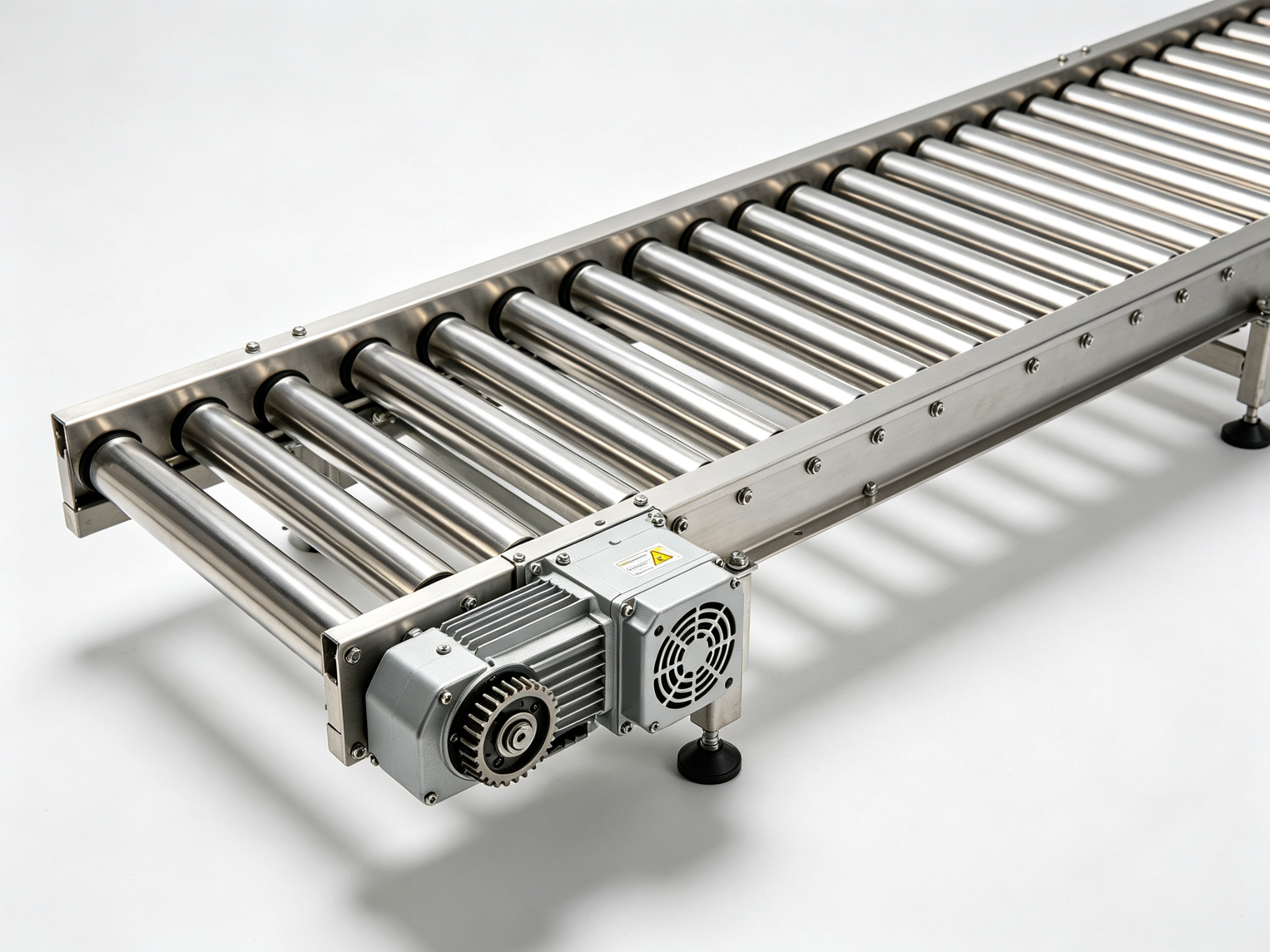
The weigher will not set the line speed by itself; the packaging machine, the takeaway conveyor and the inspection stations all have to keep up. The downstream handling after the bag is sealed usually runs on conveyor systems, and the speed matching follows the same rule as any automated line: each station must be able to absorb the station ahead, with an accumulation buffer so that a short stoppage at metal detection or case packing does not stop the weigher. When the weigher and wrapper are not clocked together, operators typically slow the whole line to the speed of the slowest, least predictable station, which is why a machine with a high rated speed can still deliver a low actual output.
Calibration, Giveaway and the Cost of Accuracy
A weigher is a metering device and has to be calibrated and verified. Load cells can drift with temperature, with residue building up on the buckets and with mechanical wear, and the line should have a routine verification against a known weight plus a documented checkweigher downstream that catches the rare bad pack. Giveaway is a direct cost: on a 500-gram bag at 40 million units a year, an average of 0.3% overfill is roughly 60 tonnes of free product, which dwarfs the price difference between a poorly and a well-integrated line. Running the machine slightly above the declared net weight to be safe is a common habit, but the correct approach is to center the distribution tightly around the legal target and prove it with the checkweigher, which is why the weighing, discharge and inspection stations are specified together rather than separately.
Controls, Recipes and Data Between the Stations
A modern multihead weigher runs from a recipe that records, for each product, the target weight, the feed-pan amplitude, the bucket fill fraction, the discharge timing, the timing-hopper delay and the hand-shake signal to the packaging machine. On a multi-SKU line this is the difference between a ten-minute changeover and a two-hour guessing session: the operator selects the product, the feed and discharge parameters load together, and the first few weighments are checked against the checkweigher before the line runs. When the weigher, wrapper and downstream conveyor are supplied as one integrated package, these recipes are configured and tested at the factory; when they are bought separately, the integration work is often left to the plant and is the point at which projects stall.
The data that matters is the same data that proves accuracy to a customer: the weighment distribution, the average overfill, the reject count and the reasons for rejects. A well-integrated line makes the weigher and the checkweigher agree, so the weight trend is one number rather than two, and a drifting load cell or a worn feed pan shows up as a shift in the distribution before it becomes a batch of underweight packs. For plants that operate against declared-weight regulations, recording this data and keeping it traceable to the batch is now part of the customer’s audit expectation, not an optional extra. The control system should therefore be specified with the line in mind, with the interface to the bagger and the takeaway conveyor defined before the order is placed and with the recipe set validated during commissioning.
Integration Mistakes That Recur
- Buying the weigher and the bagger separately. The two must share a clock; bought independently, the interface and timing often fall through the gap, and the line never reaches its rated speed.
- Feeding the top pan from a starved hopper. A dry pan destroys combinations. Use level sensors and a controlled feed, not a flat-out elevator.
- Long or angled discharge chutes. The product spreads and arrives late. Use a short vertical drop and a timing hopper for fast or fragile products.
- No downstream accumulation. Every downstream stoppage becomes a full line stop; add a buffer on the takeaway.
- Never testing the real product. Sticky, frozen, oily or fragile products change the feed and timing; insist on a machine trial with the actual product and bags.
- Ignoring cleanability. In food, seafood and frozen plants, the weigher must strip and wash down quickly; the contact surfaces and bucket design should be chosen for that.
Frequently Asked Questions
Why is my multihead weigher running far below its rated speed?
Usually the feed is inconsistent, the product is not being discharged into the bag on time, or the bagger is slower than the weigher. Check the top pan coverage, the per-bucket fill fraction, and the clock signal between the weigher and the packaging machine; the load cells are rarely the cause.
Do I need a timing hopper between the weigher and the bag?
For fast, fine or fragile products, a timing hopper collects the selected combination and releases it as a single slug at the bagger’s cycle, which improves both speed and gentle handling. For slower, coarse products a straight chute may be enough. It is decided from the product’s fall time and the bagger speed.
Can a multihead weigher handle frozen or wet products?
Yes, with a wash-down build and suitable buckets, slower feed and moisture control. The same integration logic applies to a seafood line, as shown in the commissioning of a vacuum-packaging line for a Vietnamese seafood exporter where the weigher portions IQF shrimp before vacuum sealing.
How do I confirm the machine will meet my accuracy?
Run the real product at the target weight on the proposed machine and record the distribution and the giveaway at the speed you need; then size the downstream conveyors and dock handling to match. A brochure figure without a product trial is not a guarantee.
Next Step
A weighing-packing line is an integrated system: the bulk feed and dispersion feeders, the combination logic, the discharge and timing hopper, the form-fill or flow-wrap machine, the takeaway conveyor and the inspection stations have to be specified as one clocked line. Send the SunAura Machinery team the product, target weight, bag type and target packs per minute, and we will recommend the head count, feed and discharge arrangement, and confirm the accuracy with a product trial. Contact us with your product data and bag specifications for a line layout and quotation.