Air-Cooled vs Water-Cooled Induction Sealing: Why an Export Bottler Kept Two Different Cooling Systems Across Its Lines
The bottler ran two plants and a simple assumption: the newer air-cooled induction sealers would replace every water-cooled unit on the floor, because eliminating chillers looked like an obvious maintenance saving. The assumption held for the high-speed supplement and beverage lines in a temperature-controlled workshop, and it failed completely at the second plant, where large jars ran through a hot, humid room with agrochemical dust in the air and the air-cooled heads began to overheat and pull contaminants into the electronics. The decision the engineering team faced is the one every packer meets when specifying induction sealing: the cooling method is not a generation marker where the newer technology always wins, but a choice set by the ambient conditions, duty cycle, container size and operating environment. This article turns that decision into a selection guide comparing air-cooled and water-cooled induction sealing, where each one earns its place, and why standardising on a single system across different plants is a quietly expensive mistake.
At SunAura Machinery we supply the induction sealing equipment and the integrated filling and capping lines around it, and the honest framing is that both cooling systems perform the same core process. A filled and capped container passes under a sealing head, an electromagnetic field heats the aluminum foil inside the liner, and the heat activates a sealing layer that bonds to the container mouth, forming a hermetic, tamper-evident barrier. What differs is how the machine removes the heat that the coil and power supply generate during continuous operation. Treat that as a facilities decision rather than a styling choice, and the correct system follows from the real plant conditions rather than from whichever technology is being marketed as the modern standard.
How Each Cooling System Works
An air-cooled sealer uses high-efficiency fans and optimized heat sinks to move ambient air across the coil and power electronics, dissipating the heat without any liquid circuit. The arrangement is self-contained: no chiller, no hoses, no water supply and no risk of a coolant leak near the packaging line. A water-cooled sealer circulates treated water through the induction coil and power supply, usually from an external chiller on a closed loop, and the liquid carries the heat away with a far higher heat-transfer coefficient than air. The water circuit is highly effective at holding the sealing head at a stable temperature, but it introduces a chiller, plumbing, a pump and a maintenance routine to control mineral buildup and biological growth. The two systems are therefore not just different machines; they assume different things about the surrounding facility, the maintenance team and the operating environment.
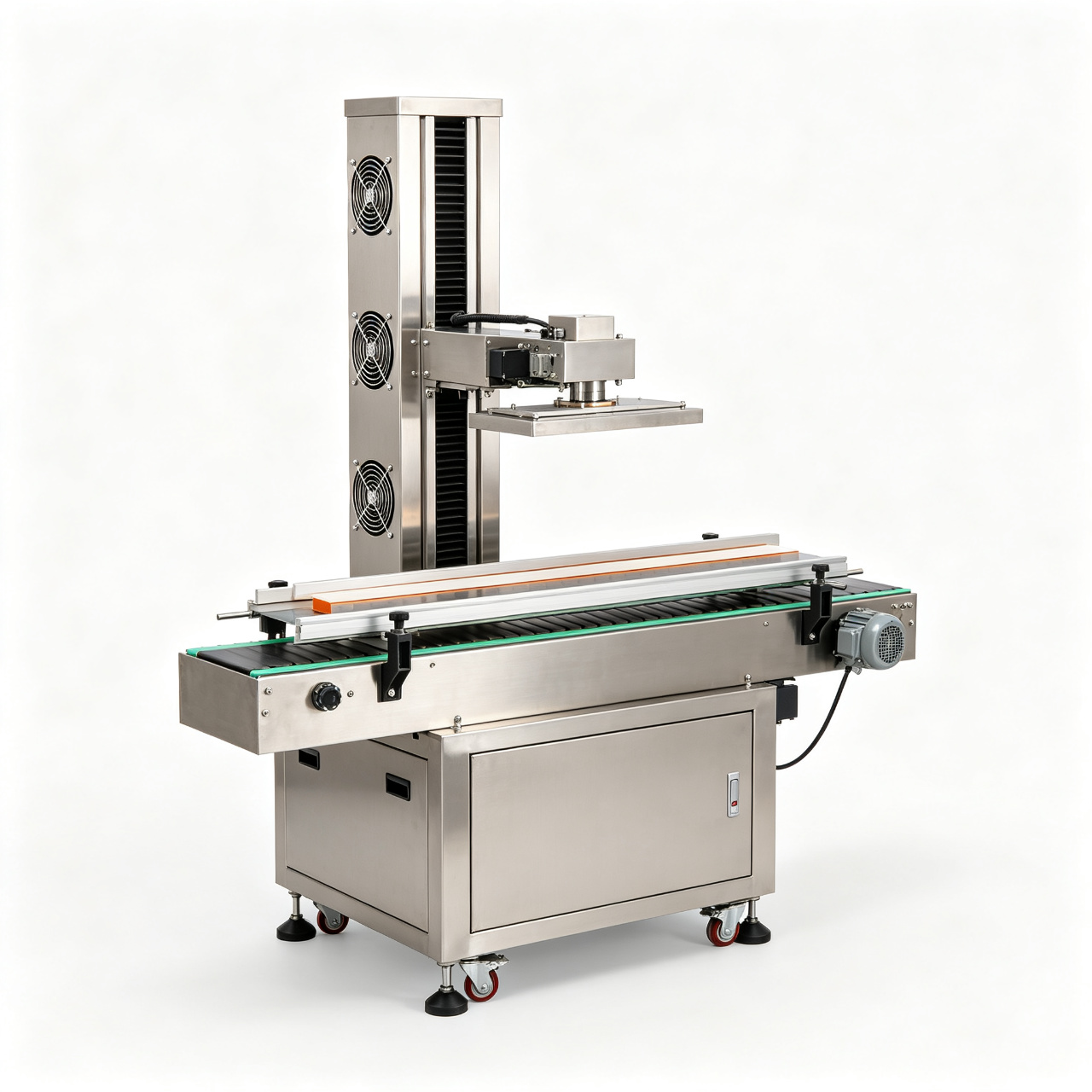
Where Air Cooling Wins: Compact, Low-Maintenance and Dry
Air cooling is the practical default for the majority of modern packaging lines, and its advantages are structural rather than cosmetic. With no chiller or water circuit, the machine has a smaller footprint and a simpler installation, and there is no coolant to monitor, no filter to change and no risk of a water leak onto the line. Maintenance is reduced to keeping the fans and heat sinks clean and the air path clear, which suits plants that do not want a separate cooling-water utility. In a temperature-controlled workshop running typical containers, well-designed air-cooled units can sustain continuous operation at high output, and published industry accounts place them as the fit for the large majority of pharmaceutical, food and chemical lines. The boundary is set by the surrounding air. Cooling efficiency depends on ambient temperature, so in a hot, poorly ventilated room the fans cannot remove enough heat and the head temperature rises, and because the fans draw plant air through the machine, corrosive or dusty vapors can be pulled onto the electronics. A fan failure is also a direct threat to the sealing head, which is why spare filters and fans belong on the stocking list.
Where Water Cooling Earns Its Cost: Stable Heat in Hard Conditions
Water cooling is not an obsolete legacy, and the cases where it is the correct choice follow directly from the limits of air. The closed liquid circuit holds the sealing head at a near-constant temperature regardless of the ambient room, which matters in a hot plant, in sustained high-duty operation and on large container diameters that demand high power. Because the coil is cooled by a sealed loop rather than by drawing plant air, the system is better isolated from corrosive and dusty atmospheres, and the sealed arrangement is preferred in controlled and cleanroom environments where moving large volumes of plant air through electronics is undesirable. The cost is real and has to be counted: the chiller, the plumbing and floor space, the pump and the ongoing maintenance of water quality, plus the leak risk that a dry machine simply does not have. Specifying water cooling for a normal line in a controlled room therefore pays for a utility the process never needs, while specifying air cooling in a hot, corrosive or extreme-duty plant is the genuine mismatch, producing overheating, shortened component life and inconsistent seals. The bottler’s two plants illustrate the split precisely: the controlled high-speed line ran air-cooled, and the hot, dusty large-jar plant kept the water-cooled units.
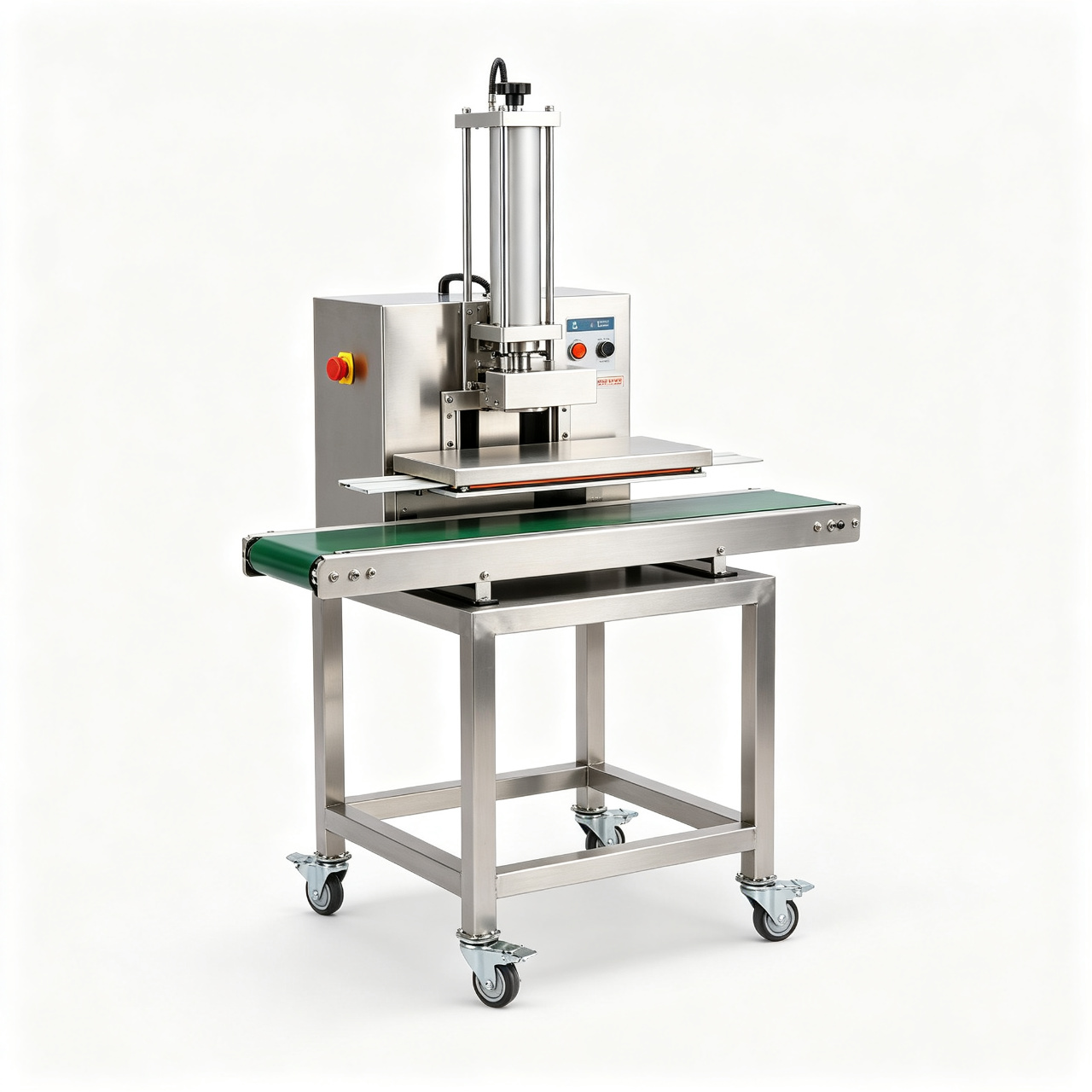
Induction sealing sits downstream of the closure and has to be specified with the line rather than in isolation. The induction sealing machines run after the automatic bottle capping equipment has set the cap and held the liner in position, and the liquid filling machines upstream determine the product that the seal protects. On integrated operations, the fully automatic edible-oil filling, capping and labeling line combines the stations into a single continuous system.
Selection Table: Air-Cooled vs Water-Cooled Induction Sealing
| Dimension | Air-cooled | Water-cooled |
|---|---|---|
| Heat removal | Fans and heat sinks, ambient air | Closed liquid loop from a chiller |
| Installation | Self-contained, no plumbing | Chiller, hoses, pump and water supply |
| Footprint | Smaller | Larger with the chiller |
| Ambient dependence | Efficiency falls in hot rooms | Stable head temperature regardless |
| Dusty or corrosive air | Fans can pull contaminants in | Sealed loop, better isolated |
| Maintenance | Fans and filters kept clean | Water quality, pump and leak checks |
| Leak risk | None, dry system | Present, requires monitoring |
| Best fit | Controlled rooms, typical containers | Hot plants, large jars, high duty, cleanroom |
| Typical industries | Supplements, beverages, general food | Agrochemical, high-power, controlled environments |
When Not to Choose Each System
Do not specify an air-cooled sealer for a hot, poorly ventilated plant or a dusty, corrosive atmosphere where the fans cannot shed the heat and will draw contaminants into the electronics, and do not assume air cooling will hold a very large, high-power container under sustained duty without checking the rated operating window. Do not pay for a water-cooled system with a chiller on a normal line in a temperature-controlled room, where the liquid circuit adds footprint, maintenance and leak risk for heat that fans already remove. Do not treat the cooling method as a later parameter change, because the machine configuration and the facility utilities are built around the chosen system. Finally, do not standardise across plants with different conditions to simplify spares: the two environments genuinely need different cooling, and carrying the correct system in each is cheaper than overheating one line or over-building the other. If the real problem is cap torque or liner quality rather than cooling, fixing the upstream closure is the correct move rather than changing the sealer.
Power Sizing, Energy Use and the Total-Cost View
Induction sealers are sized by power output, and published ranges run from small units around half a kilowatt to industrial machines at four to six kilowatts and above. The required power is set by the cap diameter, the foil structure and the line speed rather than by the cooling method: a larger foil area needs more energy to reach sealing temperature, and a faster line leaves less dwell time under the head, so both push the power requirement up. Under-sizing the power is the common procurement error, because a machine that can only just seal a small cap at low speed will fail to hold a consistent bond on a larger container or a faster line, and the operator compensates by slowing the whole line. The cooling choice then has to be matched to that power and duty, which is why high-power, high-duty machines are the natural candidates for liquid cooling. The total-cost view should include the energy the cooling system itself consumes: a chiller and its pump run continuously and add their own electricity and maintenance, while fans draw less power but only work where the ambient air can absorb the heat. Published buyer guides place a typical service life in the range of seven to ten years with proper maintenance, and note that air-cooled machines can have a shorter life under continuous heavy duty, which is a genuine factor in a long-run cost comparison rather than a reason to prefer one system in every plant.
Seal quality is the output that ultimately justifies the specification, and most failures trace to a small set of controllable variables rather than to the cooling label. Weak or inconsistent seals usually reflect cap torque that is too low to hold the liner in place, a liner that is mismatched to the container material, a sealing window that is too short, or a head that is overheating and drifting out of its temperature range. The cooling system matters because it keeps the head inside that window, but a chiller will not fix a torque or liner problem and a fan will not rescue a machine that is under-powered for the cap. A useful acceptance step is to run sealed samples through a leak or seal-strength check and to confirm the operating window on the actual container, rather than accepting a machine on a single demonstration part. Suppliers that can discuss the power calculation, the expected head temperature and the maintenance schedule for the specific line are demonstrating the engineering support that matters more than a generic claim that one cooling technology is universally better.
Frequently Asked Questions
Are air-cooled induction sealers reliable for high-speed lines?
Yes, in a temperature-controlled workshop with typical containers, modern air-cooled units can sustain continuous high-speed operation without water, and industry accounts treat them as the fit for most packaging lines. The reliability depends on the ambient conditions and on keeping the fans and heat sinks clean.
When is a water-cooled induction sealer still necessary?
It is justified in hot or humid plants, on large high-power containers under sustained duty, and in controlled or corrosive environments where drawing plant air through fans is undesirable. The sealed liquid loop holds a stable head temperature where air cooling cannot.
What maintenance does a water-cooled system add?
The chiller, pump and water quality need routine attention to prevent mineral buildup and biological growth, and the hoses and joints require leak monitoring. Air-cooled units replace that with fan and filter maintenance, which is the main reason they are simpler to operate.
Can the cooling system be switched after installation?
Not as a simple setting. Moving to water cooling requires a chiller, plumbing and the facility utilities, while the machines are configured around the cooling method, so the system should be specified at order time against the real ambient and duty conditions.
Summary: Match the Cooling Method to the Plant Conditions
Choose air cooling for temperature-controlled workshops running typical containers, where the self-contained, dry, low-maintenance arrangement is the simpler and cheaper fit and the ambient air can reliably remove the heat. Choose water cooling for hot or humid plants, large high-power containers, sustained duty and controlled or corrosive environments, where the sealed liquid loop holds a stable temperature and isolates the electronics from the plant air. The correct system is the one the real ambient, duty cycle, container size and atmosphere demand, and the decision should be made per line rather than by defaulting to whichever technology is newer.
The cooling decision connects to the other choices on the line. If you are deciding how the rigid packs themselves are formed, see how to choose between vacuum, pressure and positive-negative pressure thermoforming, and if you are choosing the flexible-bag seal style, compare fin seal and lap seal flow wrappers. If you want the cooling system specified against your real ambient, containers and duty cycle rather than a generic recommendation, send us your plant details and container list and we will confirm the configuration, power and line balance — contact SunAura Machinery to start the review.
Source Material
This article was developed from, and reorganizes, published technical and supplier material covering induction sealing principles, air-cooled and water-cooled cooling circuits, chiller and plumbing requirements, ambient and duty-cycle effects, maintenance and operating-environment considerations, and typical power and output ranges. The figures and percentage claims are treated as indicative published estimates and supplier views rather than universal guarantees; the appropriate cooling method must be validated against the specific ambient conditions, container and duty cycle.