
Robotic End-of-Arm Tooling for Case Packing and Palletizing: Vacuum Cups vs Grippers vs Magnets vs Clamps
You have signed off on the robot. The payload, reach and cycle time all check out on the datasheet, and then the integrator asks a quieter question that decides whether the cell actually works: what goes on the end of the arm? The robot itself is a capable arm, but the end-of-arm tool (EOAT) is the hand that touches your cases, bags, trays and bottles. Pick the wrong one and a perfectly sized robot drops product, misplaces layers or becomes a changeover nightmare every time the marketing team launches a new pack size. This guide separates the four tooling families you will actually be offered — vacuum, mechanical finger grippers, magnetic and clamping tools — where each earns its keep, and where specifying it is an expensive mistake.
At SunAura Machinery we integrate case-packing and palletizing cells across food, beverage, personal-care and building-products plants, and the honest starting point is that the most elaborate tool is rarely the best buy. A single-SKU, high-volume line often runs best on a dead-simple set of suction cups, while a mixed-SKU co-packing operation needs the flexibility that justifies a heavier, pricier gripper. The correct answer is set by your product and your SKU mix, not by what looks impressive on the supplier’s render.
Why the Tool Matters More Than the Robot Brand
Robots are remarkably reliable and increasingly interchangeable. Two different six-axis arms from reputable makers will hit similar repeatability figures and run for years. The end-of-arm tool is where the real engineering lives, because it has to solve problems that are specific to your product: a porous surface that leaks vacuum, a floppy filled pouch with no rigid face, a hot shrink-wrapped case that is still slightly tacky, or a dusty bag that contaminates every cup it touches. Most of the field failures in a new robotic cell are not robot failures. They are cups that slip, fingers that jam, sensors that get knocked out of alignment, and fittings that loosen under thousands of cycles. The tool is the part under the load, and it is the part you should spend the most time scrutinizing during the design review.
It is also where hidden cost accumulates. A cheap fabricated tool with no spare parts and no documented drawing can be bought once and paid for forever in downtime. Conversely, an over-specified tool with motorized axes and automatic tool change can double the cell price for flexibility you never use. The discipline is to match the tool to the actual range of products and the realistic changeover frequency, and to treat spare cups, fittings and a second complete tool as legitimate line items rather than optional extras.
Vacuum Tooling: The Default That Does Most of the Work
Vacuum is the most common end-of-arm technology in case packing and palletizing, and for good reason. A frame or plate carries a set of suction cups connected to a vacuum generator, and the tool simply lowers onto the top face of a case, bag or bundle, grips it, moves it and releases. There are no moving fingers to collide with the product, and a single tool can handle a wide range of sizes as long as the cups land on a usable surface. Vacuum tools are light, fast, relatively inexpensive and forgiving of minor dimensional variation, which is why they are the default for sealed RSC cases, trays, shrink bundles and many rigid containers.
The vacuum can be generated two ways. A compact venturi ejector mounted on the tool uses compressed air and creates vacuum instantly with no moving parts, which suits simple, high-speed pick-and-place cycles. A standalone electric vacuum pump serves heavier or multi-zone tools and uses far less energy over a long shift, at the cost of a slightly more complex setup. Larger tools often split the cups into independent zones, so the same tool can pick a small case using only the inner cups and a full pallet-layer footprint using all of them, without wasting vacuum on uncovered cups.
Where vacuum starts to lose is the product itself. It needs a reasonably flat, non-porous surface for the cups to seal. A porous woven bag, a case with heavy corrugated fluting exposed on the top, a wet or dusty surface, or a soft pouch with no rigid face all leak vacuum and reduce the effective lifting force. Cups also wear, tear and pick up contamination, and a single cracked cup can quietly drop the payload on a high-speed cycle. Vacuum is the right starting point for most rigid and sealed loads, but it is not universal, and a supplier who defaults to cups without checking your surface is doing you no favors.
Mechanical Finger Grippers: When You Need to Get Around the Product
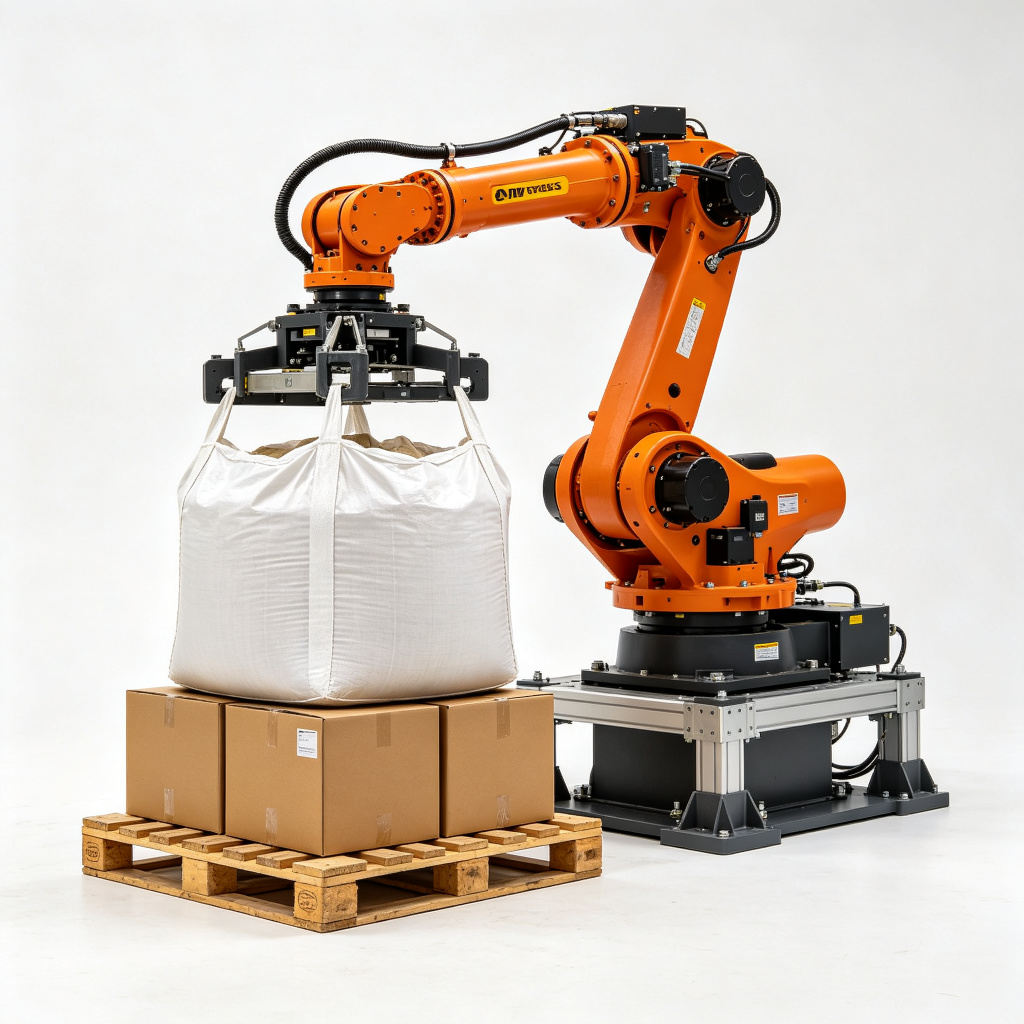
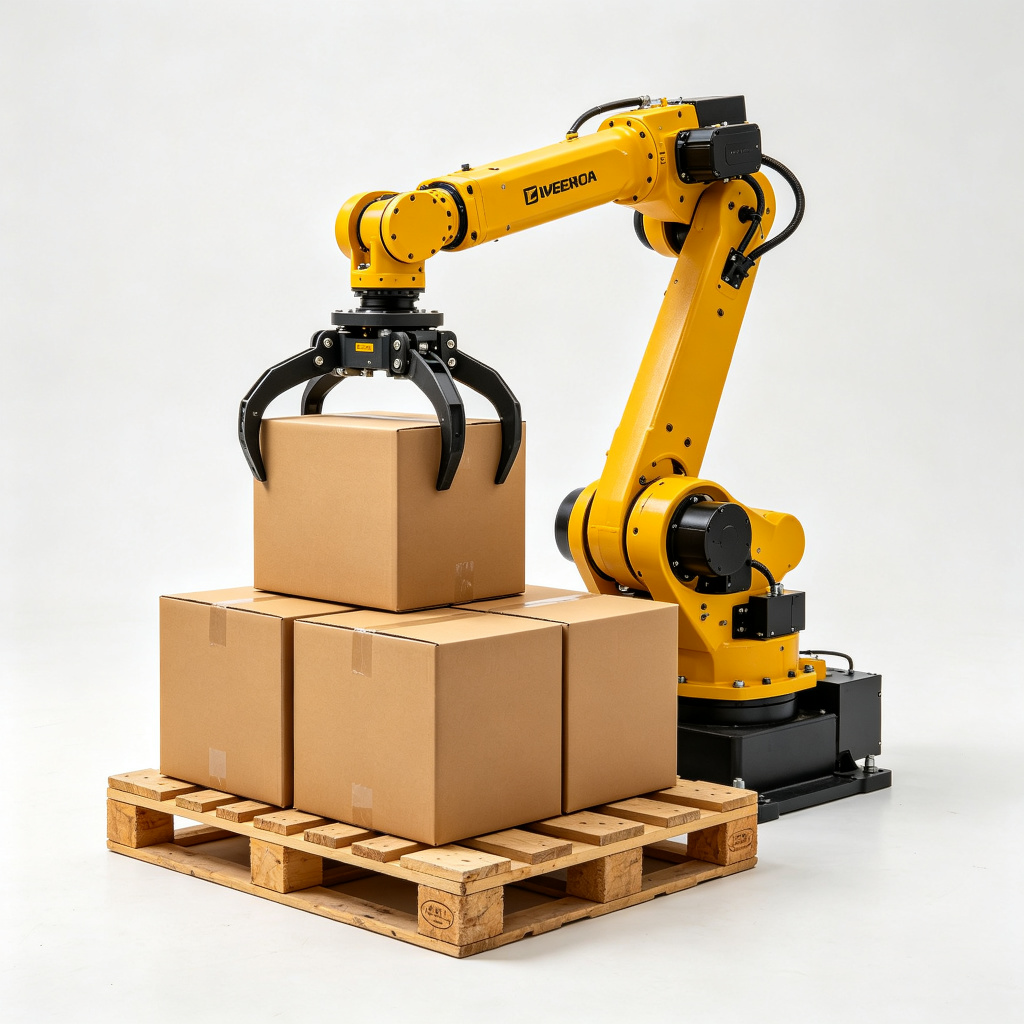
Mechanical grippers use motorized or pneumatic fingers that close around the sides of the product rather than pulling on its top face. This is the tool family that solves the problems vacuum cannot. A finger gripper can pick a porous sack, a floppy filled pouch, an open-top tray or an irregular bundle because it does not rely on a sealed surface at all. It cradles the load from underneath or clamps it on two sides, which often gives more positive control over a shifting, soft or unstable product than suction ever could. In bag handling, a dedicated bag gripper may combine side fingers with a top plate that squares the sack before it is placed, producing a neater pallet than a vacuum tool can manage.
The trade-off is complexity and clearance. Moving fingers need actuators, guides and sensors, so the tool is heavier, more expensive and has more parts to maintain. The fingers also have to approach the product from the side, which demands clearance around the pick and place positions and can rule out tight, nested layouts. Changeover between widely different sizes may require physically swapping finger sets or adjusting stroke limits, and a misaligned finger can crush a lightweight product rather than hold it. Specify mechanical grippers when the product genuinely demands them, and make sure the quoted tool includes the guarding and collision logic that moving fingers require.
Magnetic and Clamp Tooling: The Specialists
Magnetic end effectors use permanent or electromagnets to lift ferrous metal items — steel cans, metal lids, stamped parts and certain pails — with no suction and no fingers to close. They are fast, tolerate rough, dirty or uneven surfaces and grip with a single straight vertical motion, which makes them extremely reliable in the right application. A permanent magnet with a mechanical release uses no holding power, while an electromagnet releases cleanly the instant current is cut. The obvious limitation is that the product must contain ferrous metal, and the tool is useless for anything else, so magnetic tooling is a specialist choice rather than a general platform. Residual magnetism in thin parts and the force needed to separate stacked sheets are design details to confirm in testing.
Clamp and parallel tools form the final family, covering everything from simple two-sided parallel grippers for boxes and totes to custom clamps for reels, drums and large irregular components. They grip by mechanical force on opposing faces and are chosen when the geometry is too large, heavy or awkward for vacuum and does not fit a standard finger pattern. Many real-world tools are hybrids: a palletizing tool might combine vacuum cups for the case with a small side clamp to square it, or a bag tool might use fingers plus a top plate. Do not assume you must choose a pure technology; the field is full of combinations, and the right tool is whatever reliably holds your full product range.
Selection Table: The Four Tooling Families Side by Side
| Dimension | Vacuum cups | Mechanical finger gripper | Magnetic | Clamp / hybrid |
|---|---|---|---|---|
| Best product fit | Sealed cases, trays, shrink bundles, rigid containers | Porous sacks, pouches, open trays, soft or irregular loads | Steel cans, lids, ferrous parts and pails | Large, heavy or awkward totes, reels and drums |
| Surface requirement | Flat, non-porous, reasonably clean | None; grips from the sides | Ferrous metal only | Two opposing faces to clamp |
| Relative tool cost | Lowest | Mid to high | Mid | Mid to high |
| Speed / cycle | Fastest; simple vertical pick | Slightly slower; fingers open and close | Very fast; vertical pick | Depends on geometry |
| Changeover across SKUs | Excellent; zoned cups cover a wide range | May need finger swaps or stroke adjustment | Only within ferrous items | Often custom per product family |
| Maintenance burden | Cups and fittings; quick to replace | Actuators, guides, sensors; more parts | Low; few moving parts | Moderate; custom mechanics |
| Typical industries | Beverage, packaged food, logistics, consumer goods | Building products, agriculture, chemicals, co-packing | Canning, metal packaging, components | Heavy industrial, drums, reels, totes |
When Not to Buy Each One
A trustworthy integrator will tell you where a tool is the wrong fit, and you should demand this before the order is placed. Do not buy vacuum cups if your primary load is a porous woven sack, a wet or dusty surface, or a soft pouch with no rigid face; the suction will leak and the cell will drop product in normal operation. Do not buy a mechanical finger gripper for a narrow, high-speed case line that vacuum already handles; you pay for actuators and clearance you do not need and add failure points to a simple job. Do not buy magnetic tooling unless ferrous metal is genuinely in your product range, and remember it cannot be adapted to anything else later. And do not buy a custom clamp or hybrid for a single stable SKU when a standard vacuum plate would do; custom tooling is justified only by geometry that nothing standard can hold.
There is also a reverse case worth naming. If your plant runs a genuinely wide and changing SKU mix, locking the cell to a single fixed tool can be the real mistake, and the answer may be an automatic tool changer with two or three dedicated tools parked in stands. The robot swaps tools in seconds, so a vacuum plate handles cases while a finger gripper handles sacks, each doing what it does best. This is a higher upfront investment and only pays back when the product range genuinely demands it; for a stable line with one or two pack sizes, a tool changer is impressive on paper and underused on the floor.
Cost, Payback and Procurement Risks
The tool itself is usually a small fraction of the total cell price, but it carries a disproportionate share of the operating risk, so the cheapest quote is not the metric to optimize. When comparing proposals, look beyond the fabricated metal and ask for the specifics: which cup or gripper model, who manufactures it, whether consumables are stocked locally, and whether a complete spare tool or at least a wear-parts kit is included. A tool built from catalog components with a full drawing is repairable by your own team; a fully welded one-off with undocumented parts becomes a single point of failure.
Factor the energy source into running cost. Venturi vacuum is cheap to install but burns compressed air continuously, and compressed air is one of the more expensive utilities on a plant; an electric pump is often the better choice on long-running or multi-zone tools. The payback calculation for a robotic cell is driven mostly by the labor it replaces and the consistent throughput it delivers, but a well-chosen tool protects that payback by avoiding scrap, mis-picks and downtime, while a poor tool erodes it quietly. Confirm the cycle time and grip with the actual product — not a clean sample, but the worst-case wet, dusty or mis-sealed pack you realistically run — before accepting the cell.
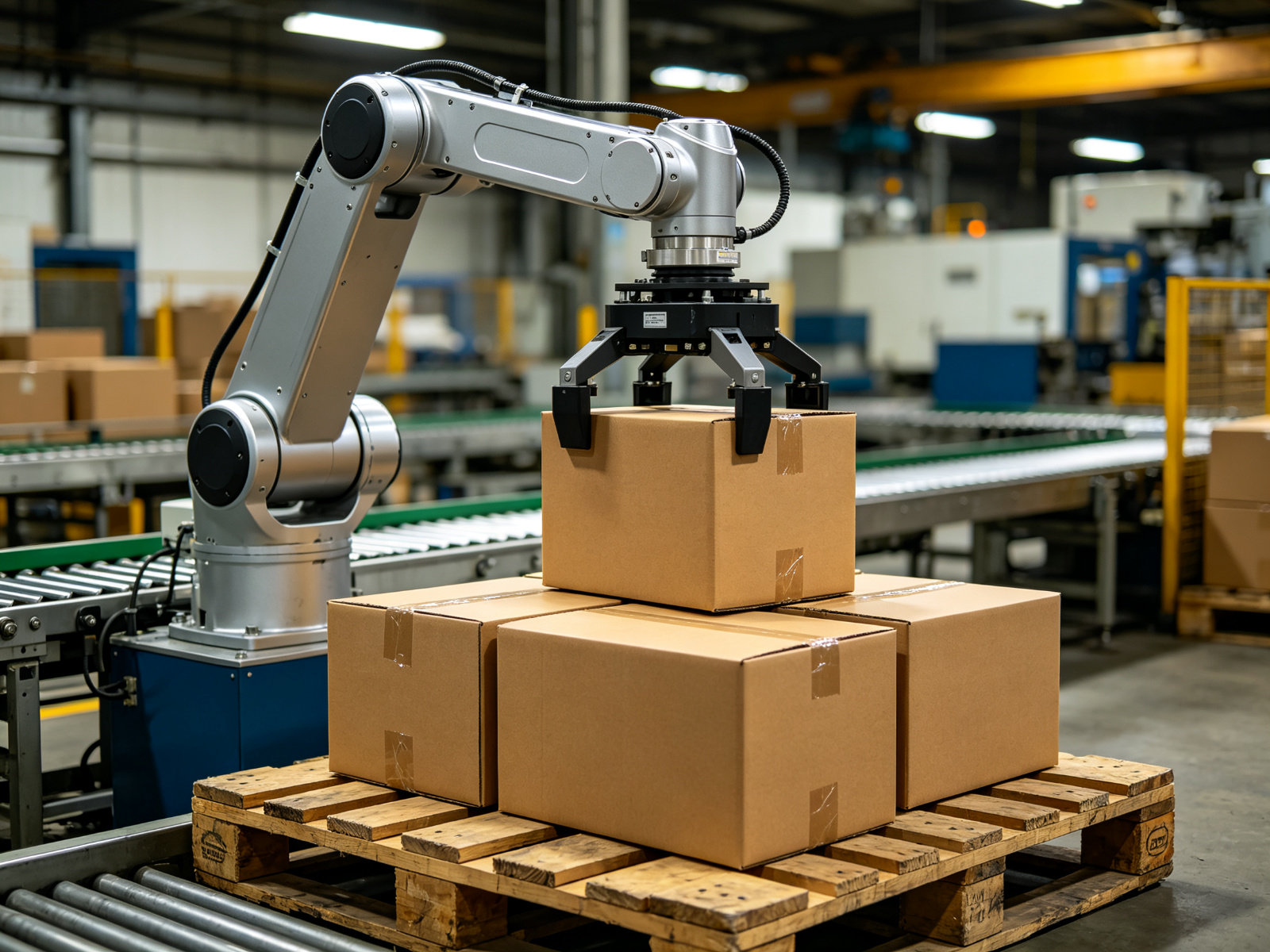
That upstream point matters. A robot can only place what arrives correctly, so the tool should be specified together with the case handling conveyors that feed it and the automatic case erectors that present consistent, squared boxes. If cases arrive crushed, wet or misaligned, no tool will save the cycle, and the robot will be blamed for a problem that began upstream. The whole end-of-line system has to be designed as one sequence rather than as separate purchases.
Frequently Asked Questions
Can one end-of-arm tool handle all of my pack sizes?
Often yes, if the loads are sealed and have usable top faces. A zoned vacuum plate with adjustable cup positions covers a surprisingly wide range of case and bundle sizes. It becomes unlikely when the range mixes rigid cases with porous sacks or soft pouches, which usually need a second tool or a tool changer rather than one compromise design.
Venturi vacuum or an electric pump — which is cheaper to run?
Venturi ejectors are cheaper to buy and ideal for short, fast cycles, but they consume compressed air continuously. On a long shift or a multi-zone tool, an electric vacuum pump almost always uses less energy and earns back its cost. Ask for the expected air consumption rather than assuming the simpler option is cheaper.
How do I know the tool will work before the cell is installed?
Insist on a physical acceptance test using your real products, including the worst-case wet, dusty or mis-sealed examples, not pristine samples. A reliable supplier demonstrates grip and cycle on the actual tool and provides the video and data as part of the factory acceptance, so problems are found before shipment rather than on your floor.
What spares should I order with the cell?
At minimum, a full set of wear cups or gripper pads, the fittings and sensors used on the tool, and ideally a complete spare tool for a high-utilization line. Catalog components are easy to source; confirm the part numbers and local availability at the design stage rather than hunting for them during an unplanned stop.
Summary: Match the Tool to the Load
The decision is less mysterious than the brochures make it sound. Choose vacuum for sealed cases, trays and bundles with a clean flat face — it is the fastest, cheapest and most flexible default, and it handles the majority of palletizing and case-packing jobs. Choose mechanical fingers when the load is porous, soft, open or irregular and suction cannot hold it. Choose magnetic only for genuine ferrous metal, and choose a clamp or hybrid for the large, awkward geometry that nothing standard fits. When the product range genuinely spans these worlds, an automatic tool changer beats forcing one tool to do everything, and when it does not, a single well-designed tool beats paying for flexibility you will never use. Get the tool right and the robot you already chose will do exactly what the datasheet promised.
If you are planning a case-packing or palletizing cell and want the end-of-arm tooling specified against your real product range rather than a generic render, talk to our applications team about the robotic palletizing systems and integrated end-of-line layouts we build. For the quality checks that protect those loads, our companion guide explains how vacuum decay leak testing catches sealed-cup failures before they ship, and for lines that purge product with inert gas, see why a beverage canner chose on-site nitrogen generation. Send us your pack list and worst-case samples and we will recommend the tool, confirm the cycle, and quote the spares — contact SunAura Machinery to start the review.