

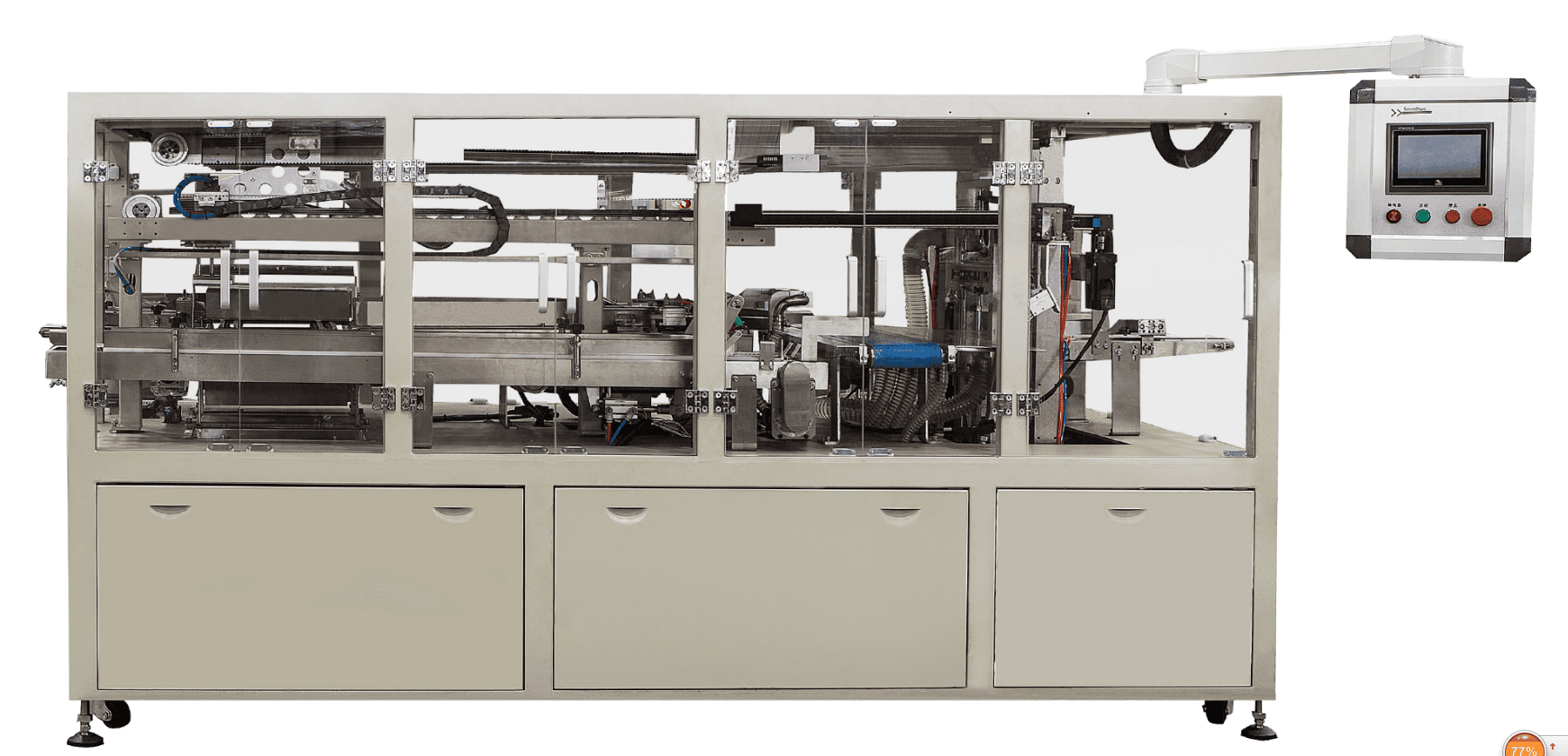
QINGDAO, China — October 4, 2026 — SunAura Machinery has expanded its carton sealing range with an automatic corner sealing machine designed for e-commerce fulfillment centers and export packing stations that need to reinforce carton corners with pressure-sensitive tape. The new machine applies tape to the vertical corner edges of regular slotted cartons at up to 12 cartons per minute, closing the corner joints that top-bottom tapers cannot reach.
The expansion answers a specific gap in the packing line. Standard top-bottom carton sealers tape the horizontal center seam of the top and bottom flaps. But for heavy products, fragile goods, and long-distance export shipments, the vertical corner edges of the carton remain untaped — and those corners are where cartons fail first in transit. Corner taping strengthens the box structurally, and it has become a de facto requirement in several export markets and in e-commerce split-case shipments.
What the Automatic Corner Sealing Machine Does
The corner sealer works after the carton has been formed and the top and bottom flaps closed. The operator places the carton on the machine’s infeed, and the machine applies tape along each vertical corner edge as the carton passes through. It handles RSC (regular slotted container) cartons from 150mm to 600mm in length and width, and up to 600mm in height.
| Specification | Value |
|---|---|
| Carton length | 150–600mm |
| Carton width | 150–600mm |
| Carton height | 150–600mm |
| Throughput | 8–12 cartons/min (4 corners) |
| Tape width | 48mm / 60mm / 72mm |
| Control | PLC + HMI, recipe storage for 30 carton formats |
| Drive | Servo-driven tape heads with automatic tape splicing |
The servo-driven tape heads apply consistent tape tension and position on every carton — a level of repeatability that manual corner taping cannot match. For facilities that run a mix of carton sizes, the recipe memory and motorized adjustment reduce changeover between formats to under three minutes. The machine’s integration points are documented on the automatic corner sealing machine product page, alongside the rest of the carton sealing range.
Corner Sealer vs. Top-Bottom Taper: Which One Does the Line Need?
Buyers often assume a corner sealer replaces a top-bottom taper. It does not — the two machines do different jobs and are typically installed in sequence. The distinction matters when planning the packing line:
| Factor | Top-Bottom Taper (Carton Sealer) | Corner Sealing Machine |
|---|---|---|
| What it seals | Horizontal center seam of top/bottom flaps | Vertical corner edges of the carton |
| Purpose | Close and secure the carton | Reinforce corners against transit damage |
| Typical speed | 15–30 cartons/min (automatic) | 8–12 cartons/min |
| Best fit | Every boxed product line | Heavy loads, fragile goods, export, e-commerce split cases |
| Price range | $6,000–$25,000 | $12,000–$30,000 |
| Line position | After case erector / packing station | After top-bottom taper |
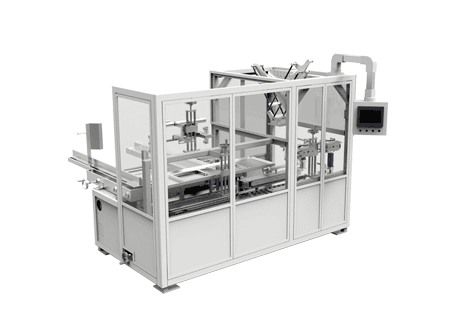
The two machines run in sequence on a complete carton sealing line: the case is erected, packed, closed by the top-bottom taper, and then corner-taped before palletizing. For facilities that only need the standard center-seam closure, the semi-automatic carton sealer and the full-automatic flaps-folding carton sealer cover the range from manual packing stations to high-speed lines. The complete carton sealing machine range is listed on the carton sealing machines page.
Where Corner Sealing Pays for Itself
Corner taping is not required for every shipment, and it does not pay back everywhere. The SunAura applications team sees three clear cases where the corner sealer earns its purchase price:
Export shipments on mixed transport legs: cartons that move from truck to container to warehouse get handled multiple times. Corner-reinforced cartons survive stacking and re-handling better, reducing damage claims. For producers shipping to destinations with a history of rough handling, the corner sealer often pays for itself through claim reductions within 12–18 months.
Heavy and dense products: a carton holding 20kg of metal parts or bottled liquids concentrates load at the corners when stacked. Untaped corners bulge and split; taped corners hold the box geometry. The failure rate difference is visible in any transit test — and in the return rate.
E-commerce split-case fulfillment: e-commerce orders ship fewer units per carton, which means more cartons and more handling per product. Corner taping strengthens the smaller cartons that move through parcel networks, where cartons are sorted and dropped multiple times. Fulfillment centers shipping more than 1,000 split-case cartons per day typically justify the machine within one peak season.
For facilities evaluating whether corner sealing belongs in their operation, the decision framework in our carton sealer buying guide covers the full range of carton closing and sealing options — from tape, to glue, to corner reinforcement — with the cost and throughput tradeoffs laid out side by side.
Operational Details That Matter on the Floor
Three details from recent SunAura corner sealer installations are worth passing on to plant engineers planning the integration:
Carton quality affects corner taping more than center taping: corner taping presses tape onto the carton’s vertical edges, where the board’s edge crush resistance determines whether the tape holds. Weak board or damaged corners lift the tape within hours. Facilities running the corner sealer should verify their carton board meets the edge crush spec — and watch for supplier changes in board quality.
Tape width choice is a cost lever: 48mm tape is cheaper and adequate for light cartons; 60mm and 72mm tape provide more structural hold for heavy loads. The machine accepts all three widths, but the tape head should be set to the width the line will actually run — switching widths on a servo head takes a few minutes but costs tape waste during the change.
Position the corner sealer after the checkweigher: cartons should be weighed and labeled before corner taping, because the corner taping operation adds tape and makes the carton harder to re-handle. Sequencing the line as taper → checkweigh → corner seal keeps the quality check before the final reinforcement.
Maintenance and Spare Parts
The corner sealer’s moving parts are concentrated in the tape heads and the drive system, which keeps the maintenance profile simple. Routine care includes:
- Daily tape path inspection and dust removal from the tape heads
- Weekly lubrication of the drive chain and guide rails
- Monthly check of tape tension and cutter blade condition
- Quarterly servo calibration check on the tape heads
Spare parts for the tape heads, cutters, and drive system are covered under SunAura’s newly launched global spare parts shipping program with 48-hour dispatch — and the full approach to stocking and sourcing machine parts is laid out in the packaging machine spare parts strategy guide, including when OEM parts are worth the premium and when generic parts are safe.
The Manual Corner Taping Cost That Hides in the Line
Most facilities that need corner taping are doing it by hand — and the cost of manual corner taping is easy to underestimate because it is spread across many short tasks. A worker applying tape to four corners of a carton takes roughly 25–40 seconds per carton. At 500 cartons per day, that is 3.5–5.5 hours of one worker’s shift, and the result varies with the worker’s speed and attention.
The practical comparison for a facility running 500–1,000 reinforced cartons per day:
| Factor | Manual Corner Taping | Automatic Corner Sealer |
|---|---|---|
| Time per carton (4 corners) | 25–40 seconds | 5–8 seconds |
| Daily labor at 750 cartons | 5–8 worker-hours | 0.5 operator-hours (load/unload) |
| Tape usage consistency | Varies; over-taping common | Fixed length per corner |
| Quality consistency | Depends on worker skill | Identical on every carton |
| Payback at 750 cartons/day | — | 12–18 months |
The payback math becomes more favorable as throughput grows and as labor becomes harder to hire. Facilities above 1,000 reinforced cartons per day typically recover the machine investment in under a year, and they free the operator for other line tasks during the wrap cycle — the same economic logic that drives semi-automatic machine adoption across the packing floor.
Common Problems and How to Prevent Them
Four issues account for most corner sealer service calls. Knowing them in advance keeps the machine running:
1. Tape wrinkles on the corner: usually caused by tape width wider than the carton’s corner flap, or by worn guide rollers. Check that the tape width matches the flap width, and inspect the tape path for buildup. Cleaning the tape path daily prevents 80% of wrinkle complaints.
2. Tape lift after a few hours: the tape is not bonding to the carton surface. Causes: dusty or oily cartons, cold tape stored below 10°C, or a carton board change with lower surface energy. Warm the tape, clean the cartons, and verify the board spec with the carton supplier.
3. Inconsistent tape length: the cutter is dull or the tension brake is drifting. Replace the cutter blade quarterly and check brake tension during weekly maintenance. Inconsistent length is also the first sign of tape roll quality problems — cheap tape rolls vary in stretch and cause length drift.
4. Carton jams at the infeed: misshapen or overfilled cartons catch on the guide rails. Set the infeed guides for the largest carton in the recipe, and train operators to spot-flatten cartons before loading. Motorized adjustment helps here — the recipe sets the guides automatically, removing the operator’s judgment from the setup.
These prevention steps are included in the operator training delivered with every SunAura corner sealer, and the spare parts they depend on — cutters, guide rollers, tension brakes — are part of the 48-hour dispatch spare parts program.
Frequently Asked Questions
Can the corner sealer handle cartons with full overlap flaps (FOL)?
No. The machine is designed for regular slotted cartons (RSC), where the vertical corners are formed by the flap joints. Full overlap flaps close the top and bottom completely and do not create the same corner structure. For FOL cartons, the standard top-bottom taper is the right machine — corner reinforcement is not needed because the overlap provides the strength.
Does corner taping replace strapping?
Not in most cases. Strapping compresses the carton and provides high tensile strength for heavy loads; corner taping reinforces the box geometry against impact and bulging. The two are complementary: heavy palletized loads often use both — corner tape for the carton, and straps around the pallet load. For a full comparison of carton closing methods, see the carton sealer buying guide linked above.
How much floor space does the corner sealer need?
The machine footprint is approximately 1,800mm × 1,200mm including infeed and outfeed tables. With service access on both sides and a staging area for cartons in and out, plan roughly 4–5 square meters of floor space. The layout planning method — including service access rules — is covered in our packaging line layout design guide published this week.
What is the lead time and price range?
Lead time is 3–4 weeks for the standard configuration. Price ranges from $12,000 to $30,000 depending on carton size range, tape width capability, and options such as motorized adjustment and automatic tape splicing. Contact the SunAura sales team for a specification matched to your carton sizes and throughput.
Availability and Support
The automatic corner sealing machine is available for order with SunAura’s standard export package: factory acceptance testing with customer cartons, installation and operator training on site, CE certification documentation, and 18-month warranty on servo and mechanical components. For a complete carton sealing line or a turnkey packing line, the machine integrates with case erectors, top-bottom tapers, checkweighers, and palletizing systems. To discuss your carton sizes, tape requirements, and line layout with the applications engineering team, contact SunAura Machinery.
About SunAura Machinery
SunAura Machinery is a packaging equipment manufacturer based in Qingdao, China, exporting complete packaging lines and individual machines to more than 100 countries. The company’s carton handling range covers case erectors, carton sealers, corner sealing machines, strapping machines, and the palletizing and wrapping equipment downstream — all CE certified.
Editorial note: Specifications are subject to change without notice. Contact SunAura Machinery for current configuration options.