
October 17, 2026 | by Frank, SunAura Machinery Project Engineering
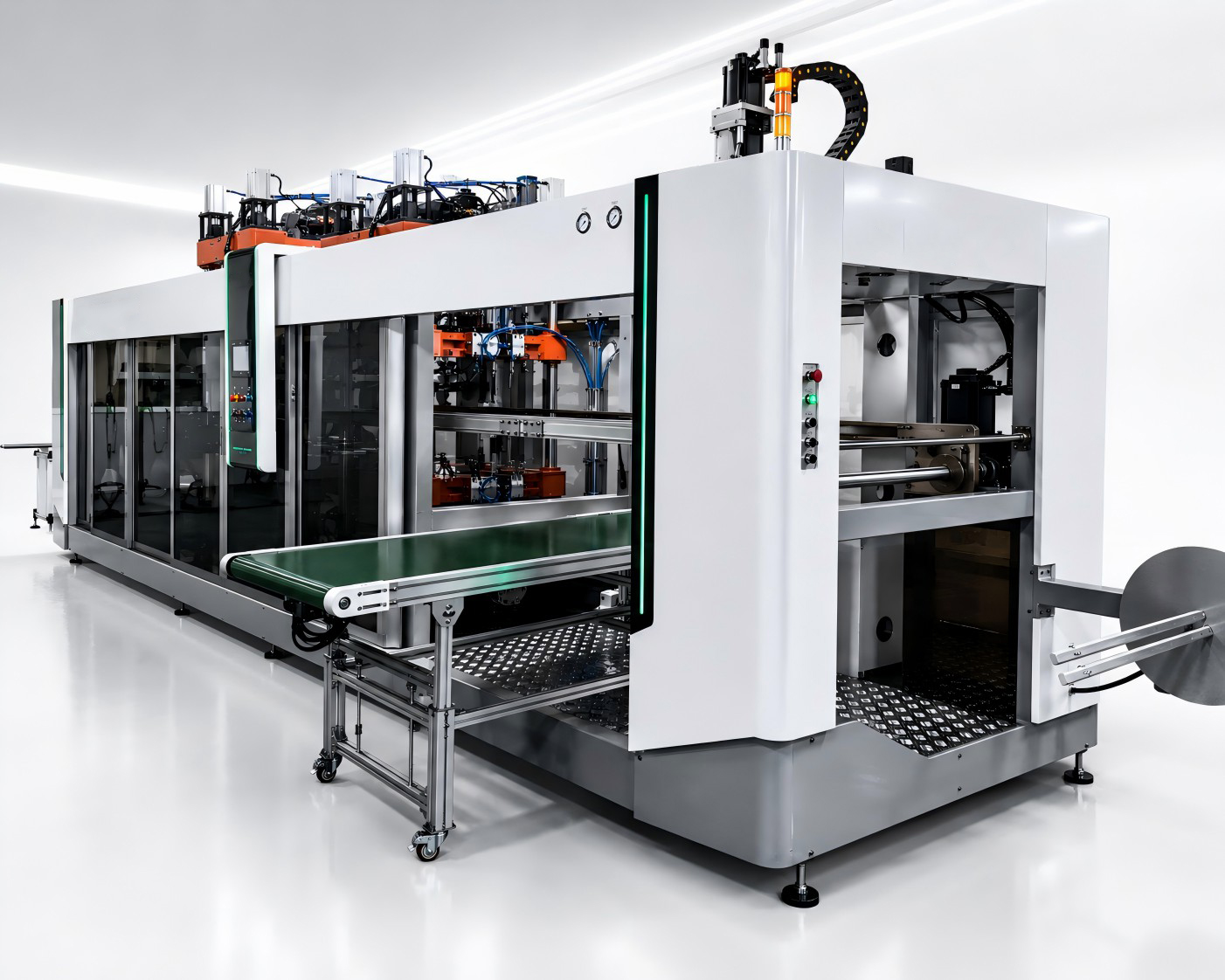
QINGDAO, China — SunAura Machinery has commissioned a double-layer thick-sheet thermoforming line for a plastics converter in the Pearl River Delta that manufactures reusable industrial dunnage trays, export pallets and heavy-gauge clamshells for automotive and appliance parts. The line is built around a double-layer thick-sheet thermoforming machine with two independent sheet stations, which lets the customer form a thick structural skin and a softer, scratch-resistant lining in one cycle rather than buying two machines or hand-assembling laminate trays. Before the upgrade, the customer was subcontracting heavy-gauge forming work and losing margin on the very jobs where their automotive clients paid a premium.
Why the Customer Could Not Keep Using a Single-Layer Machine
Thin-gauge roll-fed thermoforming is the right technology for disposable cups and lids, but it is the wrong tool for returnable industrial packaging. A pallet or dunnage tray that holds 20–40 kg of metal parts and survives hundreds of trip cycles needs a wall thickness in the 1.5–6 mm range, heavy gauge, and often a second material: a stiff outer layer for stack strength and a softer inner layer so machined components are not scuffed in transit. The customer’s existing single-layer vacuum forming machine could produce the geometry but not the laminate, and attempts to glue a lining after forming were slow, inconsistent and a recurring source of warranty claims.
There was also a scheduling problem. Their automotive programs wanted the heavy trays in long runs, while appliance customers ordered small batches of deep-draw clamshells with frequent tool changes. Switching the old single-station press between those jobs meant long, manual sheet-width and heater changes. A double-layer machine with a second sheet station and servo-driven platen was specified to handle both, with the recipe stored on the HMI so the changeover became a guided procedure instead of a skilled-fitter task.
How Double-Layer Thermoforming Works
In a twin-sheet or double-layer configuration, two independently heated sheets are presented to the mold and formed together. Depending on the tool, the layers can be co-formed into a single rigid part with a contrasting surface, or formed into a hollow, double-walled structure in one clamp cycle. The economics are simple: one machine and one operator replace a forming press, a secondary laminating step and the labor between them. The trade-off is that the machine needs accurate independent temperature control for each sheet, because a 2 mm HDPE structural layer and a thin TPE lining do not soften at the same temperature.
- Two servo-driven sheet stations index material from separate rolls or cut sheets, allowing different gauges and colors per layer.
- Independent ceramic heater zones hold the structural and lining layers at their own forming windows, avoiding sag or web tear.
- Combined vacuum and pressure forming reproduces sharp corners and ribs needed for stacking strength, using the same positive-and-negative pressure forming principle as a high-detail single-layer press.
- A servo platen controls closing speed and dwell, which is what makes a repeatable bond between two dissimilar materials possible.
Line Configuration and Specifications
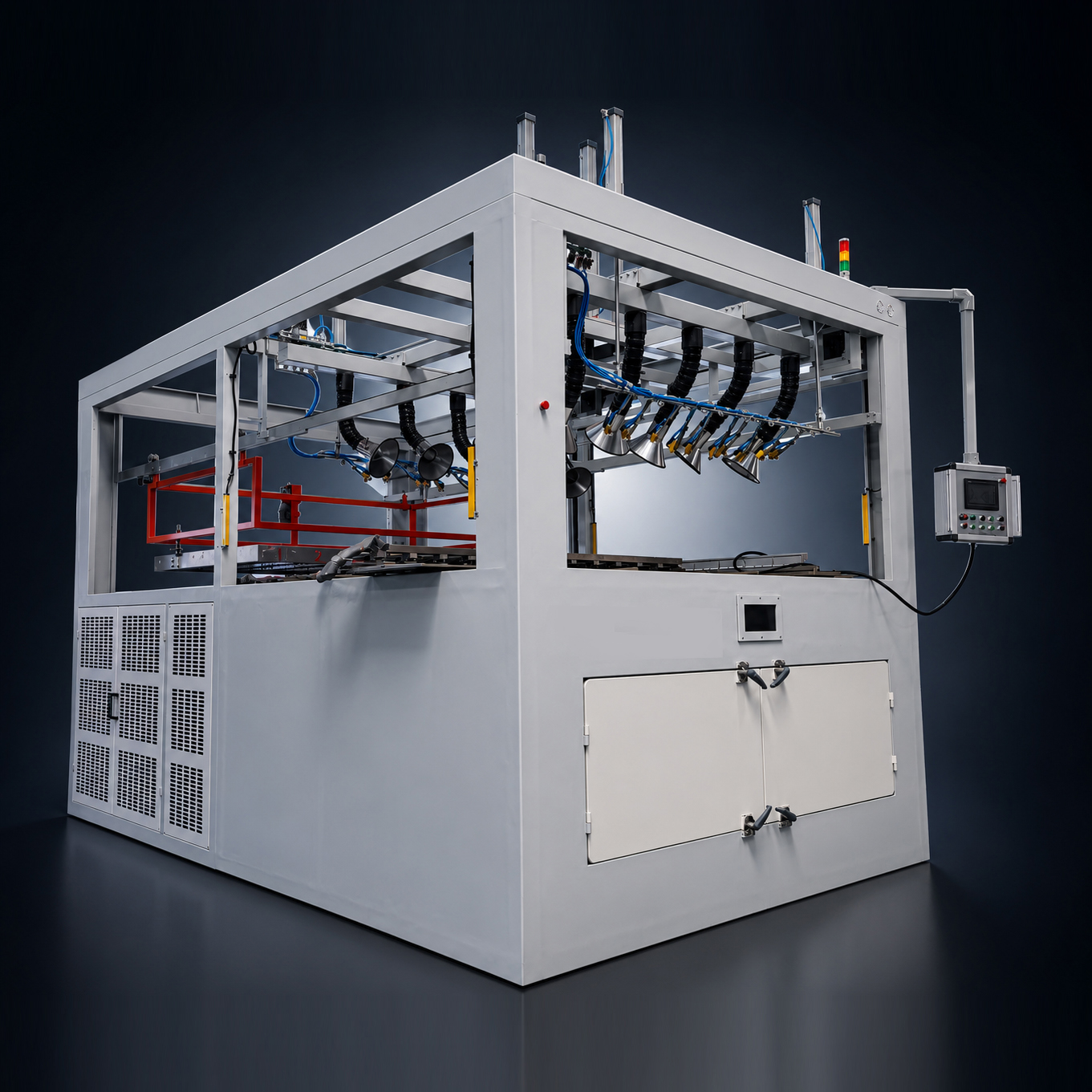
The cell feeds cut HDPE and PP sheet from a powered de-stacker, pre-heats it in a zoning oven, forms it on the double-layer press, and transfers the hot part to a servo trim station where the perimeter and handle slots are die-cut. A short belt conveyor carries finished trays to a stack-and-count unit, and offcuts are granulated beside the press for reintroduction into the non-cosmetic structural layer. The customer retained their existing hot-plate welder for the few hollow, double-walled parts that require a sealed cavity.
| Parameter | Specification |
|---|---|
| Forming method | Twin-sheet, vacuum + pressure forming |
| Sheet thickness | 1.5–6 mm per layer, cut-sheet fed |
| Materials | HDPE, PP, HIPS, with TPE/soft lining option |
| Typical products | Returnable pallets, dunnage trays, heavy clamshells |
| Platen drive | Servo, closed-loop speed and position |
| Heating | Multi-zone ceramic, independent per layer |
| Downstream | Servo trim press, granulation, stack conveyor |
| Operator | One, with a materials handler for sheet and regrind |
FAT, Tooling and Material Trials
Because the part performance depends on the laminate bond, we asked the customer to send their actual HDPE and PP gauge, the TPE lining and the most demanding tray mold before the factory acceptance test. We ran the twin-sheet bond at several heater-zone settings, then sectioned samples to inspect the fusion line and did a simple bend-and-peel check to confirm the layers did not delaminate. We also formed a run of the deepest-draw clamshell to prove the thicker sheet could reach the bottom corners without thinning below the customer’s specified minimum wall.
This is the discipline we apply on every thermoforming machine: prove the process on the real material and real tool in our workshop, because a line that forms perfectly on a generic HIPS test sheet can fail the moment a buyer’s recycled-content, pigmented or multi-layer sheet is loaded. For buyers who need to understand why we insisted on the material trial, our engineering team published a dedicated thermoforming sheet material guide covering PP, PET, PS and PLA selection.
Results After the First Quarter
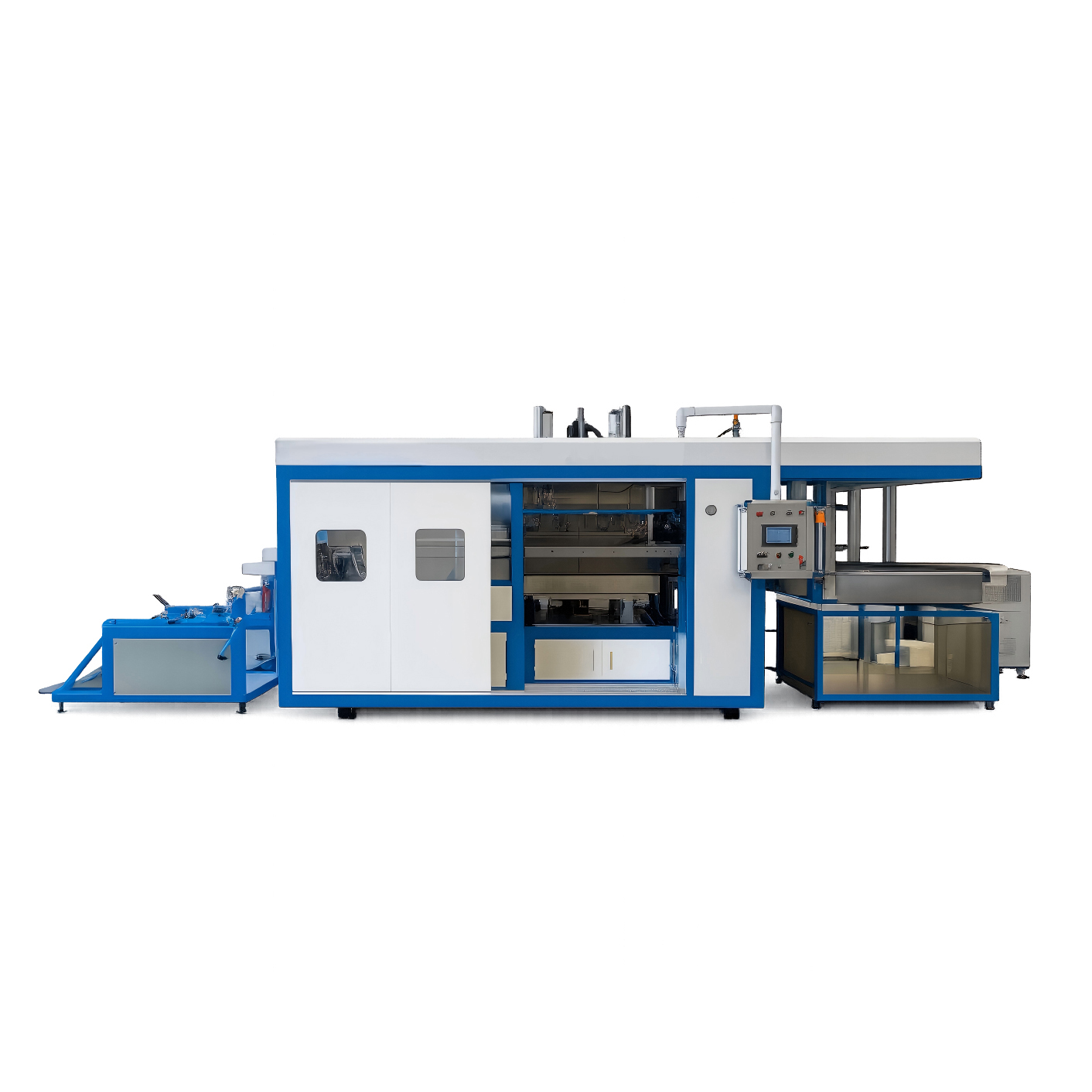
- Heavy-gauge tray work that was previously subcontracted is now formed in-house, recovering the margin on the customer’s highest-value programs.
- The secondary lamination and glue station was removed, eliminating the delamination warranty claims that came with it.
- Changeover between long automotive runs and small appliance batches fell to a guided, recipe-driven procedure rather than a fitter’s job.
- Regrind from the structural layer is reused in the non-cosmetic layer, improving material utilization on thick-sheet runs.
The customer’s production manager summed it up in a way worth repeating: the old arrangement made heavy-gauge work feel like a favor to the customer, because every tray had to be ordered out, tracked and freighted before it could even be sold. Now that the same jobs are formed on the floor under their own roof, the heavy trays are no longer the awkward part of the product range; they are the part with the best margin and the shortest lead time. That shift in how the business talks about the product is, in our experience, the clearest sign that an in-house heavy-gauge investment has landed.
Where Heavy-Gauge Thermoforming Fits Against Thin-Gauge
Buyers sometimes ask us to make one machine cover both disposable cups and returnable pallets, and the honest answer is that the duty cycles are too far apart. Thin-gauge, roll-fed, high-cycle machines like our high-speed cup forming machine are optimized for fast cycling on light film, whereas thick-sheet cut-sheet presses trade raw speed for platen force and heater mass. The twin-sheet line sits firmly in the heavy-gauge camp. If your output is pallets, totes, refrigerator liners or appliance housings, the heavy press is the right investment; if it is cups and lids, the thin-gauge roll-fed machine will pay back far faster. Our application engineers size the clamping force and oven zones to the thickest sheet you actually run, not to a brochure number.
The Economics of Bringing Heavy-Gauge Forming In-House
The customer’s decision to buy instead of continue subcontracting came down to a concrete margin calculation, not a preference for owning machines. Their heavy-gauge programs were the highest-margin work in the portfolio because automotive and appliance customers pay for returnable packaging that protects precision parts and is specified by part number. But every pallet and tray sent to a third-party former carried a subcontractor markup, a freight leg to and from the outside plant, and a lead time that forced the customer to hold inventory against programs they did not control. When a program changed, the resulting pallets were obsolete before the next run.
Bringing the work in-house removed three costs at once: the toll-forming margin, the back-and-forth freight, and the safety stock held to cover subcontractor lead time. Against that, the customer counted the machine depreciation, one operator, the floor space and a modest increase in electricity and compressed-air load. On their actual automotive volumes the payback landed well inside three years, and it became shorter as the appliance customers moved their heavy clamshells onto the same line. The non-financial benefit was speed to sample: a new dunnage tray that used to take two weeks of subcontractor lead time can now be iterated in days, which helps win the program in the first place.
Installation, Utilities and Safety
Thick-sheet thermoforming has different site requirements from a small roll-fed cup machine, and the projects that go smoothly are the ones where these are settled before the equipment arrives. The press needs a level, reinforced floor sized for the clamp force and the mass of the oven, plus electrical supply with the correct breaker for the heating load, which on a multi-zone heavy-gauge oven is the largest utility draw. Compressed air drives pressure forming, the trim press and the de-stacker, so the plant must deliver clean, dry air at the specified pressure and flow; an under-sized compressor is the single most common commissioning delay we see.
Water cooling for the molds and trim tooling is required for short cycle times, and the customer added a small chiller loop rather than relying on process water that varies with the season. Safety follows the same standard we apply on every guarded cell: interlocked access doors around the press and trim station, a guarded knife on the trim press, light curtains where an operator feeds material, and an E-stop at both the HMI and the trim discharge. The granulator, which is a genuine noise and dust source, was isolated with its own guarding and a sound-attenuated enclosure, and regrind is routed to the non-cosmetic structural layer rather than back into visible parts.
Frequently Asked Questions
Can one double-layer machine also run single-layer parts?
Yes. With the second sheet station idle, the press runs as a conventional heavy-gauge single-layer machine, so you can make simple trays and pallets without a lining and reserve the twin-sheet mode for the laminated parts.
What wall thickness can it form?
This line is configured for roughly 1.5–6 mm per layer, with the practical limit set by the oven, clamp frame and platen force. The exact maximum depends on the material and draw depth, which is why we test your deepest tool during FAT.
How are finished pallets and trays stacked and shipped?
For customers who want a fully automated end of line, the trim press can feed a stacker and then an automatic bag palletizer or a gantry system for rigid stacks. We recently commissioned a similar palletizing cell for a pet food producer, covered in our automatic bag palletizer project report.
Do you supply the molds?
We can supply production tooling or work with your mold maker. Either way, the first-article samples are formed on your actual tool during FAT, and the forming recipe is documented and handed over with the machine.
What about recyclable and recycled-content sheet?
Heavy-gauge PP and HDPE are readily recycled, and the line is set up to reintroduce clean structural regrind. Material-specific behavior, including recycled-content variability, is covered in our PP, PET, PS and PLA sheet guide.
What floor space and utilities does a line like this need?
Expect room for the press, a de-stacker, oven, trim station, granulator and a finished-parts stacker, plus maintenance access for mold changes. The dominant utilities are the oven electrical load, compressed air for pressure forming and trim, and chilled water for fast cooling. We provide a site-utility sheet with the exact values so the facility can be prepared before delivery.
How long does tooling changeover take?
A guided mold and recipe change on the servo press takes a fraction of the time of a manual fitter change on a single-layer machine, and the second sheet station lets the two layers be set up independently. Exact time depends on the mold size and whether the trim die also changes, both of which we time during FAT and document for the operator.
Next Steps
The line is now in production, and our after-sales and spare-parts team stocks heater elements, thermocouples and servo-drive components, with remote HMI support during the warranty period. The forming and trimming recipes for each pallet and clamshell are stored on the machine so new operators can reproduce qualified parts.
Forming heavy-gauge pallets, totes or dunnage trays? Send us your part drawing, sheet gauge, material and target cycle time, and we will recommend the right platen force, oven configuration and whether twin-sheet or single-layer forming is the better fit. Browse the thermoforming machine range and our turnkey packaging lines, see the floor on the workshop page, or start a quote on the contact page. For material choice, read the thermoforming sheet material guide.