
October 17, 2026 | by Monica, SunAura Machinery Applications Engineering
Most thermoforming problems that land on a service engineer’s desk are not machine faults at all. They are sheet problems dressed up as machine problems: a PET cup that crazes because the sheet was run at a PP temperature, a PLA tray that droops in the oven because the forming window was treated like ordinary PS, or a heavy-gauge HDPE pallet that thins at the corners because the draw ratio was designed for a material that does not flow like HDPE. At SunAura Machinery, the first question we ask a thermoforming customer is never “which machine?” It is “which sheet?” This guide explains how PP, PET, PS (including HIPS and OPS) and PLA behave during thermoforming, how to match each material to the correct forming method, and where the common buying mistakes are made. The machine follows the material, not the other way around.
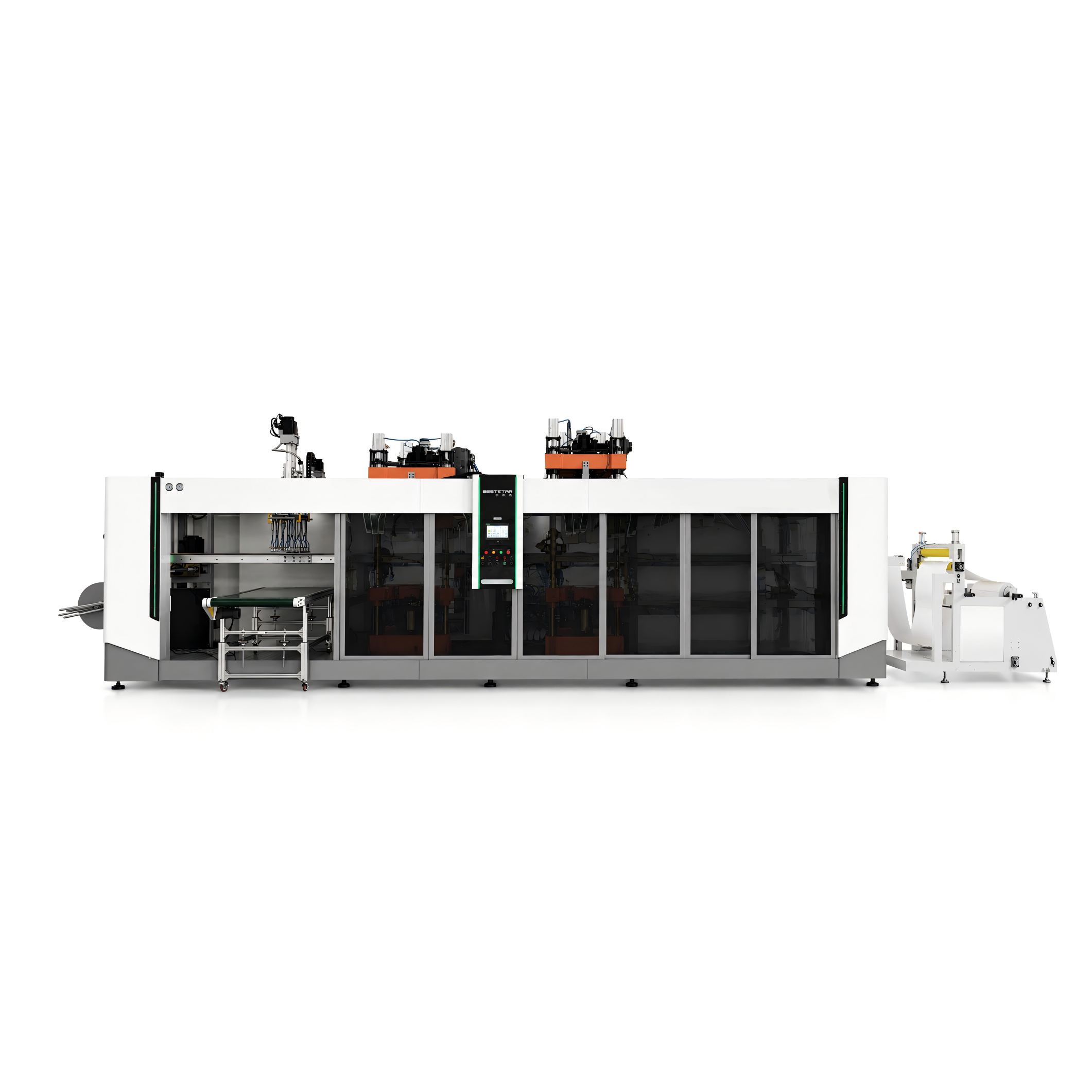
The Thermoforming Window in Plain Terms
Thermoforming works by heating a sheet until it is soft enough to stretch, then pulling or pushing it onto a mold with vacuum or pressure, and cooling it below the temperature at which it holds its shape. Every polymer has a different “forming window” — the temperature band where the sheet is soft enough to draw without sagging, tearing or freezing halfway down the mold. A narrow window (PLA and PET are the classic examples) demands precise, even heating and fast transfer; a broad window (PP and HIPS are comparatively forgiving) tolerates a less precise machine and a less experienced operator. The width of that window, and the pressure the material needs to reproduce detail, drives almost everything downstream: oven type, platen speed, number of heater zones and whether you need vacuum-only or full pressure forming.
PP, PET, PS and PLA Side by Side
| Property | PP / PP copolymer | PET / PETG | HIPS / OPS | PLA |
|---|---|---|---|---|
| Typical use | Hot-fill cups, lids, microwavable trays, heavy-gauge | Clear cups, clamshells, bottles, food trays | Foam trays, disposable cups, refrigerator liners | Compostable cups, lids, deli trays |
| Clarity | Translucent / opaque | Excellent clarity | Opaque (HIPS), clear (OPS) | Clear to haze |
| Heat resistance | High, hot-fill capable | Moderate (APET low, CPET high) | Low | Low; heat-sensitive |
| Forming window | Broad | Medium | Broad (HIPS) | Narrow, unforgiving |
| Impact / toughness | Good, flexible, living hinge | Very tough | Brittle (HIPS) | Brittle if mishandled |
| Recycled content | Readily available rPP | rPET widely available | Available | Compostable; bio-based |
| Main risk | Low stiffness, can sag | Moisture, tight temperature | Cracking, stress whitening | Oven sag, thermal history |
Polypropylene (PP): The Forgiving, Hot-Fill Workhorse
PP is the material customers reach for when the part has to survive heat: microwavable ready-meal trays, hot-fill cups, baby-food tubs and heavy-gauge returnable items. It has a relatively broad forming window, good chemical resistance and the ability to form a living hinge, which is why caps and closures with integral hinges are so often PP. Its weakness is stiffness and sag: heated PP sheet can droop between the clamp frame and the mold, so a PP line needs good sheet support, well-controlled oven zones and reasonably fast transfer. For high-cycle thin-gauge PP, a high-speed cup forming machine with a servo plug and rapid indexing is the right tool; for thick PP pallets and totes, a heavy-gauge press is the correct machine class.
PP copolymers are used where impact toughness matters at low temperature, and filled PP (with talc or mineral loading) increases stiffness and reduces sag for deep trays. Buyers should specify the grade and filler percentage to the machine builder, because filled sheet heats and shrinks differently from neat PP.
PET: Clarity and Toughness, but Moisture and Temperature Must Be Managed
PET is the clear, tough polymer behind most disposable cups, salad clamshells and fruit punnets, and it is the easiest material to justify on recycled-content grounds because rPET is mature and widely available. It is not, however, a forgiving material to form. PET is hygroscopic, so moisture absorbed from the sheet will cause bubbles and surface defects if the material is not dried or stored correctly. Its forming window is also tighter than PP: underheat it and the detail and rim will not form, overheat it and the sheet sags and crystallizes unevenly. Amorphous PET (APET) is the common clear sheet; crystalline PET (CPET) is the black or colored high-temperature tray used for oven-ready meals, and it is processed with a different, more controlled thermal profile.
PET reproduces fine detail beautifully when the tool and process are right, which is why customers running PET clamshells and lids often specify a positive and negative pressure forming machine rather than a vacuum-only press. PETG, a glycol-modified variant, is easier to form and is common for medical and display parts where clarity and deep draws are worth the material premium.
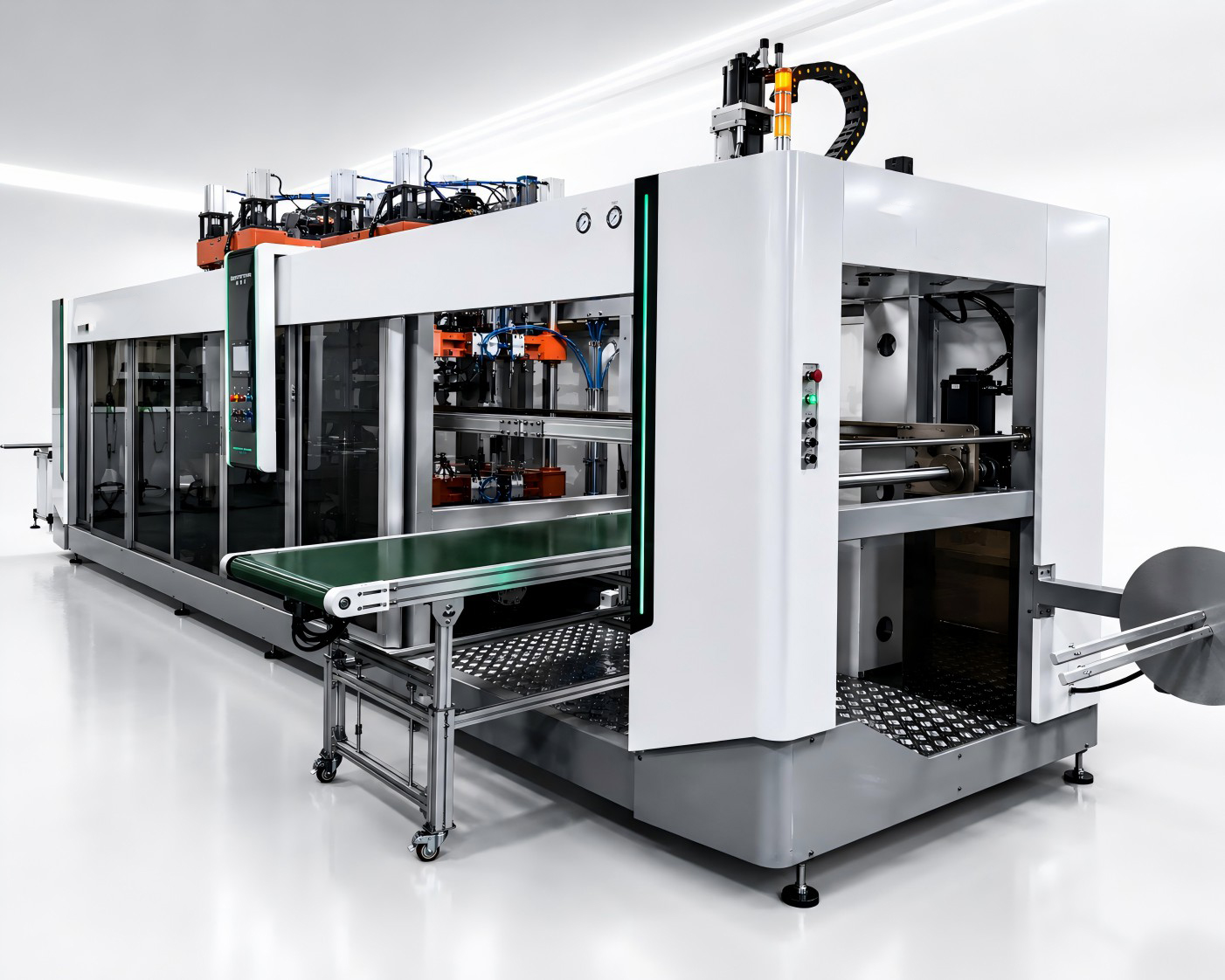
Polystyrene (HIPS and OPS): Cheap and Easy, but Brittle
HIPS (high-impact polystyrene) is a broad-window, easy-to-form material that is inexpensive and predictable, which is why it has historically dominated disposable cups, refrigerator liners and refrigerator door liners. OPS (oriented polystyrene) is a clear, stiff sheet used for bakery and display packaging. The trade-offs are well known: HIPS is more brittle than PET or PP, it can stress-whiten where it is bent, and it does not match PET for clarity or PP for heat. It is also under pressure from compostable and recycled-content requirements in many markets, so buyers exporting to the EU need to check the relevant packaging-waste rules before designing a new HIPS line.
Expanded PS (EPS, foam) is a different process and machine entirely and should not be conflated with solid-sheet HIPS thermoforming. For solid HIPS, a standard vacuum or vacuum-pressure machine is usually sufficient; the material’s broad window makes it a sensible starting point for a new operator learning the process.
PLA: Compostable, but the Narrowest Window of All
PLA is the bio-based, industrially compostable polymer that brands request to meet packaging-reduction commitments, and it is the material most frequently mishandled on the shop floor. Its forming window is narrow and close to the temperature at which it begins to lose strength entirely, so it is easy to overheat into a sagging web or underheat into a tray that will not draw. PLA is also sensitive to its thermal history and to ambient moisture, which is why a PLA line needs precise, even, multi-zone heating, a fast sheet-to-mold transfer, and often chilled tooling so the part sets before it distorts. A machine that handles HIPS with a few crude top-and-bottom heater panels will not hold a consistent PLA cycle.
Commercial reality matters here: PLA is typically more expensive and more brittle than the polymers it replaces, and its compostability depends on industrial composting infrastructure rather than the machine. The brand team’s sustainability target and the plant’s capability have to be reconciled before purchase, and we have commissioned more than one line where the honest recommendation was a multi-material servo machine capable of running rPET and PLA on different recipes rather than a PLA-only press.
Vacuum Forming vs Pressure Forming vs Twin-Sheet
Once the material is chosen, the forming method follows from the detail, thickness and rigidity required. Vacuum forming pulls a single sheet onto a male or female tool with a vacuum and is adequate for forgiving materials and simple geometry; it is the lower-cost process and is typical of HIPS and many heavy-gauge industrial parts. Pressure forming adds positive air pressure on the back of the sheet, giving finer detail, sharper texture and tighter dimensional accuracy, which is what clear PET and PLA packaging with precise rims and snap-fit lids usually need. Twin-sheet or double-layer forming bonds two sheets for rigid, double-walled or laminated structures such as pallets and dunnage trays. We covered that class in detail in our double-layer thick-sheet thermoforming project report, and a servo-driven thermoforming machine is the platform that can move between these methods with stored recipes.
| Method | How it works | Best for |
|---|---|---|
| Vacuum (negative) forming | Vacuum pulls sheet onto a mold | HIPS, simple heavy-gauge trays, lower detail |
| Pressure forming | Positive air pressure pushes sheet in | Clear PET/PLA, fine detail, snap-fit lids |
| Twin-sheet / double-layer | Two sheets formed and bonded together | Pallets, totes, hollow and laminated parts |
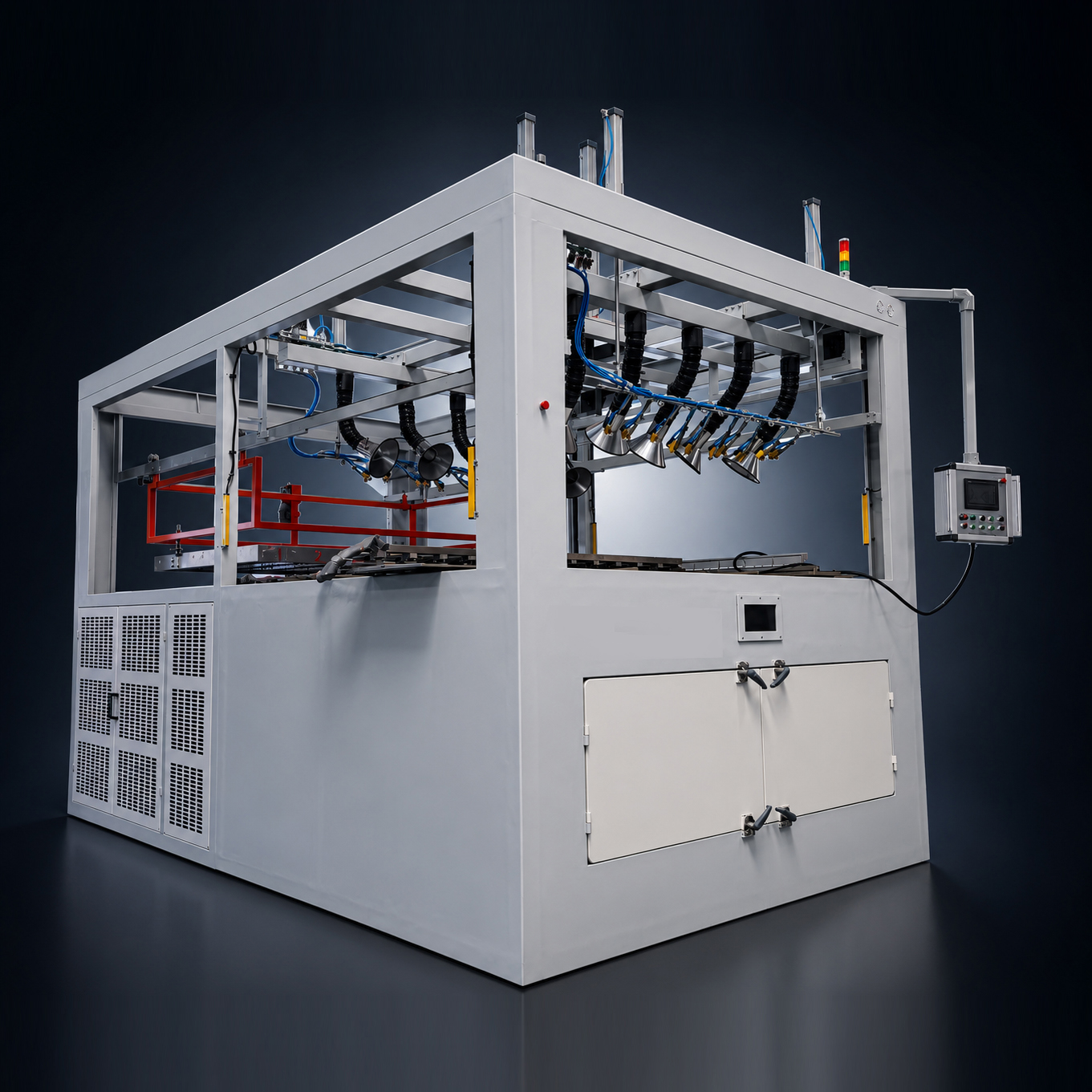
Draw Ratio, Corner Thinning and Mold Design
Even with the correct material and machine, a part can fail because of the draw ratio. A deep, narrow cavity pulls a disproportionate amount of material toward the bottom and into corners, leaving the rim thick and the base thin. The remedies are a plug-assist to carry material down into the cavity, correct corner radii, and a material that flows evenly under heat. PP and HDPE flow differently from PET, so a plug profile that works on a PET cup will not automatically work on a PP tray. We insist on seeing the deepest part and its minimum wall thickness before quoting, because the machine’s clamp force and platen stroke are sized from that, not from the part’s footprint.
Regrind, Recycled Content and Sheet Variability
Every thermoforming line generates skeletal web and trim scrap, and the conventional practice is to granulate and reintroduce it. For non-cosmetic layers and heavy-gauge structural parts, regrind can be a significant percentage of the material; for clear PET, contamination and moisture in the regrind will show as defects and haze, so the handling, drying and percentage need to be controlled. Recycled-content sheet also varies more from batch to batch than virgin, which is a strong argument for a servo machine with repeatable oven recipes. The plant running heavy-gauge returnable pallets on the double-layer thick-sheet line deliberately routes structural regrind into the non-cosmetic layer for exactly this reason.
A Sizing Checklist Before You Buy
- Name the exact polymer, grade and filler percentage, and the sheet gauge range.
- State the deepest draw, minimum wall thickness and whether the rim or lid is a snap-fit.
- Confirm clarity, hot-fill or oven requirements — these often force PP, CPET or PLA.
- Decide whether the part needs vacuum-only, pressure forming or twin-sheet.
- Give the recycled-content or compostable target and the destination market’s rules.
- Send your actual sheet and deepest mold for a material trial, not a brochure-grade test.
Frequently Asked Questions
Which thermoforming material is cheapest?
HIPS is generally the least expensive and easiest to form, but it is brittle and increasingly restricted by packaging rules. PP is the value choice for hot-fill and heavy-gauge parts; PET wins on clarity and recycled content; PLA is chosen for compostability rather than cost.
Can one machine run all four materials?
A well-specified servo machine with multi-zone heating and pressure forming can switch between PP, PET, HIPS and PLA on stored recipes, but a bare, low-end vacuum former will not hold the narrow PET and PLA windows. Do not assume a multi-material capability without the oven and control hardware.
Why do my PET parts have bubbles or haze?
Almost always moisture or temperature. PET is hygroscopic; dry or condition the sheet, and check the oven profile for overheating and crystallization. A sheet supplier’s storage condition is part of the process, not an optional detail.
Why do my PLA trays sag and distort?
PLA has a narrow forming window and sets slowly. Tighten the oven-zone control, speed up the transfer, and use chilled tooling so the part holds its shape before release.
How does the material choice affect the rest of the line?
It drives the trim and downstream handling as well as the press. Thin-gauge cups feed a stacking and packing line; thick trays and pallets feed a trim press and then a palletizer, which is the end-of-line integration covered in the automatic bag palletizer project.
Conclusion
Selecting a thermoforming sheet is a decision that compounds through the whole project: it fixes the oven, the forming method, the mold, the trim station and the operator skill level. PET and PLA reward precision and punish a cheap oven; PP rewards hot-fill and heavy-gauge work but needs sag control; HIPS is forgiving but brittle and increasingly regulated. Get the material right with an actual trial and the machine specification almost writes itself; get it wrong and the most capable press will be blamed for a sheet problem.
Specifying a thermoforming line? Send us the polymer, gauge, part drawing, minimum wall thickness and the deepest draw, and we will recommend vacuum, pressure or twin-sheet forming with the right oven and platen. Browse the thermoforming machine range, from heavy-gauge sheet forming to high-speed cup forming, and see our packaging lines. Then start the conversation on the contact page, and read the double-layer thermoforming case study for a heavy-gauge example.