
October 19, 2026 | by Frank, SunAura Machinery Project Engineering
UBERABA, Brazil — SunAura Machinery has commissioned a fully automatic inline induction cap sealing line for a crop-protection co-packer in the Triângulo Mineiro region of Minas Gerais, the heart of Brazil’s soybean, corn and sugarcane belt. The plant fills and bottles foliar fertilizers, herbicides and liquid insecticides across seven HDPE and PET container formats from 250 ml jugs to 5-liter canisters. Before the project, every cap was sealed by hand-held induction units and the seals were checked by eye, which the customer’s QA team could no longer defend against ANVISA and distributor requirements for tamper-evident, leak-proof closures. The new line pairs a high-speed conveyor induction sealer for the small bottles with a large-head unit for the 2- and 5-liter canisters, and it has cut the sealing station from four operators to one while bringing the leak-rejection rate from roughly 2.8% to under 0.2%.
Why an Agrochemical Bottler Cannot Treat Cap Sealing as an Afterthought
For food and beverage plants, a missing foil seal is a quality complaint. For a pesticide and fertilizer plant, it is a regulatory and liability event. Crop-protection containers are routinely shaken, stacked two pallets high and trucked across unpaved roads in Mato Grosso and Goiás; a closure that weeps even a few milliliters contaminates the carton, the pallet and eventually the shipping container. Brazilian distributors and the cooperatives that buy in bulk increasingly reject loads that lack an intact, visibly tamper-evident foil liner, and ANVISA good-practice audits ask for documented evidence that the seal was applied and verified, not merely assumed.
The customer’s original process was a classic bottleneck. Two operators ran hand-held induction wands over the small bottles while two more handled the canisters, with a fifth person visually inspecting. Hand wands are sensitive to the distance between the head and the cap, the dwell time and the operator’s fatigue. At the end of a ten-hour shift, seals were visibly inconsistent — some overheated and blistered, others were cold at the edge and peeled off under pressure. The co-packer calculated that about 2.8% of sealed bottles were either rejected at the in-house leak test or came back as distributor complaints, and the manual station was the single largest reason the filling line could not run above 70% of its rated speed.
The Line Layout and the Two Sealer Heads
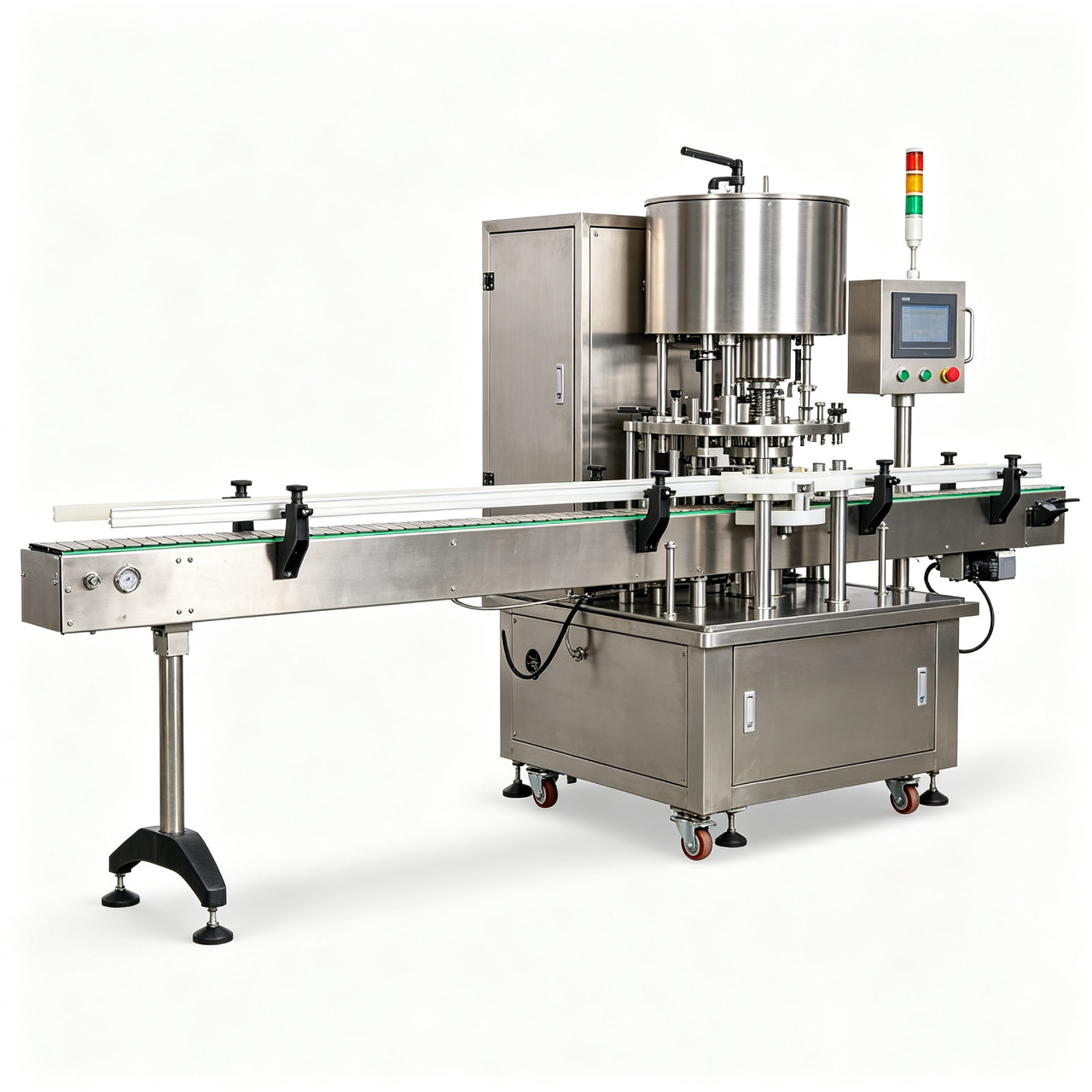
The installed line runs from the existing linear filler through a spindle capper, a bottle orienter and then into the induction sealing section, before a cooling tunnel, a cap torquer, a pressure leak test and a downstream case packer. The sealing section is split into two heads because one induction head cannot economically cover a cap range from 20 mm to 120 mm.
- High-speed conveyor head (20–80 mm caps): a high-speed automatic induction sealing machine with conveyor handles the 250 ml, 500 ml and 1-liter PET and HDPE bottles at up to 120 bottles per minute. The sealing head height and power are recipe-driven, so changing from a 28 mm herbicide bottle to a 38 mm fertilizer bottle is a stored selection rather than a manual dial.
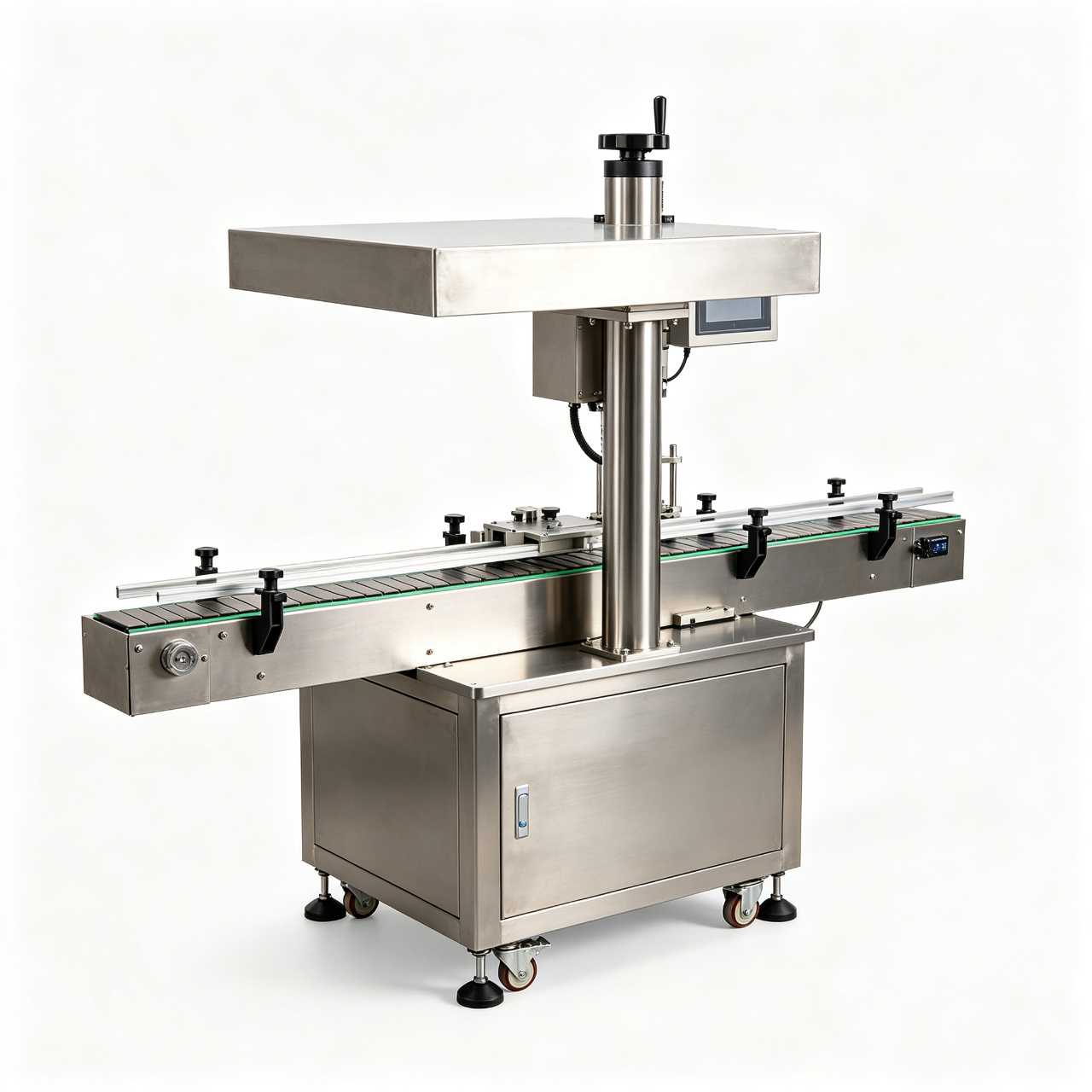
- Large-head station (30–150 mm caps): a large-head continuous induction sealer rated 30–150 mm covers the 2-liter and 5-liter canisters at 30–40 per minute. These large closures need lower frequency, longer dwell and more deliberate cooling; a single small-bottle head would either fail to heat the center of the foil or burn the rim.
- PET-bottle configuration: on the thin-neck PET bottles the team specified an automatic induction sealer for PET bottles profile with an air-cooling coil, because PET is more heat-sensitive than HDPE and a water-cooled head that runs too cold can leave the foil tacky.
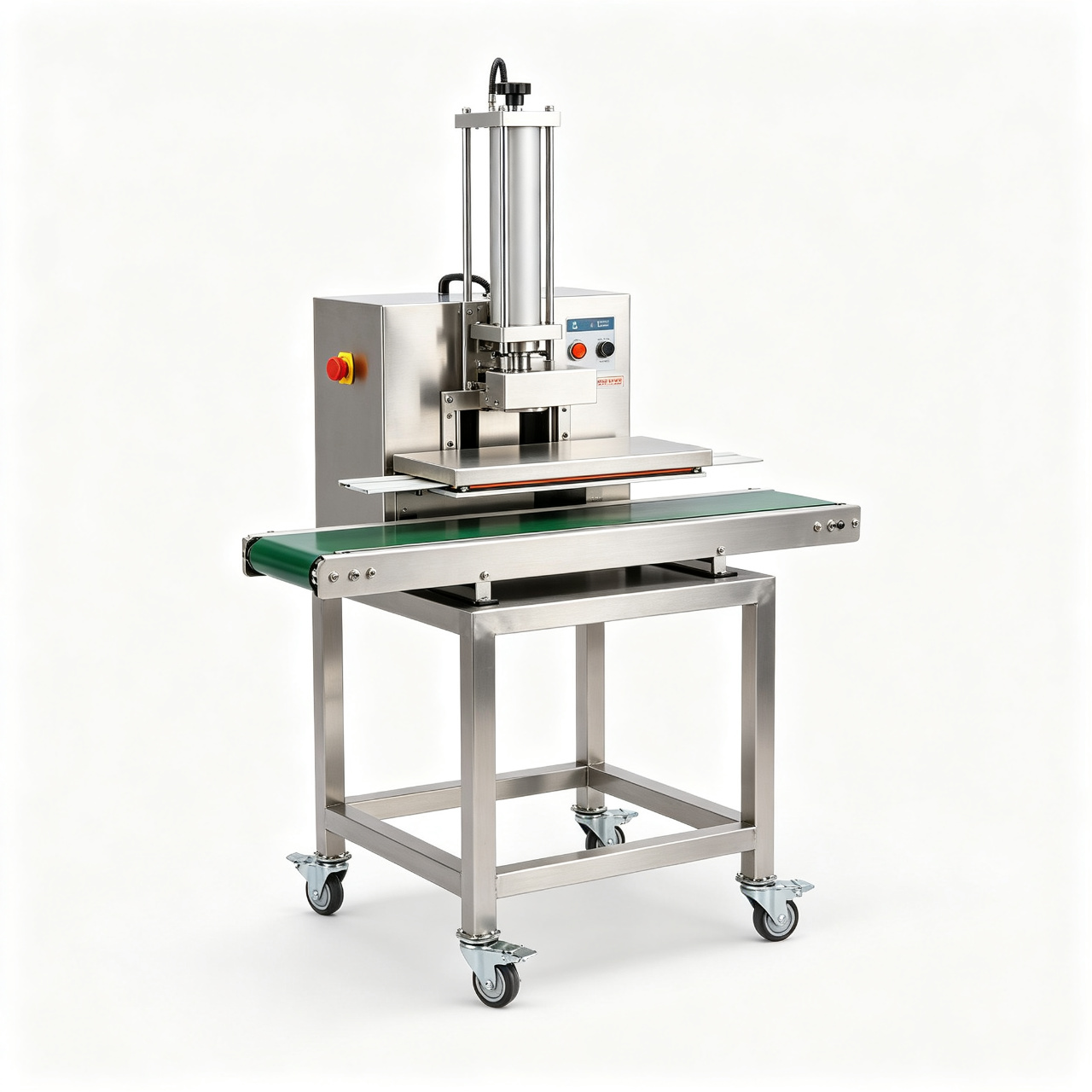
The complete induction range is shown in the induction sealing machines hub, and the filler directly upstream is covered by the same automatic linear filling machine family already running in the plant. Keeping the filler and sealer from one supplier mattered here: the line timing, the reject interlock and the recipe system share one HMI, so a bottle that fails the leak test is traced back to the exact filler head and seal recipe rather than being logged as an anonymous fault.
The Numbers That Decided the Project
The co-packer’s engineering director approved the line on three measured criteria, and the commissioning data is shown in the table below. The figures were taken over five consecutive shifts after the 30-day bedding-in period.
| Parameter | Manual wands (before) | Inline induction (after) |
|---|---|---|
| Operators at sealing station | 4 + 1 inspector | 1 (line-wide) |
| Small-bottle line speed | ~70 bpm effective | 120 bpm sustained |
| 5-liter canister speed | ~18 per minute | 36 per minute |
| Leak / seal-failure rate | ~2.8% | <0.2% |
| Cap-format changeover | 25–40 minutes | 6–10 minutes (stored recipe) |
| Seal verification | Visual, sampled | 100% pressure leak test + reject |
Two engineering decisions explain most of the improvement. First, the foil liner is now specified as a two-piece wad (aluminum bonded to a pulpboard backing) with a heat-seal layer matched to HDPE and PET; the original one-piece lids the plant bought on price were the cause of many of the “random” seals, because the liner did not bond consistently to both resin types. Second, an air-cooled continuous aluminum foil induction sealer head was used on the small-bottle line rather than a water-cooled unit, because the Brazilian summer ambient temperature and the water quality in the plant made closed-loop water cooling a maintenance burden.
Chemical-Plant Details That Food Installations Do Not Have
An agrochemical line is not a food line with bigger bottles. The specification reflected that:
- Spill and corrosion resistance: the conveyor frame and the sealer enclosure are stainless with sealed bearings, because herbicide concentrate and foliar salts splash during cap changes and corrode exposed carbon steel within weeks.
- Dedusting and the induction head: powder and crystalline residue from fertilizer bottles build up on the sealing head. The head was mounted with a positive air purge and a daily wipe-down interval written into the maintenance schedule; a dirty coil is the most common cause of gradual seal failure on a line that “was working yesterday.”
- Cap torque before the foil: induction sealing cannot rescue a loose cap. A fixed-height spindle capper was set to torque the closures to the supplier’s spec before the foil passed under the head; the team added a torque audit every two hours.
- Cooling before testing: the foil is hot and soft when it leaves the head. A 1.2-meter cooling section (forced air in this case, water quench on faster food lines) gives the bond time to set before the pressure leak test; testing too early produces false failures.
- Reject and containment: every bottle that fails the pressure test is pushed into a locked reject bin with a counter, because an agrochemical bottle cannot be simply re-fed to the conveyor the way a dry food pack can.
Commissioning, Training and What the First Week Showed
FAT at the SunAura Machinery workshop was run against all seven container formats, with the customer’s actual foil wads and caps rather than matched test parts. That caught a mis-matched liner for the 5-liter canister before shipment, which would otherwise have been found in Brazil against a live production schedule. SAT at the Uberaba plant added the leak-test and reject interlock and then ran a four-hour production simulation per format.
Operators were trained to read the three failure modes that account for the vast majority of induction seal problems: an overheated foil that wrinkles or blisters (reduce power or increase line speed), a cold seal with a weak or partial bond (increase power or slow the belt), and an eccentric seal caused by a mis-centered cap or a head set too high (mechanical, not electrical). The local service partner keeps a spare sealing head and a set of cooling fans on site, and the HMI stores the recipe and trend data for every SKU so a shift handover cannot silently change the seal window.
Two site-specific points are worth flagging for any Latin American installation. The first is electrical stability: rural substations serving plants on the edge of agricultural districts can dip during irrigation-pump load switching, and an induction generator that loses power mid-seal produces a weak bond that the leak test catches but the line rhythm pays for. The line was therefore fitted with a voltage regulator on the sealing circuit and a no-seal/no-pass interlock, so a bottle that passes under a powered-down head is automatically rejected instead of reaching the pallet. The second is consumable discipline. The customer initially mixed three suppliers of foil wads on price; each supplier bonded at a slightly different temperature window, and the operator could not tell which liner was inside a cap. Standardizing on one qualified wad per resin type, and keeping a sealed stock away from the humid line-side air, removed the last source of sporadic seals.
The Audit Trail Behind a Tamper-Evident Seal
An induction seal only proves tamper-evident if the plant can document it. The new line was configured to log three things for every bottle: the seal recipe that was active, the conveyor speed and head power at the time the bottle passed, and the pass-or-fail result of the pressure leak test. The reject counter and the locked reject bin cannot be reset without a supervisor login, so the number of failed seals is a real number rather than a hand-written estimate. During an ANVISA or distributor audit, the quality manager can pull a shift record and show that a specific lot was sealed within the validated window, that every bottle was tested, and that the failures were contained and quarantined. That level of documentation is a sales advantage as well as a compliance one; several of the large Brazilian cooperatives now require it before approving a co-packer for store-brand crop-protection products.
The team also standardized the inspection language. A foil that is hot and slightly soft at the moment of visual inspection can look fine and still fail once cooled, so inspection is performed only after the cooling section, and operators assess the seal on a defined set of criteria: a complete, uniform foil disc with no wrinkles, a sealed ring that reaches the full circumference, and no eccentric foil edge caused by a tilted cap. A weekly peel test on a sample bottle confirms the bond strength and provides an early warning that a foil batch or a seal head is drifting before the leak test catches it in production.
Questions From the Plant Floor
How long does an induction foil liner actually last on a stored pesticide bottle?
A correctly applied hermetic induction seal on HDPE or PET remains intact for the stated shelf life of the product, typically two to three years for most crop-protection formulations. The failure cases we see are nearly always a weak or contaminated bond from the sealing line, not the liner aging, which is why the seal must be applied and verified rather than visually assumed.
Can one induction head seal every bottle from 250 ml to 5 liters?
Not economically. The electromagnetic field geometry that heats a 28 mm PET cap evenly is different from what a 120 mm canister closure needs. A split setup with a high-speed small-head and a large-head station gives better seals, faster changeover and lower power than forcing one oversized head across the entire range.
Does induction sealing replace the screw cap?
No. The foil provides a hermetic, tamper-evident barrier; the screw cap provides re-sealability after the consumer breaks the foil and protects the liner in transit. The cap must be torqued to spec before the bottle reaches the induction head, because the foil cannot compensate for a loose or cross-threaded closure.
What is the typical payback on an agrochemical line?
At this plant the labor saving, the reduction in rejected product and the ability to run the filler at its rated speed instead of waiting on the sealing station produced a calculated payback inside 14 months. Payback is fastest where the manual sealing station is the bottleneck and where distributor returns of leaking bottles carry a freight and penalty cost.
Discussing Your Own Closure Line
If your bottles are agrochemical, household chemical or any liquid where a leaking or non-tamper-evident cap is a serious event, the sealing decision starts with the cap range, the resin, the line speed and the verification requirement — not with the machine brochure. The induction sealer is one station inside a line that includes the liquid filling machines, the capper and the downstream packing. Solid, dry products follow a different path entirely, as in the servo pillow packaging line SunAura delivered for a Thai snack producer; and the broader question of how to match the filler to the product is laid out in our liquid filling machine buying guide on gravity, overflow, piston and flow-meter filling. Send us your cap sizes, container formats and target throughput and the SunAura Machinery applications team will size the heads and the line balance for you — contact us for a layout and quotation.