
QINGDAO, China — October 21, 2026 | by Monica, SunAura Machinery Export Projects
SunAura Machinery has completed factory acceptance testing and shipped a complete jam and sauce filling and capping line to a mid-sized food producer in Izmir, Turkey. The line is built for high-viscosity products — strawberry jam, tomato sauce, hot chili sauce and creamed honey — at a rated 2,400 bottles per hour on 330 g glass jars, with a second format of 720 g jars for the foodservice channel. The order matters because it is the kind of project buyers get wrong most often: a particulate, sticky, hot-filled product that punishes a filler chosen on price alone, and a line that has to wash down and change between fourteen SKUs rather than run one sauce forever. The completed system pairs an eight-head servo piston filler with a rotary capper, an induction foil sealer and a stainless tabletop conveyor, and it left the Qingdao workshop after the client’s own product passed three days of FAT.
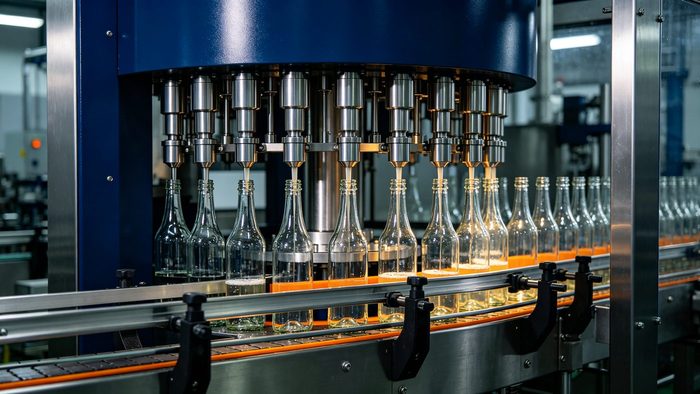
The Bottleneck the Producer Was Living With
Before the project, the Izmir plant filled its premium jam range on two semi-automatic piston machines operated by four workers, with capping and foil application done at separate stations. The arrangement had three problems that did not show up on the equipment invoice. First, viscous product with fruit pieces was slow to meter and inconsistent: jars that were under-filled were pulled by the checkweigher, and operators overfilled the rest to be safe, giving away roughly two to three percent of an expensive product. Second, changeover between fourteen SKUs — different jar sizes, different sauces, and an organic line that demanded full disassembly — ate most of a shift and was the reason the plant could not accept the small, frequent retail orders its supermarket customers wanted. Third, the hand-applied foil seals were uneven and occasionally failed in export cartons, which is exactly the kind of tamper-evidence defect a European buyer rejects without opening the negotiation.
The company was not short of orders; it was short of a stable, cleanable front end. Its managers set the supplier a clear brief: a single integrated line that could hold fill accuracy on chunky jam, change recipe in under twenty minutes, seal every jar to a documented standard, and wash down to organic-certification requirements. That brief — rather than the headline speed — drove the configuration.
Line Configuration
The turnkey system integrates six major modules selected for the client’s product range and factory layout, each matched to the viscous, particulate nature of the product:
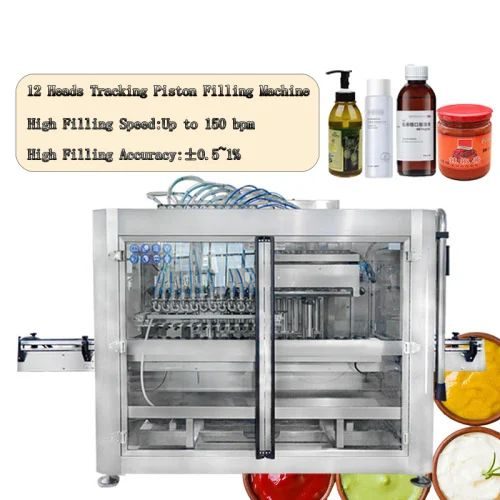
- Eight-head servo piston filler. Handles products up to roughly 50,000 cP, including particulate sauces with pieces up to 12 mm. Servo-driven pistons, rather than a pneumatic cam, let each head vary its stroke from the HMI and hold about ±0.5% fill accuracy across the 50–500 ml range; the same automatic linear liquid filling machine family is used for the producer’s thinner hot-filled sauces.
- Four-head rotary capper. Applies twist-off lug caps and screw caps at up to 3,000 bph, with magnetic torque heads and a cap-orientation sorting bowl so lids are always presented correctly.
- Inline induction cap sealer. After capping, an air-cooled continuous aluminum foil induction sealer bonds the liner to glass and PET jars for tamper evidence and a moisture barrier, sized for continuous operation.
- Automatic bottle unscrambler. Feeds 330 g and 720 g glass jars from a bulk hopper to the main conveyor at about 60 cycles per minute.
- Front-and-back labeler with date coder. Applies self-adhesive labels and prints the lot and best-before code on the line.
- Stainless tabletop conveyor. A wash-down tabletop chain links every module with variable-speed drives and accumulation before the capper so the filler is never starved.
The full range of metering and capping options is set out in the liquid filling machines hub, and the foil-sealing step that follows capping is covered by the induction sealing machines range.
Filling Viscous, Particulate Product Without Giving It Away
Jam with fruit pieces is a difficult product to meter, and the details of the filler are where cheap machines lose the contract. A free-flowing liquid can be timed through a pump; a chunky, viscous sauce cannot, because shear changes its viscosity and the pieces bridge or shear depending on the port geometry. The servo piston fillers were specified with large intake ports and positive-acting rotary valves that open a clear passage rather than pinching a ball valve, so a twelve-millimeter piece of fruit passes through without being cut. The hopper includes a slow, large-diameter agitator and a heated jacket that keeps the product at the fill temperature during hot-fill runs, because a jam that cools in the hopper becomes a different viscosity and the fill drifts. The piston cylinders are the “displacement” type, so the fill volume is set mechanically by the stroke and is not left to a timer; that is the main reason the FAT results beat the target on both jam and honey.
Giveaway control is the quiet economic story. On a declared 330 g jar, an average overfill of 2.5% across a year of export production is free product and free freight, and in a glass jar the error is visible as the headspace. Servo metering let the plant center the distribution tightly on the legal target rather than filling heavy to avoid rejects, and the checkweighter downstream was used to prove it rather than to catch a chronic problem. For the thicker honey, which strings and drips, the nozzles were fitted with anti-drip cut-off and a suck-back function so the seam and shoulder of the jar stayed clean — a clean shoulder matters because the foil liner has to seat on a dry rim.
The Foil Seal That Protects an Export Carton
For a producer shipping by sea and selling into modern retail, the foil seal is not an optional add-on; it is the evidence a customer checks on first opening. The inline induction sealer was positioned immediately after the capper, with a short hold-down belt that keeps the cap under pressure while the electromagnetic field excites the foil liner. The heat bonds the liner to the jar rim, and the backing peels away when the consumer first twists the lid. The glass jars use the settings suited to continuous foil sealing on glass jars, with the air-cooled head chosen because the line runs two shifts and the producer did not want the water cooling and maintenance of a water-cooled unit. The same sealing logic and the export logic behind it are described in the project to add a automatic induction foil sealing line for an Egyptian honey and food exporter.
Hygienic Design and the Cleaning Reality
Because the plant runs organic-certified products alongside conventional sauces, the filler had to be built to strip down quickly rather than merely look stainless. All product-contact parts are 316L with tri-clamp connections, and the product path comes apart in under twenty minutes for manual wet-out cleaning; the cylinders, manifolds and nozzles are reached without special tools. The customer’s quality team treated the cleanability as a FAT item in its own right, timing the disassembly and checking that there were no threaded dead-ends in the product flow. The reasons those details matter — biofilm in piston seals, dead legs, and the difference between wet-out, CIP and SIP regimes — are laid out in the engineering guide to cleaning and sanitizing liquid filling machines (CIP, SIP and wet-out). For this line, which is a hot-fill food application rather than aseptic, a well-designed manual wet-out with the option to connect portable recirculation was the correct and proportionate choice; a full SIP system would have added cost the product did not require.
FAT Results
Factory acceptance testing ran for three days. The client’s team brought their own products — strawberry jam with fruit pieces, smooth tomato sauce, and creamed honey — and validated against the agreed specification:
| Parameter | Specification | FAT result |
|---|---|---|
| Filling accuracy (jam) | ±0.5% of target | ±0.32% average |
| Filling accuracy (honey) | ±0.5% of target | ±0.28% average |
| Output (sauce, 330 g jar) | 2,400 bph | 2,580 bph sustained |
| Capping torque (TT lids) | 5–25 N·m adjustable | Stable at 12 N·m |
| Induction seal integrity | 100% sealed | Zero leaks across 500 jars |
| Changeover jam → honey | ≤20 min target | 14 minutes observed |
Why the Client Chose SunAura
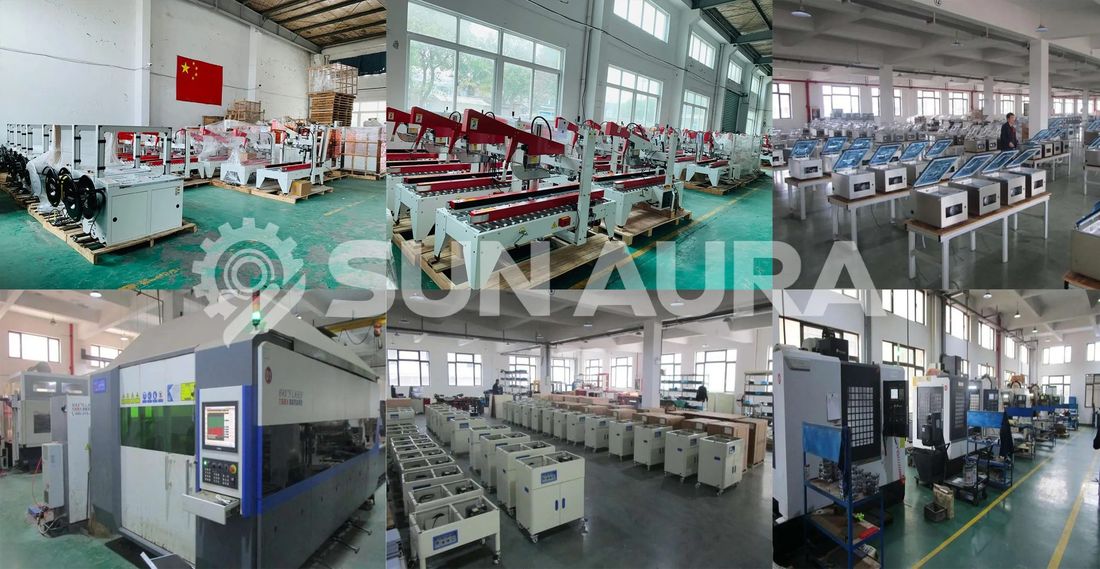
The producer evaluated three Chinese suppliers before awarding the contract. The deciding factors were the ones that usually decide a viscous-food project. First, recipe flexibility: the servo filler’s PLC stores thirty recipe presets, so the fourteen-SKU range changes over in under fifteen minutes without tools. Second, hygienic design: the tri-clamp, 316L product path and the documented disassembly time answered the organic-certification requirement directly. Third, turnkey responsibility: SunAura took the line layout, electrical integration, the filling-to-sealing handoff and operator training under one contract, so the customer was not reconciling the timing of a filler from one vendor and a sealer from another. The FAT was run on the actual product rather than on water, which is the only honest way to prove a chunky-jam line.
Installation, Training and the First Season
The equipment departed Qingdao in mid-October and is scheduled to reach the Izmir facility by late November. A SunAura commissioning engineer will install the line, align the conveyor and cap torques, validate the induction seals on the client’s jars and lids, and run the first production batches alongside the plant’s operators. The customer ordered a twelve-month spare parts package covering piston seals, O-ring kits, nozzle gaskets, cap-sorter parts and the induction head’s usual wear items, so a liner change or a worn seal does not mean an air-freight wait. The line is also laid out so a second filler head block can be added later for the smaller 50 g hotel-format jar, a growth option the producer specified up front rather than retrofitting.
Two risks were written into the contract rather than left to the installation. The first was liner compatibility: the exporter’s twist-off lids are sourced from a Turkish converter, and the foil liners had to be qualified against those exact caps rather than against SunAura’s own test lids, so the FAT included a seal-peel and leak test on the customer’s real lids. The second was local support: the producer runs a seasonal peak before the year-end holidays and cannot afford a week of downtime, so the spares package and the remote-diagnosis connection were specified before shipment, and a local electrical partner was briefed on the drives. Settling both items in the contract, rather than during the first breakdown, is the difference between a line that ramps cleanly and one that spends its first season being debugged by email.
Frequently Asked Questions
Can a piston filler really handle jam with fruit pieces?
Yes, when it is built for it. Large intake ports, positive rotary valves and a displacement cylinder allow pieces up to about 12 mm to pass without being cut, while a heated, gently agitated hopper keeps the product at a consistent viscosity. A small-port timer or pump filler is the wrong choice for chunky jam.
Why add an induction sealer if the jars already have a cap?
The cap applies torque; the foil liner provides tamper evidence and a moisture and oxygen barrier. Retail and export buyers expect a foil seal that visibly fails on first opening, and the line seals every jar immediately after capping at production speed instead of relying on hand-applied liners.
How fast can a viscous line change between products?
On this line a jam-to-honey change was recorded at fourteen minutes, including the recipe preset, the nozzle and piston-size checks, and the cleaning needed for the organic range. The decisive factors are servo recipe storage, tool-free tri-clamp disassembly and a written changeover procedure.
Does a food filler need CIP or SIP?
Most hot-fill sauce and jam lines use a well-designed manual wet-out cleaning, sometimes with portable recirculation; full CIP is typical of high-volume dairy and beverage, and SIP is required for aseptic or pharmaceutical product. The choice should be made against the product and the audit standard, not as a blanket upsell.
Next Steps
A viscous, multi-SKU filling line is specified from the product outward — the metering principle, the cap and foil system, the cleanability and the changeover time have to be settled together, not bought as separate machines. Send SunAura Machinery your viscosity, bottle or jar sizes, particle size, target output and cleaning requirements, and the engineering team will prepare a layout proposal within a few business days. Request a quote and layout, review the liquid filling machines and induction sealing machines ranges, and read the companion CIP and SIP cleaning guide for the hygienic-design questions to put to any supplier. Learn about SunAura Machinery.